
Contents
- 1 Kalinga Nadheeswarar Temple, Irulancheri: A Definitive Pilgrimage Guide
- 1.1 Introduction & Spiritual Essence
- 1.2 Historical Origins & Scriptural Legend
- 1.3 Architectural Marvels
- 1.4 Darshan & Ritual Logistics
- 1.5 Practical Visitor Guidance
- 1.6 Pilgrimage Connectivity
- 1.7 Frequently Asked Questions (FAQ)
- 1.7.1 1. Is there a VIP darshan entry available?
- 1.7.2 2. Are there restaurants or accommodation facilities near the temple?
- 1.7.3 3. Is the temple accessible for senior citizens and differently-abled visitors?
- 1.7.4 4. What is the historical significance of the inscriptions found here?
- 1.7.5 5. Can we perform rituals for ancestors (Shraddha) here?
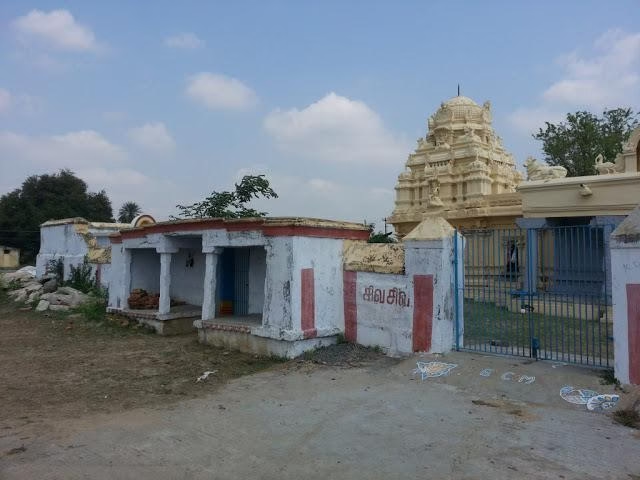
Kalinga Nadheeswarar Temple, Irulancheri: A Definitive Pilgrimage Guide
As the Lead Heritage Architect for BharatTemples.com, I invite you to step into the serene spiritual landscape of Irulancheri. This is not merely a guide; it is a journey into the heart of Dravidian heritage, where history, architecture, and devotion converge at the feet of Kalinga Nadheeswarar.
Introduction & Spiritual Essence
The Kalinga Nadheeswarar Temple is a timeless sanctuary dedicated to Lord Shiva, situated in the tranquil village of Irulancheri, near Perambakkam in the Thiruvallur district of Tamil Nadu.
- Presiding Deity (Moolavar): Kalinga Nadheeswarar (Shiva).
- Consort (Thayar): Thaayinum Nallal (Goddess Parvati).
- Form: The lingam is a Swayambhu (self-manifested) idol, revered as the protector of devotees.
Phalaśruti: The Spiritual Benefits
Devotees flock to this Thevara Vaippu Sthalam (a temple celebrated in the Tamil Saiva canon) seeking liberation from the cycle of birth and death. Specifically, it is believed that:
- Offering prayers here helps cleanse ancestral karma (Pitra Dosha).
- Lord Kalinga Nadheeswarar grants protection against negative influences and serpentine afflictions (Naga Dosha).
- It is a potent site for Shanthi (peace) and fulfillment of lawful desires.
Historical Origins & Scriptural Legend
While the exact date of construction remains elusive in popular records, the temple resonates with centuries of history.
Scriptural and Dynastic Context
Tradition holds that this site is mentioned in the Thevaram hymns of Thirugnana Sambandar, referenced as Iraiyancheri. While further scholarly study is needed to definitively link it, the local consensus treats it as a Thevara Vaippu Sthalam of immense antiquity.
Archaeological evidence confirms the temple’s antiquity. According to temple records and epigraphy, inscriptions dating back to the period of Rajaraja III (later Chola dynasty, circa 13th century) are found on the temple walls. These inscriptions detail land grants and donations made to the temple, evidencing its historical significance.
The Sthala Purana: The Legend of Kali
The temple derives its name from a fascinating local legend involving the destruction of the serpent demon Kali. According to the Sthala Purana, Lord Shiva manifested here to subdue the tyranny of a giant serpent (Kali) that was tormenting the sages and the people of the region. By placing his foot upon the serpent (or destroying its ego), Shiva established peace, hence the name Kalinga Nadheeswarar. The Thaayinum Nallal shrine represents the divine grace that followed this victory.
Architectural Marvels
The temple is a classic example of the Dravidian style of architecture, characterized by its horizontal principles and emphasis on intricate carvings.
Vastu and Layout
Surrounded by lush paddy fields, the temple faces East. It features a modest yet powerful Rayagopuram (gateway tower) which, while not the largest in the region, is architecturally significant for its proportionate design.
- The Sanctum (Garbhagriha): Houses the Swayambhu lingam, designed according to Vastu Shastra principles to channel cosmic energy.
- Outer Prakaram: The circumambulatory path encloses the shrines of various deities, including Narthana Ganapathy and Murugan.
- Sculptures: Though modest, the pillars and walls bear the mark of ancient artisans, with motifs of floral designs and divine figures.
Adjacent to the temple stands a dilapidated Mutt associated with Devar Singa Adheenam, serving as a silent testament to the monastic traditions that once thrived here.
Darshan & Ritual Logistics
To facilitate a seamless darshan experience, devotees must adhere to the temple’s schedule. The following timings are projected for the year 2026.
Daily Darshan Timings
| Session | Timings (IST) | Notes |
|---|---|---|
| Morning | 07:00 AM – 12:00 PM | Best time: 8:30 AM (less crowded) |
| Evening | 04:00 PM – 08:00 PM | Best time: 6:00 PM (Abhishekam time) |
Key Sevas and Offerings
While on-site bookings are available, online seva booking is recommended for major festivals to avoid last-minute disappointment.
- Abhishekam: Ritual bathing of the lingam with milk, honey, and sandalwood paste. Timings: 7:30 AM daily.
- Archana: Chanting of the Lord’s names. Available throughout darshan hours.
- Deepa Aradhana: Lamp offering, usually performed during evening hours.
2026 Festival Calendar
Plan your visit around these auspicious dates:
- Maha Shivaratri: February 26, 2026 (Special night-long vigils).
- Ardra Darshanam: December 2026 (Exact date based on Tamil calendar).
- Pradosham: Bi-monthly (13th and 28th of every month) – highly recommended for darshan.
Practical Visitor Guidance
As a heritage site, the temple requires respectful conduct and preparation.
- Dress Code: Traditional attire is mandatory. Men should wear dhotis or formal trousers with shirts; women should wear sarees, salwar kameez, or full-length skirts.
- Photography: Strictly prohibited inside the sanctum sanctorum. Permitted in the outer prakaram without flash.
- Mobile Lockers:Crowd Management: Weekends and Pradosham see higher footfall. Best hours to visit: Weekday mornings (7:00 AM – 9:00 AM). In May, carry water as temperatures rise; the open courtyards offer little shade.
Pilgrimage Connectivity
How to Reach Irulancheri
The temple is well-connected to Chennai and major hubs via State Highways.
- By Air: Chennai International Airport (MAA) is approximately 54 km away.
- By Rail: Manavur Railway Station is 10 km away. Kadambathur Railway Station is 11 km away. Arakkonam Junction (26 km) connects to major lines.
- By Road: Located 1.5 km from the Perambakkam Bus Terminus. The temple is accessible via the Perambakkam–Irulancheri Road. It is approximately 19 km from Thiruvallur and 54 km from Chennai via NH-75 or connecting state routes.
Nearby Sacred Sites
Extend your pilgrimage with these nearby Thevara Vaippu Sthalams:
- Thirumazhisai (Jalagandeeswarar Temple): Located roughly 25 km away, associated with the Nayanmars.
- Karumbakkam (Karkadeswarar Temple): A significant temple dedicated to Lord Shiva, located near Ulundurpettai.
- Thiruvallur (Veetrirundha Perumal Temple): The district headquarters, home to a Vishnu temple where the Lord reclines on an ant hill.
Frequently Asked Questions (FAQ)
1. Is there a VIP darshan entry available?
Currently, the temple does not have a separate VIP entry gate. However, priority is given to those who book special Abhishekam slots in advance via the local administration or temple trust.
2. Are there restaurants or accommodation facilities near the temple?
Being a rural village, Irulancheri has limited commercial facilities. It is advisable to dine at the hotels in Perambakkam (1.5 km) or Thiruvallur (19 km). For accommodation, basic lodges are available in Thiruvallur.
3. Is the temple accessible for senior citizens and differently-abled visitors?
The temple is small with a flat layout. While there are no wheelchairs provided, the prakaram is generally accessible. However, the steps to the inner sanctum are few and manageable.
4. What is the historical significance of the inscriptions found here?
The inscriptions, primarily from the reign of Rajaraja III, provide evidence of the temple’s economic and social standing during the Chola era, detailing grants made by local chieftains.
5. Can we perform rituals for ancestors (Shraddha) here?
Yes, the serene environment and the energy of Kalinga Nadheeswarar make it an ideal spot for performing ancestral rites. Contact the temple priest (Archagar) in advance to arrange materials.
Recent Posts

ओ सांवरे तूने ही मुझको संभाला – Lyrics & Meaning
ओ सांवरे तूने ही मुझको संभाला – A Prayer to Shyam Origin & Spiritual Essence Why This Bhajan Resonates Devotees chant this when overwhelmed by life’s storms—the refrain ‘तूने ही मुझको संभाला’ is the soul’s sigh of relief: “You…

कथा ये है महाराज मेरे की – Lyrics & Meaning
कथा ये है महाराज मेरे की छत्रपति संभाजी महाराज – A Prayer to Chhatrapati Sambhaji Maharaj Origin & Spiritual Essence Why This Bhajan Resonates Devotees chant this when their spirit feels tested—its powerful refrain “महाराज मेरे” is a soul’s…

Rigveda Samhita Yathartha Anuvada (ऋग्वेद संहिता यथार्थ अनुवाद) – Complete Set with Anvayartha & Hindi/English Translation
The Rigveda is the oldest surviving scripture of humanity and the foundational text of Sanātana Dharma. For serious students, scholars, UPSC aspirants studying ancient Indian history, Sanskrit learners, and spiritual seekers, a precise and grammatically structured translation is indispensable.…

आना भी अकेला है जाना भी अकेला है – Lyrics & Meaning | BharatTemples
आना भी अकेला है जाना भी अकेला है – A Prayer to the Divine Witness Origin & Spiritual Essence Why This Bhajan Resonates Devotees turn to this bhajan in moments of deep reflection—when life’s attachments begin to ache. The…

माता शेरावाली के द्वार जो भी जाता है – Lyrics & Meaning
माता शेरावाली के द्वार जो भी जाता है – A Prayer to Maa Sherawali Origin & Spiritual Essence Why This Bhajan Resonates Devotees turn to this bhajan in times of fear or uncertainty—its promise that no one leaves Maa’s…

मार लेना सपणी उबार लेणा भवरा – Lyrics & Meaning
मार लेना सपणी उबार लेणा भवरा – A Prayer to the Divine Beloved Origin & Spiritual Essence Why This Bhajan Resonates Devotees chant this in moments of deep vulnerability—its cry of “मार लेना सपणी, उबार लेणा भवरा” is the…

हमें श्याम सुंदर भरोसा तुम्हारा – Lyrics & Meaning
हमें श्याम सुंदर भरोसा तुम्हारा – A Prayer to Shyam Sundar Origin & Spiritual Essence Why This Bhajan Resonates Devotees chant this when feeling alone—its refrain ‘de do sahara’ is the soul’s cry for divine support. Lyrics in Hindi…

Mere Satguru Ne Di Thi Davai Lyrics in Hindi & Meaning
Mere Satguru Ne Di Thi Davai: Invoking the Guru’s Liberating Wisdom This soul-stirring bhajan venerates the Satguru (True Spiritual Master) as the divine physician who dispenses the only remedy for life’s deepest sufferings. Composed by Sant Karmaveer Tufani, it…

Janm Diyo Thari Maa Dukh Dekhiyo Lyrics in Hindi & Meaning
जन्म दियो थारी माँ दुख देखियो (Maa’s Grief Upon Birthing You) This soul-stirring Chetavani Bhajan (admonitory hymn) is addressed to the Divine Mother (Maa) – a call for repentance when children forget their filial duties in the dark age…
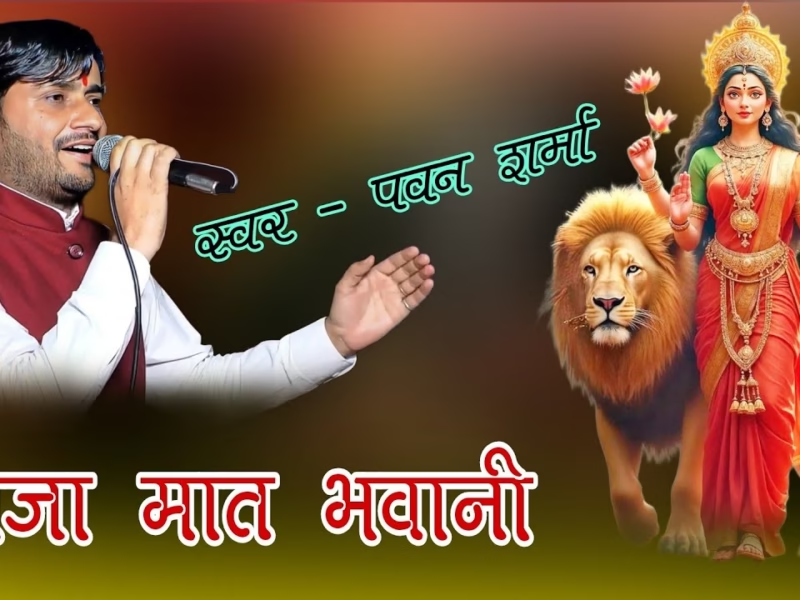
Bhadi Sabha Mein Thane Manaun Lyrics in Hindi & Meaning
Bhadi Sabha Mein Thane Manaun: Invoking the Spear-Wielding Mother Mata Bhawani (श्री ज्वाला भवानी), the fiery manifestation of Shakti worshipped as the Protector of Dharma in Her Dhaulagarh sanctum. Origin & Spiritual Essence Composed in Rajasthani folk tradition by…