Kalyaneshwari Temple: History, Darshan Timings & Complete Guide

Receive daily temple updates, divine darshan, and morning bhajans directly on WhatsApp.
Contents
- 1 Introduction & Spiritual Essence
- 2 Historical Origins & Scriptural Legend
- 3 Architectural Marvels
- 4 Darshan & Ritual Logistics
- 5 Practical Visitor Guidance
- 6 Pilgrimage Connectivity
- 7 Frequently Asked Questions (FAQ)
- 8 Contact Details
Introduction & Spiritual Essence
Nestled on the banks of the River Barakar in the Paschim Bardhaman district of West Bengal, the Kalyaneshwari Temple stands as a monumental beacon of Shakta devotion. It is one of the oldest and most revered spiritual sites in the Asansol region. The primary deity, Devi Kalyaneshwari, is worshipped here in her fierce yet benevolent form as an aspect of Goddess Kali.
While the precise antiquity of the original shrine is shrouded in the mists of time, the current structural identity is deeply linked to the Panchkot Raj dynasty. The temple is widely revered for its Phalaśruti (spiritual efficacy); it is specifically believed that childless women who offer prayers here with a pure heart are blessed with offspring. Consequently, it is often referred to as a “Manas Kalyan”
(Prosperity of the Mind) shrine where devotees seek liberation from ancestral karma and fulfillment of personal vows.
Historical Origins & Scriptural Legend
The Panchkot Legacy
According to temple records and historical chronicles, the current stone structure was commissioned by the Raja of Panchkot (also historically spelled as Panchakot). While folk tradition suggests the existence of a shrine here since the 3rd century BC, the prevailing architectural presence dates back to the 15th to 16th century, with significant renovations carried out over the centuries.
The Legend of Human Sacrifice
Tradition holds that this region was once a dense forest known for ancient Shakti worship rituals. The Sthala Purana (local oral legend) speaks of a dark era when human sacrifices were offered to appease the Goddess. The name “Kalyaneshwari” is interpreted by scholars as a transformative shift—moving from the violent aspects of the deity to the benevolent form that grants “Kalyan” (well-being) to devotees. It is said that Maharaja Hari Gupt, fleeing from the Kushans, is also associated with the site’s early sanctity, though the Panchkot rulers solidified its stone form.
📖 Related: Shri Ravi Das Chalisa
Architectural Marvels
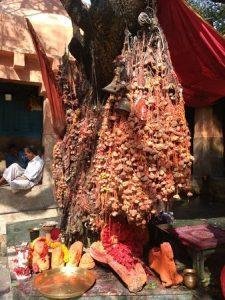
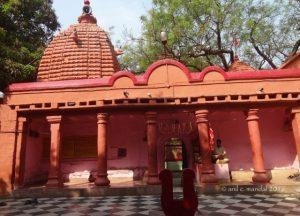
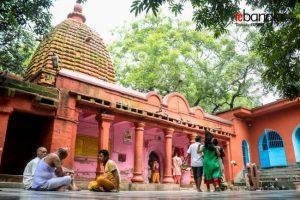
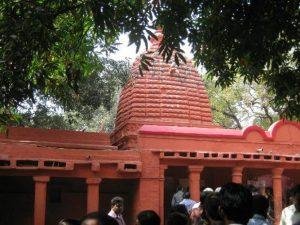
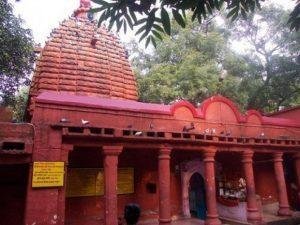
The Kalyaneshwari Temple is a classic example of the traditional Bengali Temple Architecture. Unlike the towering spires of South Indian Dravida style, the temple features a curved Shikhara (tower) that rises in tiers to a pointed crown.
- Garbhagriha (Sanctum Sanctorum): The temple is built upon a raised mound. The inner sanctum houses the deity of Goddess Kalyaneshwari. Due to ancient traditions and the specific form of the idol (described as a child with a visible right hand), the murti is traditionally covered with a red cloth.
- Frescoes and Sculptures: The exterior walls are adorned with ancient terracotta plaques and frescoes depicting scenes from Hindu mythology and the life of the Panchkot kings. While not a designated UNESCO site, the temple is of significant interest to the Archaeological Survey of India (ASI) for its preservation of medieval Bengali sculptural art.
- Setting: Originally situated immediately on the riverbank, the shifting course of the Barakar has left the temple slightly inland, though the view of the neighboring Maithan Dam creates a picturesque backdrop.
Darshan & Ritual Logistics
The temple follows a strict regimen of daily Aartis and rituals. For devotees planning a visit in 2026, the following schedule applies.
Daily Timings
| Session | Timings |
|---|---|
| Morning Darshan | 6:00 AM – 12:00 PM |
| Afternoon Break | 12:00 PM – 3:00 PM |
| Evening Darshan | 3:00 PM – 8:00 PM |
| Special Aarti (Sandhya) | 7:30 PM (Daily) |
Key Sevas & Online Booking
Devotees can book various Sevas (services) to offer to the Goddess. While on-site booking is available, the temple administration is increasingly digitizing services.
- Abhishekam: Ritual bathing of the deity (performed on Tuesday and Saturday mornings).
- Archana: Recitation of 108 names of Goddess Kalyaneshwari.
- Pushpanjali: Floral offering (available on all days).
Online Seva Booking: Visit the official temple website or the West Bengal Temple Trust portal to book Sevas for 2026. It is recommended to book at least 24 hours in advance for weekend visits.
Major Festivals in 2026
- Navaratri (Shardiya): October 18 – October 26, 2026. This is the busiest period; the temple remains open from 4:00 AM to 10:00 PM.
- Kali Puja: November 11, 2026. A grand fair is organized near the temple grounds. Special Maha Aarti is performed at midnight.
- Chaitra Navaratri: April 6 – April 14, 2026.
Practical Visitor Guidance
To ensure a respectful and hassle-free darshan experience, please adhere to the following guidelines:
- Dress Code: Traditional Indian attire is preferred. Men should wear dhotis or full-length trousers; women should wear sarees, salwar kameez, or modest dresses covering shoulders and knees.
- Photography: Photography is strictly prohibited inside the Garbhagriha (sanctum). Outside the temple complex, photography is permitted.
- Crowd Management:
- Best Hours: 6:00 AM – 8:00 AM (Morning) or 3:00 PM – 4:30 PM (Afternoon). Avoid weekends and festival evenings if possible.
- Seasonal Advice: Summers (April–May) in Paschim Bardhaman are hot; carry a water bottle and an umbrella. Winters (December–January) are mild and ideal for visiting.
- Mobile Lockers: Shoes and luggage must be deposited at the designated counter before entering. Mobile phones should be kept on silent mode.
Pilgrimage Connectivity
How to Reach Kalyaneshwari Temple
By Road: The temple is located in Kalyaneshwari, near Maithan and Asansol. It connects well to National Highway 2 (NH-2) and NH-14. Direct buses are available from Kolkata (approx. 230 km), Durgapur, and Burdwan.
By Rail: The nearest major railway station is Asansol Junction (approx. 10 km). However, the closest station to the temple specifically is Barakar Railway Station (approx. 4 km). Local taxis and rickshaws are easily available from Barakar.
By Air: The nearest airport is Birsa Munda Airport, Ranchi (approx. 180 km). The second closest is Netaji Subhas Chandra Bose International Airport, Kolkata (approx. 235 km). From the airport, hire a taxi to Asansol via Durgapur.
Nearby Sacred Sites
- Maithan Dam (Kalyaneshwari Lake): Located just a few minutes from the temple, this is a serene spot for meditation. There is also a famous temple of Kedareshwar (Lord Shiva) within the dam area.
- Sitaji Mandir, Chittaranjan: A significant Hanuman temple located about 40 km away.
- Deul Park (Burdwan): Approximately 50 km away, featuring historic terracotta temples.
Frequently Asked Questions (FAQ)
1. Is there a VIP Darshan entry available?
Currently, the Kalyaneshwari Temple administration does not offer a formal VIP paid entry system. Darshan is on a first-come, first-served basis. However, senior citizens and persons with disabilities are given priority access.
2. What is the significance of the red cloth on the deity?
The murti of Goddess Kalyaneshwari is covered with a red cloth. This signifies the form of the Goddess as a “Mother” protecting her child (the devotee). The red color also represents Shakti (power) and auspiciousness in Shakta traditions.
3. Are there accommodation facilities nearby?
Yes, Asansol offers a wide range of hotels, ranging from budget lodges to 3-star properties. For pilgrims, the WBPDCL Guest Houses at Maithan are popular options, though they require prior booking.
4. Is the temple accessible for wheelchairs?
The main sanctum requires climbing a flight of stairs. However, the temple trust has installed ramps in the outer courtyard for accessibility to the prayer hall, but reaching the inner sanctum might be challenging for wheelchairs without assistance.
5. What is the history of the river changing course?
Historical records and geological surveys indicate that the River Barakar changed its course significantly in the late 19th and early 20th centuries due to silting and flood patterns. This natural shift separated the original riverbank temple from the water’s edge, though the spiritual connection to the river remains central to the temple’s identity.

kalyaneshwari-temple-Express-Photo-Shashi-Ghoshklyaneswari-8295-005-650×433
img-20181116-124503-largejpg, Kalyaneshwari Temple, Paschim Bardhaman, West Bengal
1-dsc05518-001, Kalyaneshwari Temple, Paschim Bardhaman, West Bengal
kalyaneshwari-temple-Express-Photo-Shashi-Ghoshklyaneswari-1-002-650×433
sri-kalyaneshwari-temple_1416898990
Kalyaneshwari Temple, Paschim Bardhaman, West Bengal
Contact Details
Kalyaneshwari Temple Trust
Kalyaneshwari, Maithan, Asansol
Paschim Bardhaman District, West Bengal
Note: For specific inquiries, it is recommended to contact the local West Bengal Tourism Development Corporation office in Asansol.
📖 Related: Shri Krishana Chalisa