

Contents
Introduction & Spiritual Essence of Kamalakkani Amman
The Kamalakkani Amman Temple in Kalavai, Vellore district, is a revered sanctuary dedicated to Mother Mahalakshmi, the consort of Lord Vishnu and the embodiment of wealth and prosperity. In the Dravidian tradition, she is worshipped here in her fierce yet benevolent form as Kamalakkani Amman.
Phalaśruti (Spiritual Benefits): Devotees flock to this sacred space primarily for the Phalaśruti—the spiritual merit attained through worship. It is believed that sincere prayers here assist in cleansing ancestral karma (Pitru Dosha removal) and bringing harmony to family life. As the goddess of fortune, worshiping Kamalakkani Amman is said to open doors to new opportunities and stabilize financial stability for devotees.
The Divine Form
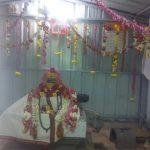
The primary deity is a Swayambhu (self-manifested) idol depicted in a lying posture, often associated with the Anantasayana form of Lord Vishnu and Lakshmi. In this temple, the massive stucco figure of the Goddess in the front mandapa represents her cosmic slumber and subsequent awakening of prosperity.
Historical Origins & Scriptural Legend
Unlike ancient stone temples dating back millennia, the Kamalakkani Amman Temple possesses a unique history of modern spiritual renaissance. According to temple records and local oral tradition, the temple was constructed in 1979.
The Builder (Sthapati): The temple was built by Swami Sachidananda, a wandering ascetic who spent years traversing the Himalayas and Northern India. After years of intense penance, he settled in Kalavai to establish a seat of worship for Kamalakkani Amman.
The Legend of the Silent Saint: Swami Sachidananda is a figure of profound mysticism. For decades, he observed Mauna Vratham (the vow of silence). He communicates solely through gestures and written messages, maintaining a state of deep meditation within the temple premises. He is venerated as a noble soul, and his presence infuses the temple with a unique vibrational energy that devotees describe as palpably peaceful.
Architectural Marvels
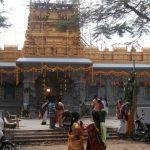
The temple showcases the grandeur of Dravidian Architecture, characterized by its towering gateways (Gopurams) and elaborate sculptural work.
- Sanctum Sanctorum (Garbhagriha): The inner sanctum houses the main deity. The layout follows the principles of Vastu Shastra, aligning the altar to promote the flow of positive energy.
- Mandapas: The front mandapa is a highlight, featuring a gigantic, stucco figure of the Goddess in a lying position. This artistic representation is rare and depicts the divine mother in a state of cosmic rest, yet with multiple hands signifying her omnipotence.
- Neighboring Shrine: The temple is situated adjacent to the Angala Parameswari Temple, creating a powerful spiritual complex where devotees can worship both Shiva and Shakti principles.
Darshan & Ritual Logistics (2026 Schedule)
To ensure a smooth pilgrimage, devotees should observe the following timings and seva details. Please note that timings may vary during major festivals.
| Session | Timings | Details |
|---|---|---|
| Morning Darshan | 06:00 AM – 12:00 PM | Includes Morning Abhishekam |
| Afternoon Break | 12:00 PM – 04:00 PM | Temple closed for Deity rest |
| Evening Darshan | 04:00 PM – 08:00 PM | Includes Deepa Aradhana |
Key Sevas & Online Booking
Devotees can perform specific Sevas to seek the Goddess’s blessings. While this temple operates with traditional simplicity, bookings for major rituals are often managed on-site.
- Abhishekam: Performed with milk, honey, and sandalwood paste. Best time: Morning hours.
- Archana: Personal chanting of the Goddess’s names. Available throughout the day.
- Special Pooja: Dedicated to ancestors, performed on Amavasya (New Moon) days.
Booking Note: While the temple is a local sanctuary, inquiries can often be made via the temple trust or through local travel desks. It is advisable to call the contact number provided below or visit in person for specific 2026 ritual slots.
2026 Festival Dates
- Navaratri: September 22 – October 1, 2026. Special homams and evening cultural programs.
- Vaikuntha Ekadashi: December 10, 2026. A major festival for Vishnu/Lakshmi temples.
- Aadi Perukku: August 3, 2026. Water rituals are performed for the Goddess.
Practical Visitor Guidance
Planning your visit to Kalavai ensures a comfortable spiritual experience.
- Dress Code: Traditional attire is mandatory. Men should wear dhotis or formal trousers with shirts; women should wear sarees, salwar kameez, or long skirts.
- Photography: Strictly prohibited inside the sanctum sanctorum. Photography of the outer mandapas is generally permitted but restricted during rituals.
- Crowd Management: Mornings (6:00 AM – 8:00 AM) are the least crowded. Weekends see an influx of local devotees. Tip: Carry a water bottle in summer (May-June) as the town is arid.
- Accessibility: The temple is accessible via a short walk. There are steps leading to the mandapa, making wheelchair access somewhat difficult without assistance.
Pilgrimage Connectivity
How to Reach Kalavai
Kalavai is a town located in the Vellore district, well-connected by road but slightly removed from major rail lines.
- By Road: Kalavai is located on the Arcot-Cheyyar Road. From Chennai, take NH48 towards Kanchipuram, then proceed to Arcot. The town is approximately 46 km from Vellore and 39 km from Kanchipuram.
- By Rail: The nearest railway junction is Ranipet (24 km) or Kanchipuram (39 km).
- By Air: Chennai International Airport (MAA) is the nearest major airport, roughly 100 km away.
Places to Visit Nearby (Pilgrimage Circuit)
Extend your spiritual journey by visiting these nearby sacred sites:
- Angala Parameswari Temple: Located immediately adjacent to Kamalakkani Amman Temple. This is a powerful Shakti Peetam.
- Kailasanathar Temple, Kanchipuram: A short drive away (approx. 1 hour), showcasing classical Pallava architecture.
- Arcot Fort Temple: A historical site and temple complex in the nearby town of Arcot.
Photo Gallery
Contact Details
For specific ritual inquiries, it is best to contact the local temple management.
- Address: Kamalakkani Amman Temple, Kalavai, Vellore District, Tamil Nadu.
- Phone: Not publicly listed. Please visit the local office in Kalavai.
Frequently Asked Questions (FAQ)
1. Is there a VIP Darshan entry available?
As a local sanctuary managed by traditional standards, the Kamalakkani Amman Temple generally does not have a formal VIP entry system. All devotees are treated equally. However, visiting during morning hours offers the fastest darshan experience.
2. What is the best time of year to visit?
The best time to visit Kalavai is during the winter months (October to February) when the weather is pleasant. However, visiting during the Navaratri festival (September/October) offers a unique spiritual atmosphere.
3. Is non-vegetarian food allowed near the temple?
Kalavai is a deeply religious village. You will find vegetarian meals (Tiffin and meals) in local shops. It is strictly advised to avoid bringing non-vegetarian food or alcohol into the temple vicinity.
4. Can I stay overnight near the temple?
While the temple itself does not have a dedicated guesthouse, there are small lodges and resting houses in Kalavai town. For better amenities, Kanchipuram (40 km) or Ranipet (24 km) offer hotels.
5. Who is the priest of the temple?
The temple is spiritually presided over by Swami Sachidananda, the builder. The daily pujas are performed by the resident priest according to Vedic Agama traditions.
6. Is the temple open on all days?
Yes, the temple remains open year-round, barring specific closure hours in the afternoon for deity rituals.
Recent Posts

ओ सांवरे तूने ही मुझको संभाला – Lyrics & Meaning
ओ सांवरे तूने ही मुझको संभाला – A Prayer to Shyam Origin & Spiritual Essence Why This Bhajan Resonates Devotees chant this when overwhelmed by life’s storms—the refrain ‘तूने ही मुझको संभाला’ is the soul’s sigh of relief: “You…

कथा ये है महाराज मेरे की – Lyrics & Meaning
कथा ये है महाराज मेरे की छत्रपति संभाजी महाराज – A Prayer to Chhatrapati Sambhaji Maharaj Origin & Spiritual Essence Why This Bhajan Resonates Devotees chant this when their spirit feels tested—its powerful refrain “महाराज मेरे” is a soul’s…

Rigveda Samhita Yathartha Anuvada (ऋग्वेद संहिता यथार्थ अनुवाद) – Complete Set with Anvayartha & Hindi/English Translation
The Rigveda is the oldest surviving scripture of humanity and the foundational text of Sanātana Dharma. For serious students, scholars, UPSC aspirants studying ancient Indian history, Sanskrit learners, and spiritual seekers, a precise and grammatically structured translation is indispensable.…

आना भी अकेला है जाना भी अकेला है – Lyrics & Meaning | BharatTemples
आना भी अकेला है जाना भी अकेला है – A Prayer to the Divine Witness Origin & Spiritual Essence Why This Bhajan Resonates Devotees turn to this bhajan in moments of deep reflection—when life’s attachments begin to ache. The…

माता शेरावाली के द्वार जो भी जाता है – Lyrics & Meaning
माता शेरावाली के द्वार जो भी जाता है – A Prayer to Maa Sherawali Origin & Spiritual Essence Why This Bhajan Resonates Devotees turn to this bhajan in times of fear or uncertainty—its promise that no one leaves Maa’s…

मार लेना सपणी उबार लेणा भवरा – Lyrics & Meaning
मार लेना सपणी उबार लेणा भवरा – A Prayer to the Divine Beloved Origin & Spiritual Essence Why This Bhajan Resonates Devotees chant this in moments of deep vulnerability—its cry of “मार लेना सपणी, उबार लेणा भवरा” is the…

हमें श्याम सुंदर भरोसा तुम्हारा – Lyrics & Meaning
हमें श्याम सुंदर भरोसा तुम्हारा – A Prayer to Shyam Sundar Origin & Spiritual Essence Why This Bhajan Resonates Devotees chant this when feeling alone—its refrain ‘de do sahara’ is the soul’s cry for divine support. Lyrics in Hindi…

Mere Satguru Ne Di Thi Davai Lyrics in Hindi & Meaning
Mere Satguru Ne Di Thi Davai: Invoking the Guru’s Liberating Wisdom This soul-stirring bhajan venerates the Satguru (True Spiritual Master) as the divine physician who dispenses the only remedy for life’s deepest sufferings. Composed by Sant Karmaveer Tufani, it…

Janm Diyo Thari Maa Dukh Dekhiyo Lyrics in Hindi & Meaning
जन्म दियो थारी माँ दुख देखियो (Maa’s Grief Upon Birthing You) This soul-stirring Chetavani Bhajan (admonitory hymn) is addressed to the Divine Mother (Maa) – a call for repentance when children forget their filial duties in the dark age…
Bhadi Sabha Mein Thane Manaun Lyrics in Hindi & Meaning
Bhadi Sabha Mein Thane Manaun: Invoking the Spear-Wielding Mother Mata Bhawani (श्री ज्वाला भवानी), the fiery manifestation of Shakti worshipped as the Protector of Dharma in Her Dhaulagarh sanctum. Origin & Spiritual Essence Composed in Rajasthani folk tradition by…