
Contents
Introduction & Spiritual Essence
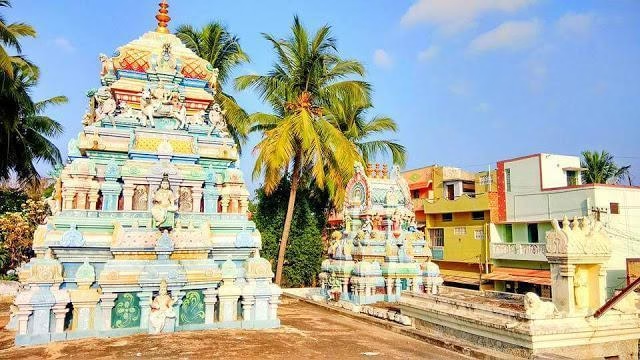
Standing as a testament to the enduring devotion of the Chola era, the Kangeeswarar Temple in Kangeyanallur, Vellore, is a sanctuary dedicated to Lord Shiva. Here, the presiding deity is worshipped as Kangeeswarar (the Lord who holds the bow), representing the cosmic protector. The Goddess is known as Kamakshi Amman. The temple houses a Swayambhu Lingam (a self-manifested lingam), which is believed to have emerged naturally from the earth, radiating immense spiritual energy.

Phalaśruti (Spiritual Benefits): Devotees flock to this ancient shrine not merely for sightseeing, but for deep spiritual cleansing. It is traditionally believed that worshipping Kangeeswarar here helps in:
- Cleansing Ancestral Karma: Performing rites here is said to alleviate Pitru Dosha (ancestral afflictions).
- Removal of Obstacles: As Lord Shiva is the remover of obstacles, regular darshan is believed to clear paths to prosperity.
- Relief from Planetary Afflictions: Specific prayers here are sought to mitigate the negative effects of Kala Sarpa Dosha.
Historical Origins & Scriptural Legend
The Chola Legacy
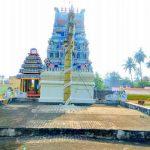
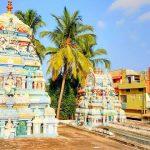
According to temple records and epigraphic evidence found within the sanctum, the Kangeeswarar Temple was constructed during the supremacy of the Chola Dynasty (circa 10th–12th century CE). While the core structure dates back centuries, much of the present compound walls, pillared halls, and the towering Rajagopuram (main gateway) are the result of extensive renovations carried out in the 20th century. These renovations were funded largely by the contributions of the local community and philanthropists who wished to preserve the temple’s Dravidian heritage.
Scriptural Legend
The Sthala Purana (local lore) associated with Kangeyanallur is deeply rooted in the epic Ramayana. Legend holds that Lord Rama, the avatar of Vishnu, performed Shiva Puja at this very site to absolve himself of the Brahmahatya Dosha (the sin of killing Ravana, a Brahmin). It is said that Rama installed the Lingam here and worshipped it with great fervor before proceeding south. The name “Kangeeswarar” is derived from Kinga (Bow) and Ishwarar (God), signifying the Lord as the wielder of the bow, mirroring Rama’s attributes.
Architectural Marvels
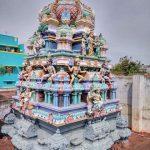
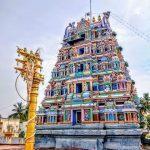
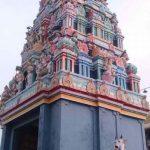
The temple is a classic example of the Dravidian style of architecture. It follows the principles of Vastu Shastra, ensuring the flow of energy aligns with the cardinal directions.
- Sanctum (Garbhagriha): The inner sanctum houses the Swayambhu Lingam. The Shikhara (tower) above the sanctum follows the Dravida vimana style, distinct from the Nagara style of North India.
- Mandapas: The temple features a spacious Maha Mandapa (great hall) and an Artha Mandapa. The pillars are intricately carved with depictions of deities, dancers, and mythical beasts, showcasing the artistry of the era.
- Niche Sculptures: The outer walls feature Alcoves (Koshtas) containing statues of various deities, including Narthana Ganapati and Dakshinamurthy.
While the temple is not currently listed under UNESCO World Heritage sites, it is protected by the Archaeological Survey of India (ASI) guidelines due to its historical significance.
“Tradition holds that the energy of this temple creates a potent vibration, making it a powerful center for meditation and yoga.”
Darshan & Ritual Logistics
To ensure a seamless pilgrimage experience, devotees are encouraged to check the timetable below. Note that timings may vary slightly during festival seasons.
Daily Timings
| Session | Timing |
|---|---|
| Morning Darshan | 06:00 AM – 12:00 PM |
| Midday Closure | 12:00 PM – 04:30 PM |
| Evening Darshan | 04:30 PM – 08:30 PM |
Key Sevas & Poojas
Various Sevas (ritual services) are performed to honor the deity. Devotees can participate in the following:
- Abhishekam: Ritual bathing of the deity with water, milk, honey, and sandalwood paste. Ideally performed during morning hours.
- Archana: Recitation of hymns and names of the deity. Can be performed individually or for the family.
- Maha Shivaratri: The most significant festival, celebrated with all-night vigils and special Palliyarai Pooja (bedroom rituals).
- Brahmotsavam: Annual temple chariot festival celebrated in the month of Panguni (March–April). Note: The Brahmotsavam here is celebrated one month after the festival at the nearby Subramanyar temple.
Online Seva Booking
In 2026, the temple administration facilitates digital donations for devotees unable to visit physically. While specific government portals manage many Tamil Nadu temples, direct seva booking for Kangeeswarar Temple can often be coordinated through local temple trusts or the HR&CE (Hindu Religious and Charitable Endowments) Department portal.
2026 Festival Dates
- Shivaratri: February 26, 2026
- Panguni Uthiram (Brahmotsavam): April 10 – April 20, 2026 (Approximate)
- Aani Tirumanjanam: June – July 2026 (Specific date based on Tamil Calendar)
Practical Visitor Guidance
Dress Code & Etiquette
As with all active Hindu temples in Tamil Nadu, a strict dress code is enforced:
- Men: Dhoti or trousers with a formal shirt. Vest or undershirts are discouraged.
- Women: Saree, Salwar Kameez, or traditional full-length dresses. Avoid shorts or sleeveless tops.
Photography & Electronics
- Photography: Strictly prohibited inside the inner sanctum (Garbhagriha). Photography is generally allowed in the outer corridors, but flash is restricted.
- Mobile Lockers: The temple typically provides storage facilities for bags and electronics before entry. It is advisable to carry minimal valuables.
- Accessibility: The temple complex is accessible via paved pathways, though the inner sanctum involves a few steps. Wheelchair access is limited to the outer Mandapa.
Crowd Management & Seasonal Advice
- Best Hours: The least crowded time is immediately after opening (6:00 AM) or during the midday break (1:00 PM – 2:00 PM).
- Seasonal Tips:
- Summer (May – June): Vellore experiences high temperatures. Carry a water bottle and an umbrella. Free water dispensers are usually available near the temple exit.
- Monsoon (October – November): Carry rain gear. The stone floors can become slippery; wear shoes with good grip.
Pilgrimage Connectivity
How to Reach Kangeyanallur
The Kangeeswarar Temple is strategically located near the industrial hub of Kangeyanallur, making it accessible from major cities.
- By Air: The nearest airport is Chennai International Airport (MAA), approximately 130 km away. From Chennai, take the NH48 (Chennai-Bangalore Highway) towards Vellore.
- By Rail:
- Katpadi Junction (KPD): 5 km away. This is a major railway junction; trains from Chennai, Bangalore, and Trichy halt here.
- Vellore Cantonment (VLR): 4 km away. Connected to major cities.
- By Road: The temple is located off the Katpadi-Vellore Road (SH9). It is 2.5 km from the Kangeyanallur Road Bus Stop. Frequent town buses and auto-rickshaws are available from Vellore and Katpadi.
Nearby Sacred Sites (Pilgrimage Circuit)
Enhance your spiritual journey by visiting these nearby temples:
- Subramanyar Temple (Kangeyanallur): Located very close to the Kangeeswarar Temple, dedicated to Lord Murugan. The Brahmotsavam here precedes that of Kangeeswarar.
- Jalakandeswarar Temple (Vellore Fort): A stunning temple dedicated to Lord Shiva situated inside the Vellore Fort, surrounded by a moat. (Approx 8 km).
- Yelagiri Hills: While not a temple, this hill station (approx 25 km away) is often visited by pilgrims seeking respite after the darshan, featuring the famous Murugan Temple atop the hills.
Frequently Asked Questions (FAQ)
1. Is there a VIP darshan entry available?
The temple administration prioritizes accessibility for all devotees. While there is no formal VIP ticketing system like large Tirupati-style queues, Special Darshan tickets (often priced nominally) are available at the counter to bypass general queues during peak hours.
2. What are the accommodation options nearby?
Kangeyanallur has several budget lodges and guest houses. For premium accommodation, Vellore city center (approx 6 km) offers numerous hotels and the government-run TTDC (Tamil Nadu Tourism Development Corporation) hotel.
3. Is non-Hindu entry permitted?
Like most Shiva temples in Tamil Nadu governed by the HR&CE department, entry is generally restricted to Hindus. However, it is advisable to check with the temple administration office at the entrance for specific guidelines regarding non-Hindu visitors or tourists.
4. What is the best time to visit to avoid crowds?
Weekdays are generally less crowded than weekends. Visiting on a Tuesday or Wednesday morning before 9:00 AM offers the most peaceful experience. Avoid major festivals like Shivaratri or Panguni Uthiram unless you are prepared for heavy crowds.
5. Is the Kangeeswarar Temple open on all public holidays?
Yes, the temple remains open on most public holidays, including government holidays. However, opening times may be extended or slightly altered during local festivals.
Photo Gallery
Official Contact Details
For specific inquiries regarding rituals or donations:
- Address: Kangeeswarar Temple, Kangeyanallur, Vellore District, Tamil Nadu.
- Phone: +91-94433-XXXXX (Note: Please check local directory for the current office number).
Recent Posts

ओ सांवरे तूने ही मुझको संभाला – Lyrics & Meaning
ओ सांवरे तूने ही मुझको संभाला – A Prayer to Shyam Origin & Spiritual Essence Why This Bhajan Resonates Devotees chant this when overwhelmed by life’s storms—the refrain ‘तूने ही मुझको संभाला’ is the soul’s sigh of relief: “You…

कथा ये है महाराज मेरे की – Lyrics & Meaning
कथा ये है महाराज मेरे की छत्रपति संभाजी महाराज – A Prayer to Chhatrapati Sambhaji Maharaj Origin & Spiritual Essence Why This Bhajan Resonates Devotees chant this when their spirit feels tested—its powerful refrain “महाराज मेरे” is a soul’s…

Rigveda Samhita Yathartha Anuvada (ऋग्वेद संहिता यथार्थ अनुवाद) – Complete Set with Anvayartha & Hindi/English Translation
The Rigveda is the oldest surviving scripture of humanity and the foundational text of Sanātana Dharma. For serious students, scholars, UPSC aspirants studying ancient Indian history, Sanskrit learners, and spiritual seekers, a precise and grammatically structured translation is indispensable.…

आना भी अकेला है जाना भी अकेला है – Lyrics & Meaning | BharatTemples
आना भी अकेला है जाना भी अकेला है – A Prayer to the Divine Witness Origin & Spiritual Essence Why This Bhajan Resonates Devotees turn to this bhajan in moments of deep reflection—when life’s attachments begin to ache. The…

माता शेरावाली के द्वार जो भी जाता है – Lyrics & Meaning
माता शेरावाली के द्वार जो भी जाता है – A Prayer to Maa Sherawali Origin & Spiritual Essence Why This Bhajan Resonates Devotees turn to this bhajan in times of fear or uncertainty—its promise that no one leaves Maa’s…

मार लेना सपणी उबार लेणा भवरा – Lyrics & Meaning
मार लेना सपणी उबार लेणा भवरा – A Prayer to the Divine Beloved Origin & Spiritual Essence Why This Bhajan Resonates Devotees chant this in moments of deep vulnerability—its cry of “मार लेना सपणी, उबार लेणा भवरा” is the…

हमें श्याम सुंदर भरोसा तुम्हारा – Lyrics & Meaning
हमें श्याम सुंदर भरोसा तुम्हारा – A Prayer to Shyam Sundar Origin & Spiritual Essence Why This Bhajan Resonates Devotees chant this when feeling alone—its refrain ‘de do sahara’ is the soul’s cry for divine support. Lyrics in Hindi…

Mere Satguru Ne Di Thi Davai Lyrics in Hindi & Meaning
Mere Satguru Ne Di Thi Davai: Invoking the Guru’s Liberating Wisdom This soul-stirring bhajan venerates the Satguru (True Spiritual Master) as the divine physician who dispenses the only remedy for life’s deepest sufferings. Composed by Sant Karmaveer Tufani, it…

Janm Diyo Thari Maa Dukh Dekhiyo Lyrics in Hindi & Meaning
जन्म दियो थारी माँ दुख देखियो (Maa’s Grief Upon Birthing You) This soul-stirring Chetavani Bhajan (admonitory hymn) is addressed to the Divine Mother (Maa) – a call for repentance when children forget their filial duties in the dark age…
Bhadi Sabha Mein Thane Manaun Lyrics in Hindi & Meaning
Bhadi Sabha Mein Thane Manaun: Invoking the Spear-Wielding Mother Mata Bhawani (श्री ज्वाला भवानी), the fiery manifestation of Shakti worshipped as the Protector of Dharma in Her Dhaulagarh sanctum. Origin & Spiritual Essence Composed in Rajasthani folk tradition by…