
Contents
Introduction & Spiritual Essence
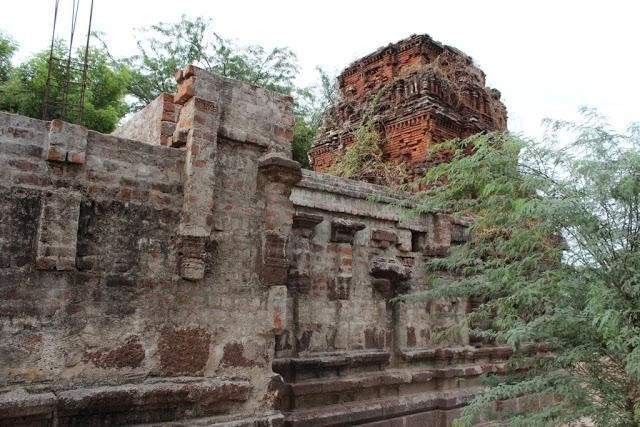
Standing as a timeless sentinel of faith in Thiruvur, the Kariamanicka Varadharaja Perumal Temple is a revered Divya Desam (holy abode of Vishnu) located in the Thiruvallur district of Tamil Nadu. This ancient shrine is dedicated to Lord Varadharaja Perumal (an incarnation of Lord Vishnu) in his seated posture, blessing devotees as Kariamanicka Perumal. The presiding deity is often compared to the gem among the collective Himalayan ranges—radiating splendor and purity.
The consort deity here is Kanakavalli Thayar (Goddess Lakshmi), whose presence adds to the temple’s sanctity. According to temple records and devotee belief, visiting this shrine is essential for those seeking the removal of Karma Dosham (ancestral sins). The Phalaśruti (beneficial result) of a darshan here is believed to grant mental clarity and foster familial harmony.
Historical Origins & Scriptural Legend
The architectural soul of the temple dates back to the era of the Pallava Kings. While the exact date of construction is documented through epigraphy as being over 1200 years old, the temple underwent significant renovation in the late 16th century under the patronage of local chieftains loyal to the Vijayanagara Empire.
According to local tradition and the Sthala Purana, the name “Kariamanicka” is derived from the Sanskrit word “Giri,” meaning mountain. Legend states that Lord Vishnu manifested here to bless the sage Narada, who arrived seeking a spiritually elevated spouse. The Lord directed Narada to Kanakavalli, leading to a divine union. Another popular folklore suggests that the crystal-clear waters of the temple tank were once a gift from Indra, the King of Celestials.
Architectural Marvels
The temple showcases the quintessential Dravidian architectural style, characterized by towering gateways (Gopurams) and enclosed courtyards. Unlike the tall, curving shikharas of North Indian temples, the Vimana (tower above the sanctum) here features a stepped pyramidal structure typical of the Pallava dynasty.
- The Sanctum Sanctorum: The inner shrine houses the swayambhu (self-manifested) idol of Lord Varadharaja Perumal in a seated yoga posture.
- Mandapas: The temple boasts a spacious Maha Mandapa (pillared hall) featuring intricate bas-reliefs depicting scenes from the Ramayana and Mahabharata.
- Carvings: The pillars feature lion mounts (Yali) and depictions of deities in various avatars. Although not designated as a UNESCO heritage site, the temple is recognized by the Hindu Religious and Charitable Endowments (HR&CE) Department of Tamil Nadu for its historical value.
Darshan & Ritual Logistics
The temple priests follow the Thenkalai tradition of Vaishnavism. Daily rituals include the Thiruvabharanam (sacred procession) and Palliyarai Pooja.
Daily Temple Timings (2026)
Timings are subject to change during festival days. Devotees are advised to confirm via the official contact number before visiting.
| Session | Timings | Ritual Details |
|---|---|---|
| Morning | 6:00 AM – 12:00 PM | Opening, Suprabhatam, Abhishekam, Deeparadhana |
| Evening | 4:00 PM – 8:00 PM | Nadarshanam, Sayaratchai Pooja, Palliyarai Seva |
Key Sevas and Booking
Devotees can perform Abhishekam (sacred bathing) and Archana (recitation of holy names) for Lord Varadharaja Perumal and Kanakavalli Thayar. Online booking for sevas is typically handled through the Tamil Nadu HR&CE portal (TNEGA).
2026 Major Festival Calendar
- Brahmotsavam (Annual Float Festival): April 22nd – April 30th, 2026 (Tamil Month of Chithirai).
- Garuda Sevai: April 27th, 2026 (The main procession of Lord Varadharaja Perumal on Garuda Vahana).
- Pavitrotsavam (Festival of Purity): August 15th – August 17th, 2026.
- Vaikuntha Ekadashi: December 28th, 2026.
Practical Visitor Guidance
To ensure a peaceful darshan and respect the sanctity of the temple, please adhere to the following guidelines:
- Dress Code: Traditional attire is mandatory for all devotees. Men should wear dhotis or formal trousers with shirts; women should wear sarees, salwar kameez, or long skirts. Jeans and shorts are strictly prohibited.
- Photography & Mobiles: Photography is strictly prohibited inside the sanctum sanctorum. Most local temples require mobile phones to be switched off or deposited at the counter before entering the inner shrine.
- Crowd Management: The temple is generally less crowded on weekdays. The best time to visit is the early morning slot (6:00 AM – 7:30 AM). During summer (April–May), carry a water bottle and an umbrella as the queues extend outdoors.
- Accessibility: The temple premises is built on flat ground, making it accessible for senior citizens via wheelchair.
Pilgrimage Connectivity
How to Reach Thiruvur
The temple is strategically located on the Chennai–Thiruvallur highway.
- By Air: Chennai International Airport (MAA) is the nearest airport, approximately 39 km away.
- By Rail: While there is no railway station in Thiruvur itself, the Sevvapet Railway Station (7 km) and Tirur Railway Station (6 km) are the nearest. However, Thiruvallur Railway Station (10 km) offers better connectivity.
- By Road: Thiruvur is situated on NH-48. Frequent buses from Chennai (CMBT or Koyambedu) and Avadi ply directly to Thiruvur.
Nearby Sacred Sites
Complete your pilgrimage by visiting these divinely connected temples in the vicinity:
- Thiruvur Sringandeeswarar Temple: Located directly opposite to the Varadharaja Perumal temple; dedicated to Lord Shiva. It is considered the ‘Kshetrapala’ (guardian) temple of Thiruvur.
- Adhi Kesava Perumal Temple (Putlur): Located 4 km away, this is a Divya Desam dedicated to Lord Vishnu sleeping on the serpent Adisesha.
- Thiruvallur Veeraraghava Swamy Temple: Located 10 km away, this is the most prominent Divya Desam in the district, known for its medicinal waters.
Frequently Asked Questions
1. Is there a VIP darshan entry available?
Yes, the temple administration offers a special darshan pass, often called the “Seva Thittu,” which allows devotees to bypass the general queue during non-peak hours. These can be booked online via the HR&CE website or purchased at the temple counter.
2. What is the history of the name Kariamanicka?
The name is a Tamil-Sanskrit composite. “Giri” (Mountain) refers to the Lord as the supreme seat of power, and “Manicka” refers to the gem-like radiance of the deity, comparing him to the finest ruby found in the Himalayan mines.
3. Are food facilities available at the temple?
While there is no large complex restaurant attached to the temple, the temple trust occasionally organizes Annam (free food) during festivals. Small eateries serving vegetarian meals are available in the Thiruvur town market, just a few minutes’ walk from the temple.
4. Is the temple open on all public holidays?
Yes, the temple remains open on all government and public holidays, including Tamil New Year and Pongal. However, timings may be extended during major festivals like Brahmotsavam.
5. Can I leave footwear inside the temple?
The temple management provides a dedicated footwear storage area (often managed by the Thiruvur Sringandeeswarar temple trust jointly) for a nominal fee. It is advisable to wear slippers that are easy to remove and keep with you if you prefer.
Recent Posts

आना भी अकेला है जाना भी अकेला है – Lyrics & Meaning | BharatTemples
आना भी अकेला है जाना भी अकेला है – A Prayer to the Divine Witness Origin & Spiritual Essence Why This Bhajan Resonates Devotees turn to this bhajan in moments of deep reflection—when life’s attachments begin to ache. The…

माता शेरावाली के द्वार जो भी जाता है – Lyrics & Meaning
माता शेरावाली के द्वार जो भी जाता है – A Prayer to Maa Sherawali Origin & Spiritual Essence Why This Bhajan Resonates Devotees turn to this bhajan in times of fear or uncertainty—its promise that no one leaves Maa’s…

मार लेना सपणी उबार लेणा भवरा – Lyrics & Meaning
मार लेना सपणी उबार लेणा भवरा – A Prayer to the Divine Beloved Origin & Spiritual Essence Why This Bhajan Resonates Devotees chant this in moments of deep vulnerability—its cry of “मार लेना सपणी, उबार लेणा भवरा” is the…

हमें श्याम सुंदर भरोसा तुम्हारा – Lyrics & Meaning
हमें श्याम सुंदर भरोसा तुम्हारा – A Prayer to Shyam Sundar Origin & Spiritual Essence Why This Bhajan Resonates Devotees chant this when feeling alone—its refrain ‘de do sahara’ is the soul’s cry for divine support. Lyrics in Hindi…

Mere Satguru Ne Di Thi Davai Lyrics in Hindi & Meaning
Mere Satguru Ne Di Thi Davai: Invoking the Guru’s Liberating Wisdom This soul-stirring bhajan venerates the Satguru (True Spiritual Master) as the divine physician who dispenses the only remedy for life’s deepest sufferings. Composed by Sant Karmaveer Tufani, it…

Janm Diyo Thari Maa Dukh Dekhiyo Lyrics in Hindi & Meaning
जन्म दियो थारी माँ दुख देखियो (Maa’s Grief Upon Birthing You) This soul-stirring Chetavani Bhajan (admonitory hymn) is addressed to the Divine Mother (Maa) – a call for repentance when children forget their filial duties in the dark age…
Bhadi Sabha Mein Thane Manaun Lyrics in Hindi & Meaning
Bhadi Sabha Mein Thane Manaun: Invoking the Spear-Wielding Mother Mata Bhawani (श्री ज्वाला भवानी), the fiery manifestation of Shakti worshipped as the Protector of Dharma in Her Dhaulagarh sanctum. Origin & Spiritual Essence Composed in Rajasthani folk tradition by…
श्याम सुन्दरवा छोटे छोटे कनुवा Lyrics & Meaning
श्याम सुन्दरवा छोटे छोटे कनुवा (Shyam Sundarva Chhote Chhote Kanuva) is a heartfelt invocation to Lord Krishna in his most enchanting form—Shyam Sundar (the dark, beautiful one). This bhajan is a plea for the divine child Kanha to grace…
Maat Meri Chintapurni Lyrics in Hindi & Meaning
Maat Meri Chintapurni is a heartfelt devotional prayer dedicated to Maa Chintapurni, a form of the Divine Mother. She is revered as the remover of worries and the granter of wishes, especially venerated in the Himalayan region of Himachal…
थारी रे नदियां का ढावा पे खीची राजा Lyrics & Meaning
खीची राजा का अद्भुत युद्ध: एक शौर्य गाथा यह भजन एक पौराणिक या ऐतिहासिक शूरवीर राजा की वीरता का वर्णन करता है, जो प्रायः गुजराती लोक संस्कृति में लोककथाओं का हिस्सा है। इसकी रचना दुर्गेश कटारा ने की है…