
Contents
- 1 Kasi Viswanathar Temple: A Definitive Pilgrimage Guide to Palaiyur
Kasi Viswanathar Temple: A Definitive Pilgrimage Guide to Palaiyur
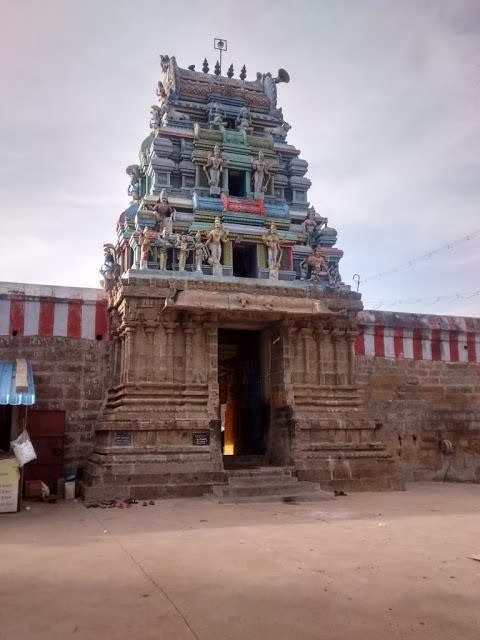
As the Lead Heritage Architect for bharattemples.com, I invite you to explore the Kasi Viswanathar Temple in Palaiyur. Nestled in the Tirupattur region of Trichy District, this ancient Shiva Kshetram offers a profound spiritual experience distinct from the bustling crowds of Kashi (Varanasi). Here, the divine presence is anchored by the Jeeva Samadhi of Sage Vyagrapada, one of the most revered Nayanmars.
| Date built: | Chola Era (Unknown specific century) |
|---|---|
| Deity: | Kasi Viswanathar (Shiva), Mother Gnanambika |
| Architectural style: | Dravidian architecture |
| Major festivals | Shivaratri, Brahmotsavam, Sadhaya Nakshatram |
| Locale: | Palaiyur, Tirupattur |
| District:: | Trichy (Tiruchirappalli) |
| Address: | Kasi Viswanathar Temple,Palaiyur, Tirupattur,Trichy District – 621104 |
| Phone | +91 431 2650439 |
1. Introduction & Spiritual Essence
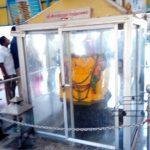
The Kasi Viswanathar Temple is an architectural testament to the Dravidian style and serves as a spiritual beacon for devotees seeking liberation from ancestral karma. The temple is renowned not just as a Shiva shrine, but as the Punar Janma Sthalam (rebirth alleviator) due to the presence of Sage Vyagrapada’s Jeeva Samadhi (living tomb).
Phalaśruti: Why Devotees Visit
- Ancestral Deliverance: Performing Tharpanam here is believed to be equivalent to performing rites in Kashi, offering Moksha to ancestors.
- Removal of Obstacles: Devotees visit to nullify the ill-effects of Rahu-Kethu Dosham and planetary afflictions.
- Sanctity of the Theertham: The Pulipaichi Theertham (temple tank) is considered highly purifying, possessing miraculous healing properties.
2. Historical Origins & Scriptural Legend
According to temple records and regional historical surveys, the temple was originally constructed during the Chola Dynasty. While the exact year of construction is unrecorded, the inscriptions and the structural integrity suggest significant antiquity, dating back several centuries. The temple has undergone periodic renovations to preserve its sanctity and structural stability.
The Legend of Sage Vyagrapada
The Sthala Purana (local oral legend) is dominated by Sage Vyagrapada, who was blessed by Lord Shiva with tiger feet to navigate the dense forests to gather flowers for worship. It is held that Vyagrapada attained his Jeeva Samadhi within the temple precincts, merging eternally with the deity he worshipped.
The Creation of Pulipaichi Theertham
Tradition holds that during a severe drought, Sage Vyagrapada struggled to obtain water for bathing the Shiva Lingam. He witnessed Indra flying overhead on his elephant, Airavata, carrying water from Mount Kailash to the Thiruvanaikaval Jambukeswarar Temple. When Indra refused to share the water, the sage’s fury caused the earth to split, miraculously bringing forth the sacred Pulipaichi Theertham.
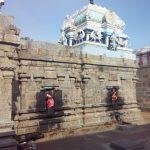
Later, Lord Shiva at Thiruvanaikaval inquired why Indra was late. Upon hearing of the incident, Shiva commanded Indra to offer the water to the sage. Vyagrapada, already satisfied by the divine spring, refused. In reverence, Indra and the elephant then performed the abhishekam (holy bath) of the deity at this Palaiyur temple—an artistic depiction of this event is carved on the temple’s Gopuram.
Curse of Ayyanar: Local legends speak of a curse once placed upon the Brahmins of Palaiyur by Ayyanar, leading to the village’s temporary desolation. However, recent renovations and the Kumbabishekam (consecration) of the Ayyanar shrine within the complex have restored the temple’s vibrancy and communal devotion.
3. Architectural Marvels
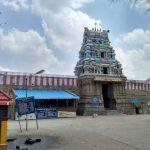
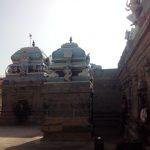
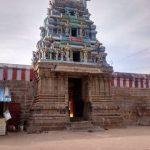
The temple exemplifies the Dravidian style of temple architecture, characterized by its imposing Gopuram (gateway tower), enclosed Prakaram (corridors), and a central shrine housing the Garbhagriha.
- The Shikhara (Tower): The temple features a modest but intricately carved Shikhara above the sanctum, adorned with miniature niches depicting deities from the Hindu pantheon.
- Mandapas: The Maha Mandapa (main hall) is supported by robust stone pillars featuring sculptures of Dwarapalakas (guardian deities). The flooring utilizes traditional stone that remains cool even in peak summer.
- Preservation Status: While the temple holds immense cultural value, it is a protected heritage site maintained by the HR&CE (Hindu Religious and Charitable Endowments) Department of Tamil Nadu.
4. Darshan & Ritual Logistics
Visitors are encouraged to participate in the daily rituals. The temple follows standard Agamic timings. Abhishekam is performed with milk, coconut water, and sandalwood paste.
Daily Timings
| Session | Timings |
|---|---|
| Morning Darshan | 07:00 AM – 12:00 PM |
| Afternoon Break | 12:00 PM – 04:00 PM |
| Evening Darshan | 04:00 PM – 08:00 PM |
Key Sevas and 2026 Festivals
Note: Booking procedures for major festivals are usually announced 30 days prior via the local temple office, as online systems are not fully integrated for smaller Chola-era temples.
- Abhishekam: Daily, usually performed in the morning.
- Archana: Available for individual and family names.
- 2026 Festival Calendar (Tentative):
- Maha Shivaratri: February 26, 2026.
- Pradosham: Bi-monthly (13th and 28th of every month).
- Sadhaya Nakshatram: Occurs monthly (specific dates vary; check the local Panchangam).
5. Practical Visitor Guidance
Ensuring a smooth pilgrimage requires adherence to specific protocols.
- Dress Code: Traditional attire is mandatory. Men should wear Dhotis or trousers (no shorts). Women should wear sarees, salwar kameez, or long skirts.
- Photography: Photography is generally permitted in the outer corridors but prohibited inside the Garbhagriha (sanctum sanctorum).
- Crowd Management: Thursdays and Full Moon days (Pournami) witness higher footfall. For a peaceful Darshan, visit between 9:00 AM and 11:00 AM on weekdays.
- Seasonal Advice:
- May (Summer): Temperatures in Trichy exceed 40°C. Carry an umbrella and water bottles (the temple pond water is potable only after boiling/filtration).
- October-December (Monsoon): The temple tank overflows, offering a scenic view, but the stone floors may be slippery.
6. Pilgrimage Connectivity
The temple is strategically located near the Chennai-Trichy Highway (NH 83), making it accessible via road.
How to Reach
- By Air: The nearest airport is Trichy International Airport (TRZ), approximately 38 km away.
- By Rail: The nearest major railway junction is Trichy (Tiruchirappalli), about 37 km from the temple. Pichandar Kovil (23 km) and Srirangam (28 km) are also viable railheads.
- By Road: From Trichy, take the Chennai highway. Pass Samayapuram Mariamman Temple and take a left turn at Siruganur. The temple is roughly 5 km from Siruganur and 1 km from the Tirupattur Brahma Temple.
Nearby Sacred Sites (Pilgrimage Circuit)
Extend your spiritual journey by visiting these nearby shrines:
- Tirupattur Brahma Temple: Located just 1 km away; one of the rare temples dedicated to Lord Brahma in South India.
- Srirangam Ranganathaswamy Temple: A 28 km drive to the largest functioning Hindu temple in the world.
- Samayapuram Mariamman Temple: A 17 km drive to one of the most powerful village deities in Tamil Nadu.
Photo Gallery

7. Frequently Asked Questions (FAQ)
1. What is the history of the Kasi Viswanathar Temple?
The temple was built by the Chola dynasty. According to legend, it is the site where Sage Vyagrapada created the temple tank (Pulipaichi Theertham) and eventually attained Jeeva Samadhi.
2. What are the temple opening hours?
The temple is open from 7:00 AM to 12:00 PM in the morning and 4:00 PM to 8:00 PM in the evening.
3. Is there a VIP darshan entry available?
As a smaller shrine under the HR&CE department, there is no formal online VIP ticket system. However, devotees can contact the temple office (+91 431 2650439) for special arrangements during non-peak hours.
4. Where is the Jeeva Samadhi of Vyagrapada located?
It is situated within the temple complex itself. Look for a distinct shrine or structure (often behind the main sanctum or in the prakaram) dedicated to the sage.
5. How far is the temple from Trichy?
It is approximately 37 km from Trichy Central Railway Station and 38 km from the Trichy Airport. The drive takes about 45 minutes to 1 hour depending on traffic.
Recent Posts

Shri Kaamkoteeshwar Mandir, Varanasi – History & Significance
In the heart of Kashi, the eternal city of Lord Shiva, where the Ganges flows with celestial grace, stands the Shri Kaamkoteeshwar Mandir. This sacred Sannidhi is not merely a temple but a profound spiritual bridge between the Northern…

ओ सांवरे तूने ही मुझको संभाला – Lyrics & Meaning
ओ सांवरे तूने ही मुझको संभाला – A Prayer to Shyam Origin & Spiritual Essence Why This Bhajan Resonates Devotees chant this when overwhelmed by life’s storms—the refrain ‘तूने ही मुझको संभाला’ is the soul’s sigh of relief: “You…

कथा ये है महाराज मेरे की – Lyrics & Meaning
कथा ये है महाराज मेरे की छत्रपति संभाजी महाराज – A Prayer to Chhatrapati Sambhaji Maharaj Origin & Spiritual Essence Why This Bhajan Resonates Devotees chant this when their spirit feels tested—its powerful refrain “महाराज मेरे” is a soul’s…

Rigveda Samhita Yathartha Anuvada (ऋग्वेद संहिता यथार्थ अनुवाद) – Complete Set with Anvayartha & Hindi/English Translation
The Rigveda is the oldest surviving scripture of humanity and the foundational text of Sanātana Dharma. For serious students, scholars, UPSC aspirants studying ancient Indian history, Sanskrit learners, and spiritual seekers, a precise and grammatically structured translation is indispensable.…

आना भी अकेला है जाना भी अकेला है – Lyrics & Meaning | BharatTemples
आना भी अकेला है जाना भी अकेला है – A Prayer to the Divine Witness Origin & Spiritual Essence Why This Bhajan Resonates Devotees turn to this bhajan in moments of deep reflection—when life’s attachments begin to ache. The…

माता शेरावाली के द्वार जो भी जाता है – Lyrics & Meaning
माता शेरावाली के द्वार जो भी जाता है – A Prayer to Maa Sherawali Origin & Spiritual Essence Why This Bhajan Resonates Devotees turn to this bhajan in times of fear or uncertainty—its promise that no one leaves Maa’s…

मार लेना सपणी उबार लेणा भवरा – Lyrics & Meaning
मार लेना सपणी उबार लेणा भवरा – A Prayer to the Divine Beloved Origin & Spiritual Essence Why This Bhajan Resonates Devotees chant this in moments of deep vulnerability—its cry of “मार लेना सपणी, उबार लेणा भवरा” is the…

हमें श्याम सुंदर भरोसा तुम्हारा – Lyrics & Meaning
हमें श्याम सुंदर भरोसा तुम्हारा – A Prayer to Shyam Sundar Origin & Spiritual Essence Why This Bhajan Resonates Devotees chant this when feeling alone—its refrain ‘de do sahara’ is the soul’s cry for divine support. Lyrics in Hindi…

Mere Satguru Ne Di Thi Davai Lyrics in Hindi & Meaning
Mere Satguru Ne Di Thi Davai: Invoking the Guru’s Liberating Wisdom This soul-stirring bhajan venerates the Satguru (True Spiritual Master) as the divine physician who dispenses the only remedy for life’s deepest sufferings. Composed by Sant Karmaveer Tufani, it…

Janm Diyo Thari Maa Dukh Dekhiyo Lyrics in Hindi & Meaning
जन्म दियो थारी माँ दुख देखियो (Maa’s Grief Upon Birthing You) This soul-stirring Chetavani Bhajan (admonitory hymn) is addressed to the Divine Mother (Maa) – a call for repentance when children forget their filial duties in the dark age…