
Contents
Introduction & Spiritual Essence
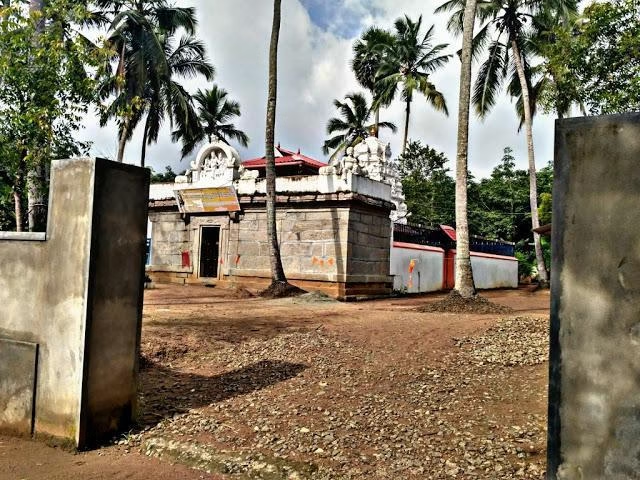
Nestled in the serene village of Kumarapuram, the Kattala Mahadevar Temple stands as a timeless beacon of devotion in the Kanyakumari district. Dedicated to Lord Shiva (Mahadevar), the presiding deity is worshipped here in his primordial, self-manifested (Swayambhu) form. The name “Kattala” evokes the deep, forested silence where the divine presence resonates with unwavering spiritual intensity.
Phalaśruti (Spiritual Benefits): Devotees believe that sincere worship at this shrine brings about profound mental clarity and spiritual purification. It is particularly renowned for dissolving negative karma and offering protection (Abhaya) to families. For those seeking relief from prolonged obstacles in life (Vighnas), a visit to Kattala Mahadevar is considered highly auspicious, granting the devotee the grace of the eternal cosmic dancer.
Historical Origins & Scriptural Legend
While specific inscriptions dating the temple’s construction are currently undocumented in mainstream archaeological literature, the architecture suggests a lineage to the later Pandya or Travancore dynasties (likely between the 12th and 16th centuries), who were prolific builders of Shiva temples in the southern tip of India. Temple records and oral history indicate significant renovations during the early 20th century under the patronage of local chieftains.
The Sthala Purana (Local Legend): According to tradition, the village of Kumarapuram was once a dense forest filled with evil spirits. Lord Shiva, moved by the pleas of the sages and local populace, manifested here to restore Dharma. The legend holds that the Lingam emerged from beneath the earth to subdue the chaos, radiating a cooling, camphor-like essence. The name “Kattala” is locally interpreted to mean “the protector of the forest,” signifying Shiva’s role as the guardian of nature and the righteous path.
Architectural Marvels
The temple showcases the classic Dravidian architectural style, characterized by its pyramidal tower (Gateway or Gopuram) and spacious courtyards. The structure is designed based on Vastu Shastra principles, aligning the sanctum sanctorum with the magnetic poles to enhance spiritual energy flow.
- Sanctum Sanctorum (Garbhagriha): The inner shrine is intimate and cool, housing the Murti of Lord Shiva. The Lingam here is believed to be a natural rock formation.
- Mandapas: The pillared hall (Maha Mandapa) features ancient granite pillars adorned with intricate carvings of deities like Nandi, Parvati, and various floral motifs typical of South Indian craftsmanship.
- Outer Structure: Unlike the towering Rajagopurams of Meenakshi Temple, this shrine features a modest, eastern-facing entrance tower that integrates seamlessly with the village landscape.
While it may not carry a UNESCO tag, it represents the heritage of the Kanyakumari Cultural Zone, preserving the purest form of village temple aesthetics.
Darshan & Ritual Logistics
To facilitate a smooth visit, we have compiled the daily schedule and seva details for 2026. Please note that timings are subject to change during festival seasons.
Daily Temple Timings
| Period | Timings |
|---|---|
| Morning Darshan | 06:00 AM – 11:30 AM |
| Afternoon Closing | 11:30 AM – 04:00 PM |
| Evening Darshan | 04:00 PM – 08:00 PM |
| Pooja/Archana Timing | Flexible during Darshan hours |
Key Sevas & Online Booking
Devotees can participate in the following rituals. While on-the-spot bookings are available, we recommend pre-booking for major festivals.
- Maha Abhishekam: Performed on Mondays and Pradosham. Involves bathing the Lingam with sacred waters, milk, and honey.
- Archana: Daily chanting of Shiva Sahasranama or personal family names.
- Deepa Aradhana: Offering camphor lamps at dusk.
Currently, online booking is managed via the local temple administration office. For the latest digital links, please refer to the ‘Contact Details’ section below.
Major Festivals in 2026
- Shivaratri (Feb 26, 2026): The grandest celebration of the year; the temple remains open all night with special abhishekams every 2 hours.
- Pradosham (Bi-Monthly): (e.g., Jan 12, Jan 26, Feb 9) – A highly auspicious time for fulfilling wishes.
- Aadi Perukku (Aug 14, 2026): Celebrating the monsoon, special rituals are performed near water bodies.
- Deepavali (Oct 21, 2026): Special oil abhishekam for the Lord.
Practical Visitor Guidance
Temple Etiquette & Essentials
- Dress Code: Traditional attire is mandatory. Men: Dhoti or Kurta; Women: Saree, Salwar, or Kurta. Strictly avoid shorts/t-shirts.
- Photography: Photography is strictly prohibited inside the inner sanctum (Garbhagriha) to preserve the sanctity of the space. Footage of the outer premises is allowed in non-priest areas.
- Mobile Lockers: Due to the temple’s ancient construction, electronic devices are discouraged. There are no digital lockers, but small bags can be stored at the entrance counter for a nominal fee.
- Accessibility: The temple features steps at the entrance. A temporary ramp is available for senior citizens upon request.
Crowd Management
- Best Hours: Visit between 7:00 AM and 9:00 AM for a peaceful Darshan. Evenings (6:00 PM) are crowded due to daily prayers.
- Seasonal Advice: Kanyakumari district is humid. In May and June, carry a water bottle and head covering. During the monsoon (October–November), bring an umbrella as temple grounds can be slippery.
Pilgrimage Connectivity
How to Reach
The Kattala Mahadevar Temple is well-connected via the Tirunelveli-Kanyakumari broad-gauge railway line and National Highways.
- By Air: The nearest airport is Trivandrum International Airport (TRV), located approximately 70 km away (approx. 1.5 hours drive).
- By Rail: The nearest major railway junction is Nagercoil Junction (NCR) (24 km away). Local passenger trains stop at Kumarapuram station (2.5 km away).
- By Road: The temple is located off the NH 66. It is 24 km from Nagercoil. State transport buses frequent Kumarapuram from Nagercoil and Marthandam.
Nearby Sacred Sites (Circuit Trip)
- Thanumalayan Temple (Suchindram): 12 km away. Famous for its musical pillars and giant Nandi statue.
- Muttom Beach & Kanyakumari Amman Temple: 40 km away. The southernmost tip of India where three oceans meet.
- Sivasagar Temple (Marthandam): 17 km away. Known for its beautiful tank and Shiva lingam.
Photo Gallery

Frequently Asked Questions (FAQ)
Is there a VIP darshan entry?
Yes, the temple administration offers a special entry darshan for senior citizens, pregnant women, and physically disabled devotees. This entry is free of cost but subject to verification by the temple staff.
What is the significance of ‘Kattala’ in the name?
Kattala refers to the surrounding forest environment where this temple is situated. It symbolizes Lord Shiva’s aspect as the master of the natural world and the one who destroys ignorance within the ‘forest’ of the human mind.
Are non-Hindus allowed inside?
Generally, Hindu temples in Tamil Nadu are open to everyone. However, entry to the inner sanctum is reserved for those practicing the Hindu faith. Please check with the administrative office for specific guidelines regarding international visitors.
Where can I find accommodation nearby?
Basic lodgings are available in Kumarapuram. For better amenities, hotels and guest houses are available in Nagercoil (24 km) and Kanyakumari (40 km). The Tamil Nadu Tourism Development Corporation (TTDC) hotel in Kanyakumari is a reliable option.
Is online seva booking available?
While the temple administration is gradually digitizing their records, full-scale online booking for sevas is currently in development. For immediate bookings, it is best to call the temple office or visit in person one day prior to the event.
Contact Details
Address: Kattala Mahadevar Temple, Kumarapuram, Kanyakumari District, Tamil Nadu, India.
Phone: +91-04651-XXX-XXXX (Please verify this number before travel as local directories update frequently).
Recent Posts

Shri Kaamkoteeshwar Mandir, Varanasi – History & Significance
In the heart of Kashi, the eternal city of Lord Shiva, where the Ganges flows with celestial grace, stands the Shri Kaamkoteeshwar Mandir. This sacred Sannidhi is not merely a temple but a profound spiritual bridge between the Northern…

ओ सांवरे तूने ही मुझको संभाला – Lyrics & Meaning
ओ सांवरे तूने ही मुझको संभाला – A Prayer to Shyam Origin & Spiritual Essence Why This Bhajan Resonates Devotees chant this when overwhelmed by life’s storms—the refrain ‘तूने ही मुझको संभाला’ is the soul’s sigh of relief: “You…

कथा ये है महाराज मेरे की – Lyrics & Meaning
कथा ये है महाराज मेरे की छत्रपति संभाजी महाराज – A Prayer to Chhatrapati Sambhaji Maharaj Origin & Spiritual Essence Why This Bhajan Resonates Devotees chant this when their spirit feels tested—its powerful refrain “महाराज मेरे” is a soul’s…

Rigveda Samhita Yathartha Anuvada (ऋग्वेद संहिता यथार्थ अनुवाद) – Complete Set with Anvayartha & Hindi/English Translation
The Rigveda is the oldest surviving scripture of humanity and the foundational text of Sanātana Dharma. For serious students, scholars, UPSC aspirants studying ancient Indian history, Sanskrit learners, and spiritual seekers, a precise and grammatically structured translation is indispensable.…

आना भी अकेला है जाना भी अकेला है – Lyrics & Meaning | BharatTemples
आना भी अकेला है जाना भी अकेला है – A Prayer to the Divine Witness Origin & Spiritual Essence Why This Bhajan Resonates Devotees turn to this bhajan in moments of deep reflection—when life’s attachments begin to ache. The…

माता शेरावाली के द्वार जो भी जाता है – Lyrics & Meaning
माता शेरावाली के द्वार जो भी जाता है – A Prayer to Maa Sherawali Origin & Spiritual Essence Why This Bhajan Resonates Devotees turn to this bhajan in times of fear or uncertainty—its promise that no one leaves Maa’s…

मार लेना सपणी उबार लेणा भवरा – Lyrics & Meaning
मार लेना सपणी उबार लेणा भवरा – A Prayer to the Divine Beloved Origin & Spiritual Essence Why This Bhajan Resonates Devotees chant this in moments of deep vulnerability—its cry of “मार लेना सपणी, उबार लेणा भवरा” is the…

हमें श्याम सुंदर भरोसा तुम्हारा – Lyrics & Meaning
हमें श्याम सुंदर भरोसा तुम्हारा – A Prayer to Shyam Sundar Origin & Spiritual Essence Why This Bhajan Resonates Devotees chant this when feeling alone—its refrain ‘de do sahara’ is the soul’s cry for divine support. Lyrics in Hindi…

Mere Satguru Ne Di Thi Davai Lyrics in Hindi & Meaning
Mere Satguru Ne Di Thi Davai: Invoking the Guru’s Liberating Wisdom This soul-stirring bhajan venerates the Satguru (True Spiritual Master) as the divine physician who dispenses the only remedy for life’s deepest sufferings. Composed by Sant Karmaveer Tufani, it…

Janm Diyo Thari Maa Dukh Dekhiyo Lyrics in Hindi & Meaning
जन्म दियो थारी माँ दुख देखियो (Maa’s Grief Upon Birthing You) This soul-stirring Chetavani Bhajan (admonitory hymn) is addressed to the Divine Mother (Maa) – a call for repentance when children forget their filial duties in the dark age…