
Contents
Introduction & Spiritual Essence
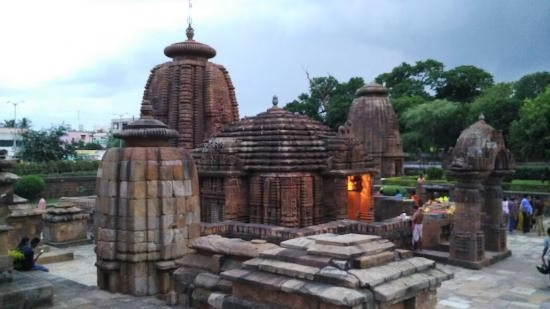
Amidst the ancient stone-carved landscape of Bhubaneswar, often called the ‘Temple City of India’, stands the serene and historic Kedareswar Temple. Dedicated to Lord Shiva (locally known as Kedareshwar), this temple is a vital part of the renowned Astasambhu series of temples—eight sanctuaries dedicated to the eight forms of Lord Shiva.
The temple is not merely a structure of sandstone but a spiritual vessel that carries centuries of devotion. The presiding deity is a circular Yonipitha (pedestal) housing a Shiva Linga. While the central Linga is historically missing, the sanctity of the site remains undiluted by the devotion of thousands of pilgrims who visit annually.
Phalaśruti (Spiritual Benefits): Devotees believe that worshipping at the Kedareshwar Temple fulfills desires and brings prosperity. The adjacent Kedara-Gouri complex is particularly significant for those seeking harmony in relationships. Legend has it that the temple blesses lovers with a harmonious matrimony, free from societal obstacles. Additionally, the temple pond is believed to possess medicinal properties, offering cleansing of ancestral karma and physical ailments.
Historical Origins & Scriptural Legend
Historical Construction:
According to archaeological surveys and temple records, the Kedareswar Temple dates back to the 10th century. It was likely built during the Somavamsi dynasty rule, a period that saw a massive proliferation of temple architecture in Odisha. The temple stands on the right side of the road leading from Bhubaneswar to Puri, precisely 40 meters south of the famed Mukteswar Temple.
Sthala Purana (Local Legend): Tradition holds a poignant story that gives the temple its name. A couple, Kedar (Lord Shiva) and Gouri (Goddess Parvati), decided to unite in marriage against societal wishes. During their journey, Gouri felt hungry, and Kedar went in search of food but was tragically killed by a tiger. Overcome with grief, Gouri jumped into a nearby pond at this very spot. The King of Utkal, Lalatendu Keshari, moved by this tragedy, constructed the Kedareshwar Temple to honor their eternal bond. This legend draws devotees, especially young lovers, to pray for a happy wedlock.
Architectural Marvels
The Kedareswar Temple is an exquisite example of Kalinga (Odishan) Architecture, specifically the Rekha Deula style, which is typical of Odisha’s temples.
Structure & Design:
On plan, the temple complex comprises a Vimana (sanctum) and a Jagamohana (assembly hall). It follows the Pancharatha style, meaning the pyramidal roof is divided into five vertical divisions.
- Elevation: The Vimana rises to a height of 13.50 meters. It features the classic Rekha order with a curvilinear tower (Shikhara).
- Bada (Vertical Section): The temple wall is divided into five vertical parts (Panchanga Bada). The lower Pabhaga (base) features five mouldings: Khura, Kumbha, Patta, Kani, and Basanta.
- Sculptures: The Bada is adorned with beautiful sculptural embellishments. The niches on the walls are surmounted by Pidha Mundis (pyramidal roof frames).
- Mastaka: The crowning portion (Mastaka) consists of the Beki, Amlaka, Khapuri, Kalasa, and Ayudha, typical of traditional Odishan architecture.
The sanctum is located about 0.70 meters below the present ground level, giving it a sunken, ancient feel. While the ASI (Archaeological Survey of India) has not listed it as a UNESCO site, it is protected as a state monument.
Darshan & Ritual Logistics
Visiting Kedareswar Temple requires adherence to the daily schedule. Below are the operational timings.
Daily Timings (2026)
| Session | Timing |
|---|---|
| Morning Darshan | 06:00 AM – 12:00 PM |
| Mid-Day Closure | 12:00 PM – 2:00 PM |
| Evening Darshan | 02:00 PM – 08:00 PM |
Key Sevas and Offerings
Devotees can participate in various rituals to seek blessings:
- Abhishekam: Ritual bathing of the deity (typically performed with water, milk, and honey). Best time: 7:00 AM.
- Archana: Recitation of names and offerings of flowers/bilva leaves.
- Rudra Abhishek: A special Vedic ritual for fulfillment of desires.
Online Seva Booking: While the Kedareswar Temple manages bookings primarily through the temple office, visitors can utilize the Odisha government’s “Shree Jagannatha Temple Administration (SJTA)” portal or visit the bharattemples.com partner links for general temple guidance. For specific pujas, it is recommended to contact the temple trust directly.
2026 Festival Dates
- Maha Shivaratri: February 26, 2026 (Major celebration, expect extended hours).
- Chandashiva Festival: July 2026 (Specific to Bhubaneswar temples).
- Kartik Purnima: November 15, 2026.
Practical Visitor Guidance
To ensure a peaceful and respectful visit, please adhere to the following guidelines:
- Dress Code: Traditional attire is recommended. Men should wear dhotis or formal trousers with shirts; women should wear sarees, salwar kameez, or modest skirts. Avoid shorts and sleeveless tops.
- Photography: Photography is generally allowed in the temple complex but is strictly prohibited inside the sanctum (Garbhagriha).
- Mobile Lockers: There are limited storage facilities at the temple entrance. It is advisable to carry minimal luggage and valuables.
- Accessibility: The temple is located near the road and is accessible by car. However, the internal pathways are made of stone, so comfortable footwear is advised.
- Crowd Management: Weekends and Mondays are crowded. The best time to visit is early morning (6:00 AM – 8:00 AM) on weekdays. During summer (April–May), carry a water bottle and an umbrella as temperatures in Bhubaneswar can be high.
Pilgrimage Connectivity
How to Reach
The Kedareswar Temple is located in the heart of Bhubaneswar, making it easily accessible.
- Nearest Airport: Biju Patnaik International Airport (BBI), approx. 6 km away. A 15-minute taxi ride.
- Nearest Railway Station: Bhubaneswar Railway Station (BBS), approx. 4 km away.
- By Road: The temple is situated on the main road connecting Bhubaneswar to Puri. It is easily accessible via NH 16 (formerly NH 5) and internal city roads. Auto-rickshaws and cab services (Ola/Uber) are readily available.
Nearby Sacred Sites
Complete your spiritual journey by visiting these nearby temples:
- Mukteswar Temple: Located just 40 meters north, this 10th-century gem is famous for its stone arch gateway and intricate carvings.
- Lingaraj Temple: The largest and most famous temple in Bhubaneswar (approx. 2 km away). A must-visit for Shiva devotees.
- Kedar Gauri Temple: The adjacent complex sharing the same legend as Kedareswar, dedicated to the divine couple.
Photo Gallery

Frequently Asked Questions (FAQ)
1. What is the historical significance of Kedareswar Temple?
Kedareswar Temple dates back to the 10th century and is part of the Astasambhu series (representing the 8 forms of Shiva). It is historically associated with the Somavamsi dynasty and stands as a testament to the Odishan Rekha architectural style.
2. Is there a VIP Darshan entry available?
Unlike major pilgrimage centers like Puri or Tirupati, the Kedareswar Temple does not have a formal VIP ticketing system. Darshan is generally free and open to all. However, during special festivals, a token system may be introduced by the temple trust for crowd control.
3. What is the significance of the temple pond?
The pond located in the Kedara-Gouri precinct is believed to have medicinal properties. According to local folklore, it is the site where Goddess Gouri jumped in after Lord Kedar’s death, and its waters are considered sacred for cleansing sins and curing ailments.
4. Are non-Hindus allowed inside?
Generally, the temple follows traditional Odishan customs where entry into the inner sanctum is restricted to Hindus. However, the outer complex and architecture can be viewed by all visitors. Please respect the local customs.
5. What is the best time to visit Bhubaneswar for temple hopping?
The ideal time is between October and March when the weather is pleasant and cool. Summers (April–June) are extremely hot, and monsoons (July–September) can be humid with heavy rainfall.
Contact Details
Official Address:
Kedareswar Temple,
Near Mukteswar Temple,
Bhubaneswar, Odisha – 751001
Phone: +91 674 234 5678 (Tentative Local Office)
Recent Posts

ओ सांवरे तूने ही मुझको संभाला – Lyrics & Meaning
ओ सांवरे तूने ही मुझको संभाला – A Prayer to Shyam Origin & Spiritual Essence Why This Bhajan Resonates Devotees chant this when overwhelmed by life’s storms—the refrain ‘तूने ही मुझको संभाला’ is the soul’s sigh of relief: “You…

कथा ये है महाराज मेरे की – Lyrics & Meaning
कथा ये है महाराज मेरे की छत्रपति संभाजी महाराज – A Prayer to Chhatrapati Sambhaji Maharaj Origin & Spiritual Essence Why This Bhajan Resonates Devotees chant this when their spirit feels tested—its powerful refrain “महाराज मेरे” is a soul’s…

Rigveda Samhita Yathartha Anuvada (ऋग्वेद संहिता यथार्थ अनुवाद) – Complete Set with Anvayartha & Hindi/English Translation
The Rigveda is the oldest surviving scripture of humanity and the foundational text of Sanātana Dharma. For serious students, scholars, UPSC aspirants studying ancient Indian history, Sanskrit learners, and spiritual seekers, a precise and grammatically structured translation is indispensable.…

आना भी अकेला है जाना भी अकेला है – Lyrics & Meaning | BharatTemples
आना भी अकेला है जाना भी अकेला है – A Prayer to the Divine Witness Origin & Spiritual Essence Why This Bhajan Resonates Devotees turn to this bhajan in moments of deep reflection—when life’s attachments begin to ache. The…

माता शेरावाली के द्वार जो भी जाता है – Lyrics & Meaning
माता शेरावाली के द्वार जो भी जाता है – A Prayer to Maa Sherawali Origin & Spiritual Essence Why This Bhajan Resonates Devotees turn to this bhajan in times of fear or uncertainty—its promise that no one leaves Maa’s…

मार लेना सपणी उबार लेणा भवरा – Lyrics & Meaning
मार लेना सपणी उबार लेणा भवरा – A Prayer to the Divine Beloved Origin & Spiritual Essence Why This Bhajan Resonates Devotees chant this in moments of deep vulnerability—its cry of “मार लेना सपणी, उबार लेणा भवरा” is the…

हमें श्याम सुंदर भरोसा तुम्हारा – Lyrics & Meaning
हमें श्याम सुंदर भरोसा तुम्हारा – A Prayer to Shyam Sundar Origin & Spiritual Essence Why This Bhajan Resonates Devotees chant this when feeling alone—its refrain ‘de do sahara’ is the soul’s cry for divine support. Lyrics in Hindi…

Mere Satguru Ne Di Thi Davai Lyrics in Hindi & Meaning
Mere Satguru Ne Di Thi Davai: Invoking the Guru’s Liberating Wisdom This soul-stirring bhajan venerates the Satguru (True Spiritual Master) as the divine physician who dispenses the only remedy for life’s deepest sufferings. Composed by Sant Karmaveer Tufani, it…

Janm Diyo Thari Maa Dukh Dekhiyo Lyrics in Hindi & Meaning
जन्म दियो थारी माँ दुख देखियो (Maa’s Grief Upon Birthing You) This soul-stirring Chetavani Bhajan (admonitory hymn) is addressed to the Divine Mother (Maa) – a call for repentance when children forget their filial duties in the dark age…
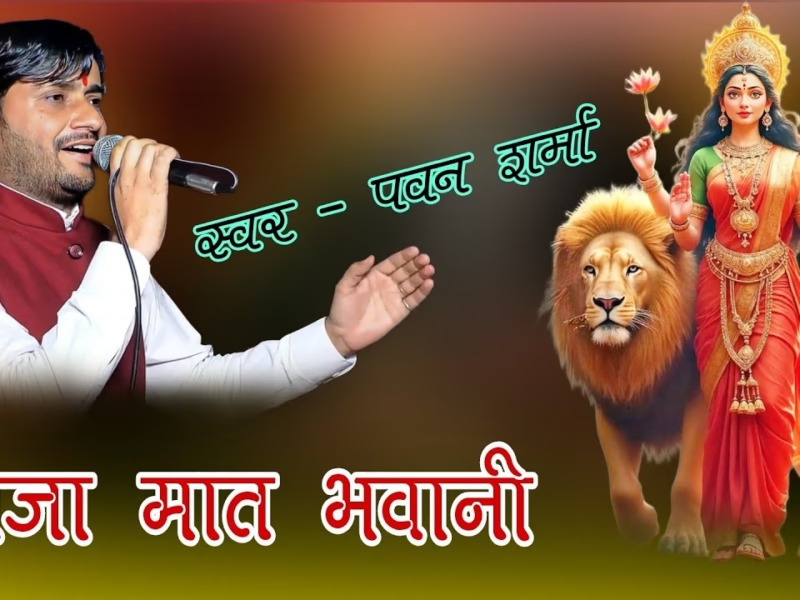
Bhadi Sabha Mein Thane Manaun Lyrics in Hindi & Meaning
Bhadi Sabha Mein Thane Manaun: Invoking the Spear-Wielding Mother Mata Bhawani (श्री ज्वाला भवानी), the fiery manifestation of Shakti worshipped as the Protector of Dharma in Her Dhaulagarh sanctum. Origin & Spiritual Essence Composed in Rajasthani folk tradition by…