
Contents
1. Introduction & Spiritual Essence
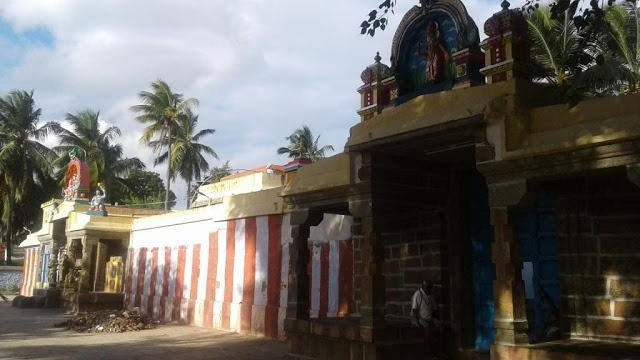
The Kirathamurthy Temple in Pannippagam, Kanyakumari, is a revered abode of Lord Shiva, embodying the divine convergence of the epic Mahabharata and the grace of the Kirata Murthy (The Hunter). Located amidst lush paddy fields at the foothills of Mookkunnimala, this temple is a vital node in the legendary Shivalaya Ottam pilgrimage circuit.
The Primary Deity & Form
The presiding deity here is Kirathamurthy, a form of Lord Shiva appearing as a hunter. Unlike the usual Lingam form, the idol depicts Shiva in a standing posture, armed with a bow, representing his manifestation to bless Arjuna. The deity faces East, radiating protective energy. The temple is known as Kattalan Koil, referencing the hunter form.
Phalaśruti: Why Devotees Visit
Devotees visit Kirathamurthy Temple seeking relief from afflictions and spiritual empowerment. According to traditional beliefs, worshipping here offers specific benefits:
- Removal of Negative Energy: As Kirathamurthy vanquished the demon Moohasuran, worshipping here is believed to remove evil influences and black magic.
- Ancestral Karma Cleansing: The temple is associated with Vishnu (through the nearby consort shrine), making it a potent site for Pithru Dosha remediation.
- Victory & Success: Just as Arjuna received the Pasupatha Astra here, devotees pray for success in legal battles, exams, and career endeavors.
2. Historical Origins & Scriptural Legend
While the exact date of construction is not explicitly recorded in early colonial archives, temple records and architectural analysis suggest the structure dates back several centuries, likely renovated significantly during the Pandya and later Venad eras. The architecture aligns with the Dravidian styles prevalent in medieval Tamil Nadu.
The Sthala Purana: The Hunter and the Boar
The temple’s existence is rooted in the Mahabharata. During the exile, Arjuna performed severe penance to obtain the Pasupatha Astra from Lord Shiva. Duryodhana, fearing Arjuna’s gain, sent the demon Moohasuran to disrupt the meditation.
Tradition holds that Moohasuran transformed into a ferocious wild boar and attacked Arjuna. Instantly, a Hunter (Kattalan) appeared and struck the boar with an arrow. Arjuna, unaware of the Hunter’s divinity, also shot the boar. When they disputed who killed the beast, Arjuna challenged the Hunter, striking him with his bow. However, the bow shattered against the Hunter’s head, revealing his divine nature.
Arjuna realized the Hunter was none other than Lord Shiva. The Lord blessed Arjuna with the Pasupatha Astra. The village, Pannippagam, derives its name from the boar (Panni), signifying the location where the demon was vanquished.
3. Architectural Marvels
Kirathamurthy Temple showcases the elegance of Dravidian architecture. Despite its compact size, the temple features intricate details typical of ancient Tamil Nadu shrines.
Vastu & Structure
The temple is oriented according to Vastu principles, with the Gopuram (gateway tower) facing East. The Vimana (roof over the sanctum) is richly sculpted, following the Dravidian tiered style.
Notable Sculptures and Shrines
- The Nandi Mandapam: Unlike standard temples where Nandi faces the deity directly, here the Nandi is situated in a dedicated Mandapam surrounded by carved lamps, facing his Lord with devotion.
- Kala Bhairava Shrine: Located in the north-east corner, a shrine dedicated to Kala Bhairava, the fierce guardian form of Shiva, ensures protection for the devotees.
- Kattalan Koil: A separate shrine in the middle of the paddy fields, distinct from the main temple, preserves the memory of the Hunter.
Note: While not a UNESCO site, the temple is a protected monument of Tamil Nadu due to its cultural significance.
4. Darshan & Ritual Logistics
To plan your visit effectively, here are the daily timings and major festivals for 2026. Please note that timings may vary during festival seasons.
Daily Darshan Timings
| Session | Timing |
|---|---|
| Morning Darshan | 5:00 AM – 11:00 AM |
| Afternoon Break | 11:00 AM – 5:00 PM |
| Evening Darshan | 5:00 PM – 8:00 PM |
Key Sevas and Booking
The temple follows traditional Agamic rituals. Key Sevas include:
- Abhishekam: Performed with milk, honey, and sandalwood paste.
- Archana: Recitation of Shiva Ashtothram.
- Deepa Aradhana: Evening lamp offering.
Booking: As of 2026, online booking is managed by the Tamil Nadu Hindu Religious and Charitable Endowments (HR&CE) Department. Visitors can book standard and special darshans via the official TN HRCE portal or the “Arulmigu” mobile application.
Major Festivals 2026
- Maha Shivaratri (Feb 26, 2026): The most significant event, featuring the Shivalaya Ottam (a ritualistic run connecting six temples).
- Thiruvathirai (Dec 10, 2026): Dedicated to the cosmic dance of Shiva.
- Aippasi Pournami (Nov 5, 2026): Special abhishekams and procession.
5. Practical Visitor Guidance
Ensuring a smooth darshan experience requires preparation. The temple is located in a rural setting with specific protocols.
Dress Code & Etiquette
Strict adherence to traditional attire is expected. Men must wear Dhoti or Panchakacham (shirt optional but recommended). Women should wear Saree, Salwar Kameez, or long skirts. Modern western attire (jeans, shorts, t-shirts) is prohibited inside the sanctum.
Photography & Lockers
- Photography: Strictly prohibited inside the inner sanctum (Garbhagriha). Photography is generally permitted in the outer courtyards, but seek permission from temple staff.
- Mobile Lockers: There are no automated lockers. A designated counter is available for depositing electronic devices and leather items (belts, wallets). Carry minimal cash.
Crowd Management & Best Time to Visit
The temple sees moderate crowds on Mondays and Fridays. During Shivaratri, crowds are massive.
- Best Hours: 6:00 AM to 8:00 AM is ideal for a peaceful darshan.
- Seasonal Advice: Kanyakumari experiences heavy heat in April and May. Carry water and an umbrella. The monsoon season (June–September) brings lush greenery but occasional heavy rains.
6. Pilgrimage Connectivity
How to Reach Kirathamurthy Temple
The temple is situated in Pannippagam, near Nattalam and Thuckalay in Kanyakumari District.
- By Air: The nearest airport is Trivandrum International Airport (TRV) in Kerala, located approximately 62 km away. Taxis and buses are available to Kanyakumari/Kumaracoil.
- By Rail: The nearest railway junction is Eraniel (ERL) (approx. 10 km). Nagercoil Junction (NCG) (approx. 20 km) is a larger station with better connectivity to major cities.
- By Road: The temple is accessible via State Highway 48. It is located 10 km from Kumaracoil and 7 km from Thuckalay. Buses ply frequently from Nagercoil and Marthandam.
Nearby Sacred Sites (Pilgrimage Circuit)
Extend your spiritual journey by visiting these nearby temples:
- Suchindram Thanumalayan Temple: Located ~15 km away, famous for its musical pillars and the 13.5-foot statue of Anjaneyar.
- Thiruvattar Adikesava Perumal Temple: ~13 km away, a Vishnu temple situated at the confluence of three rivers.
- Udayagiri Temple: Located near Kanyakumari, known for its rock-cut architecture and 18 caves.
7. Frequently Asked Questions (FAQ)
Is there a VIP Darshan entry at Kirathamurthy Temple?
Yes, the temple offers a “Special Darshan” ticket which allows devotees to bypass the general queue during peak hours. These tickets can be purchased at the temple counter or booked online via the TN HRCE app.
What is the significance of the “Shivalaya Ottam” here?
Kirathamurthy Temple is the 6th temple in the Shivalaya Ottam series performed during Shivaratri. Pilgrims run (or walk) a specific route connecting six temples dedicated to Lord Shiva in the Kanyakumari district, symbolizing the hunt.
Are non-Hindus allowed inside the temple?
Generally, entry is restricted to Hindus only. However, foreigners may be permitted entry for darshan upon presentation of a passport or proof of religion, subject to the temple administrator’s discretion. Non-Hindus are usually not allowed inside the inner sanctum.
What are the accommodation options nearby?
Basic lodges and guest houses are available in Thuckalay and Nagercoil (10-15 km away). For luxury stays, Kanyakumari (25-30 km) offers various hotels and resorts.
Is food available at the temple?
The temple does not have a major Anna Dhana (free meal) center daily. However, during festivals, Prasadam is distributed. It is advisable to eat in Nagercoil or Thuckalay before visiting.
Recent Posts

ओ सांवरे तूने ही मुझको संभाला – Lyrics & Meaning
ओ सांवरे तूने ही मुझको संभाला – A Prayer to Shyam Origin & Spiritual Essence Why This Bhajan Resonates Devotees chant this when overwhelmed by life’s storms—the refrain ‘तूने ही मुझको संभाला’ is the soul’s sigh of relief: “You…

कथा ये है महाराज मेरे की – Lyrics & Meaning
कथा ये है महाराज मेरे की छत्रपति संभाजी महाराज – A Prayer to Chhatrapati Sambhaji Maharaj Origin & Spiritual Essence Why This Bhajan Resonates Devotees chant this when their spirit feels tested—its powerful refrain “महाराज मेरे” is a soul’s…

Rigveda Samhita Yathartha Anuvada (ऋग्वेद संहिता यथार्थ अनुवाद) – Complete Set with Anvayartha & Hindi/English Translation
The Rigveda is the oldest surviving scripture of humanity and the foundational text of Sanātana Dharma. For serious students, scholars, UPSC aspirants studying ancient Indian history, Sanskrit learners, and spiritual seekers, a precise and grammatically structured translation is indispensable.…

आना भी अकेला है जाना भी अकेला है – Lyrics & Meaning | BharatTemples
आना भी अकेला है जाना भी अकेला है – A Prayer to the Divine Witness Origin & Spiritual Essence Why This Bhajan Resonates Devotees turn to this bhajan in moments of deep reflection—when life’s attachments begin to ache. The…

माता शेरावाली के द्वार जो भी जाता है – Lyrics & Meaning
माता शेरावाली के द्वार जो भी जाता है – A Prayer to Maa Sherawali Origin & Spiritual Essence Why This Bhajan Resonates Devotees turn to this bhajan in times of fear or uncertainty—its promise that no one leaves Maa’s…

मार लेना सपणी उबार लेणा भवरा – Lyrics & Meaning
मार लेना सपणी उबार लेणा भवरा – A Prayer to the Divine Beloved Origin & Spiritual Essence Why This Bhajan Resonates Devotees chant this in moments of deep vulnerability—its cry of “मार लेना सपणी, उबार लेणा भवरा” is the…

हमें श्याम सुंदर भरोसा तुम्हारा – Lyrics & Meaning
हमें श्याम सुंदर भरोसा तुम्हारा – A Prayer to Shyam Sundar Origin & Spiritual Essence Why This Bhajan Resonates Devotees chant this when feeling alone—its refrain ‘de do sahara’ is the soul’s cry for divine support. Lyrics in Hindi…

Mere Satguru Ne Di Thi Davai Lyrics in Hindi & Meaning
Mere Satguru Ne Di Thi Davai: Invoking the Guru’s Liberating Wisdom This soul-stirring bhajan venerates the Satguru (True Spiritual Master) as the divine physician who dispenses the only remedy for life’s deepest sufferings. Composed by Sant Karmaveer Tufani, it…

Janm Diyo Thari Maa Dukh Dekhiyo Lyrics in Hindi & Meaning
जन्म दियो थारी माँ दुख देखियो (Maa’s Grief Upon Birthing You) This soul-stirring Chetavani Bhajan (admonitory hymn) is addressed to the Divine Mother (Maa) – a call for repentance when children forget their filial duties in the dark age…
Bhadi Sabha Mein Thane Manaun Lyrics in Hindi & Meaning
Bhadi Sabha Mein Thane Manaun: Invoking the Spear-Wielding Mother Mata Bhawani (श्री ज्वाला भवानी), the fiery manifestation of Shakti worshipped as the Protector of Dharma in Her Dhaulagarh sanctum. Origin & Spiritual Essence Composed in Rajasthani folk tradition by…