
Contents
Kolahala Narsimha Temple: A Definitive Pilgrimage Guide
Introduction & Spiritual Essence
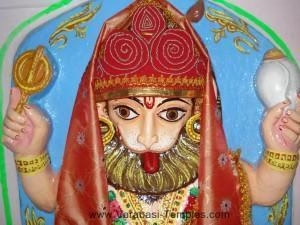
In the sacred labyrinthine lanes of Varanasi (Kashi), where the divine presence of Lord Shiva permeates the atmosphere, rests a powerful manifestation of Lord Vishnu in his Narsimha avatar. The Kolahala Narsimha Temple is a sanctuary of immense spiritual potency. “Kolahala” signifies an uproar or a tumultuous disturbance—a reference to the intense energy required to uproot sin and ego. The primary deity here is Sri Kolahala Narsimha, a form of Lord Vishnu who appeared to protect his devotee Prahlada and destroy the demon Hiranyakashipu.
Phalaśruti (The Fruit of Visiting):
According to local tradition and Vedic scriptures, worshipping at this temple holds specific merit. The legend suggests that by the grace of Kolahala Narsimha, the “topsy-turvy” cycle of sins is brought to a halt. Devotees believe that visiting this shrine helps in cleansing ancestral karma and removes obstacles caused by planetary afflictions (specifically regarding Mars and Saturn). It is a place where the destructive energy of ignorance is vanquished, replaced by the light of wisdom.
Historical Origins & Scriptural Legend
Antiquity and Location:
The exact date of construction is not recorded in standard historical archives, typical of many ancient Kashi temples that pre-date modern documentation. However, the architectural style and the placement of the shrine suggest a history spanning centuries, likely originating during the medieval period of temple construction in Varanasi. The temple is located in the Shivala area, specifically within the Narsimha Mutt complex, near Atyugra Narsimha.
Scriptural Context:
While the temple is not directly named in the major Puranas, the deity is central to the Bhagavata Purana. The local Sthala Purana (oral history) recounts that this specific form of Narsimha was self-manifested (Swayambhu) in this section of the city. Tradition holds that the temple was established to commemorate the event where Lord Narsimha subdued the pride of the demon (or the internal demon of ego) in such a tumultuous manner that the very atmosphere trembled—hence the name Kolahala.
Architectural Marvels
Style and Structure:
The Kolahala Narsimha Temple features a blend of traditional Nagara and regional North Indian temple styles, adapted to the tight urban constraints of Varanasi. Unlike massive temple complexes, this shrine exemplifies the intimate, mystical architecture found within the galis (alleys) of Kashi.
Key Features:
– The Sanctum (Garbhagriha): The inner sanctum is compact, focusing the devotee’s attention entirely on the central murti. The murti of Lord Narsimha is depicted with a lion’s head on a human body, often in a ferocious yet protective posture.
– Carvings: The exterior walls, though weathered by time, bear remnants of intricate floral motifs and miniature deities typical of Varanasi stone craftsmanship.
– Vastu Alignment: The temple is aligned to the sacred geometry of Kashi, maintaining the spiritual axis (Axis Mundi) that connects the terrestrial to the celestial.
Darshan & Ritual Logistics
Devotees visiting Kolahala Narsimha can participate in several rituals aimed at spiritual cleansing. Below are the general timings and rituals observed at the temple (note: timings may vary slightly during festivals).
Daily Timings
| Session | Timing | Activity |
|---|---|---|
| Morning Darshan | 05:00 AM – 11:00 AM | First Aarti, Abhishekam, and individual prayers. |
| Afternoon Closure | 11:00 AM – 03:00 PM | Closed for restoration and priest rest. |
| Evening Darshan | 03:00 PM – 08:30 PM | Evening Aarti and Diya offerings. |
Key Sevas (Rituals)
- Abhishekam: Ritual bathing of the deity with water, milk, and honey, accompanied by Vedic chants.
- Narsimha Kavacham: Recitation of the protective shield hymn for planetary peace.
- Deep Daan: Offering a ghee lamp, specifically recommended for ancestors.
Online Booking: While major Kashi temples offer online services, specific heritage shrines like Kolahala Narsimha often manage Sevas directly at the temple counter. For larger events, check the official Varanasi Temple Trust portals or consult local purohits for VVIP access.
2026 Festival Dates
- Narasimha Jayanti: May 21, 2026 (Thursday) – The most auspicious day for special Yagnas and Abhishekam.
- Vaikuntha Ekadashi: January 10, 2026 (Saturday) – Celebrated with special Aarti.
- Deepavali (Naraka Chaturdashi): October 20, 2026 – Continuous lamp lighting.
Practical Visitor Guidance
Dress Code: As with all major Hindu shrines in Varanasi, modest attire is required. Traditional Indian clothing (Saree, Kurta-Pajama, Dhoti) is highly recommended. Leather items are prohibited.
Photography & Mobiles:
Photography inside the sanctum is strictly prohibited to maintain the sanctity of the space. Mobile phones should be kept in silent mode. It is advisable to carry a small locker or hand over valuables to the cloakroom provided at the larger Narsimha Mutt complex entrance.
Crowd Management & Seasons:
– Best Time: The cooler months (October to March) are ideal for walking through the narrow lanes.
– Monsoon: July and August can bring heavy rains; carry an umbrella and wear water-resistant footwear.
– Summer: In May, Varanasi temperatures can rise. Carry water and visit early morning (before 8 AM) or late evening to avoid the heat and crowds.
Pilgrimage Connectivity
How to Reach
- Nearest Railway Station: Varanasi Junction (BSB) is approximately 5 km away. From there, take an auto-rickshaw to Chowk (approx. 20-30 mins depending on traffic).
- Airport: Lal Bahadur Shastri International Airport (LKO) is about 25 km away.
- Local Access:
Kolahala Narsimha is located at Ck.8/181, above Siddhi Vinayak, inside Narsimha Mutt. Travel to Chowk via rickshaw, then proceed on foot through the historic alleys.
- Atyugra Narsimha Temple: Located in the same locality, this temple is dedicated to Lord Narsimha in his “Swift” form. Visiting both is said to complete the Narsimha cycle of blessings.
- Siddhi Vinayak (Ganesh) Temple: Just adjacent, a powerful remover of obstacles, essential to visit before proceeding to other shrines.
- Kedar Ghat & Ganga Aarti: After the temple visit, walk down to the ghats (approx. 10 min walk) to witness the grand Ganga Aarti at Dashashwamedh Ghat or the serene Aarti at Manikarnika Ghat.
Nearby Sacred Sites
Many pilgrims combine a visit to Kolahala Narsimha with the following nearby shrines to complete a spiritual circuit:
Frequently Asked Questions (FAQ)
1. What is the significance of the name “Kolahala”?
The word “Kolahala” refers to a tumultuous uproar or clamor. In the context of this temple, it symbolizes the fierce roar of Lord Narsimha that shook the universe to destroy the arrogance of the demon Hiranyakashipu. It represents the power to disrupt and dismantle ignorance through intense spiritual energy.
2. Is there a VIP Darshan entry available?
Given the temple’s location in the narrow alleys of the old city, large-scale VIP queues are not common here. However, special access can often be arranged through the priests of the Narsimha Mutt. It is best to inquire directly at the temple office for a “Special Darshan” pass.
3. What is the best time to visit to avoid crowds?
The best time for a peaceful darshan is between 6:00 AM and 8:00 AM in the morning, or after 7:00 PM in the evening. Tuesday and Saturday are considered particularly auspicious days for Lord Narsimha.
4. Is the temple accessible for senior citizens?
While the sanctum is accessible, the approach involves walking through the crowded lanes of Chowk. Autos cannot enter the alley directly. Senior citizens may need assistance walking from the Chowk drop-off point. However, the temple is small, so standing time inside is generally minimal.
5. Can I visit Kolahala Narsimha on a boat?
Yes. You can take a boat to Assi Ghat or Dashashwamedh Ghat. From the ghat, it is a 10-15 minute walk through the old city to reach the temple. This is often a scenic and spiritually pleasant way to approach the shrine, avoiding the traffic.
Recent Posts

ओ सांवरे तूने ही मुझको संभाला – Lyrics & Meaning
ओ सांवरे तूने ही मुझको संभाला – A Prayer to Shyam Origin & Spiritual Essence Why This Bhajan Resonates Devotees chant this when overwhelmed by life’s storms—the refrain ‘तूने ही मुझको संभाला’ is the soul’s sigh of relief: “You…

कथा ये है महाराज मेरे की – Lyrics & Meaning
कथा ये है महाराज मेरे की छत्रपति संभाजी महाराज – A Prayer to Chhatrapati Sambhaji Maharaj Origin & Spiritual Essence Why This Bhajan Resonates Devotees chant this when their spirit feels tested—its powerful refrain “महाराज मेरे” is a soul’s…

Rigveda Samhita Yathartha Anuvada (ऋग्वेद संहिता यथार्थ अनुवाद) – Complete Set with Anvayartha & Hindi/English Translation
The Rigveda is the oldest surviving scripture of humanity and the foundational text of Sanātana Dharma. For serious students, scholars, UPSC aspirants studying ancient Indian history, Sanskrit learners, and spiritual seekers, a precise and grammatically structured translation is indispensable.…

आना भी अकेला है जाना भी अकेला है – Lyrics & Meaning | BharatTemples
आना भी अकेला है जाना भी अकेला है – A Prayer to the Divine Witness Origin & Spiritual Essence Why This Bhajan Resonates Devotees turn to this bhajan in moments of deep reflection—when life’s attachments begin to ache. The…

माता शेरावाली के द्वार जो भी जाता है – Lyrics & Meaning
माता शेरावाली के द्वार जो भी जाता है – A Prayer to Maa Sherawali Origin & Spiritual Essence Why This Bhajan Resonates Devotees turn to this bhajan in times of fear or uncertainty—its promise that no one leaves Maa’s…

मार लेना सपणी उबार लेणा भवरा – Lyrics & Meaning
मार लेना सपणी उबार लेणा भवरा – A Prayer to the Divine Beloved Origin & Spiritual Essence Why This Bhajan Resonates Devotees chant this in moments of deep vulnerability—its cry of “मार लेना सपणी, उबार लेणा भवरा” is the…

हमें श्याम सुंदर भरोसा तुम्हारा – Lyrics & Meaning
हमें श्याम सुंदर भरोसा तुम्हारा – A Prayer to Shyam Sundar Origin & Spiritual Essence Why This Bhajan Resonates Devotees chant this when feeling alone—its refrain ‘de do sahara’ is the soul’s cry for divine support. Lyrics in Hindi…

Mere Satguru Ne Di Thi Davai Lyrics in Hindi & Meaning
Mere Satguru Ne Di Thi Davai: Invoking the Guru’s Liberating Wisdom This soul-stirring bhajan venerates the Satguru (True Spiritual Master) as the divine physician who dispenses the only remedy for life’s deepest sufferings. Composed by Sant Karmaveer Tufani, it…

Janm Diyo Thari Maa Dukh Dekhiyo Lyrics in Hindi & Meaning
जन्म दियो थारी माँ दुख देखियो (Maa’s Grief Upon Birthing You) This soul-stirring Chetavani Bhajan (admonitory hymn) is addressed to the Divine Mother (Maa) – a call for repentance when children forget their filial duties in the dark age…
Bhadi Sabha Mein Thane Manaun Lyrics in Hindi & Meaning
Bhadi Sabha Mein Thane Manaun: Invoking the Spear-Wielding Mother Mata Bhawani (श्री ज्वाला भवानी), the fiery manifestation of Shakti worshipped as the Protector of Dharma in Her Dhaulagarh sanctum. Origin & Spiritual Essence Composed in Rajasthani folk tradition by…