
Contents
Introduction & Spiritual Essence
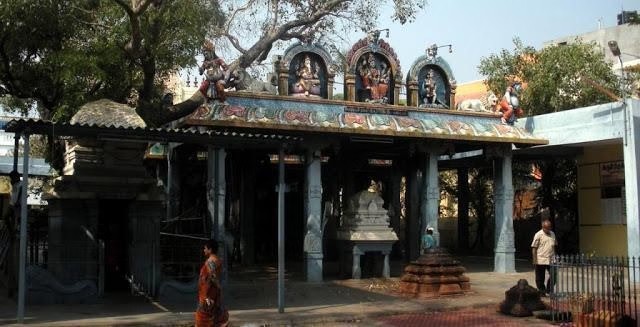
Nestled in the heart of historic Mylapore, the Kolavizhi Amman Temple stands as a testament to ancient protective divinity and Dravidian heritage. This sacred site is dedicated to Kolavizhi Amman, a fierce yet benevolent manifestation of the Divine Mother (Shakti). In the local Tamil lexicon, “Kola” refers to the earth or territory, and “Vizhi” implies an eye; thus, Kolavizhi literally translates to the “Eye of the Territory.” Historically, she was the guardian deity of the village, watching over Mylapore as its protector.
Unlike many temples where Nambudiri Brahmin priests conduct rituals, the poojas here are traditionally performed by non-Brahmin Poojaris strictly adhering to Agama Shastra. The murti (idol) is revered as a Swayambhu (self-manifested) form, radiating immense protective energy.
Phalaśruti: Why Visit?
Devotees flock to this ancient shrine seeking relief from specific worldly sufferings and spiritual upliftment. According to local belief and oral traditions:
- Resolution of Legal Disputes: Kolavizhi Amman is famed for intervening in complex legal cases and litigation, offering clarity and justice.
- Protection from Natural Calamities: As the ancient guardian of the territory, she is worshipped to ward off disasters and negative external forces.
- Health and Prosperity: Regular worship is believed to cure chronic diseases and bring peace of mind to devotees and their families.
Historical Origins & Scriptural Legend
Historical Timeline: The temple is estimated to be over 1,000 years old, predating the famous Kapaleeshwarar Temple in the vicinity. While specific inscriptions regarding the founding dynasty are less documented compared to royal temples, the architectural style and oral history firmly place it in the Chola period or early Pandya era, with subsequent renovations by local chieftains.
The Sthala Purana (Local Legend): Tradition holds that Kolavizhi Amman was the primary guardian when Mylapore was a thriving agrarian village. Legend suggests that the goddess manifested to protect the local inhabitants from invaders and epidemics. In the religious hierarchy of the Mylapore Karthikai Deepam and Brahmotsavam festivals, Kolavizhi Amman holds precedence. In the famous 63 Nayanmars (Tamil Saiva saints) processions, her chariot traditionally leads the procession, symbolizing her status as the protector of the territory before the procession moves to the Kapaleeshwarar Temple.
Architectural Marvels
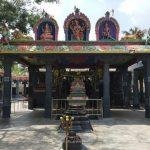
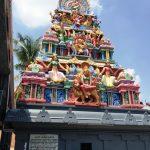
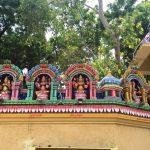
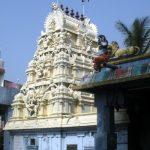
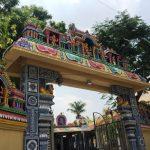
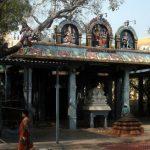
The temple showcases the quintessential Dravidian style of architecture, characterized by its pyramidal towers, enclosed courtyards, and intricate sculptures. Despite its age, the structure is compact yet spiritually potent.
Key Features:
- The Garbhagriha (Sanctum Sanctorum): The main shrine houses the Kolavizhi Amman murti, oriented to the east. The iconography typically depicts the goddess with multiple arms holding various weapons, symbolizing her Durga aspect.
- Sculptural Details: The exterior walls and pillars feature carvings of deities, mythical creatures (Yalis), and floral motifs common in Tamil temple art. The thresholds are adorned with Yalis to ward off evil.
- Surrounding Shrines: The complex includes smaller shrines for Lord Ganesha and Murugan, maintaining the Saiva Vittam (doctrines) of the region.
Darshan & Ritual Logistics (2026 Guide)
The temple follows a strict daily schedule of Abhishekam (ritual bathing) and Alankaram (decoration). The rituals are performed as per ancient Agama traditions.
Daily Timings
Note: Timings are subject to change during festivals and special occasions. It is advisable to call ahead for confirmation.
| Session | Timings |
|---|---|
| Morning Darshan | 06:00 AM – 12:00 PM |
| Afternoon Break | 12:00 PM – 04:30 PM |
| Evening Darshan | 04:30 PM – 08:30 PM |
Key Sevas & Offerings
- Milk Abhishekam: A primary offering where the deity is bathed in milk, often carried in a ceremonial procession.
- Pournami Pooja: A special full moon ritual where vegetables and fruits are offered and hung around the temple premises as a symbolic gesture of fertility and abundance.
- Poochoridal & Poochatti: Rituals involving the carrying of fire pots (Poochatti) and floral offerings, distinct to this temple’s traditions.
Online Seva Booking (2026)
Currently, the temple relies on direct in-person offerings. However, for the upcoming year, devotees can coordinate special archanas via the local temple administration or through the Chennai Corporation Religious Endowments Department portal. For specific Archana tickets, it is recommended to visit the temple counter upon arrival.
Major Festivals 2026
- Margazhi Brahmotsavam (Dec 2025 – Jan 2026): The grand annual festival where Kolavizhi Amman leads the chariot procession.
- Aadi Perukku: Special Abhishekam and flag hoisting.
- Navaratri: Nine days of special Alankaram for the Goddess.
- Pournami (Full Moon): Monthly special Pooja and vegetable hanging ritual.
Practical Visitor Guidance
Dress Code: Traditional Indian attire is mandatory. Men should wear Dhotis or formal trousers with shirts; women should wear sarees, Salwar Kameez, or traditional skirts and blouses. Avoid shorts and sleeveless tops.
Photography & Mobiles: Photography of the main deity is strictly prohibited. Mobile phones are allowed but must be silenced inside the sanctum. Lockers are generally not available, so travel light.
Crowd Management:
- Best Time to Visit: Weekday mornings (Tuesday and Friday are auspicious).
- Seasonal Advice: During the peak summer months (April–June), the granite floors can be hot; carry water. The Margazhi season (Dec–Jan) sees heavy crowds due to proximity to the Kapaleeshwarar Temple festivals; visit early morning to avoid long queues.
Pilgrimage Connectivity
How to Reach Kolavizhi Amman Temple
The temple is located on Gopathy Narayana Chetty Street, opposite the Valiswarar Temple and east of the Mundakkanni Amman Temple.
- By Train: The nearest railway station is Mylapore (Thirumayilai) on the MRTS line, approximately 1 km away. Chennai Central is about 9 km away.
- By Air: Chennai International Airport (MAA) is roughly 17 km (approx. 45 mins by car).
- By Road: The temple is accessible via Kutchery Road. From the Mylapore Tank bus stop, take Kutchery Road to G. N. Chetty Street.
Pilgrimage Circuit: Nearby Sacred Sites
Enhance your spiritual journey by visiting these nearby landmarks:
- Valiswarar Temple: Located directly opposite Kolavizhi Amman, dedicated to Lord Shiva.
- Mundakkanni Amman Temple: Situated to the west, another ancient protective deity shrine.
- Kapaleeshwarar Temple: The iconic Shiva temple of Mylapore (1 km away), famous for its grand Dravidian architecture and Nandi.
Frequently Asked Questions (FAQ)
1. Is there a VIP Darshan entry available?
The Kolavizhi Amman Temple is a community-focused shrine rather than a major commercial tourist hub. While there is no formal VIP ticket system like in Tirupati, devotees contributing to temple Seva (donations) are often given priority access during Abhishekam times. Contact the temple administrator for special arrangement requests.
2. What is the significance of the “Poochoridal” ritual?
Poochoridal is a specific ritual involving the scattering of flowers, symbolizing the showering of divine grace. Combined with the Poochatti (carrying of fire pots), it represents the purification of the surroundings and the devotee’s mind.
3. Are non-Hindus allowed inside?
Generally, entry is restricted to followers of Hinduism, as the temple follows strict Agamic principles. However, guidelines can vary; it is best to check with the temple authorities before planning a visit.
4. What is the best way to book accommodation in Mylapore?
Mylapore offers various options from heritage hotels to budget lodges. Since the temple is in a residential area, it is recommended to book hotels near T. Nagar or Royapettah, which are well-connected to Mylapore via bus or cab.
5. When is the temple closed?
The temple typically closes in the afternoon between 12:00 PM and 4:30 PM. It remains closed on specific festival afternoons or during temple cleaning schedules.


Recent Posts

ओ सांवरे तूने ही मुझको संभाला – Lyrics & Meaning
ओ सांवरे तूने ही मुझको संभाला – A Prayer to Shyam Origin & Spiritual Essence Why This Bhajan Resonates Devotees chant this when overwhelmed by life’s storms—the refrain ‘तूने ही मुझको संभाला’ is the soul’s sigh of relief: “You…

कथा ये है महाराज मेरे की – Lyrics & Meaning
कथा ये है महाराज मेरे की छत्रपति संभाजी महाराज – A Prayer to Chhatrapati Sambhaji Maharaj Origin & Spiritual Essence Why This Bhajan Resonates Devotees chant this when their spirit feels tested—its powerful refrain “महाराज मेरे” is a soul’s…

Rigveda Samhita Yathartha Anuvada (ऋग्वेद संहिता यथार्थ अनुवाद) – Complete Set with Anvayartha & Hindi/English Translation
The Rigveda is the oldest surviving scripture of humanity and the foundational text of Sanātana Dharma. For serious students, scholars, UPSC aspirants studying ancient Indian history, Sanskrit learners, and spiritual seekers, a precise and grammatically structured translation is indispensable.…

आना भी अकेला है जाना भी अकेला है – Lyrics & Meaning | BharatTemples
आना भी अकेला है जाना भी अकेला है – A Prayer to the Divine Witness Origin & Spiritual Essence Why This Bhajan Resonates Devotees turn to this bhajan in moments of deep reflection—when life’s attachments begin to ache. The…

माता शेरावाली के द्वार जो भी जाता है – Lyrics & Meaning
माता शेरावाली के द्वार जो भी जाता है – A Prayer to Maa Sherawali Origin & Spiritual Essence Why This Bhajan Resonates Devotees turn to this bhajan in times of fear or uncertainty—its promise that no one leaves Maa’s…

मार लेना सपणी उबार लेणा भवरा – Lyrics & Meaning
मार लेना सपणी उबार लेणा भवरा – A Prayer to the Divine Beloved Origin & Spiritual Essence Why This Bhajan Resonates Devotees chant this in moments of deep vulnerability—its cry of “मार लेना सपणी, उबार लेणा भवरा” is the…

हमें श्याम सुंदर भरोसा तुम्हारा – Lyrics & Meaning
हमें श्याम सुंदर भरोसा तुम्हारा – A Prayer to Shyam Sundar Origin & Spiritual Essence Why This Bhajan Resonates Devotees chant this when feeling alone—its refrain ‘de do sahara’ is the soul’s cry for divine support. Lyrics in Hindi…

Mere Satguru Ne Di Thi Davai Lyrics in Hindi & Meaning
Mere Satguru Ne Di Thi Davai: Invoking the Guru’s Liberating Wisdom This soul-stirring bhajan venerates the Satguru (True Spiritual Master) as the divine physician who dispenses the only remedy for life’s deepest sufferings. Composed by Sant Karmaveer Tufani, it…

Janm Diyo Thari Maa Dukh Dekhiyo Lyrics in Hindi & Meaning
जन्म दियो थारी माँ दुख देखियो (Maa’s Grief Upon Birthing You) This soul-stirring Chetavani Bhajan (admonitory hymn) is addressed to the Divine Mother (Maa) – a call for repentance when children forget their filial duties in the dark age…
Bhadi Sabha Mein Thane Manaun Lyrics in Hindi & Meaning
Bhadi Sabha Mein Thane Manaun: Invoking the Spear-Wielding Mother Mata Bhawani (श्री ज्वाला भवानी), the fiery manifestation of Shakti worshipped as the Protector of Dharma in Her Dhaulagarh sanctum. Origin & Spiritual Essence Composed in Rajasthani folk tradition by…