Konetirayala Temple History & Darshan Timings | Keelapatla Guide
Receive daily temple updates, divine darshan, and morning bhajans directly on WhatsApp.
Contents
- 1 Konetirayala Temple: The Ultimate 2026 Pilgrimage Guide
Konetirayala Temple: The Ultimate 2026 Pilgrimage Guide
Nestled in the serene village of Keelapatla in the Palamaner district of Andhra Pradesh, the Konetirayala Swamy Temple (often revered as the Sri Venkateswara Temple) stands as a beacon of spiritual solace and architectural grandeur. For devotees seeking the divine grace of Lord Venkateswara, this temple offers a profound connection to the divine, free from the overwhelming crowds of larger pilgrimage centers.
1. Introduction & Spiritual Essence
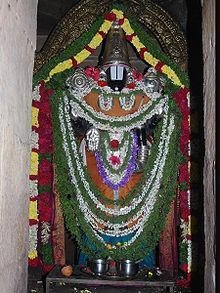
The primary deity of this sacred shrine is Sri Venkateswara Swamy, an incarnation of Lord Vishnu. Locally, he is affectionately known as Konetiraya Swamy. The presiding deity is enshrined in a Swayambhu (self-manifested) form, which amplifies its spiritual potency.
Phalaśruti: Why Devotees Visit
According to temple lore and local beliefs, a pilgrimage to Konetirayala Temple fulfills the desires of the devotee. The temple is particularly renowned for:
- Removal of Doshas: It is believed that worshipping here cleanses ancestral karma and mitigates planetary afflictions.
- Marital Harmony: Couples often visit to pray for stability and prosperity in their household.
- Financial Stability: The temple is often called the “Balaji of the East,” where sincere prayers are said to remove financial obstacles.
📖 Related: Bhairabi Temple, Tezpur: History, Darshan Timings & Complete Guide
2. Historical Origins & Scriptural Legend
Ancient Lineage
Temple records indicate a rich and tumultuous history spanning centuries. The region has seen the patronage of various dynasties, including the Sathavahans, Pallavas, Renati Cholas, Rastrakootas, Chalukyas, Pandyas, and the Yadava Kings. The most significant contributions to the temple’s structure are attributed to the Vijayanagar Emperors, who were ardent devotees of Lord Venkateswara.
Scriptural & Oral Legends
The 15th-century saint Annamacharya, the Andhra Pada Kavitā Pitāmaha, composed several Sankeerthanas (devotional hymns) mentioning the glory of Konetiraya. Tradition holds that the temple served as a spiritual retreat for various rulers, including the Matli Kings and the Arcot Nawabs.
Historically, the temple was greatly developed by the Punganur Jamindars. They utilized a specific road network connecting Punganuru, Kallupalli, Malleru, Melumoi, and Kothapalli to reach Keelapatla. Although this route has since become a soil road, archaeological evidence—such as the coins found near Melumoi—attests to the Muslim nobility’s contribution to the temple’s upkeep, highlighting the syncretic culture of devotion in this region.
3. Architectural Marvels
Dravidian Style
The temple exemplifies the classic Dravidian architectural style. The structure is designed in accordance with Vastu Shastra, ensuring energy flow aligns with cosmic rhythms. The temple complex is compact yet visually striking, dominated by the towering Shikhara (tower) above the sanctum sanctorum.
Sculptural Details
The Mandapa (hall) features intricately carved pillars depicting scenes from the Puranas. The ceiling is adorned with motifs of lotus flowers and geometric patterns, common in Dravidian temple art. The outer walls house niches containing images of various deities, though the primary focus remains the awe-inspiring idol of Venkateswara.
4. Darshan & Ritual Logistics (2026 Update)
Planning your visit requires attention to the specific timings and seva schedules. Below is the general daily schedule. Note that timings may vary during festivals.
| Ritual / Darshan | Timings (IST) |
|---|---|
| Temple Opening (Morning) | 06:00 AM |
| Suprabhatam / Early Morning Pooja | 06:30 AM – 07:00 AM |
| General Darshan | 07:00 AM – 12:00 PM |
| Temple Closure (Afternoon) | 12:30 PM |
| Temple Re-opening (Evening) | 03:30 PM |
| Archana / Seva | 03:30 PM – 05:30 PM |
| Evening Darshan | 05:30 PM – 07:00 PM |
| Temple Closing | 07:30 PM |
📖 Related: Sivasagar Sivadol: History, Timings & Complete Pilgrimage Guide
Key Sevas & Online Booking
Devotees can book specific Sevas online via the official TTD (Tirumala Tirupati Devasthanam) or local temple trust portals (as applicable). Key Sevas include:
- Kalyanotsavam: Performed daily at 10:00 AM (Pre-booking required).
- Abhishekam: Conducted in the early morning.
- Archana: Recitation of the deity’s names.
Major 2026 Festivals
Mark your calendars for these auspicious dates:
- Vaikunta Ekadasi: December 31, 2025 (continuing to January 2026).
- Ratha Saptami: February 4, 2026.
- Brahmotsavam: Usually held in March (Exact dates depend on the local Telugu calendar).
- Venkatapati Brahmotsavam: September 2026.
5. Practical Visitor Guidance
Code of Conduct & Facilities
- Dress Code: Traditional attire is mandatory. Men should wear dhotis or trousers with shirts; women should wear sarees, salwar kameez, or traditional skirts.
- Photography: Strictly prohibited inside the Sanctum Sanctorum. Photography may be allowed in the outer corridors subject to discretion.
- Mobile Lockers: Free lockers are available near the entrance for electronic devices.
- Accessibility: The temple is accessible via wheelchair on the ground floor, though some stairs exist at the entrance.
Crowd Management
Unlike Tirupati, Keelapatla is relatively peaceful. However, Sundays and festival days witness increased local footfall.
- Best Time to Visit: Weekday mornings (7 AM – 9 AM) offer the most intimate Darshan.
- Seasonal Advice: Summers (April–May) can be scorching. Carry a water bottle and umbrella.
6. Pilgrimage Connectivity
How to Reach Konetirayala Temple
The temple is located in Keelapatla village, approximately 40 km from Palamaner and 70 km from Chittoor.
- By Air: The nearest airport is Tirupati International Airport (TIR), roughly 80 km away. Alternatively, Bengaluru Kempegowda International Airport (BLR) is 140 km away.
- By Rail: The closest railway station is Palamaner. The major junction is Chittoor (approx. 55 km).
- By Road: Accessible via NH 40 (Bangalore-Chennai route). From Bangalore, take the Palamaner exit and proceed towards Kuppam/Keelapatla.
📖 Related: Hayagriva Madhava Temple, Kamrup: History, Darshan Timings & Guide
Nearby Sacred Sites (Circuit)
Extend your pilgrimage by visiting these nearby temples:
- Lord Shiva Temple, Kailasa Kona (45 km): A natural waterfall and sacred shrine dedicated to Lord Shiva.
- Kadiri Lakshmi Narasimha Swamy Temple (40 km): Located in Kadiri (Anantapur District), known for its powerful Narasimha idol.
- Sri Kalahasteeswara Temple (85 km): A major Shiva temple known for Rahu-Ketu dosha nivarana.
7. Frequently Asked Questions (FAQ)
Is there a VIP darshan entry at Konetirayala Temple?
Yes, the temple trust facilitates special darshan for elderly devotees and those with disabilities. VIP tickets generally need to be booked in advance through the local administration office.
What is the best way to book Kalyanotsavam online?
While specific local bookings are handled by the temple trust, major sevas can often be coordinated via TTD online portal if the temple is linked to the TTD network. Otherwise, visit the temple counter one day prior.
Is accommodation available near the temple?
Basic guest houses (choultries) are available in Keelapatla and Palamaner. For better amenities, Chittoor offers a range of hotels and budget lodges.
What is the significance of the name ‘Konetirayala’?
It is derived from local Telugu dialect referring to Lord Venkateswara as the ‘King of Kings’ (Raya) governing the region, distinct from the Tirumala deity though same in essence.
Are non-Hindus allowed inside?
As per traditional norms, entry is restricted to devotees of Hindu faith. Please verify specific entry protocols with the temple office.
Disclaimer: The information provided is based on 2026 projections and historical data. Temple timings and Seva schedules are subject to change without prior notice due to local administration decisions. Please verify directly with the temple office before planning your visit.