
Contents
Introduction & Spiritual Essence
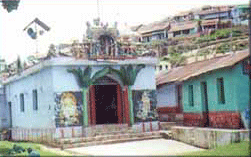
Nestled amidst the misty hills of Kodaikanal, the Kuzhandai Velayudha Swamy Temple stands as a serene testament to ancient faith. The presiding deity, Lord Velayudha (an infant form of Lord Murugan), is revered as the divine child protecting devotees from worldly troubles. Unlike the more prominent temples in this region, this shrine offers a tranquil spiritual atmosphere, allowing pilgrims to connect deeply with the benevolent energy of the Lord.
Phalaśruti: The Benefits of Visiting
According to local devotees and temple lore, worshiping Lord Velayudha here bestows specific blessings:
- Protection from Evil: The infant form is believed to ward off negative energies and provide safety to children.
- Removal of Mental Anxiety: The cool breeze of Kodaikanal combined with the Lord’s grace helps alleviate stress.
- Ancestral Karmic Cleansing: Performing Archana here is said to grant peace to the souls of ancestors, helping to resolve Pitru Dosham.
Historical Origins & Scriptural Legend
While the exact date of construction is not documented in modern records, the temple follows traditions deeply rooted in the Puranas. The architecture and the style of worship point towards the medieval period of Tamil Nadu’s history, likely established during the era when the Palani Dhandayuthapani Swamy temple gained prominence.
The Legend of the Infant Lord
According to the Stala Purana (local oral legend), Lord Murugan appeared in the form of an infant (Bala Murugan) to bless his ardent devotees in this region. The name “Kuzhandai” translates to “Infant” or “Child” in Tamil. Tradition holds that sages meditating in these hills received the divine vision of the infant Velayudha, holding the Vel (divine spear).
There is a strong spiritual connection to the Palani Murugan Temple. Many pilgrims visiting Palani travel to Kodaikanal to seek the blessings of the Lord in his playful, infant form, completing a circle of devotion that encompasses both the fierce warrior and the innocent child.
Architectural Marvels
The temple exemplifies the classical Dravidian style of architecture, characterized by its pyramidal towers and intricate carvings.
Structural Details
- Gopuram: The temple features a modest but ornate Rajagopuram (main gateway tower) adorned with colorful sculptures depicting stories from the Skanda Purana.
- Garbhagriha (Sanctum Sanctorum): The inner sanctum houses the main deity, Kuzhandai Velayudha Swamy. The idol is usually a stone or metal murti depicting the Lord as a child standing on a lotus or holding the Vel.
- Mandapas: The pillared hall allows for gatherings during festivals and offers a sheltered space for devotees to sit and chant prayers.
Unlike the massive temple complexes in the plains, the structure here is harmoniously integrated into the natural landscape, blending seamlessly with the lush greenery of Kodaikanal.
Darshan & Ritual Logistics (2026 Guide)
Visiting the temple requires adhering to specific timings. As Kodaikanal is a hill station, temple timings may vary slightly during peak tourist seasons.
Daily Temple Timings
| Session | Timing | Activity |
|---|---|---|
| Morning | 6:00 AM – 12:00 PM | Abhishekam, Archana |
| Afternoon | 12:00 PM – 4:00 PM | Temple Closed |
| Evening | 4:00 PM – 7:00 PM | Deeparadhana, Nataraja Darshan |
Key Sevas & Online Booking
While smaller temples often operate on a direct walk-in basis, for special rituals, you may contact the executive officer or local purohits.
- Abhishekam: Performed with milk, honey, and sandalwood paste. Best time: Morning 7:00 AM.
- Archana: Recitation of the Lord’s names. Available throughout open hours.
- Online Seva: While direct online booking for this specific hill temple may be limited, devotees often book general services through the larger Palani Temple website (palanitemple.tnhrce.org), which manages the cluster of temples in the region.
2026 Festival Dates
Plan your visit around these major events for a vibrant darshan experience:
- Thaipusam: January 12, 2026 (Tamil Month of Thai) – A major pilgrimage event in the Palani hills.
- Panguni Uthiram: March 24, 2026 – Marks the wedding of Lord Murugan.
- Skanda Shashti: November 12, 2026 – Celebrates the victory of Lord Murugan over Surapadma (Dates may vary slightly based on the Tamil calendar).
Practical Visitor Guidance
Visiting a hill temple requires preparation. Here are the essentials for a smooth pilgrimage.
Code of Conduct
- Dress Code: Traditional attire is mandatory. Men should wear dhotis or pants with shirts (avoid t-shirts). Women should wear sarees, salwar kameez, or traditional skirts.
- Photography: Strictly prohibited inside the sanctum sanctorum. Photography in the outer mandapam may be allowed at the discretion of the temple priests, but it is best to avoid it to maintain the sanctity of the space.
- Footwear: Remove footwear before entering the temple premises. There are designated shoe racks available.
Crowd Management & Seasonal Tips
- Best Hours: Visit between 6:00 AM and 7:30 AM for a peaceful darshan before the tourist influx begins. Evening darshan (4:30 PM) is also less crowded.
- Seasonal Advice:
- Summer (May–June): Kodaikanal is packed with tourists. Arrive extremely early. Carry a water bottle and sun protection.
- Monsoon (October–November): The path can be slippery. Wear rubber-soled sandals with good grip.
Pilgrimage Connectivity
How to Reach
The Kuzhandai Velayudha Swamy Temple is located within the Kodaikanal hill range, accessible via the main hill roads.
- By Air: The nearest airport is Coimbatore International Airport, approximately 170 km away (4-5 hours drive via NH 83).
- By Rail: The nearest major railway junction is Madurai (85 km) or Coimbatore Junction (140 km). From there, you can hire a taxi to Kodaikanal.
- By Road: Kodaikanal is well-connected by ghat roads. Buses ply regularly from major cities like Chennai, Coimbatore, Madurai, and Dindigul via NH 83 and SH 159.
Nearby Sacred Sites
Extend your pilgrimage circuit by visiting these nearby temples:
- Palani Dhandayuthapani Swamy Temple: The primary temple of Lord Murugan, located at the foothills (approx. 60 km from Kodaikanal). This is the main seat of the deity.
- Brihadisvara Temple, Kumbakonam: While a bit further, this UNESCO site is a must for architectural enthusiasts.
- Mattu Puli Kudi (Bull Tirtha): A sacred water tank located near Palani temple, known for its healing properties.
Frequently Asked Questions
Is there a VIP darshan entry?
As this is a smaller hill temple, there is generally no separate VIP entry like in larger temples. However, devotees offering special Sevas like Abhishekam are allowed immediate access to the sanctum.
Can I visit Kodaikanal and Palani on the same day?
Yes, it is possible. Palani is located at the foothills, about 2.5 hours drive from Kodaikanal. Most pilgrims visit the Palani temple first and then travel up to Kodaikanal to visit the Kuzhandai Velayudha Swamy Temple.
Is the temple accessible for the elderly?
The temple is situated on a hill and requires climbing a flight of stairs. It is moderately difficult for the elderly. Hiring a palanquin (Doli) or using a taxi to get closer to the entrance area is recommended.
What is the best time of year to visit?
The ideal time is between October and March when the weather is cool and pleasant. Summers (April–June) are crowded, and monsoon (July–September) may disrupt travel.
Photo Gallery
Contact Details & Official Address
As specific direct contact numbers for this specific hill shrine are often managed locally, inquiries can be directed to the:
Executive Officer,
Kuzhandai Velayudha Swamy Temple,
Kodaikanal, Dindigul District,
Tamil Nadu – 624101.
Note: For general administrative queries regarding the Palani group of temples, contact the HR&CE Department of the Tamil Nadu Government.
Recent Posts

ओ सांवरे तूने ही मुझको संभाला – Lyrics & Meaning
ओ सांवरे तूने ही मुझको संभाला – A Prayer to Shyam Origin & Spiritual Essence Why This Bhajan Resonates Devotees chant this when overwhelmed by life’s storms—the refrain ‘तूने ही मुझको संभाला’ is the soul’s sigh of relief: “You…

कथा ये है महाराज मेरे की – Lyrics & Meaning
कथा ये है महाराज मेरे की छत्रपति संभाजी महाराज – A Prayer to Chhatrapati Sambhaji Maharaj Origin & Spiritual Essence Why This Bhajan Resonates Devotees chant this when their spirit feels tested—its powerful refrain “महाराज मेरे” is a soul’s…

Rigveda Samhita Yathartha Anuvada (ऋग्वेद संहिता यथार्थ अनुवाद) – Complete Set with Anvayartha & Hindi/English Translation
The Rigveda is the oldest surviving scripture of humanity and the foundational text of Sanātana Dharma. For serious students, scholars, UPSC aspirants studying ancient Indian history, Sanskrit learners, and spiritual seekers, a precise and grammatically structured translation is indispensable.…

आना भी अकेला है जाना भी अकेला है – Lyrics & Meaning | BharatTemples
आना भी अकेला है जाना भी अकेला है – A Prayer to the Divine Witness Origin & Spiritual Essence Why This Bhajan Resonates Devotees turn to this bhajan in moments of deep reflection—when life’s attachments begin to ache. The…

माता शेरावाली के द्वार जो भी जाता है – Lyrics & Meaning
माता शेरावाली के द्वार जो भी जाता है – A Prayer to Maa Sherawali Origin & Spiritual Essence Why This Bhajan Resonates Devotees turn to this bhajan in times of fear or uncertainty—its promise that no one leaves Maa’s…

मार लेना सपणी उबार लेणा भवरा – Lyrics & Meaning
मार लेना सपणी उबार लेणा भवरा – A Prayer to the Divine Beloved Origin & Spiritual Essence Why This Bhajan Resonates Devotees chant this in moments of deep vulnerability—its cry of “मार लेना सपणी, उबार लेणा भवरा” is the…

हमें श्याम सुंदर भरोसा तुम्हारा – Lyrics & Meaning
हमें श्याम सुंदर भरोसा तुम्हारा – A Prayer to Shyam Sundar Origin & Spiritual Essence Why This Bhajan Resonates Devotees chant this when feeling alone—its refrain ‘de do sahara’ is the soul’s cry for divine support. Lyrics in Hindi…

Mere Satguru Ne Di Thi Davai Lyrics in Hindi & Meaning
Mere Satguru Ne Di Thi Davai: Invoking the Guru’s Liberating Wisdom This soul-stirring bhajan venerates the Satguru (True Spiritual Master) as the divine physician who dispenses the only remedy for life’s deepest sufferings. Composed by Sant Karmaveer Tufani, it…

Janm Diyo Thari Maa Dukh Dekhiyo Lyrics in Hindi & Meaning
जन्म दियो थारी माँ दुख देखियो (Maa’s Grief Upon Birthing You) This soul-stirring Chetavani Bhajan (admonitory hymn) is addressed to the Divine Mother (Maa) – a call for repentance when children forget their filial duties in the dark age…
Bhadi Sabha Mein Thane Manaun Lyrics in Hindi & Meaning
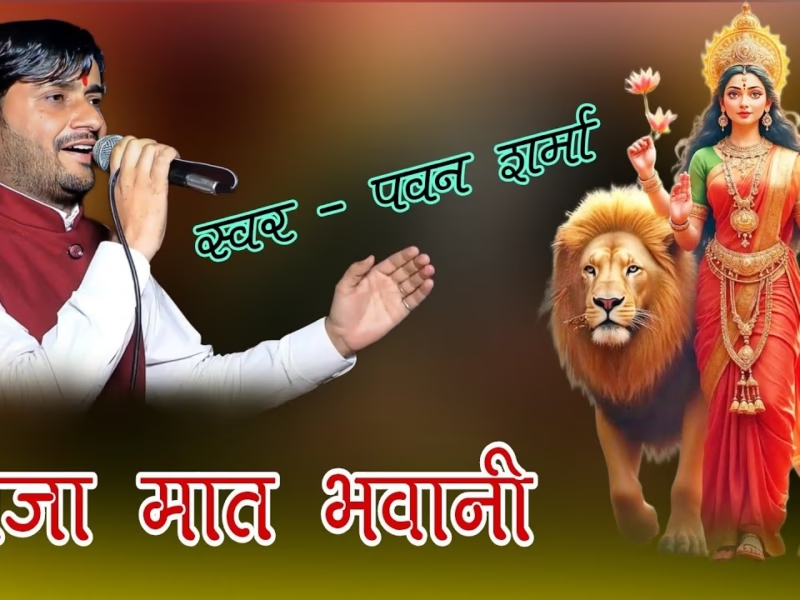
Bhadi Sabha Mein Thane Manaun: Invoking the Spear-Wielding Mother Mata Bhawani (श्री ज्वाला भवानी), the fiery manifestation of Shakti worshipped as the Protector of Dharma in Her Dhaulagarh sanctum. Origin & Spiritual Essence Composed in Rajasthani folk tradition by…