
Contents
Lakkadiya Hanuman Temple: History, Significance, and Darshan Guide
Welcome to the Lakkadiya Hanuman Temple, one of Ahmedabad’s most revered spiritual landmarks. Located in the bustling Bhat area of Ahmedabad, Gujarat, this temple is dedicated to Lord Hanuman, the epitome of devotion and strength. This definitive guide provides devotees and pilgrims with essential information on history, rituals, and logistics for 2026.
Introduction & Spiritual Essence
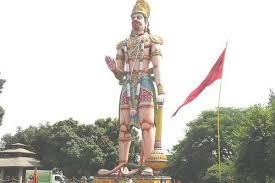
The Lakkadiya Hanuman Temple, also locally known as Hanumanji Mandir, serves as a powerful center for devotion in Ahmedabad. Lord Hanuman is revered not just as a warrior but as the personification of Bhakti (devotion) and Shakti (power). According to theology, he is an incarnation of Lord Shiva, born to serve Lord Rama.
Phalaśruti: Why Devotees Visit
Devotees flock to this temple seeking specific spiritual boons:
- Removal of Obstacles: Praying to Hanuman is believed to remove negative energies and life obstacles.
- Strength and Courage: As the guardian of the Ramayana, he bestows physical and mental strength.
- Ancestral Karma Cleansing: It is a local belief that performing Sankalp here helps pacify ancestors and cleanse past karma.
Historical Origins & Scriptural Legend
While the exact construction date is not widely recorded in public archives, the Lakkadiya Hanuman Temple has stood as a pillar of faith for decades. Traditionally, the temple evolved from a small shrine in the Bhat area of Ahmedabad into a significant Mandir complex, reflecting the deep-rooted Hanuman devotion in Gujarati culture.
Scriptural and Oral Legends
The temple draws its spiritual authority from the Ramayana and local Sthala Purana.
According to temple records and local tradition, the name “Lakkadiya” (relating to wood/structure) may stem from historical architectural references or the specific material used in the original shrine construction. The central legend revolves around Lord Hanuman’s devotion to Lord Rama. As mentioned in the scriptures, Hanuman’s greatest service was retrieving the Sanjeevani herb and facilitating the construction of the Ram Setu—a testament to his immense capability and dedication.
Architectural Marvels
The temple architecture reflects a blend of traditional Gujarati and Nagara styles, characterized by intricate carvings and a vibrant spiritual atmosphere.
Key Architectural Elements
- The Sanctum (Garbhagriha): The inner sanctum houses the central Murti of Lord Hanuman. The idol is crafted in a standing or sitting posture, often adorned with traditional ornaments and sindoor.
- Vastu Shastra: The layout follows Vastu principles, ensuring the flow of positive energy from the entrance to the inner sanctum.
- Mandapas: The temple features spacious halls for devotees to sit and chant, often decorated with motifs depicting stories from the Ramayana.
Darshan & Ritual Logistics
To ensure a seamless darshan experience, devotees should familiarize themselves with the temple schedule and rituals.
Daily Timings (2026)
| Day | Morning Timings | Evening Timings |
|---|---|---|
| Mon – Sun | 6:00 AM – 12:00 PM | 4:00 PM – 9:00 PM |
Key Sevas and Booking
Devotees can participate in various rituals. Online booking for sevas is available through the temple’s official portal or trusted third-party religious platforms.
- Abhishekam: Ritual bathing of the deity with water, milk, and honey. (Timing: 7:00 AM daily)
- Archana: Chanting of the 108 names of Hanuman. (Timing: Every 30 minutes)
- Special Aarti: Held on Tuesdays and Saturdays.
2026 Festival Calendar
Major festivals are celebrated with immense fervor. Plan your visit accordingly as crowds are significantly larger.
- Hanuman Jayanti: April 12, 2026 (Saturday) – The most significant day of the year. Special Abhishekam and Maha Aarti are performed. Expect long queues; morning arrival is recommended.
- Dussehra: October 1, 2026 – Celebrated with the recitation of the Sunderkand.
- Diwali: October 21, 2026 – The temple is illuminated with thousands of diyas.
Practical Visitor Guidance
A smooth darshan requires preparation. Here are essential tips for visitors:
Rules and Etiquette
- Dress Code: Traditional attire is preferred. Men should wear dhotis or long pants and shirts; women should wear sarees or full-length dresses.
- Photography: Strictly prohibited inside the sanctum sanctorum. Discretion is advised in prayer halls.
- Mobile & Lockers: Large bags and electronic devices are restricted. Use the free mobile lockers provided at the entrance before entering the temple.
Crowd Management & Seasonal Advice
- Best Hours: Weekday mornings (6:00 AM – 7:30 AM) offer the calmest darshan.
- Weekends: Tuesdays and Saturdays see peak footfall. Arrive at least 30 minutes before opening time.
- Seasonal: During the summer (May), carry a water bottle and a handkerchief. Monsoon (July-September) brings pleasant weather but occasional showers.
Pilgrimage Connectivity
How to Reach Lakkadiya Hanuman Temple
Located in the Bhat area of Ahmedabad, the temple is easily accessible via road and public transport.
- By Air: Sardar Vallabhbhai Patel International Airport (AMD) is approximately 15-20 km away (30-40 minutes by taxi).
- By Train: Ahmedabad Railway Station (Kalupur) is about 8 km away. Auto-rickshaws are readily available.
- By Road: The temple is situated near NH 147. It is well-connected to the SG Highway (Sarkhej-Gandhinagar Highway). Parking is available, though limited during peak hours.
Nearby Sacred Sites (Pilgrimage Circuit)
Extend your spiritual journey by visiting these nearby landmarks:
- Akshardham Temple (Gandhinagar): Located 25 km away, this architectural masterpiece is a must-visit for its exhibits and light show.
- Bhadra Fort Hanuman Temple: Located in the walled city (approx 8 km), this is another ancient Hanuman shrine in Ahmedabad.
- Sarkhej Roza: A complex of mosques and tombs with a serene lake, offering a glimpse of Ahmedabad’s syncretic heritage (10 km from Bhat).
Frequently Asked Questions (FAQ)
1. Is there a VIP darshan entry at Lakkadiya Hanuman Temple?
Generally, the temple management maintains a standard line for all devotees. However, on special festival days, a separate queue may be available for donors or senior citizens. It is best to consult the temple office upon arrival.
2. Is there a facility for online seva booking?
Yes, devotees can book standard sevas like Archana and Abhishekam online. Check the official temple website or trusted portals like ‘HarZari’ for current availability.
3. What are the temple timings on Hanuman Jayanti?
On April 12, 2026, the temple will likely operate special timings (often 4:00 AM to 10:00 PM). Detailed schedules are released by the trust a week prior to the festival.
4. Is the temple accessible for differently-abled visitors?
The main ground floor is accessible. However, access to upper levels may require assistance as the building is older. Wheelchairs are generally not available on-site, so carrying your own is recommended.
5. Is photography allowed outside the temple?
Photography is generally permitted in the outer courtyard and entrance areas, but strictly prohibited inside the sanctum. Always respect the sanctity of the space.
Recent Posts

ओ सांवरे तूने ही मुझको संभाला – Lyrics & Meaning
ओ सांवरे तूने ही मुझको संभाला – A Prayer to Shyam Origin & Spiritual Essence Why This Bhajan Resonates Devotees chant this when overwhelmed by life’s storms—the refrain ‘तूने ही मुझको संभाला’ is the soul’s sigh of relief: “You…

कथा ये है महाराज मेरे की – Lyrics & Meaning
कथा ये है महाराज मेरे की छत्रपति संभाजी महाराज – A Prayer to Chhatrapati Sambhaji Maharaj Origin & Spiritual Essence Why This Bhajan Resonates Devotees chant this when their spirit feels tested—its powerful refrain “महाराज मेरे” is a soul’s…

Rigveda Samhita Yathartha Anuvada (ऋग्वेद संहिता यथार्थ अनुवाद) – Complete Set with Anvayartha & Hindi/English Translation
The Rigveda is the oldest surviving scripture of humanity and the foundational text of Sanātana Dharma. For serious students, scholars, UPSC aspirants studying ancient Indian history, Sanskrit learners, and spiritual seekers, a precise and grammatically structured translation is indispensable.…

आना भी अकेला है जाना भी अकेला है – Lyrics & Meaning | BharatTemples
आना भी अकेला है जाना भी अकेला है – A Prayer to the Divine Witness Origin & Spiritual Essence Why This Bhajan Resonates Devotees turn to this bhajan in moments of deep reflection—when life’s attachments begin to ache. The…

माता शेरावाली के द्वार जो भी जाता है – Lyrics & Meaning
माता शेरावाली के द्वार जो भी जाता है – A Prayer to Maa Sherawali Origin & Spiritual Essence Why This Bhajan Resonates Devotees turn to this bhajan in times of fear or uncertainty—its promise that no one leaves Maa’s…

मार लेना सपणी उबार लेणा भवरा – Lyrics & Meaning
मार लेना सपणी उबार लेणा भवरा – A Prayer to the Divine Beloved Origin & Spiritual Essence Why This Bhajan Resonates Devotees chant this in moments of deep vulnerability—its cry of “मार लेना सपणी, उबार लेणा भवरा” is the…

हमें श्याम सुंदर भरोसा तुम्हारा – Lyrics & Meaning
हमें श्याम सुंदर भरोसा तुम्हारा – A Prayer to Shyam Sundar Origin & Spiritual Essence Why This Bhajan Resonates Devotees chant this when feeling alone—its refrain ‘de do sahara’ is the soul’s cry for divine support. Lyrics in Hindi…

Mere Satguru Ne Di Thi Davai Lyrics in Hindi & Meaning
Mere Satguru Ne Di Thi Davai: Invoking the Guru’s Liberating Wisdom This soul-stirring bhajan venerates the Satguru (True Spiritual Master) as the divine physician who dispenses the only remedy for life’s deepest sufferings. Composed by Sant Karmaveer Tufani, it…

Janm Diyo Thari Maa Dukh Dekhiyo Lyrics in Hindi & Meaning
जन्म दियो थारी माँ दुख देखियो (Maa’s Grief Upon Birthing You) This soul-stirring Chetavani Bhajan (admonitory hymn) is addressed to the Divine Mother (Maa) – a call for repentance when children forget their filial duties in the dark age…
Bhadi Sabha Mein Thane Manaun Lyrics in Hindi & Meaning
Bhadi Sabha Mein Thane Manaun: Invoking the Spear-Wielding Mother Mata Bhawani (श्री ज्वाला भवानी), the fiery manifestation of Shakti worshipped as the Protector of Dharma in Her Dhaulagarh sanctum. Origin & Spiritual Essence Composed in Rajasthani folk tradition by…