
Contents
Introduction & Spiritual Essence
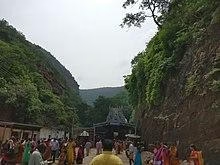
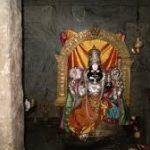
The Lakshmi Narasimha Swamy Temple in Penna Ahobilam, Andhra Pradesh, stands as a beacon of divine grace, embodying the fierce yet compassionate form of Lord Vishnu. The primary deity here is Lakshmi Narasimha, a unique manifestation where Lord Narasimha is seated alongside Goddess Lakshmi, signifying a balance between terrifying justice and benevolent mercy. Unlike other Narasimha temples that depict the deity in a purely wrathful state (Ugra Narasimha), this form (Shanta or Soumya Narasimha) calms the devotee’s mind and offers protection.
Phalaśruti: The Fruits of Devotion
According to Vedic scriptures and local tradition, visiting this temple yields profound spiritual benefits. It is believed that sincere darshan and worship here help in:
- Cleansing Ancestral Karma: Performing rituals at this temple is said to pacify Pitru Dosha (ancestral afflictions), bringing peace to the departed souls of the lineage.
- Removing Planetary Obstacles: Devotees visit to mitigate the adverse effects of planetary alignments, particularly those related to Saturn (Shani) and Rahu/Ketu.
- Marital Harmony & Progeny: Being a shrine where the Lord is with His consort, it is highly revered for those seeking marital bliss and blessings for children.
Historical Origins & Scriptural Legend
The history of Penna Ahobilam is steeped in the grandeur of the Vijayanagara Empire. The temple complex and its structures were largely developed during the 15th to 16th centuries under the patronage of the Vijayanagara rulers, who were ardent devotees of Lord Vishnu.
The Sthala Purana
Tradition holds that the sacred site of Penna Ahobilam is a geographical and spiritual parallel to the Nine Narasimha Temples (Nava Narasimha) located in the hills of Ahobilam (about 15 km away). This riverbank site was established as a more accessible location for devotees to worship the Lord, especially the elderly and those unable to trek the hills.
Local legends suggest that Lord Brahma performed a Yagna here, and Lord Vishnu appeared as Lakshmi Narasimha to bless the sages. The temple is situated on the banks of the Penna River, adding to its sanctity as a Teerthasthala (holy site). According to temple records, the idol was consecrated to allow year-round worship regardless of the harsh climatic conditions often found in the hilly regions.
Architectural Marvels
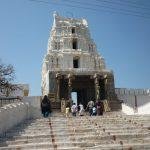
The temple is a shining example of the Dravidian style of architecture, prevalent in South India. The construction features intricate stone carvings, massive granite pillars, and towering gateways (Gopurams) that are characteristic of the Vijayanagara era.
Key Architectural Features
- The Mandapa: The temple boasts a spacious hall with ornate pillars. These pillars often depict scenes from the Ramayana and Mahabharata, as well as celestial nymphs (Apsaras) and mythical beasts (Yalis).
- The Sanctum Sanctorum (Garbhagriha): The inner shrine houses the Panchaloha idol of Lakshmi Narasimha. The deity is depicted with four arms—holding the Sudarshana Chakra (discus), Shankha (conch), Abhaya (gesture of fearlessness), and Varada (gesture of boon-giving). The idol is Swayambhu (self-manifested) and the footprint of the deity is carved on a raised pedestal, measuring exactly 5 feet 3 inches.
- Vastu Shastra: The temple follows traditional Vastu principles, with the sanctum oriented to the east, allowing the first rays of the sun to touch the deity during the equinoxes.
Darshan & Ritual Logistics
Visitors are encouraged to check the official temple website or contact the management office for the latest updates on special closures or festival schedules. The temple administration is managed by the Tirumala Tirupati Devasthanams (TTD) or local temple committees, ensuring organized rituals.
Daily Temple Timings
Note: Timings are subject to change based on seasonal variations and festival schedules. Assume current year is 2026.
| Session | Timing |
|---|---|
| Morning Darshan | 06:00 AM – 11:00 AM |
| Mid-day Break | 11:00 AM – 04:30 PM |
| Evening Darshan | 04:30 PM – 08:30 PM |
Key Sevas & Booking
Devotees can participate in various rituals. For online seva booking, it is recommended to visit the official TTD website (ttdsevaonline.com) or the specific temple portal if available.
- Suprabhatam: 6:00 AM (Awakening the Lord)
- Abhishekam: 8:00 AM (Ritual bathing of the deity)
- Archana: Throughout the day (Offering prayers with sacred names)
- Kalyanotsavam: Marriage ceremony performed for the deity (Highly popular here).
2026 Festival Calendar (Dates TBC)
The temple hosts a vibrant celebration of festivals. Mark your calendar for:
- Narasimha Jayanti: May 2026 (Varies based on the lunar calendar; typically the 14th day of the bright fortnight of Vaishakha month).
- Brahmotsavam: April 2026 (The annual car festival, known as Rathotsavam, is the major highlight here).
- Vaikuntha Ekadashi: January 2026.
- Hanuman Jayanti: April 2026.
Practical Visitor Guidance
To ensure a smooth darshan experience, please adhere to the following guidelines.
Dress Code & Etiquette
Visitors must dress in traditional Indian attire. Men should wear Dhoti or Kurta-Pajama, and women should wear Saree, Salwar Kameez, or traditional skirts. Strictly avoid modern clothing like jeans, shorts, and t-shirts.
Facilities & Crowd Management
- Photography: Photography is strictly prohibited inside the sanctum sanctorum.
- Mobile Phones: Phones must be switched off or kept in silent mode. Lockers are usually not available, so it is best to leave valuables in the vehicle.
- Accessibility: The temple has ramps for wheelchair access in the outer courtyards, but the inner sanctum may be challenging due to the ancient structure.
- Best Time to Visit: To avoid crowds, visit on weekdays between 8:00 AM and 10:00 AM. In the summer months (April–June), carry water bottles and head coverings, as the region is arid and temperatures can be high.
Pilgrimage Connectivity
Penna Ahobilam is located in the Anantapur district, well-connected by road and rail.
How to Reach
- By Air: The nearest airport is Sri Sathya Sai Airport in Puttaparthi (approx. 80 km) or Vijayawada Airport (approx. 220 km). Bangalore Airport is the nearest international hub (approx. 250 km).
- By Train: The nearest major railway junction is Anantapur (41 km). Another nearby station is Guntakal Junction (60 km), which is a major rail hub.
- By Road: The temple is located on the Penna Ahobilam Road. It is accessible via NH 44 (North-South Corridor). Buses are frequently available from Anantapur, Hindupur, and Bellary.
Nearby Sacred Sites (The Pilgrimage Circuit)
A visit to Penna Ahobilam is often combined with other nearby holy sites:
- Ahobilam (Nava Narasimha Temples): Located just 15 km away, this is the primary pilgrimage center comprising nine temples dedicated to Lord Narasimha.
- Uttara Chitra (Lepakshi): About 45 km from Penna Ahobilam, famous for the giant monolithic Nandi and the hanging pillar of the Veerabhadra Temple.
- Penukonda Fort: An ancient fort (approx. 40 km) that served as the second capital of the Vijayanagara Empire, housing the Gagan Mahal and Hanuman Temple.
Frequently Asked Questions (FAQ)
1. Is there a VIP darshan entry?
Yes, the temple administration often provides a Special Entry Darshan for senior citizens, differently-abled devotees, and those who book specific sevas. However, unlike Tirupati, it is generally less crowded, and general darshan is usually swift.
2. What is the best season to visit Penna Ahobilam?
The ideal time is between October and March when the weather is cool and pleasant. Summers (April–June) are extremely hot in this region, so if visiting then, schedule darshan early in the morning or late in the evening.
3. Are there accommodation facilities available?
Yes, the temple trust and local authorities provide guest houses and choultries (Dharmashalas) for pilgrims. Additionally, private lodges are available in the nearby town of Uravakonda (12 km away).
4. Is non-vegetarian food allowed?
No, the entire region is strictly vegetarian. Alcohol and non-vegetarian food are prohibited. Free meals (Prasadam) are often served at the temple community hall (Bhajan Hall) during major festivals.
5. What is the significance of the 5 feet 3 inches footprint?
The idol here is established over a stone carving of a footprint believed to be the actual footmark of Lord Lakshmi Narasimha. It is a unique feature of this temple, symbolizing the Lord’s presence and his protective strides over the devotees.

Contact Details
Official Address:
Lakshmi Narasimha Swamy Temple,
Penna Ahobilam Rd, Penna Ahobilam,
Anantapur District, Andhra Pradesh 515812, India.
Directions: View on Google Maps
Recent Posts

Shri Kaamkoteeshwar Mandir, Varanasi – History & Significance
In the heart of Kashi, the eternal city of Lord Shiva, where the Ganges flows with celestial grace, stands the Shri Kaamkoteeshwar Mandir. This sacred Sannidhi is not merely a temple but a profound spiritual bridge between the Northern…

ओ सांवरे तूने ही मुझको संभाला – Lyrics & Meaning
ओ सांवरे तूने ही मुझको संभाला – A Prayer to Shyam Origin & Spiritual Essence Why This Bhajan Resonates Devotees chant this when overwhelmed by life’s storms—the refrain ‘तूने ही मुझको संभाला’ is the soul’s sigh of relief: “You…

कथा ये है महाराज मेरे की – Lyrics & Meaning
कथा ये है महाराज मेरे की छत्रपति संभाजी महाराज – A Prayer to Chhatrapati Sambhaji Maharaj Origin & Spiritual Essence Why This Bhajan Resonates Devotees chant this when their spirit feels tested—its powerful refrain “महाराज मेरे” is a soul’s…

Rigveda Samhita Yathartha Anuvada (ऋग्वेद संहिता यथार्थ अनुवाद) – Complete Set with Anvayartha & Hindi/English Translation
The Rigveda is the oldest surviving scripture of humanity and the foundational text of Sanātana Dharma. For serious students, scholars, UPSC aspirants studying ancient Indian history, Sanskrit learners, and spiritual seekers, a precise and grammatically structured translation is indispensable.…

आना भी अकेला है जाना भी अकेला है – Lyrics & Meaning | BharatTemples
आना भी अकेला है जाना भी अकेला है – A Prayer to the Divine Witness Origin & Spiritual Essence Why This Bhajan Resonates Devotees turn to this bhajan in moments of deep reflection—when life’s attachments begin to ache. The…

माता शेरावाली के द्वार जो भी जाता है – Lyrics & Meaning
माता शेरावाली के द्वार जो भी जाता है – A Prayer to Maa Sherawali Origin & Spiritual Essence Why This Bhajan Resonates Devotees turn to this bhajan in times of fear or uncertainty—its promise that no one leaves Maa’s…

मार लेना सपणी उबार लेणा भवरा – Lyrics & Meaning
मार लेना सपणी उबार लेणा भवरा – A Prayer to the Divine Beloved Origin & Spiritual Essence Why This Bhajan Resonates Devotees chant this in moments of deep vulnerability—its cry of “मार लेना सपणी, उबार लेणा भवरा” is the…

हमें श्याम सुंदर भरोसा तुम्हारा – Lyrics & Meaning
हमें श्याम सुंदर भरोसा तुम्हारा – A Prayer to Shyam Sundar Origin & Spiritual Essence Why This Bhajan Resonates Devotees chant this when feeling alone—its refrain ‘de do sahara’ is the soul’s cry for divine support. Lyrics in Hindi…

Mere Satguru Ne Di Thi Davai Lyrics in Hindi & Meaning
Mere Satguru Ne Di Thi Davai: Invoking the Guru’s Liberating Wisdom This soul-stirring bhajan venerates the Satguru (True Spiritual Master) as the divine physician who dispenses the only remedy for life’s deepest sufferings. Composed by Sant Karmaveer Tufani, it…

Janm Diyo Thari Maa Dukh Dekhiyo Lyrics in Hindi & Meaning
जन्म दियो थारी माँ दुख देखियो (Maa’s Grief Upon Birthing You) This soul-stirring Chetavani Bhajan (admonitory hymn) is addressed to the Divine Mother (Maa) – a call for repentance when children forget their filial duties in the dark age…