
Contents
- 1 The Sacred Abode of Lakshmi Narasimha: A Definitive Pilgrimage Guide to Yadadri
The Sacred Abode of Lakshmi Narasimha: A Definitive Pilgrimage Guide to Yadadri
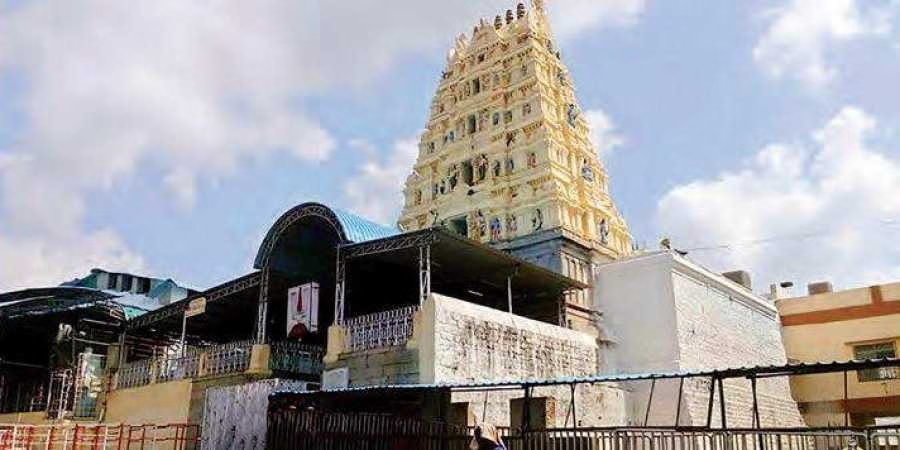
Perched atop the serene Yadagiri Hills in the Bhongir district of Telangana stands one of South India’s most revered spiritual bastions—the Lakshmi Narasimha Temple, popularly known as Yadadri. For the devout follower of Vishnu, a visit here is not merely a travel itinerary but a profound engagement with divine history. As the Lead Heritage Architect of BharatTemples.com, I invite you to explore the architectural magnificence and spiritual aura of this ancient shrine.
1. Introduction & Spiritual Essence
The presiding deity of this hilltop sanctuary is Lord Lakshmi Narasimha, the ferocious yet benevolent lion-man incarnation of Lord Vishnu. The temple is also famously known as Yadagirigutta. Unlike other shrines where the deity is consecrated, the murti of Yadadri is a Swayambhu (self-manifested) idol, believed to have been naturally formed within a cave.
Phalaśruti: The Benefits of Pilgrimage
According to temple lore and devotee belief, a visit to Yadadri carries immense spiritual weight:
- Removal of Navagraha Doshas: It is believed that worshipping the Jwala Narasimha form here helps mitigate the negative influences of planetary alignments.
- Cleansing Ancestral Karma: Performing rituals for departed ancestors (Pinda Pradana) at this holy site is said to grant them liberation (Moksha).
- Protection from Evils: As Narasimha is the conqueror of fear, devotees visit to seek protection from supernatural and psychological fears.
2. Historical Origins & Scriptural Legend
The history of Yadadri is rooted in the mists of the Treta Yuga, making it a site of timeless sanctity.
The Legend of Yadarishi
Tradition holds that the great sage Yadarishi, the son of Rishi Rishyashringa and Santa Devi, performed intense penance on this hill to please Lord Vishnu. Pleased by his devotion, the Lord manifested as Narasimha. The sage, however, desired to witness the Lord in his complete form, accompanied by his consort, Goddess Lakshmi. The Lord obliged, appearing with the Goddess on his lap, thus earning the name Lakshmi Narasimha Swamy.
Scriptural References
The temple finds mention in the Skanda Purana, validating its ancient lineage. While specific dynastic records of construction are sparse, the current architectural structure has seen significant renovations and expansions by the Qutb Shahi rulers and, more recently, the Government of Telangana, which redeveloped the complex into a grand “temple city” in 2016.
3. Architectural Marvels
The temple is a masterpiece of Dravidian Architecture, blending traditional Vastu Shastra with modern engineering.
Structural Design
The temple complex is built on a sprawling 62-acre area. The most striking feature is the towering Rajagopuram (entrance tower), which soars 120 feet high, adorned with intricate sculptures of deities and mythological narratives. The sanctum sanctorum (Garbhagriha) is carved out of the natural rock formation, preserving the Swayambhu nature of the deity.
Notable Features
The cave sanctuary houses the Lord in three distinct forms:
- Jwala Narasimha: Depicted as a snake (serpent form).
- Gandabherunda Narasimha: A powerful two-headed avatar.
- Yogananda Narasimha: Seated in a meditative yoga posture.


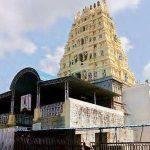
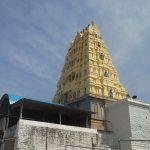
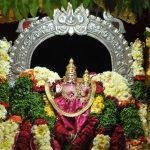
While the temple is not a UNESCO World Heritage site, it is protected and maintained by the Telangana Endowments Department as a site of national heritage importance.
4. Darshan & Ritual Logistics (2026 Guide)
Planning your darshan requires attention to the ritualistic schedule. The temple follows strict Panchangam timings.
Daily Darshan Timings
| Session | Timings | Duration |
|---|---|---|
| Morning Darshan | 04:00 AM – 12:30 PM | 5 Hours |
| Suprabhatam | 04:00 AM | 30 Mins |
| First Archna | 05:00 AM | 1 Hour |
| Evening Darshan | 03:00 PM – 09:30 PM | 5 Hours |
| Second Archna | 06:30 PM | 1 Hour |
Key Sevas & Online Booking
Devotees can book the following Sevas via the official Sri Lakshmi Narasimha Swamy Vari Devastanam portal:
- Kumkum Archana: Daily, performed by proxy if unable to attend.
- Lakshmi Narasimha Abhishekam: Performed on Ekadashi and full moon days.
- Kalyanotsavam: Celestial wedding ceremony of the Lord (requires prior online reservation).
2026 Major Festivals
- Narasimha Jayanti: May 9, 2026 (Vaishakh Shukla Chaturdashi) – Grand celebrations with special Alankaram.
- Brahmotsavam: June 24 – July 4, 2026 – The annual chariot festival.
- Vaikuntha Ekadashi: December 29, 2026 – Special viewing of the Vaikuntha Dwaram.
5. Practical Visitor Guidance
To ensure a smooth darshan experience, please adhere to the following guidelines.
Dress Code & Etiquette
- Attire: Traditional Indian clothing is mandatory (Dhoti/Saree/Shalwar Kameez). Western attire (jeans, shorts) is strictly prohibited inside the sanctum.
- Photography: Photography is strictly prohibited inside the main sanctum (Garbhagriha). Mobile phones should be switched to silent mode.
Locker Facilities & Accessibility
Free mobile and luggage lockers are available at the entrance counter. The temple complex is wheelchair accessible, with ramps leading up to the lower prakaram (circumambulation path), though the cave sanctum requires climbing stairs (volunteers are available for assistance).
Crowd Management & Seasonal Advice
- Best Time to Visit: Weekdays (Tuesday to Thursday) have significantly lower footfall compared to weekends.
- Weather: November to February offers the most pleasant weather. During May/June (Summer), carry a water bottle and head covering, as the hilltop exposes devotees to direct sunlight.
6. Pilgrimage Connectivity
Yadadri is well-connected to major hubs in Telangana.
How to Reach
- By Air: Rajiv Gandhi International Airport, Hyderabad (HYD) is the nearest airport, approximately 92 km away. Taxis and buses are available directly from the airport.
- By Train:
- Raigir Railway Station (RAG): 6 km (The closest station).
- Bhongir Railway Station (BG): 11 km.
- Secunderabad Junction (SC): 60 km.
- By Road: The temple is located on National Highway 65 (Hyderabad-Vijayawada). TSRTC runs special buses from Hyderabad (MGBS) and Secunderabad directly to Yadadri.
Nearby Sacred Sites (The Circuit)
- Basara Gnana Saraswati Temple: 110 km from Yadadri. The only temple in South India dedicated to Goddess Saraswati.
- Kolanupaka Jain Temple: 90 km away. An ancient Jain temple housing a 5-foot high idol of Lord Mahavira.
- Bhongir Fort: Located at the foothills of Yadagiri, offering a glimpse into medieval history.
7. Frequently Asked Questions (FAQs)
Is there a VIP Darshan entry available?
Yes, the temple provides a Special Entry Darshan (Seegra Darshan) for a nominal fee of Rs. 100/- per person. Tickets can be purchased at the counters at the foothills or booked online.
Can we carry our own Puja items?
While you may carry flowers and coconuts, the temple administration prefers devotees to purchase the official Archana packets (containing Tirunamams, flowers, and vibhuti) from the counters to support the temple’s maintenance.
What is the best route to climb the hill?
There are two ways: The Pedestrian Steps (approx. 500 steps) and the Ghat Road (3 km drive). Electric vehicles are available at the foothill for those unable to walk.
Are there accommodation facilities near the temple?
Yes, the Sri Lakshmi Narasimha Swamy Devasthanam runs guest houses at the foothills. Additionally, private hotels are available in Bhongir (12 km) and Hyderabad (60 km).
Is the temple open on all days?
The temple remains open every day of the year, including festivals. However, during extreme weather or special maintenance, timings may change; checking the official website before travel is recommended.
Recent Posts

Shri Kaamkoteeshwar Mandir, Varanasi – History & Significance
In the heart of Kashi, the eternal city of Lord Shiva, where the Ganges flows with celestial grace, stands the Shri Kaamkoteeshwar Mandir. This sacred Sannidhi is not merely a temple but a profound spiritual bridge between the Northern…

ओ सांवरे तूने ही मुझको संभाला – Lyrics & Meaning
ओ सांवरे तूने ही मुझको संभाला – A Prayer to Shyam Origin & Spiritual Essence Why This Bhajan Resonates Devotees chant this when overwhelmed by life’s storms—the refrain ‘तूने ही मुझको संभाला’ is the soul’s sigh of relief: “You…

कथा ये है महाराज मेरे की – Lyrics & Meaning
कथा ये है महाराज मेरे की छत्रपति संभाजी महाराज – A Prayer to Chhatrapati Sambhaji Maharaj Origin & Spiritual Essence Why This Bhajan Resonates Devotees chant this when their spirit feels tested—its powerful refrain “महाराज मेरे” is a soul’s…

Rigveda Samhita Yathartha Anuvada (ऋग्वेद संहिता यथार्थ अनुवाद) – Complete Set with Anvayartha & Hindi/English Translation
The Rigveda is the oldest surviving scripture of humanity and the foundational text of Sanātana Dharma. For serious students, scholars, UPSC aspirants studying ancient Indian history, Sanskrit learners, and spiritual seekers, a precise and grammatically structured translation is indispensable.…

आना भी अकेला है जाना भी अकेला है – Lyrics & Meaning | BharatTemples
आना भी अकेला है जाना भी अकेला है – A Prayer to the Divine Witness Origin & Spiritual Essence Why This Bhajan Resonates Devotees turn to this bhajan in moments of deep reflection—when life’s attachments begin to ache. The…

माता शेरावाली के द्वार जो भी जाता है – Lyrics & Meaning
माता शेरावाली के द्वार जो भी जाता है – A Prayer to Maa Sherawali Origin & Spiritual Essence Why This Bhajan Resonates Devotees turn to this bhajan in times of fear or uncertainty—its promise that no one leaves Maa’s…

मार लेना सपणी उबार लेणा भवरा – Lyrics & Meaning
मार लेना सपणी उबार लेणा भवरा – A Prayer to the Divine Beloved Origin & Spiritual Essence Why This Bhajan Resonates Devotees chant this in moments of deep vulnerability—its cry of “मार लेना सपणी, उबार लेणा भवरा” is the…

हमें श्याम सुंदर भरोसा तुम्हारा – Lyrics & Meaning
हमें श्याम सुंदर भरोसा तुम्हारा – A Prayer to Shyam Sundar Origin & Spiritual Essence Why This Bhajan Resonates Devotees chant this when feeling alone—its refrain ‘de do sahara’ is the soul’s cry for divine support. Lyrics in Hindi…

Mere Satguru Ne Di Thi Davai Lyrics in Hindi & Meaning
Mere Satguru Ne Di Thi Davai: Invoking the Guru’s Liberating Wisdom This soul-stirring bhajan venerates the Satguru (True Spiritual Master) as the divine physician who dispenses the only remedy for life’s deepest sufferings. Composed by Sant Karmaveer Tufani, it…

Janm Diyo Thari Maa Dukh Dekhiyo Lyrics in Hindi & Meaning
जन्म दियो थारी माँ दुख देखियो (Maa’s Grief Upon Birthing You) This soul-stirring Chetavani Bhajan (admonitory hymn) is addressed to the Divine Mother (Maa) – a call for repentance when children forget their filial duties in the dark age…