
Contents
Introduction & Spiritual Essence
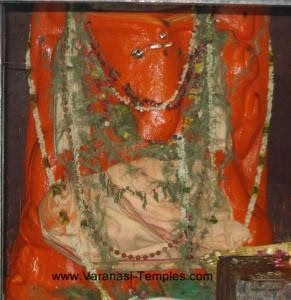
Perched amidst the ancient ghats of Varanasi stands the Lambodara Vinayak Temple, a sanctuary of unwavering faith and cosmic energy. Locally revered as the Chintamani Ganesh Temple, this sacred abode is dedicated to Lord Ganesha in the form of Lambodara—the ‘Pot-Bellied’ one, symbolizing the universe contained within.
For the devotee, this is not merely a stop on a tour, but a profound spiritual intervention. The primary deity, a Swayambhu (self-manifested) murti, radiates a powerful aura that is said to annihilate obstacles and cleanse ancestral karma. The name “Chintamani” itself translates to the ‘Jewel that removes worry.’ Visitors flock here to surrender their anxieties to Lord Ganesha, seeking his boon of Siddhi (spiritual success) and Buddhi (intellect). The Phalaśruti (benefit of worship) here is specifically associated with the removal of Sankat (crisis) and the granting of fearlessness in life’s journey.
Historical Origins & Scriptural Legend
The Legend of Chintamani
According to the local Sthala Purana (oral tradition), the temple derives its alternate name from a legendary connection to the Chintamani gem, a wish-fulfilling jewel of the gods. Tradition holds that this temple was the meditation site of sages who invoked Ganesha to protect the spiritual sanctity of the Kedarghat area.
Unlike the grand royal temples of North India, this shrine’s origins are deeply rooted in the devotional movements of Varanasi. While specific dynastic records from the initial construction are sparse—typical of many ancient shrines in the holy city—the architectural ethos dates back centuries. The temple has undergone several renovations over the years, funded by wealthy devotees and local trusts, ensuring the preservation of the sanctum sanctorum while maintaining its original charm.
Architectural Marvels
The architecture of Lambodara Vinayak Temple is a classic example of the Nagara style, adapted to the compact urban fabric of Varanasi’s galis (lanes).
- The Shikhara (Spire): While modest in height compared to massive cathedrals, the shikhara is intricately carved, featuring tiers of amalakas (stone discs) and a harmonious vertical rise that draws the eye upward toward the heavens.
- The Mandapa (Hall): The temple features a covered mandapa that serves as the gathering space for devotees before darshan. The pillars are adorned with traditional motifs.
- The Murti (Idol): The central iconography is striking. The idol of Lord Ganesha is depicted in a seated posture, with a pot belly (Lambodara) which represents the cosmic egg (Brahmanda). The trunk is usually turned towards the right (Dakshinabhimukhi), which is considered auspicious for fulfilling desires.
Darshan & Ritual Logistics
The temple maintains a rigorous schedule to accommodate both early-rising pilgrims and evening devotees. Below are the current operational timings.
| Session | Timings | Activity |
|---|---|---|
| Morning | 05:00 AM – 10:00 AM | Mangala Aarti (08:30 AM) |
| Mid-Day | 10:00 AM – 06:30 PM | General Darshan (Grilled Door) |
| Evening | 06:30 PM – 08:00 PM | Sandhya Aarti (07:30 PM) |
Sevas and Online Booking
Devotees can perform several Sevas, including:
- Abhishekam: Ritual bathing of the deity with milk, honey, and curd.
- Archana: Chanting of Ganesh Sahasranam (1008 names of Ganesha).
Note on Online Seva: While the temple office manages local bookings, many Varanasi temples are increasingly adopting digital platforms. Devotees are advised to contact the temple trust management or visit authorized portals for “Online Seva Booking” for major festivals.
2026 Festival Calendar (Varanasi)
- Vinayaka Chaturthi: September 5, 2026 (Primary celebration)
- Sankashti Chaturthi: Monthly (Check local Panchang)
- Magha Gupta Navratri: February 26 – March 5, 2026
- Rama Navami: April 2, 2026
Practical Visitor Guidance
To ensure a harmonious visit, please adhere to the following protocols:
- Dress Code: Traditional attire is recommended. Men should wear dhotis or trousers with shirts; women should wear sarees or modest dresses. Avoid shorts and sleeveless tops.
- Photography & Mobiles: Photography is generally restricted inside the sanctum. Silence is required within the mandapa.
- Crowd Management: The lanes of Kedarghat can get narrow. The best time for a peaceful darshan is early morning (5:00 AM – 6:30 AM) or late evening (post 7:00 PM). During May and June (summer), carry a water bottle and cover your head while walking in the galis.
- Accessibility: The temple is located in a traditional lane. While autorickshaws can get close, the final approach is a narrow walkway suitable for pedestrians.
Pilgrimage Connectivity
How to Reach Lambodara Vinayak Temple
Address: B.7/206, Kedarghat Road, Varanasi, Uttar Pradesh 221001.
- By Air: Lal Bahadur Shastri International Airport (LBS) is approximately 25 km away. Taxis and cabs are available to Kedarghat (approx. 45-60 mins).
- By Rail: Varanasi Junction (BSB) is about 7 km away. From the station, take an auto-rickshaw to Kedarghat (approx. 20-30 mins).
- By Road: The temple is situated off the main Varanasi-Ghazipur road. The nearest major access point is Dashashwamedh Ghat, from where one can walk or take a cycle rickshaw.
Nearby Sacred Sites (Pilgrimage Circuit)
Expand your spiritual journey by visiting these nearby landmarks:
- Sankat Mochan Hanuman Temple: Located 2 km away, famous for its tulsi mala and protective energies.
- Kedarnath Temple (Kedarghat): Just a stone’s throw from Lambodara Vinayak, sharing the name of the ghat.
- Dashashwamedh Ghat: The heart of Varanasi, approximately 1 km away, where the grand Ganga Aarti takes place.
Frequently Asked Questions (FAQs)
1. Is there a VIP darshan entry available?
No, this is a traditional temple without a VIP entry system. Darshan is accessible to all devotees equally. However, visiting early in the morning or late at night ensures a quicker and more intimate experience.
2. Can I perform the Ganesh Sahasranamam myself?
Yes, the temple authorities allow devotees to perform their own pooja and chant the Ganesh Sahasranamam within the premises, provided it does not obstruct the general flow of devotees.
3. Is there parking available near the temple?
Due to the narrow lanes of Kedarghat, vehicle parking is limited. It is advisable to park vehicles near the main ghats or use public transport to reach the nearest access point, then walk.
4. What is the specific significance of Lambodara form?
The Lambodara form represents Lord Ganesha as the cosmic repository of happiness and the remover of past sins (purva papa). Worshipping this form is believed to ensure a worry-free future.
5. Are there accommodation facilities nearby?
Yes, the Kedarghat and Dashashwamedh area is filled with guest houses, hotels, and Dharamshalas catering to pilgrims of all budgets.
Recent Posts

ओ सांवरे तूने ही मुझको संभाला – Lyrics & Meaning
ओ सांवरे तूने ही मुझको संभाला – A Prayer to Shyam Origin & Spiritual Essence Why This Bhajan Resonates Devotees chant this when overwhelmed by life’s storms—the refrain ‘तूने ही मुझको संभाला’ is the soul’s sigh of relief: “You…

कथा ये है महाराज मेरे की – Lyrics & Meaning
कथा ये है महाराज मेरे की छत्रपति संभाजी महाराज – A Prayer to Chhatrapati Sambhaji Maharaj Origin & Spiritual Essence Why This Bhajan Resonates Devotees chant this when their spirit feels tested—its powerful refrain “महाराज मेरे” is a soul’s…

Rigveda Samhita Yathartha Anuvada (ऋग्वेद संहिता यथार्थ अनुवाद) – Complete Set with Anvayartha & Hindi/English Translation
The Rigveda is the oldest surviving scripture of humanity and the foundational text of Sanātana Dharma. For serious students, scholars, UPSC aspirants studying ancient Indian history, Sanskrit learners, and spiritual seekers, a precise and grammatically structured translation is indispensable.…

आना भी अकेला है जाना भी अकेला है – Lyrics & Meaning | BharatTemples
आना भी अकेला है जाना भी अकेला है – A Prayer to the Divine Witness Origin & Spiritual Essence Why This Bhajan Resonates Devotees turn to this bhajan in moments of deep reflection—when life’s attachments begin to ache. The…

माता शेरावाली के द्वार जो भी जाता है – Lyrics & Meaning
माता शेरावाली के द्वार जो भी जाता है – A Prayer to Maa Sherawali Origin & Spiritual Essence Why This Bhajan Resonates Devotees turn to this bhajan in times of fear or uncertainty—its promise that no one leaves Maa’s…

मार लेना सपणी उबार लेणा भवरा – Lyrics & Meaning
मार लेना सपणी उबार लेणा भवरा – A Prayer to the Divine Beloved Origin & Spiritual Essence Why This Bhajan Resonates Devotees chant this in moments of deep vulnerability—its cry of “मार लेना सपणी, उबार लेणा भवरा” is the…

हमें श्याम सुंदर भरोसा तुम्हारा – Lyrics & Meaning
हमें श्याम सुंदर भरोसा तुम्हारा – A Prayer to Shyam Sundar Origin & Spiritual Essence Why This Bhajan Resonates Devotees chant this when feeling alone—its refrain ‘de do sahara’ is the soul’s cry for divine support. Lyrics in Hindi…

Mere Satguru Ne Di Thi Davai Lyrics in Hindi & Meaning
Mere Satguru Ne Di Thi Davai: Invoking the Guru’s Liberating Wisdom This soul-stirring bhajan venerates the Satguru (True Spiritual Master) as the divine physician who dispenses the only remedy for life’s deepest sufferings. Composed by Sant Karmaveer Tufani, it…

Janm Diyo Thari Maa Dukh Dekhiyo Lyrics in Hindi & Meaning
जन्म दियो थारी माँ दुख देखियो (Maa’s Grief Upon Birthing You) This soul-stirring Chetavani Bhajan (admonitory hymn) is addressed to the Divine Mother (Maa) – a call for repentance when children forget their filial duties in the dark age…
Bhadi Sabha Mein Thane Manaun Lyrics in Hindi & Meaning
Bhadi Sabha Mein Thane Manaun: Invoking the Spear-Wielding Mother Mata Bhawani (श्री ज्वाला भवानी), the fiery manifestation of Shakti worshipped as the Protector of Dharma in Her Dhaulagarh sanctum. Origin & Spiritual Essence Composed in Rajasthani folk tradition by…