

Contents
Introduction & Spiritual Essence
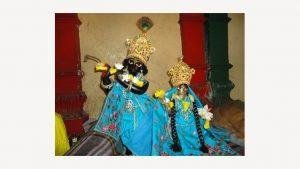
Located in the serene village of Mellock, near the banks of the holy Rupnarayan River in West Bengal, stands the Madangopal Jiu Temple. Locally revered as Gopaler Mondir, this sacred site is a sanctuary for devotees of Radha and Madangopala (Lord Krishna).
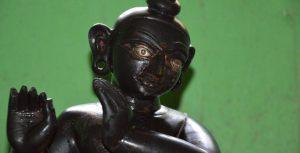
The primary deity, Madangopala, is a manifestation of Lord Krishna known as the protector of cows and the Gopala of Vrindavan. The temple is a Swayambhu site in a spiritual sense, where the presence of the deity is believed to have been established through divine will, though the murti (idol) was physically consecrated in the 17th century.
Phalaśruti (Spiritual Benefits): Why do devotees visit? According to local traditions and the Sthala Purana, offering prayers here helps in:
- Cleansing Ancestral Karma: Performing rituals near the Rupnarayan River is believed to liberate ancestors from the cycle of Pitra Dosha.
- Harmonizing Relationships: As the temple is dedicated to Radha and Krishna, it is a powerful place for couples and families seeking divine blessings for unity and unconditional love.
- Fulfillment of Desires: The deity is known as “Manogopal” (The Lord who fulfills the mind’s desires).
Historical Origins & Scriptural Legend
The history of the Madangopal Jiu Temple is deeply intertwined with the Roychoudhury Zamindar family of Mellock.
The Founder: The temple was constructed in the 17th century AD (circa 1651) by Mukundaprasad Roychoudhury, a prominent Zamindar known for his legendary physical strength and dedication to Lord Krishna. Tradition holds that he was a devout wrestler who would perform his exercises by carrying heavy stone dumbbells across the Rupnarayan to the temple site.
The Sthala Purana: One of the stone dumbbells used by Mukundaprasad is still preserved within the temple campus. Visitors can observe the deep impressions etched into the stone, said to be the result of the immense force exerted by the Zamindar’s hands—a physical testament to the era’s devotion and valor.
Renovation History: While the temple was originally situated directly on the banks of the Rupnarayan, the river’s course has since shifted. Reconstruction efforts began in the early 2010s to preserve this terracotta heritage, symbolizing a continuous effort to maintain the sanctity of the site.
Architectural Marvels
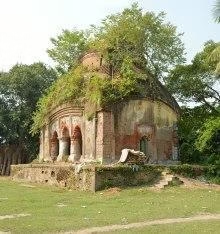
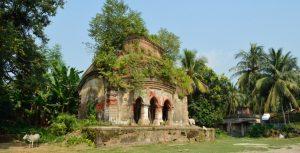
The temple is a masterpiece of traditional Bengali temple architecture, specifically the “Aatchala” style, characterized by a roof with eight slopes—a design highly effective for the region’s heavy rainfall.
- Material & Facade: Constructed primarily from burnt brick and lime mortar, the exterior is adorned with intricate terracotta reliefs. These carvings depict scenes from the Ramayana and Mahabharata, alongside everyday rural life of 17th-century Bengal.
- Orientation: The main entrance, featuring three distinct arches, faces South (the direction associated with Yama, the lord of death, but here it is purified by the presence of Krishna, granting victory over death).
- Structure: The temple stands approximately 40 feet high. An additional entrance on the East leads to an antechroom adjacent to the Garbhagriha (Sanctum Sanctorum).
Darshan & Ritual Logistics
Visitors are encouraged to verify timings locally, as seasonal variations may occur. Below is the standard schedule for Darshan and Sevas.
| Ritual / Seva | Timings | Booking Mode |
|---|---|---|
| Mangala Darshan | 6:00 AM – 7:00 AM | Direct Entry |
| Abhishekam (Morning) | 7:30 AM – 9:00 AM | At Temple Counter |
| Midday Rest (Mangal Aarti) | 12:00 PM – 12:30 PM | General Darshan |
| Sandhya Darshan | 5:00 PM – 6:30 PM | Direct Entry |
| Shayan Aarti (Closing) | 8:00 PM – 8:30 PM | General Entry |
Online Seva Booking: While the temple administration is undergoing digitization, most Sevas (Abhishekam, Archana) are currently booked directly at the temple counter upon arrival. For future updates, devotees are advised to contact the local managing committee of Mellock.
2026 Festival Calendar
Major festivals are celebrated with immense fervor. Plan your visit during these dates for a vibrant spiritual experience:
- Jhulan Yatra: August 10 – August 14, 2026 (Dates may vary based on the lunar calendar).
- Janmashtami: August 14, 2026 (Main festivities).
- Holi (Dol Jatra): March 13, 2026 (Celebrated as Dol Purnima).
Practical Visitor Guidance
To ensure a respectful visit, please adhere to the following protocols:
Dress Code & Etiquette
Modest attire is mandatory. Traditional Indian wear (Dhoti for men, Saree/Salwar Kameez for women) is preferred. Western attire like shorts or sleeveless tops is discouraged within the sanctum sanctorum.
Photography & Mobiles
Photography is generally permitted in the temple courtyard but restricted inside the Garbhagriha. Mobile phones should be kept on silent mode.
Accessibility
The temple is an older structure without modern elevators. The approach path is earthen/brick. Elderly pilgrims may require assistance to ascend the steps.
Crowd Management
- Best Time to Visit: Early mornings (6 AM – 8 AM) are peaceful. Evening Aarti (6 PM) is the most crowded.
- Seasonal Advice: During May and June (summer), carry ample water. The terracotta structure retains heat. Monsoons (July-September) bring lush greenery but can make the riverbank approach slippery.
Pilgrimage Connectivity
Accessing the Madangopal Jiu Temple involves a journey through the rural heartland of East Midnapore.
How to Reach
- Nearest Railway Station: Kharagpur Junction (KGP) is the major railhead, approximately 18-20 km away. From there, local cabs or buses travel toward Tamluk/Mellock.
- Nearest Airport: Netaji Subhas Chandra Bose International Airport (CCU), Kolkata, is roughly 120 km away (approx. 3.5 hours by road via NH16).
- By Road: The temple is located off NH16 (formerly NH6). From Kolkata, take the Kolkata–Kharagpur highway, turn toward Tamluk, and proceed to Mellock village.
Nearby Sacred Sites
Enhance your pilgrimage with a visit to these nearby spiritual centers:
- Tamluk Rajarampur Temple: An ancient site linked to the Mahabharata era (Dvaraka).
- Mahishadal Rajbari Temple: A historic temple complex showcasing colonial and traditional architecture.
- Rupnarayan River Ghats: Located just a short walk from the temple, ideal for ritual bathing.
Photo Gallery
Frequently Asked Questions (FAQs)
Is there a VIP darshan entry available at Madangopal Jiu Temple?
Unlike larger commercial temples, Madangopal Jiu Temple operates on a community level. There is no formal VIP entry system. However, visiting during non-peak hours (early mornings on weekdays) ensures a quick and intimate darshan.
What is the architectural style of the temple?
The temple follows the Bengali Aatchala style with terracotta embellishments. It features a curved roof with eight slopes, typical of the 17th century in this region of West Bengal.
Where can I stay near the temple?
Lodging options are limited in Mellock itself. Devotees usually stay in Kharagpur or Tamluk, where multiple hotels and guesthouses are available.
Is the temple accessible for wheelchairs?
Due to the heritage nature of the structure and the lack of ramps, accessibility for wheelchairs is challenging. The inner sanctum requires climbing stairs.
What is the significance of the Rupnarayan River here?
Historically, the temple was built on the riverbank. Bathing in the Rupnarayan on auspicious days like Kartik Purnima is considered as meritorious as performing a hundred Ashvamedh Yagyas, according to the temple priest.
Contact Details
As specific direct contact numbers for the temple management committee are subject to change, it is recommended to inquire at the Kharagpur Temple Association or the local West Bengal Tourism office for the latest information.
Official Address: Mellock Village, Kharagpur Block, East Midnapore District, West Bengal, India.
Recent Posts

ओ सांवरे तूने ही मुझको संभाला – Lyrics & Meaning
ओ सांवरे तूने ही मुझको संभाला – A Prayer to Shyam Origin & Spiritual Essence Why This Bhajan Resonates Devotees chant this when overwhelmed by life’s storms—the refrain ‘तूने ही मुझको संभाला’ is the soul’s sigh of relief: “You…

कथा ये है महाराज मेरे की – Lyrics & Meaning
कथा ये है महाराज मेरे की छत्रपति संभाजी महाराज – A Prayer to Chhatrapati Sambhaji Maharaj Origin & Spiritual Essence Why This Bhajan Resonates Devotees chant this when their spirit feels tested—its powerful refrain “महाराज मेरे” is a soul’s…

Rigveda Samhita Yathartha Anuvada (ऋग्वेद संहिता यथार्थ अनुवाद) – Complete Set with Anvayartha & Hindi/English Translation
The Rigveda is the oldest surviving scripture of humanity and the foundational text of Sanātana Dharma. For serious students, scholars, UPSC aspirants studying ancient Indian history, Sanskrit learners, and spiritual seekers, a precise and grammatically structured translation is indispensable.…

आना भी अकेला है जाना भी अकेला है – Lyrics & Meaning | BharatTemples
आना भी अकेला है जाना भी अकेला है – A Prayer to the Divine Witness Origin & Spiritual Essence Why This Bhajan Resonates Devotees turn to this bhajan in moments of deep reflection—when life’s attachments begin to ache. The…

माता शेरावाली के द्वार जो भी जाता है – Lyrics & Meaning
माता शेरावाली के द्वार जो भी जाता है – A Prayer to Maa Sherawali Origin & Spiritual Essence Why This Bhajan Resonates Devotees turn to this bhajan in times of fear or uncertainty—its promise that no one leaves Maa’s…

मार लेना सपणी उबार लेणा भवरा – Lyrics & Meaning
मार लेना सपणी उबार लेणा भवरा – A Prayer to the Divine Beloved Origin & Spiritual Essence Why This Bhajan Resonates Devotees chant this in moments of deep vulnerability—its cry of “मार लेना सपणी, उबार लेणा भवरा” is the…

हमें श्याम सुंदर भरोसा तुम्हारा – Lyrics & Meaning
हमें श्याम सुंदर भरोसा तुम्हारा – A Prayer to Shyam Sundar Origin & Spiritual Essence Why This Bhajan Resonates Devotees chant this when feeling alone—its refrain ‘de do sahara’ is the soul’s cry for divine support. Lyrics in Hindi…

Mere Satguru Ne Di Thi Davai Lyrics in Hindi & Meaning
Mere Satguru Ne Di Thi Davai: Invoking the Guru’s Liberating Wisdom This soul-stirring bhajan venerates the Satguru (True Spiritual Master) as the divine physician who dispenses the only remedy for life’s deepest sufferings. Composed by Sant Karmaveer Tufani, it…

Janm Diyo Thari Maa Dukh Dekhiyo Lyrics in Hindi & Meaning
जन्म दियो थारी माँ दुख देखियो (Maa’s Grief Upon Birthing You) This soul-stirring Chetavani Bhajan (admonitory hymn) is addressed to the Divine Mother (Maa) – a call for repentance when children forget their filial duties in the dark age…
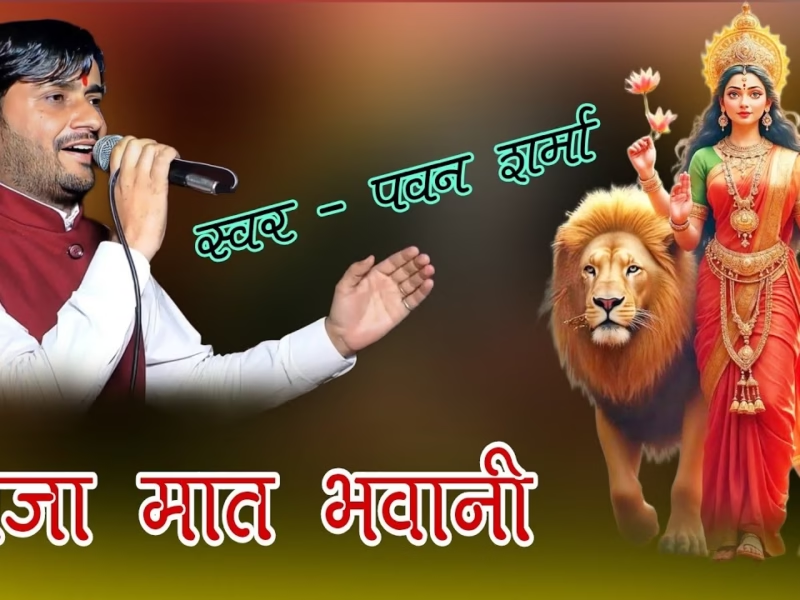
Bhadi Sabha Mein Thane Manaun Lyrics in Hindi & Meaning
Bhadi Sabha Mein Thane Manaun: Invoking the Spear-Wielding Mother Mata Bhawani (श्री ज्वाला भवानी), the fiery manifestation of Shakti worshipped as the Protector of Dharma in Her Dhaulagarh sanctum. Origin & Spiritual Essence Composed in Rajasthani folk tradition by…