
Contents
1. Introduction & Spiritual Essence: Madneswar Mahadev
Nestled in the spiritual heart of Santarapur, Bhubaneswar, the Madneswar Siva Temple stands as a serene testament to the eternal presence of Lord Shiva. Known locally as Madanesvara, this ancient shrine is dedicated to the Swayambhu (self-manifested) Siva Lingam. The name “Madneswar” is often interpreted as the “Lord of Madana” or the intoxicating Lord, representing the cosmic ecstasy of the divine.
For devotees, a visit to this temple is not merely a sightseeing activity but a spiritual journey. The primary deity, the Shiva Lingam enshrined within a circular Yonipitha, is believed to radiate immense protective energy. Phalaśruti (scriptural promise of merit) associated with this temple suggests that regular worship here helps in cleansing ancestral karma and brings mental tranquility to the devotee. It is a sanctuary for those seeking peace amidst the bustling modern capital of Odisha.
2. Historical Origins & Scriptural Legend
Dating the Sanctum
Based on stylistic analysis and local historical records, the Madneswar Siva Temple is dated to the 12th century CE (circa 1100–1200 AD). This era marks the waning years of the Somavamsi Dynasty in Odisha, a period renowned for prolific temple construction in Bhubaneswar. While specific royal patronage inscriptions are currently missing, the architectural vocabulary aligns with the grand Kalinga styles of the Ganga period.
The Legend of Madana
While the Stala Purana (local oral legend) is not explicitly documented in major texts, the temple’s name offers a clue. In Hindu mythology, Madana refers to Kamadeva, the God of Desire. A popular local tradition holds that this Lingam was established to sublimate the negative energies of desire into pure spiritual devotion, acting as a anchor for the neighborhood.
According to temple records and ASI (Archaeological Survey of India) notes, the shrine originally possessed a full superstructure. Over centuries, likely due to the 1838 earthquake or natural weathering, the upper portions (the Shikhara or spire) collapsed. However, the sanctity of the Garbhagriha (sanctum sanctorum) remains undisturbed.
3. Architectural Marvels: Kalinga Style
The temple is a classic example of transitional Kalinga architecture, bridging the gap between earlier and later temple styles in Odisha.
The Structure (A broken shrine)
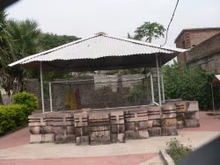
Currently, the temple is a “broken shrine” where only the Pabhaga (base portion) is intact. The sanctum is square, facing East, and surrounded by residential buildings on the north, west, and east, with a road flanking the southern side.
Notable Sculptural Elements
The surviving base rests on a plinth defined by distinct mouldings. The five mouldings of the Pabhaga are crucial identifiers of Kalinga style:
- Khura: The lower pot-like base.
- Kumbha: The bell-shaped molding.
- Pata: A flat band.
- Kani: A projecting course.
- Basanta: The uppermost moldings.
The circular Yonipitha housing the Lingam is significant, contrasting with the square sanctum. This design creates a visual focus on the union of the cosmic masculine (Lingam) and feminine (Yoni) principles.
4. Darshan & Ritual Logistics
As a historic monument under the protection of the ASI, the temple operates on traditional timings. The atmosphere is most vibrant during the monthly Pradosh and Shivaratri festivals.
Daily Timings
Note: Timings are subject to seasonal changes and local rituals.
| Session | Timings |
|---|---|
| Morning Darshan | 06:00 AM – 12:00 PM |
| Evening Darshan | 05:00 PM – 08:00 PM |
| Special Abhishekam | 07:00 AM (Daily) |
Key Sevas & Offerings
While formal online booking portals (like the Odisha Government’s dedicated temple portals) are commonly used for major temples in Bhubaneswar (e.g., Lingaraj), smaller historic temples like Madneswar often rely on local administration.
- Abhishekam: Ritual bathing of the Lingam with water, milk, and honey.
- Archana: Recitation of names (108 names of Shiva).
- Deepa/Dhupa: Morning and evening lamp offerings.
Online Booking: For specific festival bookings, devotees can check the official Odisha Government Temple Administration portal or the Sri Lingaraj Temple Trust website, which oversees several minor temples in the vicinity.
2026 Festival Dates (Odisha Calendars)
- Shivaratri: February 26, 2026
- Chandrashekara Odhana Ekadashi: December 13, 2026
- Monthly Pradosham: 13th and 28th of every month (Evening)
5. Practical Visitor Guidance
Since the temple is located in the residential Santarapur area, logistics are straightforward but require respect for local peace.
Rules & Etiquette
- Dress Code: Traditional Indian attire is preferred. Men should wear dhotis or trousers with shirts; women should wear sarees or salwar kameez. Avoid shorts and sleeveless tops.
- Photography: Photography is generally allowed in the outer courtyard, but prohibited inside the sanctum (Garbhagriha).
- Mobile/Baggage: There are no formal locker facilities due to the small size of the temple. It is advisable to travel light.
- Accessibility: The temple has a few steps. Wheelchair access is limited due to the narrow surrounding lanes.
Crowd Management & Best Times
Unlike the nearby Lingaraj Temple, Madneswar is relatively quieter.
- Best Time to Visit: Early mornings (6:00 AM – 8:00 AM) offer the most peaceful Darshan.
- Seasonal Advice: Bhubaneswar gets very hot in May. If visiting then, carry a water bottle and an umbrella. The winter months (November to February) are ideal for pilgrimage.
6. Pilgrimage Connectivity
How to Reach
Location: Santarapur, Sisupalgarh, Bhubaneswar, Odisha.
- By Air: The nearest airport is Biju Patnaik International Airport (BBI), approximately 8 km away (20–30 mins drive).
- By Rail: Bhubaneswar Railway Station (BBS) is the main junction, roughly 6 km away. Auto-rickshaws and taxis are readily available.
- By Road: The temple is accessible via NH 16 (National Highway 16). From the Vani Vihar or Master Canteen square, take the route toward Sisupalgarh/Mahavir Lane.
Visiting Time
Approximate visit duration: 30–45 minutes.
Nearby Sacred Sites (Pilgrimage Circuit)
Combine your visit with these nearby architectural wonders:
- Lingaraj Temple (1.5 km): The paramount Kalinga temple of Odisha.
- Mukteswar Temple (2.5 km): Known as the “Gem of Odisha architecture.”
- Raja Rani Temple (3 km): Famous for its ornate sculptures and absence of an idol.
7. Frequently Asked Questions
What is the architectural style of Madneswar Siva Temple?
The temple follows the Kalinga architectural style, specifically characteristic of the 12th-century Ganga period. It features a square sanctum and a distinct five-molded base (Pabhaga).
Is there a VIP or special entry for darshan?
As a protected ASI monument and a neighborhood temple, there is no formal VIP entry system like large pilgrimage centers. However, devotees can perform Abhishekam by contacting the local temple priest.
Can we perform marriage rituals at Madneswar Temple?
Given the small size of the sanctum and the surrounding residential area, large-scale weddings are not typically conducted here. However, small rites and naming ceremonies may be permitted with prior local permission.
Is photography allowed inside the sanctum?
No. Out of respect for the deity and traditional norms, photography is strictly prohibited inside the Garbhagriha (inner sanctum).
What is the historical significance of the Yonipitha?
The circular Yonipitha represents the creative energy of the universe. It houses the Lingam, symbolizing the formless absolute reality (Shiva). This specific arrangement is a hallmark of ancient Shaivite worship in Odisha.
Recent Posts

ओ सांवरे तूने ही मुझको संभाला – Lyrics & Meaning
ओ सांवरे तूने ही मुझको संभाला – A Prayer to Shyam Origin & Spiritual Essence Why This Bhajan Resonates Devotees chant this when overwhelmed by life’s storms—the refrain ‘तूने ही मुझको संभाला’ is the soul’s sigh of relief: “You…

कथा ये है महाराज मेरे की – Lyrics & Meaning
कथा ये है महाराज मेरे की छत्रपति संभाजी महाराज – A Prayer to Chhatrapati Sambhaji Maharaj Origin & Spiritual Essence Why This Bhajan Resonates Devotees chant this when their spirit feels tested—its powerful refrain “महाराज मेरे” is a soul’s…

Rigveda Samhita Yathartha Anuvada (ऋग्वेद संहिता यथार्थ अनुवाद) – Complete Set with Anvayartha & Hindi/English Translation
The Rigveda is the oldest surviving scripture of humanity and the foundational text of Sanātana Dharma. For serious students, scholars, UPSC aspirants studying ancient Indian history, Sanskrit learners, and spiritual seekers, a precise and grammatically structured translation is indispensable.…

आना भी अकेला है जाना भी अकेला है – Lyrics & Meaning | BharatTemples
आना भी अकेला है जाना भी अकेला है – A Prayer to the Divine Witness Origin & Spiritual Essence Why This Bhajan Resonates Devotees turn to this bhajan in moments of deep reflection—when life’s attachments begin to ache. The…

माता शेरावाली के द्वार जो भी जाता है – Lyrics & Meaning
माता शेरावाली के द्वार जो भी जाता है – A Prayer to Maa Sherawali Origin & Spiritual Essence Why This Bhajan Resonates Devotees turn to this bhajan in times of fear or uncertainty—its promise that no one leaves Maa’s…

मार लेना सपणी उबार लेणा भवरा – Lyrics & Meaning
मार लेना सपणी उबार लेणा भवरा – A Prayer to the Divine Beloved Origin & Spiritual Essence Why This Bhajan Resonates Devotees chant this in moments of deep vulnerability—its cry of “मार लेना सपणी, उबार लेणा भवरा” is the…

हमें श्याम सुंदर भरोसा तुम्हारा – Lyrics & Meaning
हमें श्याम सुंदर भरोसा तुम्हारा – A Prayer to Shyam Sundar Origin & Spiritual Essence Why This Bhajan Resonates Devotees chant this when feeling alone—its refrain ‘de do sahara’ is the soul’s cry for divine support. Lyrics in Hindi…

Mere Satguru Ne Di Thi Davai Lyrics in Hindi & Meaning
Mere Satguru Ne Di Thi Davai: Invoking the Guru’s Liberating Wisdom This soul-stirring bhajan venerates the Satguru (True Spiritual Master) as the divine physician who dispenses the only remedy for life’s deepest sufferings. Composed by Sant Karmaveer Tufani, it…

Janm Diyo Thari Maa Dukh Dekhiyo Lyrics in Hindi & Meaning
जन्म दियो थारी माँ दुख देखियो (Maa’s Grief Upon Birthing You) This soul-stirring Chetavani Bhajan (admonitory hymn) is addressed to the Divine Mother (Maa) – a call for repentance when children forget their filial duties in the dark age…

Bhadi Sabha Mein Thane Manaun Lyrics in Hindi & Meaning
Bhadi Sabha Mein Thane Manaun: Invoking the Spear-Wielding Mother Mata Bhawani (श्री ज्वाला भवानी), the fiery manifestation of Shakti worshipped as the Protector of Dharma in Her Dhaulagarh sanctum. Origin & Spiritual Essence Composed in Rajasthani folk tradition by…