
Contents
- 1 Definitive Pilgrimage Guide: Maha Muneeswarar Temple, Pulivaai
Definitive Pilgrimage Guide: Maha Muneeswarar Temple, Pulivaai
Welcome to the definitive 2026 guide for the ancient Maha Muneeswarar Temple in Pulivaai, Uthiramerur. As the Lead Heritage Architect for BharatTemples.com, I have curated this guide to help devotees and heritage enthusiasts navigate the spiritual and architectural significance of this Dravidian marvel. While specific historical timelines are currently being verified by ASI experts, the temple’s energy and architectural footprint remain a testament to ancient Tamil devotion.
1. Introduction & Spiritual Essence
At the heart of Pulivaai village stands the Maha Muneeswarar Temple, a sanctum dedicated to Lord Shiva. Here, the presiding deity is revered as Sri Maha Muneeswarar (a form of Shiva associated with sages or Munis), and the consort Goddess is Sri Maragathavalli (emerald-hued Lakshmi). The Sthala Vriksham (sacred tree) is the Vilvam tree, which is integral to Shiva worship.
Phalaśruti: The Boon of Devotion
According to local oral tradition and temple records, this shrine holds immense therapeutic power. The primary Phalaśruti (benefit of hearing/serving) associated with this temple is the cure of eye ailments. It is widely believed among the villagers that offering garlands made of Vilva leaves to Sri Maha Muneeswarar continuously for 4 or 8 days brings relief from vision-related issues. Devotees visit not only for physical healing but to cleanse ancestral karma through the grace of the Muneeswarar.
2. Historical Origins & Scriptural Legend
The Maha Muneeswarar Temple is a heritage structure of significant antiquity. While restoration records are pending, the temple is widely acknowledged as a “very old” structure deeply woven into the fabric of Pulivaai’s history.
Scriptural and Local Context
Tradition holds that the temple was constructed during the era of local chieftains who were ardent devotees of Shiva. The architecture suggests a lineage connected to the Pallava or early Chola periods, characterized by the distinct Dravidian style. The temple complex houses many stone inscriptions (Tamil Brahmi and Vatteluttu scripts are commonly found in this region). These stones remain a vital untranscribed record of the temple’s land grants and past Dharmas, awaiting detailed epigraphic study.
3. Architectural Marvels
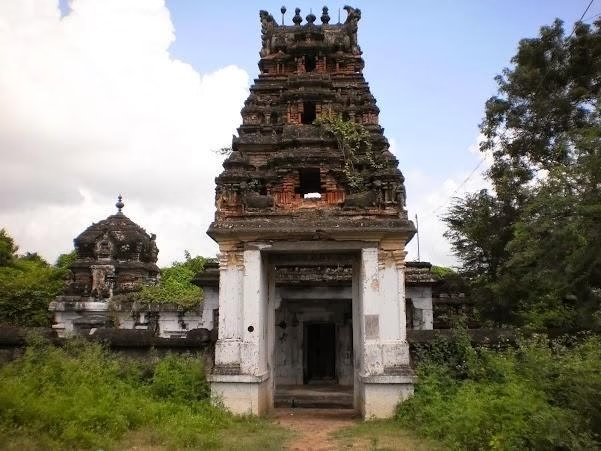
The temple is a classic example of Dravidian Architecture, emphasizing horizontal lines and pyramid-like towers.
Structural Highlights
- The Sanctum (Garbhagriha): The inner shrine houses the Swayambhu-like self-manifested form of Maha Muneeswarar. The Vimana (tower above the sanctum) follows the Dravidian style with tiered Kutas (mini-towers).
- Mandapas: The temple features pillared Mandapas (halls) used for rituals and festivals. The ceiling often depicts carvings of deities and floral motifs typical of South Indian temple art.
- Sculpture: The outer walls feature niche sculptures (Alcoves) depicting various forms of Shiva and guardian deities.
Note: The temple is currently in a state of preservation that requires careful architectural restoration to maintain its structural integrity.
4. Darshan & Ritual Logistics
Visitors to the Maha Muneeswarar Temple can partake in daily rituals that have been maintained for generations. As of 2026, the temple administration has streamlined these processes for better accessibility.
Daily Temple Timings
The temple opens for specific intervals to allow for the daily Pooja.
| Session | Timings |
|---|---|
| Morning Darshan | 06:00 AM – 11:00 AM |
| Afternoon Closure | 11:00 AM – 04:00 PM |
| Evening Darshan | 04:00 PM – 08:00 PM |
*Timings may vary slightly during festival days. Please check the official notice board upon arrival.
Seva & Online Booking
Currently, one primary Pooja is performed daily. However, special Sevas can be requested:
- Abhishekam: Ritual bathing of the deity with milk, honey, and sandalwood.
- Archana: Recitation of the deity’s names.
- Vilva Archana: Special offering of Vilva leaves for eye health.
While physical booking is available at the temple counter, for the convenience of devotees in 2026, online seva booking platforms (such as local Tamil Nadu temple portals) are increasingly being utilized. We recommend checking the Kanchipuram District Temple Administration website for real-time availability.
2026 Festival Calendar (Highlights)
- Pradosham: Occurs every 13th day of the lunar cycle (bi-monthly).
- Maha Shivaratri (Feb 26, 2026): The grandest celebration of the year, featuring night-long vigils.
- Ardra Darshan: Celebration during the Ardra star (usually in December/January).
- Deepavali (Oct 21, 2026): Special Abhishekam and oil lamp lighting.
5. Practical Visitor Guidance
To ensure a serene darshan experience, please adhere to the following guidelines.
Code of Conduct
- Dress Code: Traditional attire is mandatory. Men should wear Dhoti or trousers with a shirt; women should wear Saree, Salwar Kameez, or traditional full-length attire.
- Photography: Photography is strictly prohibited inside the Garbhagriha (sanctum). Discretion is advised in the outer corridors.
- Mobile Phones: Please switch phones to silent mode. While electronic lockers may not be available at this village temple, it is advised to carry minimal luggage.
- Accessibility: The temple has stone steps leading to the sanctum. It may be challenging for those with severe mobility issues; assistance from temple volunteers is usually available.
Crowd Management & Seasonal Advice
- Best Time to Visit: Early morning (6:00 AM – 7:30 AM) offers the most peaceful Darshan.
- Seasonal Tip: In the summer months (April–June), the Tamil Nadu heat can be intense. Carry a water bottle and an umbrella.
- Footwear: There is a designated area to leave footwear outside the temple premises; a small donation is customary.
6. Pilgrimage Connectivity
How to Reach Maha Muneeswarar Temple
The temple is located in the village of Pulivaai, approximately 9 km from Uthiramerur in the Kanchipuram district.
- By Bus: The most convenient local transport. Bus No. 34D runs from Kanchipuram to Malayankulam and stops directly at Pulivaai Village.
- By Train: The nearest Railway Station is Kanchipuram (Tamil Nadu) (approx. 20 km). From there, auto-rickshaws or buses are available to Uthiramerur.
- By Air: The nearest airport is Chennai International Airport (MAA) (approx. 70 km). Taxis are available for the 1.5-hour drive.
- By Road: The temple is accessible via the Uthiramerur–Kanchipuram road.
Nearby Sacred Sites (Pilgrimage Circuit)
Extend your spiritual journey by visiting these nearby landmarks:
- Uthiramerur Sundareswarar Temple: A historic Shiva temple in the main town, famous for its intricate stone carvings and association with the Chola administrative system.
- Kanchipuram Kamakshi Amman Temple: Located about 20 km away, this is one of the Shakti Peethas and a must-visit for devotees visiting Kanchipuram.
- Ekambareswarar Temple (Kanchipuram): One of the Pancha Bhoota Stalas (representing the element of Earth), just a short drive from the temple area.
7. Frequently Asked Questions (FAQ)
Is there a VIP darshan entry?
As a village temple, the Maha Muneeswarar Temple operates on a community basis. There is no formal VIP ticket system. However, devotees contributing to temple maintenance or special Seva donors are often granted priority entry by the temple priests.
Can we perform special rituals for eye ailments?
Yes. The local belief specifically highlights the efficacy of the Vilva Archana. Devotees can coordinate with the temple priest to perform this offering for 4 to 8 consecutive days.
Is food provided at the temple?
Unlike large shrines, this temple does not typically have a dedicated Annapurna dining hall. Visitors are advised to eat at the restaurants in Uthiramerur or carry Prasadam from home.
What is the best mode of transport for a family?
Driving a private car is the most convenient option, allowing you to navigate the village roads easily. Alternatively, hiring a taxi from Kanchipuram for a half-day trip is recommended.
Are there ATMs nearby?
ATM facilities are available in Uthiramerur town (9 km away). It is advisable to carry cash when visiting Pulivaai village.
Recent Posts

ओ सांवरे तूने ही मुझको संभाला – Lyrics & Meaning
ओ सांवरे तूने ही मुझको संभाला – A Prayer to Shyam Origin & Spiritual Essence Why This Bhajan Resonates Devotees chant this when overwhelmed by life’s storms—the refrain ‘तूने ही मुझको संभाला’ is the soul’s sigh of relief: “You…

कथा ये है महाराज मेरे की – Lyrics & Meaning
कथा ये है महाराज मेरे की छत्रपति संभाजी महाराज – A Prayer to Chhatrapati Sambhaji Maharaj Origin & Spiritual Essence Why This Bhajan Resonates Devotees chant this when their spirit feels tested—its powerful refrain “महाराज मेरे” is a soul’s…

Rigveda Samhita Yathartha Anuvada (ऋग्वेद संहिता यथार्थ अनुवाद) – Complete Set with Anvayartha & Hindi/English Translation
The Rigveda is the oldest surviving scripture of humanity and the foundational text of Sanātana Dharma. For serious students, scholars, UPSC aspirants studying ancient Indian history, Sanskrit learners, and spiritual seekers, a precise and grammatically structured translation is indispensable.…

आना भी अकेला है जाना भी अकेला है – Lyrics & Meaning | BharatTemples
आना भी अकेला है जाना भी अकेला है – A Prayer to the Divine Witness Origin & Spiritual Essence Why This Bhajan Resonates Devotees turn to this bhajan in moments of deep reflection—when life’s attachments begin to ache. The…

माता शेरावाली के द्वार जो भी जाता है – Lyrics & Meaning
माता शेरावाली के द्वार जो भी जाता है – A Prayer to Maa Sherawali Origin & Spiritual Essence Why This Bhajan Resonates Devotees turn to this bhajan in times of fear or uncertainty—its promise that no one leaves Maa’s…

मार लेना सपणी उबार लेणा भवरा – Lyrics & Meaning
मार लेना सपणी उबार लेणा भवरा – A Prayer to the Divine Beloved Origin & Spiritual Essence Why This Bhajan Resonates Devotees chant this in moments of deep vulnerability—its cry of “मार लेना सपणी, उबार लेणा भवरा” is the…

हमें श्याम सुंदर भरोसा तुम्हारा – Lyrics & Meaning
हमें श्याम सुंदर भरोसा तुम्हारा – A Prayer to Shyam Sundar Origin & Spiritual Essence Why This Bhajan Resonates Devotees chant this when feeling alone—its refrain ‘de do sahara’ is the soul’s cry for divine support. Lyrics in Hindi…

Mere Satguru Ne Di Thi Davai Lyrics in Hindi & Meaning
Mere Satguru Ne Di Thi Davai: Invoking the Guru’s Liberating Wisdom This soul-stirring bhajan venerates the Satguru (True Spiritual Master) as the divine physician who dispenses the only remedy for life’s deepest sufferings. Composed by Sant Karmaveer Tufani, it…

Janm Diyo Thari Maa Dukh Dekhiyo Lyrics in Hindi & Meaning
जन्म दियो थारी माँ दुख देखियो (Maa’s Grief Upon Birthing You) This soul-stirring Chetavani Bhajan (admonitory hymn) is addressed to the Divine Mother (Maa) – a call for repentance when children forget their filial duties in the dark age…
Bhadi Sabha Mein Thane Manaun Lyrics in Hindi & Meaning
Bhadi Sabha Mein Thane Manaun: Invoking the Spear-Wielding Mother Mata Bhawani (श्री ज्वाला भवानी), the fiery manifestation of Shakti worshipped as the Protector of Dharma in Her Dhaulagarh sanctum. Origin & Spiritual Essence Composed in Rajasthani folk tradition by…