
Contents
- 1 Maha Muthu Mariamman Temple, Mettukulam: A Definitive Pilgrimage Guide
- 1.1 1. Introduction & Spiritual Essence
- 1.2 2. Historical Origins & Scriptural Legend
- 1.3 3. Architectural Marvels
- 1.4 4. Darshan & Ritual Logistics (2026 Schedule)
- 1.5 5. Practical Visitor Guidance
- 1.6 6. Pilgrimage Connectivity
- 1.7 7. Frequently Asked Questions (FAQ)
- 1.8 Photo Gallery
- 1.9 Contact Details
- 1.10 How to Reach:
Maha Muthu Mariamman Temple, Mettukulam: A Definitive Pilgrimage Guide
Author: Lead Heritage Architect, bharattemples.com
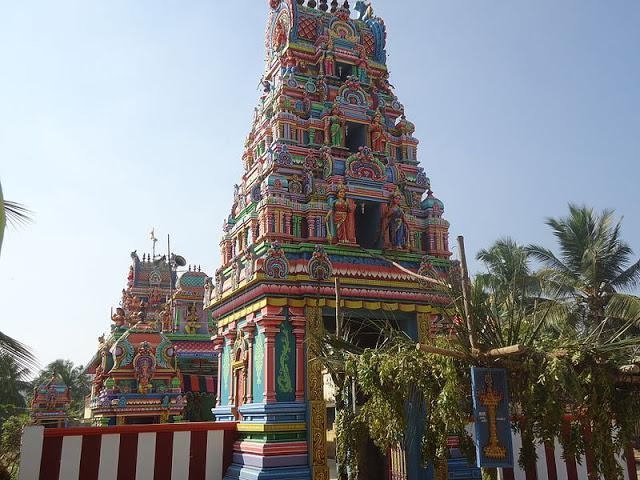
Welcome to the definitive architectural and spiritual guide to the Maha Muthu Mariamman Temple in Mettukulam. Situated in the serene outskirts of Katpadi, Vellore, this temple is a sanctum dedicated to Maha Muthu Mariamman, the powerful manifestation of Goddess Parvati as the bestower of rain, fertility, and protection.
This guide is engineered for the modern pilgrim, blending deep scriptural lore with practical logistics for your visit in 2026.
1. Introduction & Spiritual Essence
The Deity: Maha Muthu Mariamman
While the primary deity is Maha Muthu Mariamman (the Goddess of Rain and Drizzle), the temple complex is a spiritual ecosystem housing several other deities:
- Lord Maha Ganapathy: The remover of obstacles.
- Lord Bala Muruga: The divine son of Shiva, representing eternal youth and valor.
- Navagrahas: The nine planetary deities, essential for astrological harmony.
Phalaśruti: Why Devotees Visit
According to temple records and local devotee traditions, the Maha Muthu Mariamman Temple is renowned for specific spiritual benefits:
- Warding off Ill Luck: It is believed that a simple sparshanam (touch) or darsanam (sight) of the deity can cleanse deep-seated ancestral karma.
- Health & Prosperity: As the Goddess of Rain, she ensures agricultural prosperity and protects devotees from water-borne diseases and skin ailments (traditional beliefs associated with Mariamman).
- Planetary Harmony: The dedicated Navagraha shrine helps mitigate the malefic effects of planetary transits.
2. Historical Origins & Scriptural Legend
Architectural Lineage & Renovation
While the specific dynasty construction records for this rural temple are not explicitly detailed in mainstream ASI registers, the architectural style suggests a strong lineage of Dravidian temple architecture, likely evolved through contributions by local chieftains and agrarian communities over centuries. The temple has undergone significant renovations to preserve its ancient sanctity while accommodating modern facilities.
The Legend of Mettukulam
Tradition holds… that the region of Mettukulam was once blessed with abundant natural springs and rain. The local lore suggests that the Maha Muthu Mariamman idol was consecrated to protect the village from epidemics and drought. The name “Muttu” often associates with pearls or drops (raindrops), symbolizing the Goddess as the one who showers blessings like precious rain upon the devotees.
3. Architectural Marvels
Dravidian Style & Vastu
The temple exemplifies Dravidian architecture. Key elements include:
- Gopuram: The entrance tower serves as a gateway between the worldly and the divine.
- Garbhagriha (Sanctum Sanctorum): The main shrine where Maha Muthu Mariamman is enshrined, designed to retain energy and resonance.
- Mandapas: Pillared halls used for rituals, marriages, and discourses, featuring ornate carvings.
Notable Sculptures
The temple complex houses distinct sanctums. The Navagraha Shrine is architecturally significant, typically designed as a circular structure facing the rising sun to align with Vastu Shastra principles.
4. Darshan & Ritual Logistics (2026 Schedule)
Daily Timings
Timings are subject to seasonal changes and special festival days. Please verify with the temple office before travel.
| Session | Timing |
|---|---|
| Morning Darshan | 06:00 AM – 12:00 PM |
| Afternoon Break | 12:00 PM – 04:00 PM |
| Evening Darshan | 04:00 PM – 08:00 PM |
| Palliyarai Pooja (Night) | 08:00 PM |
Key Sevas & Online Booking
To perform Sevas, devotees can book online through the official Tamil Nadu Hindu Religious and Charitable Endowments (HR&CE) portal or contact the temple office.
- Abhishekam: Ritual bathing of the deity (usually performed on Sundays).
- Archana: Chanting of the Goddess’s names (Daily).
- Navagraha Homam: Special fire ritual for planetary relief (Best performed on Saturdays).
Link for Online Seva Booking: [Insert HRCE Booking Link Here]
Major 2026 Festivals
- Chithirai Thiruvizha (April): The annual chariot festival (Rathotsavam).
- Aadi Perukku (July/August): Special Abhishekam for rain and water.
- Navaratri (Oct 2026): Nine nights of Devi worship with special decorations.
- Karthigai Deepam (Nov 2026): Lighting of lamps to dispel darkness.
5. Practical Visitor Guidance
Code of Conduct & Dress Code
- Attire: Traditional Indian dress is mandatory (Dhoti/Saree). Western attire is generally discouraged.
- Photography: Strictly prohibited inside the sanctum sanctorum. Allowed in the outer praharam (corridors) unless restricted by security.
- Mobile/Baggage: Small bags may be checked. It is advisable to leave valuables in your vehicle or use designated lockers if available.
Crowd Management & Seasonal Advice
- Best Hours: Weekday mornings (7:00 AM – 9:00 AM) offer the most peaceful Darshan.
- Weekend Rush: Saturdays and Sundays see peak local crowds; expect longer wait times.
- Summer (May-June): Vellore temperatures are high. Carry a water bottle, umbrella, and wear cotton clothing. The temple queue lines may be exposed to the sun.
6. Pilgrimage Connectivity
How to Reach
The Maha Muthu Mariamman Temple is conveniently located near Katpadi, a major transit hub in Vellore District.
- By Air: Chennai International Airport (MAA) is approximately 134 km away. Alternatively, Tirupati Airport (TIR) is about 100 km away.
- By Rail: Katpadi Junction (KPD) is the nearest railway station, located just 4 km from the temple. Vellore Cantonment (VLR) is about 11 km away.
- By Road:
- From Vellore: Take the Katpadi Road (SH-9).
- From Chennai: Direct connectivity via NH 75 (Chennai-Bangalore Highway).
Nearby Sacred Sites (Pilgrimage Circuit)
Extend your trip by visiting these nearby holy destinations:
- Jalakandeswarar Temple, Vellore: An ancient Shiva temple located inside the Vellore Fort (11 km).
- Karadiyamman Temple, Kavassiram: A prominent deity for removing obstacles.
- Muthu Mandapam: Located on the banks of Palar River, a memorial for Sri Ramana Maharshi (10 km).
7. Frequently Asked Questions (FAQ)
1. Is there a VIP Darshan entry?
Currently, the temple does not have a formal paid VIP entry system like large mutts. Darshan is first-come-first-served. However, priority is given to elderly devotees and those requiring physical assistance.
The Maha Muthu Mariamman Temple houses a dedicated Navagraha shrine. Worshipping here is believed to balance planetary influences, particularly beneficial for those going through Saturn (Sani) or Rahu/Ketu dosham.
3. Is the temple accessible for wheelchair users?
The outer corridors are accessible, but the sanctum sanctorum has a raised threshold typical of Dravidian temples. Aid workers may assist devotees to enter the inner shrine.
4. Are non-Hindus allowed?
While the temple is a traditional Hindu place of worship, visitors interested in architectural heritage are often allowed entry, though respecting the customs and rituals is expected.
5. What is the best time to visit Mettukulam?
Between October and March. The weather in Vellore is pleasant during these months, making the pilgrimage comfortable.
Photo Gallery
Contact Details
Address: Maha Muthu Mariamman Temple, Mettukulam, Katpadi Taluk, Vellore District, Tamil Nadu – 632007.
Phone: Available via the Vellore HR&CE Regional Office (Contact local directory for current office number).
How to Reach:
The Temple is located at about 3.5 Kms from Katpadi, 11 Kms from Vellore, 4 Kms from Katpadi Railway Station, 145 Kms from Chennai and 134 Kms from Chennai Airport.
Recent Posts

ओ सांवरे तूने ही मुझको संभाला – Lyrics & Meaning
ओ सांवरे तूने ही मुझको संभाला – A Prayer to Shyam Origin & Spiritual Essence Why This Bhajan Resonates Devotees chant this when overwhelmed by life’s storms—the refrain ‘तूने ही मुझको संभाला’ is the soul’s sigh of relief: “You…

कथा ये है महाराज मेरे की – Lyrics & Meaning
कथा ये है महाराज मेरे की छत्रपति संभाजी महाराज – A Prayer to Chhatrapati Sambhaji Maharaj Origin & Spiritual Essence Why This Bhajan Resonates Devotees chant this when their spirit feels tested—its powerful refrain “महाराज मेरे” is a soul’s…

Rigveda Samhita Yathartha Anuvada (ऋग्वेद संहिता यथार्थ अनुवाद) – Complete Set with Anvayartha & Hindi/English Translation
The Rigveda is the oldest surviving scripture of humanity and the foundational text of Sanātana Dharma. For serious students, scholars, UPSC aspirants studying ancient Indian history, Sanskrit learners, and spiritual seekers, a precise and grammatically structured translation is indispensable.…

आना भी अकेला है जाना भी अकेला है – Lyrics & Meaning | BharatTemples
आना भी अकेला है जाना भी अकेला है – A Prayer to the Divine Witness Origin & Spiritual Essence Why This Bhajan Resonates Devotees turn to this bhajan in moments of deep reflection—when life’s attachments begin to ache. The…

माता शेरावाली के द्वार जो भी जाता है – Lyrics & Meaning
माता शेरावाली के द्वार जो भी जाता है – A Prayer to Maa Sherawali Origin & Spiritual Essence Why This Bhajan Resonates Devotees turn to this bhajan in times of fear or uncertainty—its promise that no one leaves Maa’s…

मार लेना सपणी उबार लेणा भवरा – Lyrics & Meaning
मार लेना सपणी उबार लेणा भवरा – A Prayer to the Divine Beloved Origin & Spiritual Essence Why This Bhajan Resonates Devotees chant this in moments of deep vulnerability—its cry of “मार लेना सपणी, उबार लेणा भवरा” is the…

हमें श्याम सुंदर भरोसा तुम्हारा – Lyrics & Meaning
हमें श्याम सुंदर भरोसा तुम्हारा – A Prayer to Shyam Sundar Origin & Spiritual Essence Why This Bhajan Resonates Devotees chant this when feeling alone—its refrain ‘de do sahara’ is the soul’s cry for divine support. Lyrics in Hindi…

Mere Satguru Ne Di Thi Davai Lyrics in Hindi & Meaning
Mere Satguru Ne Di Thi Davai: Invoking the Guru’s Liberating Wisdom This soul-stirring bhajan venerates the Satguru (True Spiritual Master) as the divine physician who dispenses the only remedy for life’s deepest sufferings. Composed by Sant Karmaveer Tufani, it…

Janm Diyo Thari Maa Dukh Dekhiyo Lyrics in Hindi & Meaning
जन्म दियो थारी माँ दुख देखियो (Maa’s Grief Upon Birthing You) This soul-stirring Chetavani Bhajan (admonitory hymn) is addressed to the Divine Mother (Maa) – a call for repentance when children forget their filial duties in the dark age…
Bhadi Sabha Mein Thane Manaun Lyrics in Hindi & Meaning
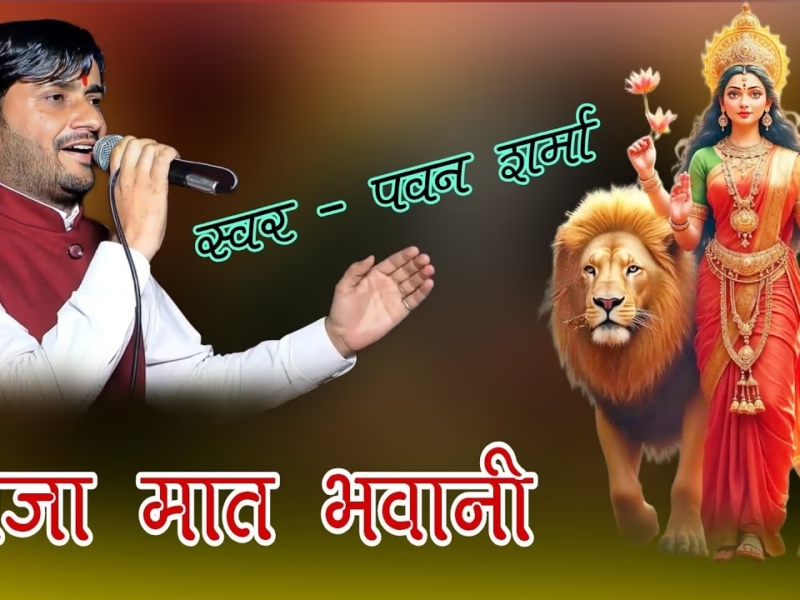
Bhadi Sabha Mein Thane Manaun: Invoking the Spear-Wielding Mother Mata Bhawani (श्री ज्वाला भवानी), the fiery manifestation of Shakti worshipped as the Protector of Dharma in Her Dhaulagarh sanctum. Origin & Spiritual Essence Composed in Rajasthani folk tradition by…