
Contents
Introduction & Spiritual Essence
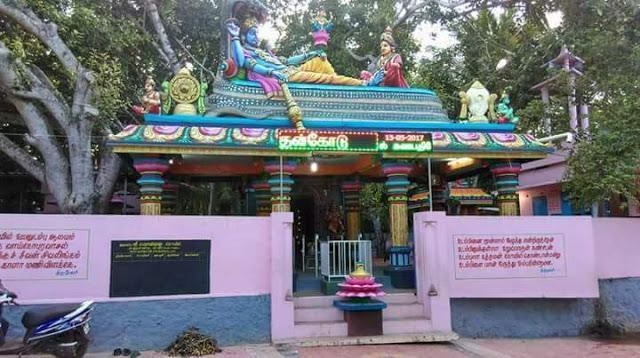
Nestled in the serene environs of Chathencode in Kanyakumari District, the Maha Vishnu Temple stands as a beacon of tranquility and ancient devotion. Dedicated to Lord Vishnu, the Preserver in the Hindu Trinity, this temple invites pilgrims to experience a profound spiritual connection. The presiding deity, known as Maha Vishnu, is revered in his form as the cosmic sustainer. Unlike the reclining form often seen elsewhere, the primary Murti (idol) here is a standing representation, carved from the indigenous rock of the region.
Phalaśruti: The Benefits of Devotion
Devotees flock to the Maha Vishnu Temple to seek blessings for familial harmony, prosperity, and the removal of obstacles. It is traditionally believed that performing sincere prayers here helps cleanse ancestral karma, ensuring peace for forefathers. The temple is particularly auspicious for those seeking relief from Shani Dosha (Saturn afflictions) and for students aspiring for academic success, as Lord Vishnu is also the bestower of wisdom (Saraswati). Regular darshan is said to instill a sense of inner peace and mental clarity.
Historical Origins & Scriptural Legend
While specific historical records regarding the exact century of construction are sparse in public archives, the Maha Vishnu Temple of Chathencode is deeply embedded in the oral traditions of the region. The architecture suggests a traditional Dravidian style that has evolved over centuries through local patronage.
Scriptural References & Sthala Purana
According to temple records and local tradition, the existence of this shrine is linked to the epic Ramayana. It is believed that during his exile, Lord Rama, along with Sita and Lakshmana, visited this region. Local lore suggests that the spot where the temple now stands was once part of a dense forest where sages performed rigorous penance to please Lord Vishnu. The Sthala Purana (local legend) holds that the Lord appeared before these sages in a majestic form, blessing the land with his eternal presence. Over time, a structure was raised to house the holy deity. Renovations have been carried out by the local Hindu Religious and Charitable Endowments (HR&CE) Department to preserve the sanctity while enhancing the amenities for pilgrims.
Architectural Marvels
The temple is a classic example of Dravidian Architecture, characterized by its towering gateway tower (Rajagopuram) and spacious courtyards.
Key Architectural Elements:
• The Sanctum (Garbhagriha): The innermost shrine houses the presiding deity, Maha Vishnu, facing east. The idol is crafted with four arms (Chaturbhuja), holding the Conch (Shankha), Wheel (Chakra), Mace (Gada), and Lotus (Padma).
• Mandapas: The temple features several pillared halls (Mandapas) adorned with intricate carvings depicting scenes from the Puranas. The ceiling often features frescoes painted with natural pigments.
• Vastu Shastra: The layout follows strict Vastu principles, with the temple oriented to the east, allowing the first rays of the sun to illuminate the sanctum during the equinoxes.
While it may not have a UNESCO designation, the temple is a protected heritage site under the TN HR&CE, maintaining the traditional Vishnu-centric temple layout with a focus on symmetry and sacred geometry.
Darshan & Ritual Logistics
Planning your visit ensures a peaceful darshan. The temple follows a standard daily ritual schedule.
Daily Timings
| Pooja / Ritual | Timing |
|---|---|
| Morning Opening (Ushathkala) | 06:00 AM |
| Viswaroopa Darshanam | 06:00 AM – 06:30 AM |
| Morning Abhishekam | 06:30 AM – 08:00 AM |
| Morning Archana & General Darshan | 08:00 AM – 12:00 PM |
| Midday Closure | 12:00 PM – 04:00 PM |
| Afternoon Opening | 04:00 PM |
| Evening Darshan | 04:00 PM – 06:00 PM |
| Deeparadhana (Evening Lamp Ritual) | 06:00 PM |
| Closing (Ardha Jama) | 08:00 PM |
Key Sevas & Online Booking
Devotees can book specific rituals to enhance their spiritual experience. Assuming the current year is 2026, the following sevas are available:
- Suprabhatam (Morning Awakening): 6:00 AM
- Abhishekam (Ritual Bathing): Performed with milk, honey, and sandalwood paste.
- Archana: Recitation of holy names (e.g., Vishnu Sahasranamam).
- Deepa Aradhana: Offering of camphor lamps.
Online Seva Booking: To book a seva, visit the official Tamil Nadu HR&CE portal or the specific Maha Vishnu Temple landing page on the bharattemples.com booking interface. Select the date, enter the pilgrim details, and make a secure payment via UPI/Net Banking. An E-receipt will be generated, which must be produced at the counter upon arrival.
2026 Festival Calendar
Mark these dates for special rituals and temple decorations:
- Vaikuntha Ekadashi: January 10, 2026 (Special Grand Darshan).
- Maha Shivaratri: February 26, 2026 (Interfaith harmony celebrations).
- Lord Brahmotsavam: April 15–24, 2026 (Annual 10-day festival).
- Deepavali: November 1, 2026 (Special evening lighting).
Practical Visitor Guidance
To ensure a respectful and hassle-free visit, please adhere to the following guidelines:
- Dress Code: Traditional attire is mandatory. Men must wear Dhoti or trousers with a shirt. Women must wear Saree, Salwar Kameez, or full-length skirts with an upper garment. Avoid shorts, torn jeans, or sleeveless tops.
- Photography & Mobiles: Photography is strictly prohibited inside the sanctum sanctorum. Mobile phones should be switched to silent mode. Lockers are available near the entrance for storing electronics and footwear.
- Accessibility: The temple complex is relatively compact. There is ramp access for senior citizens and devotees with disabilities up to the second courtyard. Wheelchairs are available upon request at the administration office.
- Crowd Management:
• Best Hours: Early mornings (6:00–7:30 AM) on weekdays and late evenings after 7:00 PM.
• Seasonal Advice: Kanyakumari can be humid. Carry a reusable water bottle (filtered water is available inside). During monsoon (October–November), carry a raincoat or umbrella as temple grounds may get slippery.
Pilgrimage Connectivity
How to Reach Maha Vishnu Temple
The Maha Vishnu Temple is conveniently located in Chathencode, well-connected by road to major hubs in Kanyakumari and Kerala.
- By Air: The nearest airport is Trivandrum International Airport (TRV) in Thiruvananthapuram, Kerala, located approximately 44 km away. Taxis and buses are readily available.
- By Rail: The closest railway stations are Parassala (9 km) and Kuzhithurai (11 km). From these stations, auto-rickshaws and local buses can take you directly to Chathencode.
- By Road: The temple is accessible via the Thiruvananthapuram – Kanyakumari Highway (NH 66). It is approximately:
• 11 km from Marthandam
• 37 km from Nagercoil
• 60 km from Kanyakumari
Nearby Sacred Sites
Extend your pilgrimage by visiting these nearby spiritual centers:
- Thirparappu Waterfalls: Located about 15 km away, this waterfall is believed to be formed by the mythological river Kothai. A temple dedicated to Shiva is situated nearby.
- Mattakkara Sree Mahavishnu Temple: Situated roughly 12 km from Chathencode, this temple is renowned for its serene setting and ancient stone carvings.
- Udayagiri Temple (Kanyakumari): A significant cave temple located about 20 km away, offering a blend of Jain and Hindu history.
Frequently Asked Questions (FAQs)
1. Is there a VIP Darshan entry available?
Yes, the temple administration facilitates a special darshan queue for senior citizens (above 65 years), differently-abled pilgrims, and those who have booked premium sevas. There is no separate “VIP” ticket for general devotees; entry is based on darshan token validity.
2. Can we perform rituals for ancestors (Tharpanam)?
While this temple is primarily dedicated to Lord Vishnu, certain rituals for ancestor peace can be performed by the resident priests. It is advisable to contact the temple office via phone prior to your visit to confirm the availability of materials and the specific priest for these rituals.
3. Is the temple open for 24 hours?
No, the Maha Vishnu Temple in Chathencode follows a strict schedule, closing between 12:00 PM and 4:00 PM, and again after 8:00 PM (except during special festival nights). Please refer to the timetable above for exact timings.
4. Are there accommodation facilities at the temple?
The temple complex itself does not have a guesthouse. However, there are numerous private lodges and homestays available in Marthandam and Nagercoil, which are within a 30-minute drive. For pilgrims traveling from Trivandrum, the city offers ample budget and luxury options.
5. What is the best mode of transport from Trivandrum to Chathencode?
Since the distance is only 44 km, hiring a taxi (Ola/Uber or local cabs) is the most convenient option. State-run buses also ply frequently along the NH 66, dropping you at Chathencode junction, from where a short walk leads to the temple.
Recent Posts

माता शेरावाली के द्वार जो भी जाता है – Lyrics & Meaning
माता शेरावाली के द्वार जो भी जाता है – A Prayer to Maa Sherawali Origin & Spiritual Essence Why This Bhajan Resonates Devotees turn to this bhajan in times of fear or uncertainty—its promise that no one leaves Maa’s…

मार लेना सपणी उबार लेणा भवरा – Lyrics & Meaning
मार लेना सपणी उबार लेणा भवरा – A Prayer to the Divine Beloved Origin & Spiritual Essence Why This Bhajan Resonates Devotees chant this in moments of deep vulnerability—its cry of “मार लेना सपणी, उबार लेणा भवरा” is the…

हमें श्याम सुंदर भरोसा तुम्हारा – Lyrics & Meaning
हमें श्याम सुंदर भरोसा तुम्हारा – A Prayer to Shyam Sundar Origin & Spiritual Essence Why This Bhajan Resonates Devotees chant this when feeling alone—its refrain ‘de do sahara’ is the soul’s cry for divine support. Lyrics in Hindi…

Mere Satguru Ne Di Thi Davai Lyrics in Hindi & Meaning
Mere Satguru Ne Di Thi Davai: Invoking the Guru’s Liberating Wisdom This soul-stirring bhajan venerates the Satguru (True Spiritual Master) as the divine physician who dispenses the only remedy for life’s deepest sufferings. Composed by Sant Karmaveer Tufani, it…

Janm Diyo Thari Maa Dukh Dekhiyo Lyrics in Hindi & Meaning
जन्म दियो थारी माँ दुख देखियो (Maa’s Grief Upon Birthing You) This soul-stirring Chetavani Bhajan (admonitory hymn) is addressed to the Divine Mother (Maa) – a call for repentance when children forget their filial duties in the dark age…
Bhadi Sabha Mein Thane Manaun Lyrics in Hindi & Meaning
Bhadi Sabha Mein Thane Manaun: Invoking the Spear-Wielding Mother Mata Bhawani (श्री ज्वाला भवानी), the fiery manifestation of Shakti worshipped as the Protector of Dharma in Her Dhaulagarh sanctum. Origin & Spiritual Essence Composed in Rajasthani folk tradition by…
श्याम सुन्दरवा छोटे छोटे कनुवा Lyrics & Meaning
श्याम सुन्दरवा छोटे छोटे कनुवा (Shyam Sundarva Chhote Chhote Kanuva) is a heartfelt invocation to Lord Krishna in his most enchanting form—Shyam Sundar (the dark, beautiful one). This bhajan is a plea for the divine child Kanha to grace…
Maat Meri Chintapurni Lyrics in Hindi & Meaning
Maat Meri Chintapurni is a heartfelt devotional prayer dedicated to Maa Chintapurni, a form of the Divine Mother. She is revered as the remover of worries and the granter of wishes, especially venerated in the Himalayan region of Himachal…
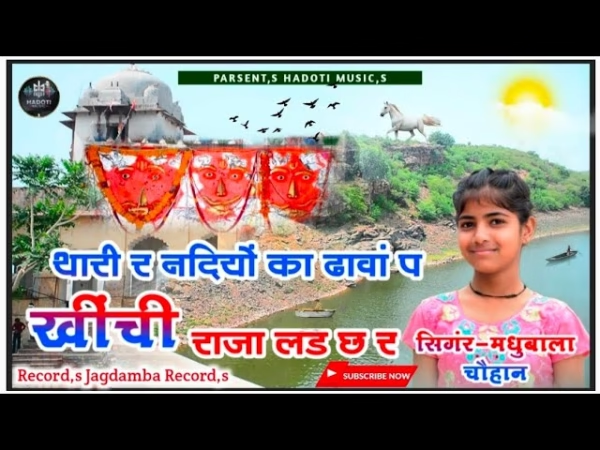
थारी रे नदियां का ढावा पे खीची राजा Lyrics & Meaning
खीची राजा का अद्भुत युद्ध: एक शौर्य गाथा यह भजन एक पौराणिक या ऐतिहासिक शूरवीर राजा की वीरता का वर्णन करता है, जो प्रायः गुजराती लोक संस्कृति में लोककथाओं का हिस्सा है। इसकी रचना दुर्गेश कटारा ने की है…
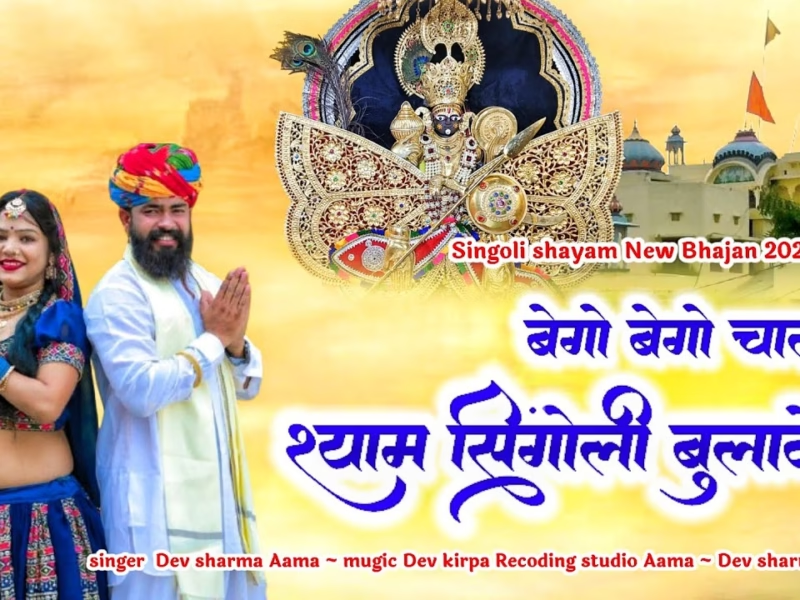
बेगो बेगो चाल श्याम सिंगोली बुलावे रे Lyrics in Hindi & Meaning
Bhajan Title & Deity This bhajan, बेगो बेगो चाल श्याम सिंगोली बुलावे रे, is dedicated to Lord Shyam, a revered form of Lord Krishna. Origin & Spiritual Essence The composer of this bhajan is not specified, but it is…