

Contents
- 1 Mahasu Devta Temple: The Eternal Abode of the Four Brothers
Mahasu Devta Temple: The Eternal Abode of the Four Brothers
Nestled on the eastern banks of the roaring Tons River, where the air carries the scent of ancient cedar and the echoes of Vedic chants, stands the Mahasu Devta Temple in Hanol. This sacred edifice is not merely a structure of stone; it is the living heart of the Jaunsar-Bawar region. Dedicated to Mahasu Devta, the supreme arbiter of justice and protector of the domain, this temple has watched over the valley since the 9th century CE. For devotees, a visit here is a pilgrimage into a realm where the divine walks among mortals, resolving disputes and blessing the faithful.
| Date built: | – |
|---|---|
| Deity: | Mahasu Devta |
| Architectural style: | – |
| Major festivals | Bissu,Basant Panchami,Diwali,Paush ki Dhaal,Holi |
| Locale: | Hanol |
| District:: | Dehradun |
| Address: | Hanol, Uttarakhand 248199 |
| Phone | 09760894952 |
Introduction & Spiritual Essence
Mahasu Devta is revered as the supreme ruler of the Mahasudom (the deity’s domain). He is unique in his quadruple form, appearing as four brothers: Botha, Pavasi, Vasik, and Chalda. Among them, Chalda is the wandering protector, while Botha resides permanently at the Hanol temple. The primary deity is worshipped as a Swayambhu (self-manifested) power, residing in a metallic goblet that serves as the focal point of worship.
Phalaśruti: The Benefits of Pilgrimage
Devotees flock to Hanol seeking the blessings of Mahasu Devta for specific spiritual and worldly benefits:
- Resolution of Disputes: The temple is famous for the Lota Pani ritual, a trial by water where disputants drink water in the name of Mahasu. It is believed that the guilty party will suffer immediately if they drink falsely.
- Protection of Ancestral Wealth: Mahasu Devta is the guardian of gold and silver within the region. A visit ensures the preservation of family assets and protection against the loss of heirlooms.
- Cleansing of Karma: The energy of the Tons River and the ancient shakti of the temple assist in cleansing deep-seated ancestral karma.
Historical Origins & Scriptural Legend
According to temple records and local tradition, the origins of Mahasu Devta date back to the transition from the Dwapara Yuga to the Kali Yuga. The Sthala Purana (local oral history) weaves a fascinating narrative involving the Pandavas.
The Legend of Huna Bhatt
Tradition holds that when the Pandavas crossed the Tons River, Yudhishthira was captivated by the beauty of the land and commissioned Vishwakarma to build a temple, staying for nine days. The village was later named Hanol after Huna Bhatt, a pious Brahmin.
In Kaliyuga, a demon named Kirmir terrorized the region, devouring the seven sons of Huna Bhatt. Desperate, Huna Bhatt and his wife prayed to Hatkeshwari Devi at Hatkoti and Lord Shiva. Following divine instructions, Huna Bhatt ploughed his field on seven consecutive Sundays using a silver plough with golden shoes, yoked to bulls that had never been worked.
On the seventh Sunday, the ground erupted with divine light. From the first furrow sprang Botha, from the second Pavasi, the third Vasik, and the fourth Chalda—the four Mahasu brothers. From the fifth furrow appeared their mother, Devladli Devi. Their celestial army emerged and vanquished the demon Kirmir.
Historical Timeline
While the legend roots the temple in mythic time, architectural evidence suggests the original structure was built in the 9th century CE. The temple was initially constructed in the Huna architectural style (a blend of Gupta and Central Asian styles), which evolved over the centuries into the distinct mixed style seen today. It is officially recognized by the Archaeological Survey of India (ASI) as an ancient monument in the Dehradun circle.
Architectural Marvels
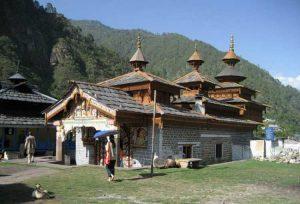
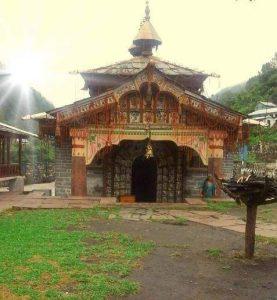
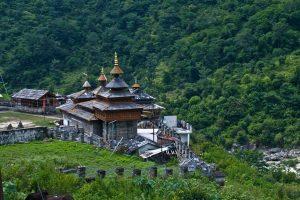
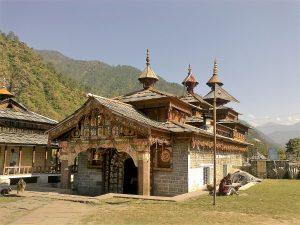
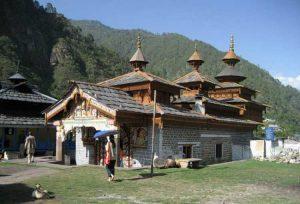
The temple stands as a testament to the evolving architectural traditions of the Himalayas. The structure is a harmonious blend of Nagara and Huna styles.
Structure and Sculpture
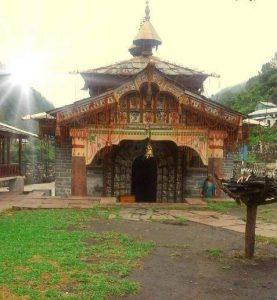
- The Sanctum (Garbhagriha): The inner sanctum houses the metallic goblet representing Mahasu Devta. The walls are adorned with intricate wood carvings typical of Jaunsar architecture.
- The Mandapa: The prayer hall features ornate wooden pillars with relief work depicting local folklore and deities.
- Materiality: The temple utilizes local stone and timber, designed to withstand the seismic activity of the Himalayan region.
The Divine Governance
Mahasu Devta is not just a spiritual figure but a temporal ruler. Historically, he exercised authority over secular matters. The unique Lota Pani adjuration—a ritualistic water trial—was the court of law for the region. Even today, the temple complex reflects this judicial heritage, symbolizing the unwavering verdict of the divine.
Darshan & Ritual Logistics
Visiting Mahasu Devta Temple requires adherence to specific timings and rituals. The atmosphere is deeply meditative, especially during the morning and evening aartis.
Daily Timings
Note: Temple timings may vary slightly during festivals or winter months due to weather conditions in the Chakrata region.
| Session | Timings |
|---|---|
| Morning Darshan | 06:00 AM – 12:00 PM |
| Afternoon Break | 12:00 PM – 02:00 PM |
| Evening Darshan | 02:00 PM – 07:00 PM |
| Shayan Aarti (Night) | 07:30 PM |
Key Sevas and Online Booking
While the temple administration is working towards digitization, many bookings are still managed directly at the temple office. However, for major festivals, inquiries can be made via the provided contact number.
- Abhishekam: Performed with milk, honey, and ghee. Best done at sunrise.
- Archana: Recitation of the deity’s names. Available throughout the day.
- Special Havan: Conducted during Paush ki Dhaal and Bissu.
2026 Festival Calendar
Plan your visit around these major celebrations to witness the temple at its vibrant peak:
- Basant Panchami: January/February 2026 – Celebration of the arrival of spring; significant prayers for knowledge.
- Bissu Festival: April 2026 – The most important harvest festival of the Jaunsar region, marking the solar new year.
- Paush ki Dhaal: January 2026 – A grand fair held in the winter month of Paush.
- Diwali: October/November 2026 – The festival of lights, celebrated with unique local oil lamps.
Photo Gallery
Practical Visitor Guidance
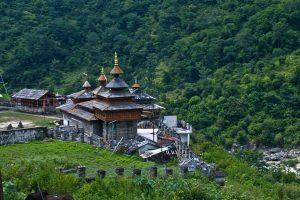
Reaching Hanol requires preparation, as it is located in a remote, pristine area of the Dehradun district.
Dress Code and Etiquette
- Attire: Traditional Indian clothing is preferred. Men should wear dhoti/kurta or trousers, and women should wear saree/salwar kameez. Modesty is strictly enforced.
- Photography: Photography is generally restricted inside the inner sanctum (Garbhagriha). You may photograph the exterior architecture and the surrounding landscape.
- Electronics: Mobile phones are allowed but should be on silent mode. Using phones inside the sanctum is considered disrespectful.
Crowd Management & Best Times to Visit
- Best Hours: Visit between 6:00 AM and 8:00 AM for a peaceful darshan. The evening aarti (around 6:30 PM) is also a magical time.
- Seasonal Advice:
– Summer (April-June): Pleasant weather. Carry a light jacket for evenings. Roads are accessible.
– Monsoon (July-September): Heavy rainfall. Landslides can occur; check road status before traveling.
– Winter (October-March): Very cold. Temperatures drop below freezing. Heavy woolens are mandatory. - Facilities: Basic lockers are available for mobiles and electronics near the entrance, as the temple administration maintains a strict no-phone zone inside the sanctum.
Pilgrimage Connectivity
How to Reach
The temple is located in Hanol village, approximately 190 km from Dehradun and 156 km from Mussoorie.
- By Air: The nearest airport is Jolly Grant Airport (DED) in Dehradun, roughly 180 km away (approx. 6-7 hours drive).
- By Rail: The nearest major railway station is Dehradun Railway Station (190 km) or Haridwar Junction (approx. 160 km).
- By Road:
– From Dehradun: Take NH7 towards Yamuna Nagar, divert towards Chakrata, and then proceed via Tuini-Mori road to Hanol.
– From Delhi: Take NH44 (Delhi-Ambala) -> Yamuna Nagar -> Chakrata -> Hanol (approx. 320 km).
Nearby Sacred Sites
To complete your spiritual circuit, visit these nearby temples:
- Hatkoti Temple (30 km): Situated on the banks of the Tons, this temple is dedicated to Goddess Hatkeshwari (an 8-armed form of Durga). It is where Huna Bhatt originally prayed.
- Chakrata Hills (45 km): A colonial hill station with deep spiritual significance, known for the Tiger Falls and ancient caves.
- Lakhmandal (60 km): An ancient town believed to be the site of the Mahabharata era palace of the Pandavas.
Frequently Asked Questions (FAQs)
1. Is there a VIP darshan entry at Mahasu Devta Temple?
No, there is no formal VIP darshan system at this temple. The deity treats all devotees equally. However, during peak festivals, priority is given to local devotees and those participating in specific rituals. It is advisable to arrive early for a closer view of the sanctum.
2. How does the Lota Pani ritual work?
Lota Pani (literally “pot of water”) is a traditional method of dispute resolution. Water is ritually filled in a metal goblet in the name of Mahasu Devta. The disputants are asked to drink this water. It is believed that the person giving a false statement will suffer from illness or misfortune shortly after drinking, thus serving as a divine truth serum.
3. Are there accommodation facilities in Hanol?
Accommodation in Hanol is very basic. There are a few small lodges and guest houses, but it is recommended to stay in Chakrata (45 km away), which offers better hotels and government guest houses (GMVN).
4. What is the significance of the four brothers (Char Mahasu)?
The four brothers represent different aspects of governance and protection. Botha is the static deity residing at Hanol. Chalda is the wandering deity who tours the realm every 12 years. Pavasi and Vasik govern other territories and assist in maintaining cosmic order.
5. Can I visit during the monsoon season?
Yes, but with caution. The region receives heavy rainfall, and landslides are common on the Chakrata-Mori road. If traveling in July or August, check the local weather forecast and road conditions with the Dehradun administration before departure.
Contact Details
For the latest updates on rituals or road conditions, you may contact the temple administration or the local panchayat.
Official Address: Hanol, Uttarakhand 248199
Recent Posts

ओ सांवरे तूने ही मुझको संभाला – Lyrics & Meaning
ओ सांवरे तूने ही मुझको संभाला – A Prayer to Shyam Origin & Spiritual Essence Why This Bhajan Resonates Devotees chant this when overwhelmed by life’s storms—the refrain ‘तूने ही मुझको संभाला’ is the soul’s sigh of relief: “You…

कथा ये है महाराज मेरे की – Lyrics & Meaning
कथा ये है महाराज मेरे की छत्रपति संभाजी महाराज – A Prayer to Chhatrapati Sambhaji Maharaj Origin & Spiritual Essence Why This Bhajan Resonates Devotees chant this when their spirit feels tested—its powerful refrain “महाराज मेरे” is a soul’s…

Rigveda Samhita Yathartha Anuvada (ऋग्वेद संहिता यथार्थ अनुवाद) – Complete Set with Anvayartha & Hindi/English Translation
The Rigveda is the oldest surviving scripture of humanity and the foundational text of Sanātana Dharma. For serious students, scholars, UPSC aspirants studying ancient Indian history, Sanskrit learners, and spiritual seekers, a precise and grammatically structured translation is indispensable.…

आना भी अकेला है जाना भी अकेला है – Lyrics & Meaning | BharatTemples
आना भी अकेला है जाना भी अकेला है – A Prayer to the Divine Witness Origin & Spiritual Essence Why This Bhajan Resonates Devotees turn to this bhajan in moments of deep reflection—when life’s attachments begin to ache. The…

माता शेरावाली के द्वार जो भी जाता है – Lyrics & Meaning
माता शेरावाली के द्वार जो भी जाता है – A Prayer to Maa Sherawali Origin & Spiritual Essence Why This Bhajan Resonates Devotees turn to this bhajan in times of fear or uncertainty—its promise that no one leaves Maa’s…

मार लेना सपणी उबार लेणा भवरा – Lyrics & Meaning
मार लेना सपणी उबार लेणा भवरा – A Prayer to the Divine Beloved Origin & Spiritual Essence Why This Bhajan Resonates Devotees chant this in moments of deep vulnerability—its cry of “मार लेना सपणी, उबार लेणा भवरा” is the…

हमें श्याम सुंदर भरोसा तुम्हारा – Lyrics & Meaning
हमें श्याम सुंदर भरोसा तुम्हारा – A Prayer to Shyam Sundar Origin & Spiritual Essence Why This Bhajan Resonates Devotees chant this when feeling alone—its refrain ‘de do sahara’ is the soul’s cry for divine support. Lyrics in Hindi…

Mere Satguru Ne Di Thi Davai Lyrics in Hindi & Meaning
Mere Satguru Ne Di Thi Davai: Invoking the Guru’s Liberating Wisdom This soul-stirring bhajan venerates the Satguru (True Spiritual Master) as the divine physician who dispenses the only remedy for life’s deepest sufferings. Composed by Sant Karmaveer Tufani, it…

Janm Diyo Thari Maa Dukh Dekhiyo Lyrics in Hindi & Meaning
जन्म दियो थारी माँ दुख देखियो (Maa’s Grief Upon Birthing You) This soul-stirring Chetavani Bhajan (admonitory hymn) is addressed to the Divine Mother (Maa) – a call for repentance when children forget their filial duties in the dark age…
Bhadi Sabha Mein Thane Manaun Lyrics in Hindi & Meaning
Bhadi Sabha Mein Thane Manaun: Invoking the Spear-Wielding Mother Mata Bhawani (श्री ज्वाला भवानी), the fiery manifestation of Shakti worshipped as the Protector of Dharma in Her Dhaulagarh sanctum. Origin & Spiritual Essence Composed in Rajasthani folk tradition by…