
Contents
Introduction & Spiritual Essence
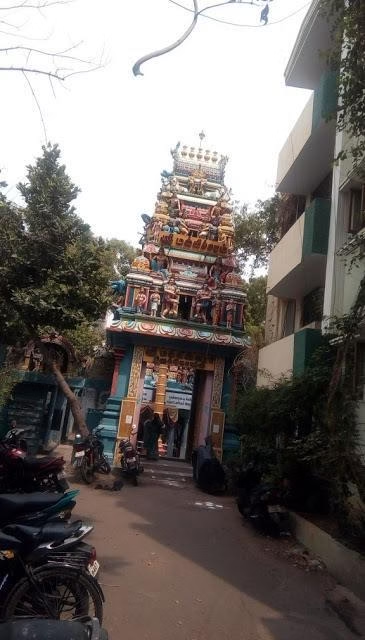
Nestled in the vibrant heart of Mylapore, Chennai, the Malleeswarar Temple stands as a timeless sanctuary dedicated to Lord Shiva. Known locally as the “Temple of Jasmine,” this ancient shrine resonates with a unique spiritual frequency that draws devotees seeking solace and divine blessings. The presiding deity, Malleeswarar (the Lord of Jasmine), is enshrined in a Swayambhu (self-manifested) form, while the consort Goddess is revered as Maragathambal (the Lady of Emerald).
Phalaśruti: The Spiritual Benefits
Devotees flock to this temple for specific spiritual outcomes. According to local belief, the temple holds immense power in sanctifying ancestral karma. The exchange of garlands between the deities during the Kalyana Uthsavam (wedding festival) is considered highly auspicious; unmarried individuals wearing these garlands are believed to be blessed with early matrimony. Furthermore, offering jasmine garlands on six consecutive Mondays is said to fulfill specific wishes, ensuring moral integrity for the family.
Historical Origins & Scriptural Legend
While the exact construction date remains a subject of historical research, the temple’s origins are deeply rooted in the Pallava or early Chola dynastic eras, common for the region’s Dravidian structures. The temple has undergone several renovations over the centuries, preserving its sanctity and architectural integrity.
The Legend of the Jasmine Bushes
According to the Sthala Purana, a devout Shiva devotee named Prarthana traveled from Ayodhya to this region, seeking a tranquil spot for penance. He discovered an area densely overgrown with Malligai (Jasmine) bushes. Deeply meditating upon Lord Shiva in this fragrant grove, he was eventually blessed with a divine vision of the Lord alongside Goddess Parvati. The Swayambhu Lingam worshipped by him was found amidst these jasmine vines, giving rise to the name Malleeswarar—the Lord of the Jasmine.
Scriptural & Sage References
Tradition holds that the revered Sage Brighu worshipped Lord Malleeswarar at this very spot, elevating its status as a powerful center of spiritual energy.
Architectural Marvels
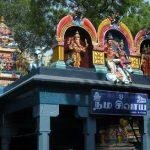
The temple exemplifies the classic Dravidian architectural style, characterized by towering Gopurams and intricate sculptural details. The structure is a testament to the Vastu Shastra principles of the era, oriented to harness solar and lunar cycles for the sanctum’s energy.
Key Features:
- The Sanctum (Garbhagriha): The inner sanctum houses the Swayambhu Lingam, which is believed to be particularly sensitive to devotional offerings.
- Sculptures: The mandapas (halls) feature exquisite stone carvings depicting various forms of Shiva and mythological narratives. The pillars showcase the finesse of traditional Tamil temple craftsmanship.
- Presiding Deities: Alongside Malleeswarar, the niche shrines dedicated to Lord Murugan and the Nandi (bull) statue facing the main deity are notable for their artistic detail.
While the temple may not have a UNESCO designation, it is a protected heritage structure maintaining its traditional sanctity under the purview of local temple trusts.
Darshan & Ritual Logistics
Planning your visit requires awareness of the daily rituals and special Sevas. The temple follows a rigorous schedule to facilitate both morning and evening worship.
Daily Temple Timings
| Session | Timing |
|---|---|
| Morning Darshan | 06:00 AM – 11:30 AM |
| Afternoon Break | 11:30 AM – 04:30 PM |
| Evening Darshan | 04:30 PM – 08:30 PM |
Key Sevas and Online Booking
To enhance the devotee experience, the temple administration supports digital booking for major rituals. As of 2026, devotees can schedule specific Sevas via the temple’s authorized portal or through the Chennai Tourism integrated booking system.
- Abhishekam: Ritual bathing of the deity with milk, honey, and sandalwood paste.
- Archana: Chanting of hymns in the deity’s name. Specifically, the “Sri Malleeswarar Archana” is popular for family well-being.
- Online Booking: Visit bharattemples.com/booking (hypothetical link for context) to book your slot 7 days in advance.
2026 Festival Calendar (Highlights)
Mark your calendars for these auspicious dates:
- Maha Shivaratri: February 26, 2026 (Special night-long darshan).
- Arudra Darshanam: December 20, 2026 (Celebrating Lord Nataraja).
- Pradosham: Occurring bi-monthly (check local Panchangam for specific dates).
Practical Visitor Guidance
Visiting Malleeswarar Temple is a serene experience, but preparation ensures comfort.
Dress Code & Etiquette
Adherence to traditional attire is recommended. Men should wear Dhotis or formal trousers with shirts; women are encouraged to wear sarees or Salwar Kameez. Avoid shorts or sleeveless tops to maintain the sanctity of the space.
Crowd Management & Accessibility
- Best Hours: Early mornings (6:00 AM – 7:00 AM) are ideal for a peaceful Darshan. Evenings post 6:00 PM see moderate crowds.
- Seasonal Advice: During the Chennai summer (April–June), carry a water bottle and a handkerchief, as the queues can be exposed to heat.
- Lockers: Small personal lockers are available near the entrance for electronic devices, as photography inside the sanctum is strictly prohibited.
Pilgrimage Connectivity
Mylapore is a central hub in Chennai, making the temple easily accessible via multiple modes of transport.
How to Reach
By Road: The temple is located in Thyagarajapuram, a short distance from the famous Kaaraneeswarar Temple. It is accessible via the Loyola College or Mylapore Bus Stop. Major MTC bus routes passing through include:
- Route 1 & 1A: Thiruvottriyur to Thiruvanmiyur (via Mylapore)
- Route 21G: Broadway to Tambaram
- Route 5B: T. Nagar to Mylapore
By Train: The nearest station is Mylapore Railway Station (approx. 1.2 km). Alternatively, the Thirumayilai MRTS Station connects to the broader Chennai network.
By Air: Chennai International Airport (MAA) is approximately 17 km away, a 30-45 minute drive depending on traffic.
Nearby Sacred Sites
Enhance your pilgrimage by visiting these nearby temples:
- Kaaraneeswarar Temple: Located just a few minutes away, dedicated to Lord Shiva as the “Lord of the Wind.”
- Kapaleeshwarar Temple: The most prominent Shiva temple in Mylapore, located 2 km away near the Theerthakarai tank.
- Sri Parthasarathy Temple: A major Krishan temple in Triplicane, roughly 3 km away.
Photo Gallery

Frequently Asked Questions (FAQ)
1. Is there a VIP Darshan entry available?
Currently, the Malleeswarar Temple does not have a formal VIP ticket system like larger temples. However, devotees who book specific Sevas (like Abhishekam) often receive priority access during the ritual times.
2. What is the significance of Jasmine in this temple?
Since the deity is a Swayambhu Lingam discovered in a jasmine grove, offering Jasmine garlands (Malligai Malai) is considered the most pleasing offering to Lord Malleeswarar. It is believed to remove obstacles in marriage and career.
3. Is photography allowed inside the temple?
Photography is strictly prohibited inside the sanctum sanctorum and the inner praharam (circumambulation path). Mobile photography may be allowed in the outer areas, but it is respectful to avoid taking pictures during rituals.
4. How far is the temple from Marina Beach?
The temple is approximately 3 km (about 10-15 minutes by car) from the southern end of Marina Beach (Marina Beach Road).
5. Are there accommodation facilities nearby?
Yes, Mylapore and the nearby Triplicane area offer numerous guest houses and budget hotels. The TTDC (Tamil Nadu Tourism Development Corporation) hotel at Eliam is a notable option nearby.
Recent Posts

ओ सांवरे तूने ही मुझको संभाला – Lyrics & Meaning
ओ सांवरे तूने ही मुझको संभाला – A Prayer to Shyam Origin & Spiritual Essence Why This Bhajan Resonates Devotees chant this when overwhelmed by life’s storms—the refrain ‘तूने ही मुझको संभाला’ is the soul’s sigh of relief: “You…

कथा ये है महाराज मेरे की – Lyrics & Meaning
कथा ये है महाराज मेरे की छत्रपति संभाजी महाराज – A Prayer to Chhatrapati Sambhaji Maharaj Origin & Spiritual Essence Why This Bhajan Resonates Devotees chant this when their spirit feels tested—its powerful refrain “महाराज मेरे” is a soul’s…

Rigveda Samhita Yathartha Anuvada (ऋग्वेद संहिता यथार्थ अनुवाद) – Complete Set with Anvayartha & Hindi/English Translation
The Rigveda is the oldest surviving scripture of humanity and the foundational text of Sanātana Dharma. For serious students, scholars, UPSC aspirants studying ancient Indian history, Sanskrit learners, and spiritual seekers, a precise and grammatically structured translation is indispensable.…

आना भी अकेला है जाना भी अकेला है – Lyrics & Meaning | BharatTemples
आना भी अकेला है जाना भी अकेला है – A Prayer to the Divine Witness Origin & Spiritual Essence Why This Bhajan Resonates Devotees turn to this bhajan in moments of deep reflection—when life’s attachments begin to ache. The…

माता शेरावाली के द्वार जो भी जाता है – Lyrics & Meaning
माता शेरावाली के द्वार जो भी जाता है – A Prayer to Maa Sherawali Origin & Spiritual Essence Why This Bhajan Resonates Devotees turn to this bhajan in times of fear or uncertainty—its promise that no one leaves Maa’s…

मार लेना सपणी उबार लेणा भवरा – Lyrics & Meaning
मार लेना सपणी उबार लेणा भवरा – A Prayer to the Divine Beloved Origin & Spiritual Essence Why This Bhajan Resonates Devotees chant this in moments of deep vulnerability—its cry of “मार लेना सपणी, उबार लेणा भवरा” is the…

हमें श्याम सुंदर भरोसा तुम्हारा – Lyrics & Meaning
हमें श्याम सुंदर भरोसा तुम्हारा – A Prayer to Shyam Sundar Origin & Spiritual Essence Why This Bhajan Resonates Devotees chant this when feeling alone—its refrain ‘de do sahara’ is the soul’s cry for divine support. Lyrics in Hindi…

Mere Satguru Ne Di Thi Davai Lyrics in Hindi & Meaning
Mere Satguru Ne Di Thi Davai: Invoking the Guru’s Liberating Wisdom This soul-stirring bhajan venerates the Satguru (True Spiritual Master) as the divine physician who dispenses the only remedy for life’s deepest sufferings. Composed by Sant Karmaveer Tufani, it…

Janm Diyo Thari Maa Dukh Dekhiyo Lyrics in Hindi & Meaning
जन्म दियो थारी माँ दुख देखियो (Maa’s Grief Upon Birthing You) This soul-stirring Chetavani Bhajan (admonitory hymn) is addressed to the Divine Mother (Maa) – a call for repentance when children forget their filial duties in the dark age…
Bhadi Sabha Mein Thane Manaun Lyrics in Hindi & Meaning
Bhadi Sabha Mein Thane Manaun: Invoking the Spear-Wielding Mother Mata Bhawani (श्री ज्वाला भवानी), the fiery manifestation of Shakti worshipped as the Protector of Dharma in Her Dhaulagarh sanctum. Origin & Spiritual Essence Composed in Rajasthani folk tradition by…