
Contents
Introduction & Spiritual Essence
Nestled amidst the dense Nallamala forests on the banks of the River Krishna lies Sri Bhramaramba Mallikarjuna Temple, one of the twelve Jyotirlingas of Lord Shiva. This temple is unique in the spiritual geography of India, holding the dual distinction of being both a Jyotirlinga (where Shiva is revered as a pillar of light) and a Shakti Peetha (where the body part of Goddess Sati fell, and where she is worshipped as Bramarambika).
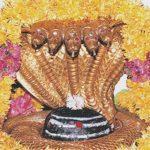
The primary deity, Mallikarjuna, is a Swayambhu (self-manifested) linga. The name derives from the words “Mallika” (Jasmine) and “Arjuna” (White), signifying the bright white hue of the deity or the legendary connection to the white flowers (Mallika) used by Goddess Parvati in her worship here. His consort, Brahmaramba, is a manifestation of Shakti worshipped in a unique form.
Phalaśruti (Spiritual Benefits): According to the Shiva Purana, visiting this temple offers supreme merit. Devotees believe that darshan here helps in cleansing ancestral karma (Pitru Dosha) and liberating the soul from the cycle of rebirth. It is said that while Lord Shiva grants Mukti (liberation), Goddess Bramarambika fulfills material wishes (Artha and Kama), making it a holistic destination for spiritual and worldly well-being.
Historical Origins & Scriptural Legend
Scriptural Legend: The Sthala Purana narrates a famous legend from the Ramayana. When Lord Rama and Lakshmana visited the forests searching for Sita, they encountered the sage Agastya at this location. While the Puranas also link the site to the iconography of Shiva and Parvati where Shiva tested the strength of the goddess, the temple’s association with the Ramayana is the most enduring local tradition.
Historical Timeline: The temple’s history dates back to the Satavahana dynasty (1st Century A.D.). Inscriptions found on the temple walls and in the surrounding caves mention King Vasishthiputra Pulumavi. The structural integrity and current form were significantly developed during the reign of the Ikshvaku and later the Vijayanagara empires. The great ruler Krishnadevaraya of the Vijayanagara Empire is recorded in temple records as a major patron, contributing significantly to the temple’s gopurams and mandapas.
Architectural Marvels
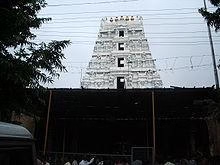
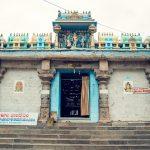
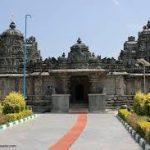
The temple architecture is a sublime blend of Dravidian and South Indian temple styles. The complex is enclosed by a massive stone wall that stands 31 feet high.
- The Shikhara: The main temple tower (Vimana) is adorned with intricate carvings and gold kalasams. The sanctum sanctorum houses the Swayambhu linga, which is encrusted with a silver face and a natural cleft on the top.
- Garbha Gruha & Mandapas: The inner sanctum is approached through a series of pillared halls (Mandapas). The pillars feature exquisite sculptures depicting mythological narratives. The ceiling of the Mukha Mandapa showcases murals depicting the “Lion of Srisailam.”
- Brahmaramba Shrine: Located to the west of the main shrine, the Goddess is worshipped in a pot-shaped form (Earthenware). The ceiling above this shrine is painted with 108 images of Surya Narayana (Sun God) surrounded by 12 zodiac signs.
- Status: While not a UNESCO heritage site, the temple is protected and managed by the Sri Srisaila Devasthanam Board and is considered a “Pancharama Kshetram.”
Darshan & Ritual Logistics
Regular Darshanam is typically open from 6:00 AM to 10:00 PM daily. However, specific timings for Sevas and rituals vary.
| Activity / Seva | Timing | Cost (Approx) |
|---|---|---|
| Suprabhatam | 4:00 AM – 4:30 AM | ₹150 |
| Early Morning (Kalaasha) Abhishekam | 4:30 AM – 5:30 AM | ₹350 |
| Milk Abhishekam | 5:30 AM – 6:30 AM | ₹200 |
| Archana (Sri Chakra/One Face) | 6:30 AM – 8:00 AM | ₹100 |
| Maha Nivedana (Lunch) | 12:00 PM – 2:30 PM | ₹500 |
| Evening Archana | 5:30 PM – 6:30 PM | ₹100 |
Online Seva Booking 2026
For devotees unable to visit physically, the Sri Srisaila Devasthanam board allows online booking for Sevas like Abhishekam and Archana. Visit the official website (srisailadevasthanam.com) to book slots. Bookings for major festivals usually open 2 months in advance.
2026 Key Festival Dates:
- Maha Shivaratri: February 25, 2026 (Grand festivities, night-long vigil).
- Navratri: September 22, 2026 – October 1, 2026 (Special decorations for Brahmaramba).
- Teppotsavam (Float Festival): October 2026 (Dates depend on the lunar calendar).
Practical Visitor Guidance
Dress Code: Traditional Indian attire is mandatory. Men should wear dhotis or trousers (no shorts). Women should wear sarees, salwar kameez, or full-length skirts.
Photography & Electronics: Strictly prohibited inside the Sanctum Sanctorum. Mobile phones are allowed in the premises but must be put on silent mode. There are lockers available near the temple entrance for bags and electronics.
Accessibility: The temple complex involves walking. Wheelchairs are available for senior citizens and differently-abled devotees at the entrance. The crowd is usually heavy on Mondays and during festival days.
Crowd Management Tip: To avoid long queues, the best time for darshan is early morning (4:30 AM – 6:00 AM) or late at night (after 9:00 PM). In summer (May-June), carry water and a cap, as the Nallamala forest region can get quite hot.
Pilgrimage Connectivity
How to Reach Srisailam
- By Air: The nearest airport is Vijayawana Airport (Gannavaram), approximately 200 km away. The second closest is Rajiv Gandhi International Airport in Hyderabad, about 220 km away.
- By Rail: The nearest railway stations are Srisailam (SPY) (limited trains), Kurnool Town (KRNT) (approx. 150 km), and Markapur Road (MRK) (approx. 85 km). From the station, you can hire a taxi or take APSRTC buses.
- By Road: The temple is well-connected by National Highway (NH). From Hyderabad, take the Hyderabad – Srisailam Highway (NH 565). Buses are frequently available from major Andhra Pradesh cities.
Nearby Sacred Sites (Pilgrimage Circuit)
- Kotappakonda (Tadipatri): Located about 50 km from Srisailam, this hill is known as the “Abode of Seven Hoods” and offers a panoramic view of the surrounding valleys.
- Mantralayam: The holy samadhi of Guru Raghavendra Swami. It is located approximately 180 km from Srisailam.
- Mahanandi Temple: A group of nine temples (Nava Nandis) located about 100 km from Srisailam, known for its architectural beauty and natural springs.
Frequently Asked Questions (FAQ)
1. Is there a VIP Darshan entry available?
Yes, the temple offers a special darshan ticket (typically ₹500) which allows devotees to bypass the general queue. Additionally, there are protocols for VIPs and special dignitaries, though these are strictly regulated by the Devasthanam administration.
2. Can we perform Rudra Abhishekam ourselves?
No, the Rudra Abhishekam and major complex rituals are performed by the authorized temple priests (Archakas) only. Devotees can sponsor the seva and witness the ritual from a designated area.
3. Is accommodation available at the temple?
Yes, the Sri Srisaila Devasthanam provides budget guest houses and choultries (Dharmashalas) for pilgrims. These can be booked at the central reception office. Private hotels are also available in Srisailam town.
4. What is the best time to visit Mallikarjuna Jyotirlinga?
The best time to visit is between October and February (Post-monsoon to Winter) when the weather in the Nallamala hills is pleasant and cool.
5. Is non-vegetarian food allowed in Srisailam?
As a holy temple town, Srisailam is a vegetarian zone. Non-vegetarian food and alcohol are strictly prohibited within the temple town limits.
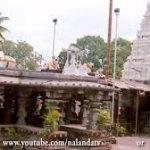
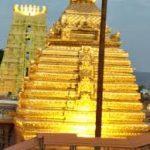
Photo Gallery
Official Contact Details
Sri Srisaila Devasthanam
Srisailam, Kurnool District
Atmakur Mandal, Andhra Pradesh – 518102
Phone: 085892 23421 (Official Devasthanam Office)
How to Reach
The town (as well as the mandal) of Srisailam is reputed for the Mallikarjuna Jyotirlinga on the flat top of Nallamala Hills. The Mallikarjuna Jyotirlinga is one of the 12 Jyotirlinga of Lord Shiva and is also one among the 275 Paadal Petra Shiva Sthalangal. Srisailam has played a dominant role in the Hindu religious, cultural and social history since ancient times. The epigraphical evidence reveals that the history of Srisailam began with the Satavahanas who were the first empire builders in South India. The earliest known historical mention of the hill, Srisailam, can be traced to the King Vasishthiputra Pulumavi’s Nasik inscription of 1st Century A.D. Srisailam or Srisailamu (Śrīśailaṁ, Śrīśailamu) is situated in the Kurnool district of Andhra Pradesh, India. It is on the banks of the Krishna River about 212 km south of Hyderabad and 179 km from Kurnool. It is sometimes spelled Shrishailam.
Recent Posts

Shri Kaamkoteeshwar Mandir, Varanasi – History & Significance
In the heart of Kashi, the eternal city of Lord Shiva, where the Ganges flows with celestial grace, stands the Shri Kaamkoteeshwar Mandir. This sacred Sannidhi is not merely a temple but a profound spiritual bridge between the Northern…

ओ सांवरे तूने ही मुझको संभाला – Lyrics & Meaning
ओ सांवरे तूने ही मुझको संभाला – A Prayer to Shyam Origin & Spiritual Essence Why This Bhajan Resonates Devotees chant this when overwhelmed by life’s storms—the refrain ‘तूने ही मुझको संभाला’ is the soul’s sigh of relief: “You…

कथा ये है महाराज मेरे की – Lyrics & Meaning
कथा ये है महाराज मेरे की छत्रपति संभाजी महाराज – A Prayer to Chhatrapati Sambhaji Maharaj Origin & Spiritual Essence Why This Bhajan Resonates Devotees chant this when their spirit feels tested—its powerful refrain “महाराज मेरे” is a soul’s…

Rigveda Samhita Yathartha Anuvada (ऋग्वेद संहिता यथार्थ अनुवाद) – Complete Set with Anvayartha & Hindi/English Translation
The Rigveda is the oldest surviving scripture of humanity and the foundational text of Sanātana Dharma. For serious students, scholars, UPSC aspirants studying ancient Indian history, Sanskrit learners, and spiritual seekers, a precise and grammatically structured translation is indispensable.…

आना भी अकेला है जाना भी अकेला है – Lyrics & Meaning | BharatTemples
आना भी अकेला है जाना भी अकेला है – A Prayer to the Divine Witness Origin & Spiritual Essence Why This Bhajan Resonates Devotees turn to this bhajan in moments of deep reflection—when life’s attachments begin to ache. The…

माता शेरावाली के द्वार जो भी जाता है – Lyrics & Meaning
माता शेरावाली के द्वार जो भी जाता है – A Prayer to Maa Sherawali Origin & Spiritual Essence Why This Bhajan Resonates Devotees turn to this bhajan in times of fear or uncertainty—its promise that no one leaves Maa’s…

मार लेना सपणी उबार लेणा भवरा – Lyrics & Meaning
मार लेना सपणी उबार लेणा भवरा – A Prayer to the Divine Beloved Origin & Spiritual Essence Why This Bhajan Resonates Devotees chant this in moments of deep vulnerability—its cry of “मार लेना सपणी, उबार लेणा भवरा” is the…

हमें श्याम सुंदर भरोसा तुम्हारा – Lyrics & Meaning
हमें श्याम सुंदर भरोसा तुम्हारा – A Prayer to Shyam Sundar Origin & Spiritual Essence Why This Bhajan Resonates Devotees chant this when feeling alone—its refrain ‘de do sahara’ is the soul’s cry for divine support. Lyrics in Hindi…

Mere Satguru Ne Di Thi Davai Lyrics in Hindi & Meaning
Mere Satguru Ne Di Thi Davai: Invoking the Guru’s Liberating Wisdom This soul-stirring bhajan venerates the Satguru (True Spiritual Master) as the divine physician who dispenses the only remedy for life’s deepest sufferings. Composed by Sant Karmaveer Tufani, it…

Janm Diyo Thari Maa Dukh Dekhiyo Lyrics in Hindi & Meaning
जन्म दियो थारी माँ दुख देखियो (Maa’s Grief Upon Birthing You) This soul-stirring Chetavani Bhajan (admonitory hymn) is addressed to the Divine Mother (Maa) – a call for repentance when children forget their filial duties in the dark age…