
Contents
- 1 Introduction & Spiritual Essence
- 2 Historical Origins & Scriptural Legend
- 3 Architectural Marvels
- 4 Darshan & Ritual Logistics
- 5 Practical Visitor Guidance
- 6 Pilgrimage Connectivity
- 7 Frequently Asked Questions (FAQ)
- 7.1 1. Why is Mandaikadu known as the ‘Women’s Sabarimala’?
- 7.2 2. Is there a VIP darshan entry available?
- 7.3 3. What is the significance of the Irumudi carried by devotees?
- 7.4 4. Is non-vegetarian food allowed within the temple complex?
- 7.5 5. Are there accommodation facilities nearby?
- 7.6 6. Is the temple safe for solo female travelers?
Introduction & Spiritual Essence
Perched serenely on the coastline of Kanyakumari district, the Mandaikadu Bhagavathy Amman Temple stands as a beacon of devotion for pilgrims across Tamil Nadu and Kerala. Dedicated to Goddess Parvathi in her fierce yet benevolent form as Bhagavathy Amman, this shrine is uniquely revered as the “Women’s Sabarimala.”
The primary deity here is a Swayambhu (self-manifested) idol rising from a sacred anthill, which has steadily grown over centuries to a height of 15 feet. Unlike many traditional temples, the Phalaśruti (benefits of worship) here is deeply connected to ancestral karma and the fulfillment of specific desires, particularly for women devotees.
Devotees visit with the fervent belief that Goddess Bhagavathy rules over the Navagrahas (nine planets), cleansing astrological afflictions and removing obstacles in marriage and family life. The practice of carrying the Irumudi (a bundle of worship items) mirrors the traditions of Sabarimala, making the spiritual journey here profoundly unique.
Historical Origins & Scriptural Legend
While the exact date of construction is not recorded in stone inscriptions, tradition holds that the temple existed during the reign of Travancore kings. The structure was later rebuilt in the simple Kerala style, yet it houses an ancient, powerful energy center.
The Sthala Purana (local legend) weaves a tapestry of miracles:
- The Growing Anthill: Legend states that a boy playing with a palm fruit accidentally dropped it on a sand hill, causing blood to gush out. This spot is where the Goddess revealed herself. Later, the Travancore king constructed the temple around the anthill, but because the hill grew incessantly, he had to demolish and rebuild it twice.
- The Promise: The Goddess is believed to have promised the king that she would only grow by the size of a grain of sand each year, a phenomenon locals still claim to observe today.
- Shankaracharya’s Samadhi: It is believed that Sri Shankaracharya performed Srichakra Puja here. When the chakra did not return to him after the ritual, he entered a state of Samadhi (eternal meditation) on this very spot. The anthill is believed to have grown over the Srichakra.
Architectural Marvels
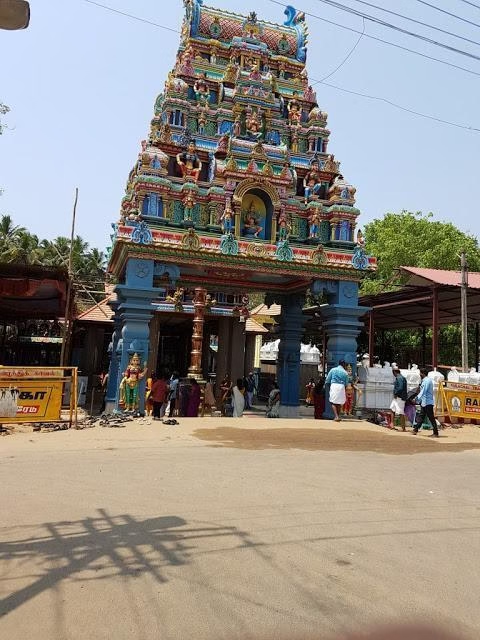
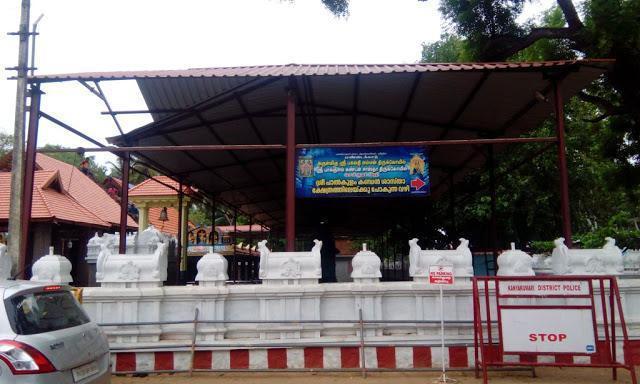
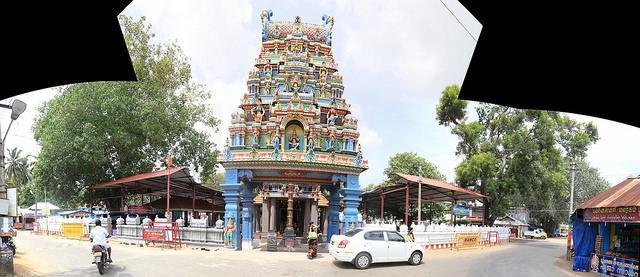
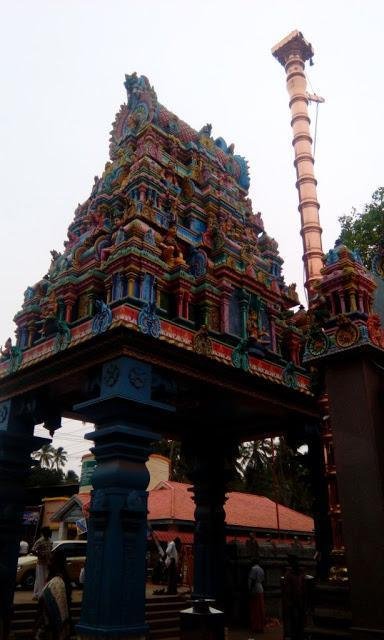
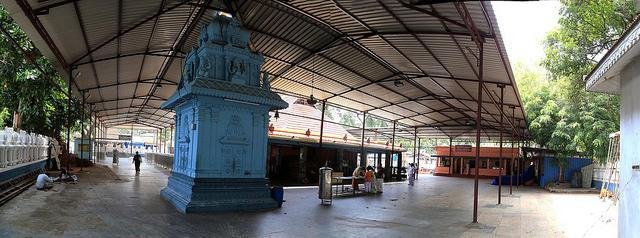
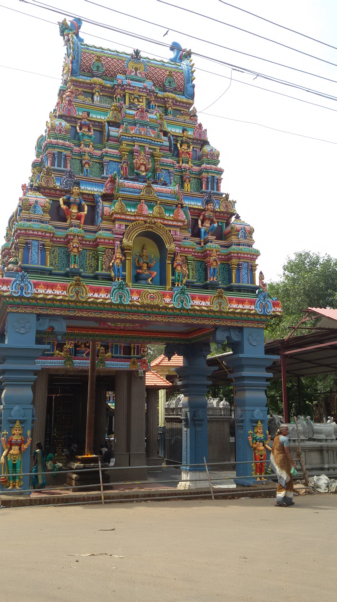
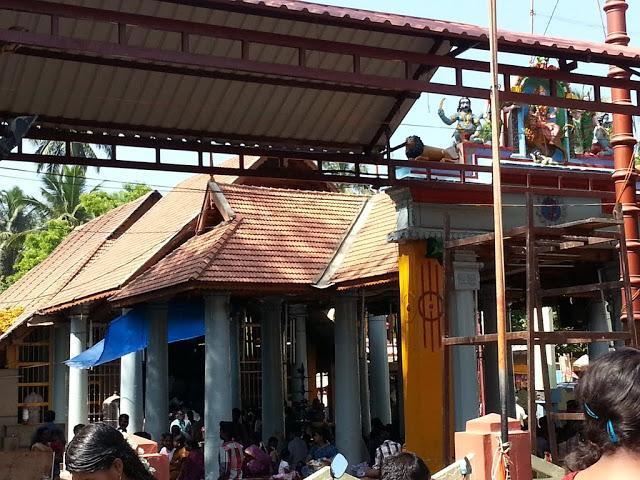
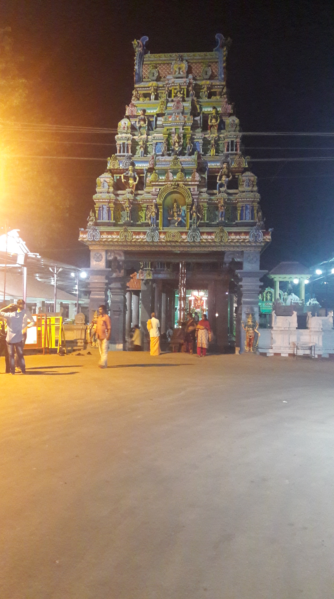
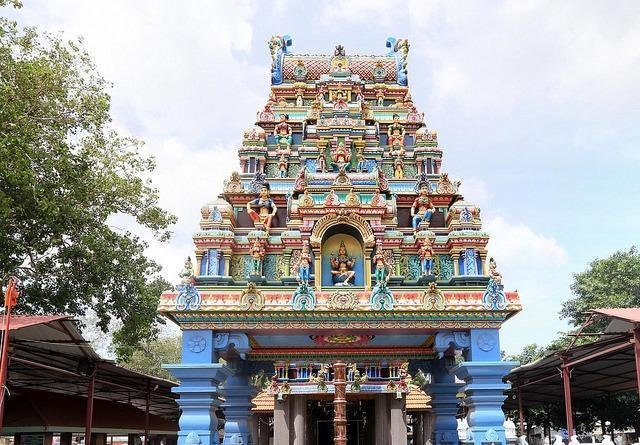
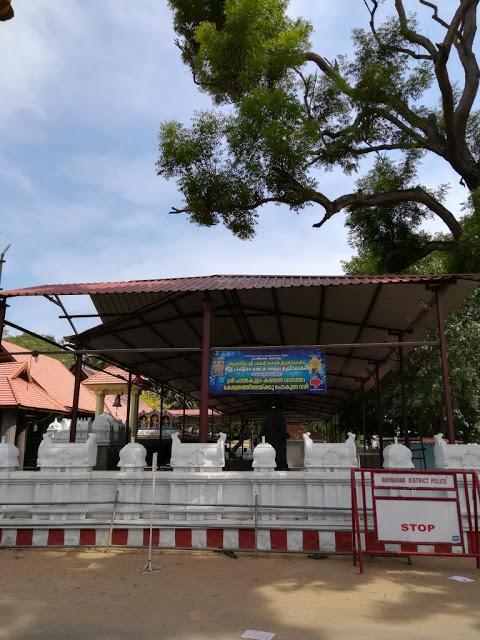
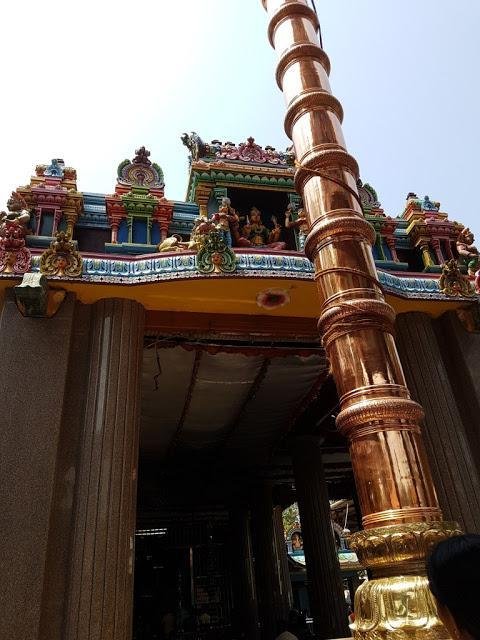
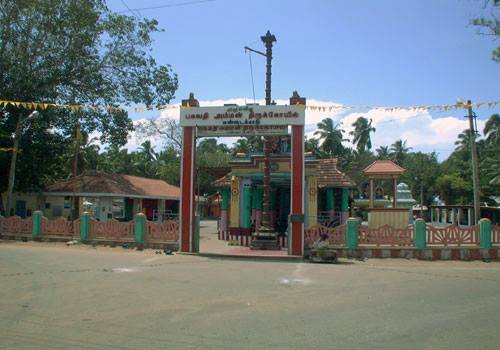
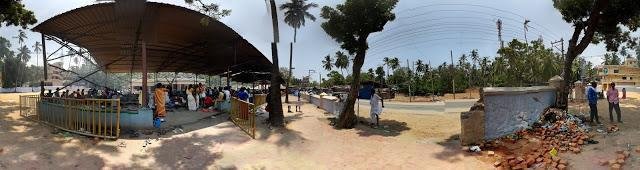
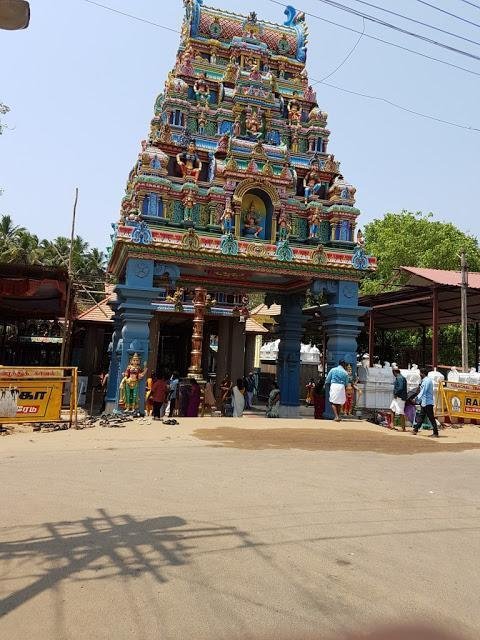
The temple is a fine example of the Kerala style of Dravidian architecture. Unlike the towering Shikharas of North Indian temples, this shrine features a sloping roof tiled in the traditional Kerala style.
- The Sanctum (Sreekovil): The inner sanctum houses the 15-foot anthill representing the Goddess, adorned with a gold mask (Thirumukham). The layout is simple but adheres to strict Vastu Shastra principles, ensuring the flow of positive energy from the ocean.
- Mandapas: The Namaskara Mandapa and Natya Mandapa (dance hall) are constructed with wood and stone, featuring intricate carvings of deities and mythological scenes.
- Holy Trees: The temple compound hosts the sacred Bo Tree (Peepal) and Neem Tree, both considered abodes of ancestral spirits.
- Location: Situated near the Colachel harbor, the temple architecture integrates coastal elements, protecting the structure from saline winds while maintaining spiritual purity.
Darshan & Ritual Logistics
Temple administration is managed by the Hindu Religious & Charitable Endowments (HR&CE) Department of Tamil Nadu. Pujas are performed four times daily, with special emphasis on Tuesdays, Fridays, and Sundays.
Daily Darshan Timings (2026 Schedule)
| Session | Timing |
|---|---|
| Morning Darshan | 05:30 AM – 12:30 PM |
| Evening Darshan | 05:00 PM – 08:30 PM |
Pooja Timings & Sevas
| Pooja Name | Timing |
| Thirupalli Ezhuchi | 4:00 AM |
| Nadaithirappu (Opening) | 4:30 AM |
| Abhishekam | 5:00 AM |
| Morning Pooja | 6:00 AM |
| Noon Pooja | 12:00 PM |
| Nadaicharththal (Closing) | 1:00 PM |
| Nadaithirappu (Evening) | 6:30 PM |
| Sayaratchai Pooja | 6:30 PM |
Online Seva Booking: While standard darshan is open to all, specific Sevas like Abhishekam and Archana can be booked via the official Tamil Nadu HR&CE portal. For 2026, the temple utilizes a token system for Irumudi preparation, which can be pre-booked online or purchased at the temple counter.
2026 Major Festival Dates
- Kodai Festival (Masi Magam): March 3 – March 13, 2026. The main Valiya Padukkai (6th day, Friday) falls on March 8.
- Ettam Kodai: The Tuesday following the main festival (approx. March 17, 2026).
- Bharani Kodai: Celebrated in the Tamil month of Panguni (April 2026), marking the birthday of the Goddess.
Practical Visitor Guidance
As a coastal temple, Mandaikadu attracts large crowds, especially during festival seasons.
- Dress Code: Traditional attire is mandatory. Men must wear Dhotis (veshti) without shirts; women should wear sarees, half-sarees, or salwar kameez with a dupatta.
- Photography: Strictly prohibited inside the sanctum sanctorum. Mobile photography is allowed in the outer corridors, but flash should be avoided.
- Mobile Lockers: Facilities are available at the temple entrance to deposit electronic devices, as many devotees prefer a distraction-free darshan.
- Accessibility: The temple has stone steps leading to the shrine. A ramp is available for elderly visitors near the side entrance, but the inner sanctum remains traditional.
- Crowd Management: The temple experiences peak crowds on Tuesdays and during the Kodai festival.
- Seasonal Advice: Due to the coastal location, May and June are hot and humid; carry water and wear sunscreen. Monsoons (November) bring pleasant sea breezes but occasional rain.
Pilgrimage Connectivity
How to Reach
The temple is located in Mandaikadu village, adjacent to the Nagercoil-Colachel State Highway.
- By Air: The nearest airport is Thiruvananthapuram International Airport (TRV) in Kerala, approximately 67 km away.
- By Rail: The closest railway station is Eraniel (7 km), while Nagercoil Junction (20 km) is the major hub with better connectivity.
- By Road: Mandaikadu is well-connected via NH 66 and the State Highway. Frequent bus services run from Nagercoil, Colachel, and Kanyakumari. During the Kodai festival, special buses are operated from Thiruvananthapuram and Nagercoil.
Nearby Sacred Sites
Extend your pilgrimage circuit by visiting:
- Thanumalayan Temple (Suchindram): 25 km away, famous for its musical pillars and giant Hanuman statue.
- Kanyakumari Amman Temple: 34 km away, located at the southernmost tip of India where the three oceans meet.
- Udayagiri Fort & Padmanabhapuram Palace: 14 km away, showcasing the architectural grandeur of the Travancore dynasty.
Frequently Asked Questions (FAQ)
1. Why is Mandaikadu known as the ‘Women’s Sabarimala’?
Similar to the Sabarimala temple where only men are allowed, Mandaikadu Bhagavathy Amman Temple places restrictions on men. Adult men (aged 10 to 50) are generally not permitted to enter the inner sanctum. However, unlike Sabarimala, women of all ages are welcome here. The temple was established to fulfill the specific desires of women devotees.
2. Is there a VIP darshan entry available?
Yes, the temple administration offers a VIP darshan ticket, which allows devotees to bypass the general queue. This can be purchased at the temple counter or booked via the Tamil Nadu HR&CE app.
3. What is the significance of the Irumudi carried by devotees?
The Irumudi is a two-part cloth bundle containing coconut, ghee, rice, jaggery, and other offerings. It symbolizes the devotee’s surrender to the Goddess. In Mandaikadu, women carry this on their heads as a mark of reverence, just as men do in Sabarimala.
4. Is non-vegetarian food allowed within the temple complex?
Generally, Hindu temples prohibit non-vegetarian food. However, during the Kodai festival, rituals involving meat offerings are part of specific Tantric practices within the temple precincts. For daily visitors, it is recommended to stick to vegetarian offerings (Prasadam) from the temple counter.
5. Are there accommodation facilities nearby?
Basic lodging is available in Mandaikadu village. For better amenities, devotees can stay in Nagercoil (20 km) or Kanyakumari (34 km), where hotels and guest houses range from budget to luxury.
6. Is the temple safe for solo female travelers?
Absolutely. The temple is dedicated to the Goddess and is renowned for its safety. Security personnel are deployed, and the environment is spiritual and respectful.
Recent Posts

ओ सांवरे तूने ही मुझको संभाला – Lyrics & Meaning
ओ सांवरे तूने ही मुझको संभाला – A Prayer to Shyam Origin & Spiritual Essence Why This Bhajan Resonates Devotees chant this when overwhelmed by life’s storms—the refrain ‘तूने ही मुझको संभाला’ is the soul’s sigh of relief: “You…

कथा ये है महाराज मेरे की – Lyrics & Meaning
कथा ये है महाराज मेरे की छत्रपति संभाजी महाराज – A Prayer to Chhatrapati Sambhaji Maharaj Origin & Spiritual Essence Why This Bhajan Resonates Devotees chant this when their spirit feels tested—its powerful refrain “महाराज मेरे” is a soul’s…

Rigveda Samhita Yathartha Anuvada (ऋग्वेद संहिता यथार्थ अनुवाद) – Complete Set with Anvayartha & Hindi/English Translation
The Rigveda is the oldest surviving scripture of humanity and the foundational text of Sanātana Dharma. For serious students, scholars, UPSC aspirants studying ancient Indian history, Sanskrit learners, and spiritual seekers, a precise and grammatically structured translation is indispensable.…

आना भी अकेला है जाना भी अकेला है – Lyrics & Meaning | BharatTemples
आना भी अकेला है जाना भी अकेला है – A Prayer to the Divine Witness Origin & Spiritual Essence Why This Bhajan Resonates Devotees turn to this bhajan in moments of deep reflection—when life’s attachments begin to ache. The…

माता शेरावाली के द्वार जो भी जाता है – Lyrics & Meaning
माता शेरावाली के द्वार जो भी जाता है – A Prayer to Maa Sherawali Origin & Spiritual Essence Why This Bhajan Resonates Devotees turn to this bhajan in times of fear or uncertainty—its promise that no one leaves Maa’s…

मार लेना सपणी उबार लेणा भवरा – Lyrics & Meaning
मार लेना सपणी उबार लेणा भवरा – A Prayer to the Divine Beloved Origin & Spiritual Essence Why This Bhajan Resonates Devotees chant this in moments of deep vulnerability—its cry of “मार लेना सपणी, उबार लेणा भवरा” is the…

हमें श्याम सुंदर भरोसा तुम्हारा – Lyrics & Meaning
हमें श्याम सुंदर भरोसा तुम्हारा – A Prayer to Shyam Sundar Origin & Spiritual Essence Why This Bhajan Resonates Devotees chant this when feeling alone—its refrain ‘de do sahara’ is the soul’s cry for divine support. Lyrics in Hindi…

Mere Satguru Ne Di Thi Davai Lyrics in Hindi & Meaning
Mere Satguru Ne Di Thi Davai: Invoking the Guru’s Liberating Wisdom This soul-stirring bhajan venerates the Satguru (True Spiritual Master) as the divine physician who dispenses the only remedy for life’s deepest sufferings. Composed by Sant Karmaveer Tufani, it…

Janm Diyo Thari Maa Dukh Dekhiyo Lyrics in Hindi & Meaning
जन्म दियो थारी माँ दुख देखियो (Maa’s Grief Upon Birthing You) This soul-stirring Chetavani Bhajan (admonitory hymn) is addressed to the Divine Mother (Maa) – a call for repentance when children forget their filial duties in the dark age…
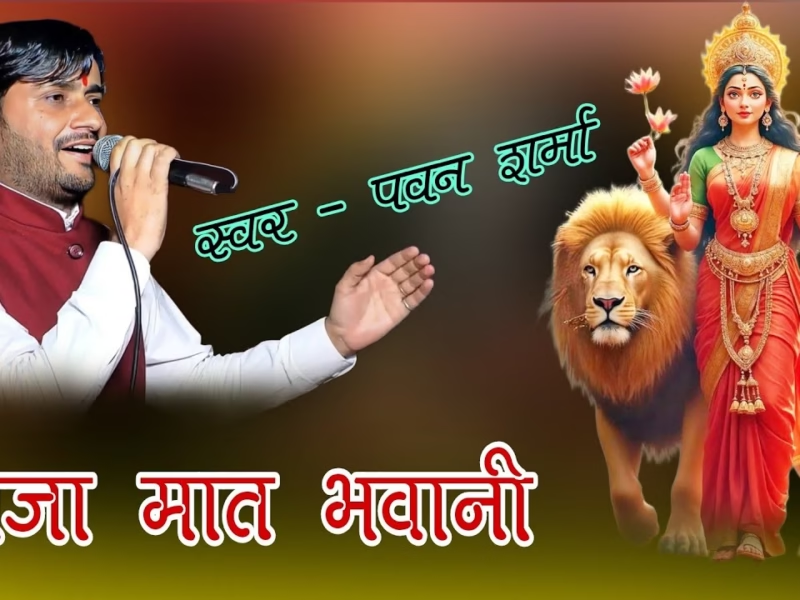
Bhadi Sabha Mein Thane Manaun Lyrics in Hindi & Meaning
Bhadi Sabha Mein Thane Manaun: Invoking the Spear-Wielding Mother Mata Bhawani (श्री ज्वाला भवानी), the fiery manifestation of Shakti worshipped as the Protector of Dharma in Her Dhaulagarh sanctum. Origin & Spiritual Essence Composed in Rajasthani folk tradition by…