
Contents
- 1 Introduction & Spiritual Essence: The Seat of Lord Shani
- 2 Historical Origins & Scriptural Legend
- 3 Architectural Marvels
- 4 Darshan & Ritual Logistics
- 5 Practical Visitor Guidance
- 6 Pilgrimage Connectivity
- 6.1 Nearby Sacred Sites
- 6.2 Frequently Asked Questions (FAQ)
- 6.3 1. Is there a VIP or special entry darshan available?
- 6.4 2. Can I perform Shani Shanti Puja for someone else?
- 6.5 3. Is there a dress code for children?
- 6.6 4. Are there food facilities available?
- 6.7 5. What is the best day to visit Mandhi Amman Temple?
- 7 Photo Gallery
- 8 Architecture
- 9 Legend / Local stories
- 10 How to Reach:
- 11 Contact Details
Introduction & Spiritual Essence: The Seat of Lord Shani
Located in the sacred groves of Mangadu (literally “Mango Grove”) on the outskirts of Chennai, the Mandhi Amman Temple stands as a powerful beacon of devotion for those seeking relief from the astrological afflictions caused by Shani (Saturn). While Mangadu is primarily renowned as the abode of Kamakshi Amman (a form of Goddess Parvati), the Mandhi Amman shrine holds a distinct and potent spiritual vibration.
The primary deity, Mandhi Amman, is enshrined here in the form of Mandhi Kaliamman. She is worshipped as the ruling deity over the planetary influence of Saturn. In Vedic astrology, Saturn is considered a karmic planet that tests patience and endurance. Devotees visit this temple to alleviate the ill-effects of Sade Sati and Dhaiya, seeking stability, peace, and the removal of obstacles in their professional and personal lives.
Phalaśruti (The Fruit of Visiting):
According to religious texts and the belief of local devotees, worshipping Mandhi Amman brings about:
- Relief from Shani Dosha: Mitigating the harsh impacts of Saturn in one’s horoscope.
- Legal & Financial Stability: Removing hurdles in legal matters and stabilizing financial growth.
- Ancestral Karma Cleansing: It is believed that performing rituals here helps in pacifying ancestors’ unsettled souls, offering them peace (Shanti).
Historical Origins & Scriptural Legend
Origins and Construction:
Unlike the grandiose granite structures of the Pallava or Chola eras, the Mandhi Amman Temple in Mangadu has evolved through local patronage. According to temple records and oral history, the current structure has been renovated over the centuries, with the sanctum sanctorum believed to be ancient. The temple follows the traditional Agama Shastra layout, dedicated to the village deity (Gramadevata) aspect of the Goddess.
Scriptural Legend (Sthala Purana):
Tradition holds that Mangadu is one of the five important Shakti Peethas in the Tondai region. The legend of Mandhi Amman is closely tied to the cosmic balance between the Devas and Asuras.
It is said that Lord Shani (Saturn), despite being a righteous planet, carries a dark complexion and brings delays. To soften his stern gaze and to provide a sanctuary where his energy could be pacified through devotion, the Goddess manifested as Mandhi Amman. In this form, she holds the power to control the harsh rays of Saturn, transforming them into blessings for her devotees. The local lore suggests that the name “Mandhi” itself is derived from roots implying “to pacify” or “to control,” referring to the Goddess’s ability to tame the difficult planetary movements.
Architectural Marvels
The temple is a classic example of Dravidian Architecture, characterized by its pyramidal towers (vimana) and ornate gateway arches. Although the main sanctum is relatively compact, the presence of the Rajagopuram (main gateway tower) welcomes pilgrims into a spiritually charged atmosphere.
Key Architectural Elements:
– Garbhagriha (Sanctum Sanctorum): The inner sanctum is designed to focus energy, housing the main deity Mandhi Amman. The idol is typically depicted holding various weapons, symbolizing the destruction of evil and ignorance.
– Mandapas (Pillared Halls): The temple features pillared halls that allow for circumambulation (Pradakshina). The pillars often depict carvings of deities associated with the Navagrahas (nine planets).
– Sacred Tank: A traditional temple tank (Pushkarani) is located within the complex, used for ritual purification before entering the sanctum.
Preservation Status:
While specific ASI (Archaeological Survey of India) listing for this minor shrine is limited compared to major forts, the temple is maintained by the Hindu Religious and Charitable Endowments (HR&CE) Department of Tamil Nadu, ensuring the preservation of its traditional liturgical practices.
Darshan & Ritual Logistics
Visiting the Mandhi Amman Temple requires awareness of the specific timings for general darshan and special rituals. The temple remains busy during Saturdays (Shani’s day) and new moon days (Amavasya).
Daily Darshan Timings
| Session | Timing | Details |
|---|---|---|
| Morning | 6:00 AM – 12:00 PM | Opens with Viswaroopa Darshan. Ideal for Abhishekam. |
| Afternoon Break | 12:00 PM – 4:00 PM | Temple remains closed. |
| Evening | 4:00 PM – 8:00 PM | Reopens for evening prayers. |
*Note: Timings may vary slightly during festival seasons.
Key Sevas & Online Booking
The temple offers a range of sevas (services) dedicated to Mandhi Amman and Lord Shani. As of 2026, most bookings can be handled digitally via the Tamil Nadu HR&CE portal.
- Shani Abhishekam: Ritual bathing of the deity with oil, black sesame, and flowers. (Recommended on Saturdays)
- Mandhi Homam: A fire ritual specifically to remove obstacles.
- Archana: Personalized prayers recited in the devotee’s name.
How to Book: Visit the official Tamil Nadu HR&CE website or use the “Arulmigu Temples” mobile app. Select “Mangadu Mandhi Amman Temple” from the list.
2026 Festival Calendar
- Shani Pradosham: Occurring twice monthly; the most significant day for temple visits.
- Aadi Perukku: August 2, 2026. A massive gathering near the temple tank for water rituals.
- Navaratri: September 22 – October 1, 2026. Special decorations and cultural programs.
- Thai Pongal: January 14, 2026. Special Golu display and sweet pongal offering.
Practical Visitor Guidance
To ensure a smooth pilgrimage experience, please adhere to the following guidelines:
- Dress Code: Traditional attire is mandatory. Men should wear Veshti (dhoti) or trousers with a shirt; women should wear saree, salwar kameez, or long skirts. Shorts and sleeveless tops are strictly prohibited.
- Photography: Photography is prohibited inside the inner sanctum (Garbhagriha). It is allowed in the outer corridors and courtyard, but please maintain decorum.
- Mobile Lockers: Secure coin-operated lockers are available near the entrance for electronic devices, as mobile phones are not allowed inside the sanctum.
- Accessibility: The temple has ramp access for wheelchair users, though the inner sanctum is accessible only via a few steps.
- Crowd Management:
- Peak Hours: 8:00 AM – 10:00 AM and 5:00 PM – 7:00 PM. Avoid these if you seek a quiet darshan.
- Seasonal Advice: Chennai summers (April–June) are scorching. Carry a water bottle and an umbrella. The temple floor can get hot, so wear comfortable footwear that is easy to remove.
Pilgrimage Connectivity
How to Reach:
Mandhi Amman Temple is located in Mangadu, which is well-connected to Chennai city via the Chennai-Bangalore Highway (NH48).
- Nearest Airport: Chennai International Airport (MAA) is approximately 17 km away. A taxi or Uber takes about 30–40 minutes.
- Nearest Railway Station: Chennai Central (MAS) is 22 km away. Chennai Egmore is 19 km away. From these stations, take a suburban train to Chengalpattu or a bus to Mangadu.
- By Bus: The Mangadu Butt Road Bus Stop is just 500 meters from the temple. Popular routes include:
- From Egmore: M53E, M53P
- From Central: M53E, 17B, 54M
- From Koyambedu CBT: M17BCT
Nearby Sacred Sites
Complete your spiritual journey by visiting these nearby temples, all within a 1-2 km radius:
- Kamakshi Amman Temple (Mangadu): The primary Shakti temple of the area, located very close to Mandhi Amman.
- Muktheeswarar Temple: A historic Shiva temple dedicated to Lord Shiva as Muktheeswarar, known for its serene atmosphere.
- Kundrathur Murugan Temple: Located about 5 km away, this hilltop temple offers panoramic views of the city.
Frequently Asked Questions (FAQ)
1. Is there a VIP or special entry darshan available?
Yes, the temple management provides a special entry darshan for a nominal fee. This allows devotees to bypass the general queue, especially during peak festival times. Tickets can be purchased at the counter or online via the HR&CE app.
2. Can I perform Shani Shanti Puja for someone else?
Absolutely. Many devotees book the Shani Abhishekam or Navagraha Homam on behalf of family members who are unable to visit physically. The priest performs the ritual using the devotee’s name and star (Nakshatra).
3. Is there a dress code for children?
While specific strictures for very young children are relaxed, it is encouraged to dress them in traditional Indian attire. For boys, a simple dhoti or kurta is preferred; for girls, a frock or salwar is appropriate.
4. Are there food facilities available?
The temple complex does not have a full-fledged restaurant, but free Prasadham (holy food) is distributed after the evening puja. Small shops outside the temple sell snacks, tea, and water. For a proper meal, the Kamakshi Amman Temple Prasadam Hall is nearby.
5. What is the best day to visit Mandhi Amman Temple?
While the temple is open year-round, Saturday is considered the holiest day dedicated to Shani. Pradosham (the 13th day of the lunar fortnight) is also highly auspicious for performing special rituals.
Photo Gallery
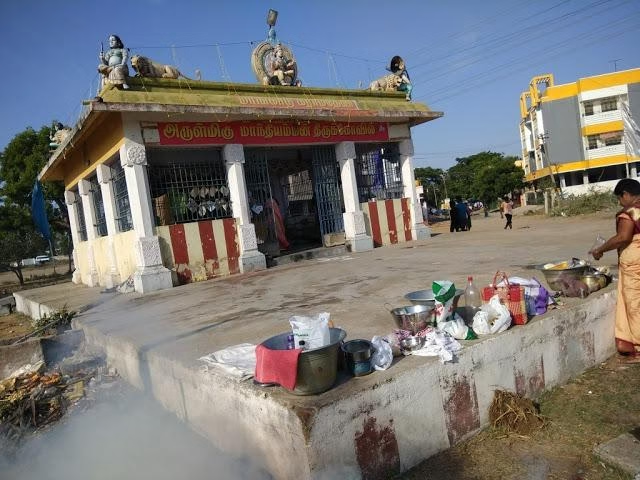
Architecture
| Date built: | – |
|---|---|
| Deity: | Mandhi Amman |
| Architectural style: | Dravidian architecture |
| Major festivals | – |
| Locale: | Mangadu |
| District:: | Chennai |
| Address: | – |
| Phone | – |
Legend / Local stories
Local folklore suggests that this area was once a dense mango grove where sages performed penance. It is believed that a divine light appeared here, which later manifested as the idol of Mandhi Amman. Villagers seeking protection from epidemics and crop failures built the first structure. Over time, the temple became the go-to place for those suffering from prolonged bad luck, which was attributed to planetary alignments.
How to Reach:
Mandhi Amman Temple is a Hindu Temple located at Mangadu in Chennai City in Tamilnadu. The Temple is located at about 500 meters from Mangadu Butt Road Bus Stop, 500 meters from Mangadu Kamakshi Amman Temple, 750 meters from Mangadu Bus Stop, 7 Kms from Porur Junction, 4 Kms from Poonamallee, 5 Kms from Kundrathur, 16 Kms from Meenambakkam Metro Station, 14 Kms from Guindy Railway Station, 22 Kms from Chennai Central Railway Station, 19 Kms from Egmore Railway Station, 17 Kms from Chennai Airport and 21 Kms from Chennai.
Mangadu is located off the Chennai Bangalore highway on the way from Poonamallee to Kunrathur. While going from Chennai city on Mount Poonamallee road, one must take left from Kumananchaavadi junction to reach Mangadu. This temple is located very close to Mangadu Bus Stop. Frequent Bus services available from Poonamallee, Porur, Tambaram, and Pallavaram.
Bus Routes:
- From Egmore: M53E, M53P
- From Central: M53E, 17B, M53P, 54M
- From Koyambedu: M17BCT
Contact Details
For the latest updates on rituals and timings, it is advisable to contact the Temple Administrator or the HR&CE office in Chennai.
Recent Posts

ओ सांवरे तूने ही मुझको संभाला – Lyrics & Meaning
ओ सांवरे तूने ही मुझको संभाला – A Prayer to Shyam Origin & Spiritual Essence Why This Bhajan Resonates Devotees chant this when overwhelmed by life’s storms—the refrain ‘तूने ही मुझको संभाला’ is the soul’s sigh of relief: “You…

कथा ये है महाराज मेरे की – Lyrics & Meaning
कथा ये है महाराज मेरे की छत्रपति संभाजी महाराज – A Prayer to Chhatrapati Sambhaji Maharaj Origin & Spiritual Essence Why This Bhajan Resonates Devotees chant this when their spirit feels tested—its powerful refrain “महाराज मेरे” is a soul’s…

Rigveda Samhita Yathartha Anuvada (ऋग्वेद संहिता यथार्थ अनुवाद) – Complete Set with Anvayartha & Hindi/English Translation
The Rigveda is the oldest surviving scripture of humanity and the foundational text of Sanātana Dharma. For serious students, scholars, UPSC aspirants studying ancient Indian history, Sanskrit learners, and spiritual seekers, a precise and grammatically structured translation is indispensable.…

आना भी अकेला है जाना भी अकेला है – Lyrics & Meaning | BharatTemples
आना भी अकेला है जाना भी अकेला है – A Prayer to the Divine Witness Origin & Spiritual Essence Why This Bhajan Resonates Devotees turn to this bhajan in moments of deep reflection—when life’s attachments begin to ache. The…

माता शेरावाली के द्वार जो भी जाता है – Lyrics & Meaning
माता शेरावाली के द्वार जो भी जाता है – A Prayer to Maa Sherawali Origin & Spiritual Essence Why This Bhajan Resonates Devotees turn to this bhajan in times of fear or uncertainty—its promise that no one leaves Maa’s…

मार लेना सपणी उबार लेणा भवरा – Lyrics & Meaning
मार लेना सपणी उबार लेणा भवरा – A Prayer to the Divine Beloved Origin & Spiritual Essence Why This Bhajan Resonates Devotees chant this in moments of deep vulnerability—its cry of “मार लेना सपणी, उबार लेणा भवरा” is the…

हमें श्याम सुंदर भरोसा तुम्हारा – Lyrics & Meaning
हमें श्याम सुंदर भरोसा तुम्हारा – A Prayer to Shyam Sundar Origin & Spiritual Essence Why This Bhajan Resonates Devotees chant this when feeling alone—its refrain ‘de do sahara’ is the soul’s cry for divine support. Lyrics in Hindi…

Mere Satguru Ne Di Thi Davai Lyrics in Hindi & Meaning
Mere Satguru Ne Di Thi Davai: Invoking the Guru’s Liberating Wisdom This soul-stirring bhajan venerates the Satguru (True Spiritual Master) as the divine physician who dispenses the only remedy for life’s deepest sufferings. Composed by Sant Karmaveer Tufani, it…

Janm Diyo Thari Maa Dukh Dekhiyo Lyrics in Hindi & Meaning
जन्म दियो थारी माँ दुख देखियो (Maa’s Grief Upon Birthing You) This soul-stirring Chetavani Bhajan (admonitory hymn) is addressed to the Divine Mother (Maa) – a call for repentance when children forget their filial duties in the dark age…
Bhadi Sabha Mein Thane Manaun Lyrics in Hindi & Meaning
Bhadi Sabha Mein Thane Manaun: Invoking the Spear-Wielding Mother Mata Bhawani (श्री ज्वाला भवानी), the fiery manifestation of Shakti worshipped as the Protector of Dharma in Her Dhaulagarh sanctum. Origin & Spiritual Essence Composed in Rajasthani folk tradition by…