

Contents
- 1 Mangal Mahadeva Birla Kanan: A Definitive Pilgrimage Guide
Mangal Mahadeva Birla Kanan: A Definitive Pilgrimage Guide
By BharatTemples.com Heritage Team
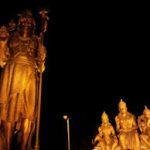
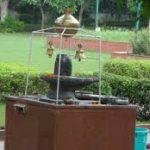
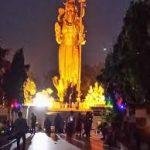
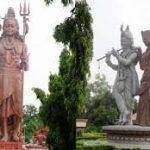
The tall Shiva statue is the identifier of this one of its kind temple in Rangpuri. The shrine is amongst the well-maintained ones in Delhi; neat and clean premises and only one single stall to buy incense and other offerings. The garden on the left of the temple has tall statues of Ram and Sita, in silver and bronze, respectively; while opposite them are statues of Radha and Krishna. The temple has a Shiva Linga that is usually seen encircled by bees and there are idols of Lord Shiva, his consort Parvati and their sons Lord Ganesha and Kartikeya. The temple even has the effigy of a mouse, which is reckoned as the Vahana of Lord Ganesha.
Introduction & Spiritual Essence
The Mangal Mahadeva Birla Kanan, often referred to locally as the Birla Temple in Rangpuri, stands as a modern sanctuary of devotion amidst the bustling capital of Delhi. Dedicated to Lord Shiva in his form as Mangal Mahadeva (The Auspicious Great God), this temple offers a serene spiritual retreat for devotees and visitors alike.
Phalaśruti (Spiritual Benefits): According to devotional beliefs, worshipping at this specific shrine is considered highly auspicious for stabilizing planetary alignments in one’s Janam Kundali (Birth Chart). The temple is particularly renowned for resolving marital discord and bestowing prosperity (Mangal). The presence of the sacred Shiva Linga, encircled by bees, is viewed as a living testament to the purity of the site—a rare natural phenomenon that symbolizes the sweetness of divine grace.
Historical Origins & Scriptural Legend
Builders and Era: The temple was established in the late 20th century under the patronage of the illustrious Birla family, renowned for constructing monumental temples across India. While relatively modern compared to ancient sites, the temple’s architecture and rituals strictly adhere to Vedic traditions.
Local Legend (Sthala Purana): The defining legend of this temple revolves around the miraculous Shiva Linga. Tradition holds that the Linga is not a mere stone carving but a Swayambhu (self-manifested) deity. It is widely reported by the archakas (priests) and devotees that a swarm of bees naturally encircles the Linga throughout the year. In Hindu iconography, the bee is often associated with the extraction of nectar (Amrita) and symbolizes the intense devotion of Bhakti. This phenomenon is interpreted as the Linga being charged with immense energy, attracting nature itself to the divine vibrations.
Scriptural Context: While this specific site does not feature in ancient Puranas like the Skanda Purana (which details Kashi), its rituals follow the Kashmiri Shaivism tradition, emphasizing the immanence of Shiva in all living beings.
Architectural Marvels
The temple is a striking example of Modern Nagara-style architecture blended with Vastu Shastra principles, designed to maximize energy flow.
Key Features:
- The Sanctum (Garbhagriha): The inner sanctum houses the central Shiva Linga. The roof is designed to allow natural light to fall directly on the Linga during specific solar positions.
- The Mandapas: The temple features a spacious Assembly Hall (Mandapa) with pristine white marble flooring, facilitating large gatherings during Aarti.
- The Complex: The tall Shiva statue at the entrance serves as a guardian figure. The surrounding gardens are landscaped with meticulous care, featuring:
- Ram & Sita: Tall statues in silver and bronze.
- Radha & Krishna: Located opposite the Ram-Sita idols, symbolizing the unity of Vaishnavism and Shaivism.
- Mouse Effigy: As mentioned, the Mushika (vehicle of Lord Ganesha) is installed near the Ganesha shrine, often a rarity in temples where Ganesha is worshipped with such specific iconography.
Photo Gallery

Darshan & Ritual Logistics
The temple management ensures a disciplined schedule to accommodate devotees. Below are the general timings (subject to change on festivals).
Daily Timings
| Session | Timings | Activity |
|---|---|---|
| Morning | 05:30 AM – 12:00 PM | Mangala Aarti, Abhishekam, Midday Puja |
| Evening | 04:30 PM – 09:00 PM | Sandhya Aarti, Shayan Aarti |
Seva & Online Booking
To perform specific Sevas like Abhishekam (ritual bathing of the deity) or Rudra Archana, devotees can book through the temple’s official website or visit the administrative office.
- Primary Sevas: Monday Rudrabhishekam, Maha Shivratri Special Puja, Ganesha Chaturthi.
- Online Portal: Visit the Birla Mandir administration page (linked in header) for current availability.
2026 Festival Calendar (Key Dates)
- January 14 (Makar Sankranti): Special Abhishekam.
- February 26 (Maha Shivratri): 24-Hour Kirtan and Rudra Homa. (Note: This is the busiest day of the year; expect extended queues).
- March 18 (Holi): Temple closed until afternoon; evening Aarti only.
- July 7 (Guru Purnima): Special discourse and Rudrabhishekam.
- August 6 (Nag Panchami): Special prayers offered near the garden deities.
Practical Visitor Guidance
Dress Code: As this is a Birla temple, modesty is strictly enforced. Men should wear dhotis or full-length trousers and shirts (no shorts). Women should opt for sarees, salwar kameez, or long skirts.
Photography & Electronics: Photography is generally permitted in the outer gardens but strictly prohibited inside the Sanctum Sanctorum. Mobile phones are allowed but must be switched to silent mode.
Crowd Management:
- Best Time: Weekday mornings (7 AM – 9 AM) are the most peaceful.
- Avoid: Monday evenings and festival evenings unless you enjoy the energetic crowd.
- Seasonal Tip: Delhi summers (May–June) can be scorching. Even though the temple has shade, carry a water bottle and headgear. The marble floors in the mandapa can get hot, so footwear is mandatory to be left at the designated shoe stand (note: there is a token system, so keep your token safe).
Accessibility: The temple has ramps for wheelchair access in the outer courtyard, though the inner sanctum involves a few steps.
Pilgrimage Connectivity
How to Reach
The temple is strategically located in South Delhi, making it accessible via multiple modes of transport.
- By Metro: The nearest metro station is Delhi Aerocity (Airport Line) or Rajiv Chowk (Yellow Line), followed by a 10-minute auto-rickshaw ride.
- By Road: Located on Shivaji Marg, it connects directly to the NH-48 (Delhi–Jaipur Highway). If driving from Gurgaon, take the IGI Airport exit towards Vasant Vihar/Rangpuri.
- By Rail/Air: New Delhi Railway Station is 20 km away. Indira Gandhi International Airport (T3) is merely 8-10 km away, making it an ideal first stop for travelers arriving in Delhi.
Nearby Sacred Sites (Pilgrimage Circuit)
Extend your spiritual journey by visiting these nearby landmarks:
- Chhatarpur Temple (approx. 8 km): One of the largest temple complexes in India, dedicated to Goddess Katyayani.
- Sri Sri Radha Parthasarathi Mandir (ISKCON Delhi) (approx. 7 km): Located in Sheikh Sarai, this Birla-built temple offers a grand viewing of the Krishna deity.
- Jhandewalan Mandir (approx. 10 km): A significant temple dedicated to Goddess Durga, recognizable by its massive outer structure.
Address & Contact
Address:
43, Shivaji Marg, Avenue Bouganvillea, Rangpuri, New Delhi, Delhi 110038
Contact Details:
For inquiries regarding timings or events, please contact the temple administration office.
Frequently Asked Questions (FAQ)
1. Is there a VIP darshan entry at Mangal Mahadeva Birla Kanan?
Unlike some historical temples, this shrine prioritizes equality. However, during peak festivals like Maha Shivratri, the temple management may issue tokens for priority entry to avoid overcrowding. It is recommended to contact the office in advance.
2. What is the significance of the bees around the Shiva Linga?
The presence of bees is considered a divine miracle. In Shaivism, this symbolizes the sweetness of the nectar of immortality (Amrita) and the presence of Shiva. It indicates that the Linga is highly energized.
3. Is there a dress code for international tourists?
Yes. While traditional Indian attire is not mandatory, clothes must cover shoulders and knees. The temple provides wraps/shawls at the entrance for those dressed in shorts or sleeveless tops, but it is better to arrive appropriately dressed.
4. Are there food facilities available inside?
The temple does not have a full-scale Bhandara (community kitchen) like larger ashrams, but packaged drinking water and light snacks may be available at the entry stall. Strict vegetarianism is enforced within the temple premises.
5. What is the parking situation?
There is limited on-site parking available for cars and bikes. During weekends and festivals, it is advisable to hire a cab or use the metro to avoid traffic congestion on Shivaji Marg.
Recent Posts

आना भी अकेला है जाना भी अकेला है – Lyrics & Meaning | BharatTemples
आना भी अकेला है जाना भी अकेला है – A Prayer to the Divine Witness Origin & Spiritual Essence Why This Bhajan Resonates Devotees turn to this bhajan in moments of deep reflection—when life’s attachments begin to ache. The…

माता शेरावाली के द्वार जो भी जाता है – Lyrics & Meaning
माता शेरावाली के द्वार जो भी जाता है – A Prayer to Maa Sherawali Origin & Spiritual Essence Why This Bhajan Resonates Devotees turn to this bhajan in times of fear or uncertainty—its promise that no one leaves Maa’s…

मार लेना सपणी उबार लेणा भवरा – Lyrics & Meaning
मार लेना सपणी उबार लेणा भवरा – A Prayer to the Divine Beloved Origin & Spiritual Essence Why This Bhajan Resonates Devotees chant this in moments of deep vulnerability—its cry of “मार लेना सपणी, उबार लेणा भवरा” is the…

हमें श्याम सुंदर भरोसा तुम्हारा – Lyrics & Meaning
हमें श्याम सुंदर भरोसा तुम्हारा – A Prayer to Shyam Sundar Origin & Spiritual Essence Why This Bhajan Resonates Devotees chant this when feeling alone—its refrain ‘de do sahara’ is the soul’s cry for divine support. Lyrics in Hindi…

Mere Satguru Ne Di Thi Davai Lyrics in Hindi & Meaning
Mere Satguru Ne Di Thi Davai: Invoking the Guru’s Liberating Wisdom This soul-stirring bhajan venerates the Satguru (True Spiritual Master) as the divine physician who dispenses the only remedy for life’s deepest sufferings. Composed by Sant Karmaveer Tufani, it…

Janm Diyo Thari Maa Dukh Dekhiyo Lyrics in Hindi & Meaning
जन्म दियो थारी माँ दुख देखियो (Maa’s Grief Upon Birthing You) This soul-stirring Chetavani Bhajan (admonitory hymn) is addressed to the Divine Mother (Maa) – a call for repentance when children forget their filial duties in the dark age…
Bhadi Sabha Mein Thane Manaun Lyrics in Hindi & Meaning
Bhadi Sabha Mein Thane Manaun: Invoking the Spear-Wielding Mother Mata Bhawani (श्री ज्वाला भवानी), the fiery manifestation of Shakti worshipped as the Protector of Dharma in Her Dhaulagarh sanctum. Origin & Spiritual Essence Composed in Rajasthani folk tradition by…
श्याम सुन्दरवा छोटे छोटे कनुवा Lyrics & Meaning
श्याम सुन्दरवा छोटे छोटे कनुवा (Shyam Sundarva Chhote Chhote Kanuva) is a heartfelt invocation to Lord Krishna in his most enchanting form—Shyam Sundar (the dark, beautiful one). This bhajan is a plea for the divine child Kanha to grace…
Maat Meri Chintapurni Lyrics in Hindi & Meaning
Maat Meri Chintapurni is a heartfelt devotional prayer dedicated to Maa Chintapurni, a form of the Divine Mother. She is revered as the remover of worries and the granter of wishes, especially venerated in the Himalayan region of Himachal…
थारी रे नदियां का ढावा पे खीची राजा Lyrics & Meaning
खीची राजा का अद्भुत युद्ध: एक शौर्य गाथा यह भजन एक पौराणिक या ऐतिहासिक शूरवीर राजा की वीरता का वर्णन करता है, जो प्रायः गुजराती लोक संस्कृति में लोककथाओं का हिस्सा है। इसकी रचना दुर्गेश कटारा ने की है…