
Contents
Introduction & Spiritual Essence: The Serene Sanctity of Mangalesvara
In the sacred city of Bhubaneswar, known globally as the “Temple City of India,” stands a testament to devotion that echoes through centuries: the Mangalesvara Siva Temple. Located in the heart of the Old Town, this temple is not merely a stone structure but a living spiritual ecosystem dedicated to Lord Shiva. While the city boasts the grandeur of the Lingaraj Temple, the Mangalesvara Siva Temple offers an intimate, contemplative atmosphere that allows devotees to connect deeply with the divine.
Primary Deity & Form:
The temple houses a Swayambhu (self-manifested) Lingam. Unlike elaborately sculpted idols, the focal point here is the circular Yonipitha (base) which, tradition holds, originally cradled the Lingam. Although the physical Lingam is notably absent today, the sanctity of the space remains undiluted, with the Yonipitha itself receiving the devotional offerings.
| Date built: | – |
|---|---|
| Deity: | – |
| Architectural style: | – |
| Major festivals | – |
| Locale: | – |
| District:: | Bhubaneswar |
| Address: | – |
| Phone | – |
Phalaśruti: The Fruits of Worship
Devotees flock to the Mangalesvara Siva Temple for specific spiritual benefits. According to local tradition and devotional beliefs:
- Ancestral Liberation: Performing rituals here is believed to help cleanse Pitru Dosha (ancestral karmic debts), granting peace to departed souls.
- Removal of Obstacles: As “Mangalesvara” signifies the Lord of Auspiciousness, regular darshan is sought to overcome life’s hurdles and ensure success in new ventures.
- Marital Harmony: Couples often visit to seek blessings for longevity and harmony in their relationships.
Historical Origins & Scriptural Legend
The Mangalesvara Siva Temple history is a fascinating narrative of resilience and architectural evolution. While many temples in Bhubaneswar date back to the 10th or 11th centuries, historical records and architectural analysis place Mangalesvara in the 14th century AD. This period corresponds to the latter stages of the Ganga Dynasty’s rule in Odisha.
The Builders and the Ganga Legacy
According to temple records, the structure bears the hallmarks of the Ganga architectural style, which dominated Odisha during this era. Though specific royal inscriptions attributing the construction to a single king are scarce in current records, the temple’s stylistic features align perfectly with the temples of the 1300s. The temple was built under the patronage of local nobility who adhered strictly to the Shilpa Shastra (canons of architecture).
The Legend of Taranisen Batu
Tradition holds that the temple’s spiritual lineage is preserved by the Taranisen Batu family, who have served as priests for generations. The name “Mangalesvara” itself carries the weight of local legend. It is said that the location was historically significant for its association with the Papanasini River. The term “Papanasini” translates to “the destroyer of sins.” Establishing a shrine of Lord Shiva—the supreme destroyer of ignorance—on the banks of a river named for sin-destruction was a deliberate spiritual act by ancient architects.
Architectural Marvels: Rekha Deul of the Ganga Era
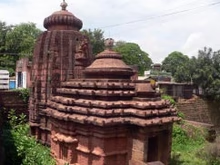
The Mangalesvara Siva Temple architecture is a masterclass in the Rekha Deul style, a distinct sub-style of the Nagara order prevalent in Odisha. The temple complex is a protected monument, reflecting the intricate stone craftsmanship that Bhubaneswar is famous for.
The Vimana and Jagamohana
The temple consists of two main structural components:
- The Vimana (Sanctum Sanctorum): This is the curvilinear spire (Rekha Deul) that rises majestically towards the sky. Standing at approximately 8.14 meters, the Vimana is divided into five distinct vertical sections (Bada): Pabhaga, Talajangha, Bandhana, Upara Jangha, and Baranda. The base (Pabhaga) features five horizontal moldings—Khura, Kumbha, Pata, Kani, and Basanta—typical of Kalinga architecture.
- The Jagamohana (Mandapa): This is the pyramidal structure where devotees gather. Unlike the curvilinear Vimana, the Jagamohana has a Pyramidal Roof (Pidha Deul). It measures roughly 4.50 square meters and features two tiers (Potalas), separated by a recessed Kanthi.
Sculptural Details and Decorative Features
While many 14th-century temples show erosion, Mangalesvara retains exquisite carvings:
- Door Jambs: The entrance to the sanctum features three plain vertical bands, a stylistic choice that focuses attention on the entrance itself. At the base, Dvarapala niches hold tridents, symbolizing protection.
- Lalatabimba: The lintel features an exquisite carving of Goddess Lakshmi seated in Padmasana (lotus posture), holding lotuses in both hands—a fusion of Saivite and Vaishnavite motifs common in Odisha temples.
- Empty Niches: The Raha Paga (central niche) of the Talajangha on three sides contains niches meant for Parsva Devatas (attendant deities). Interestingly, these niches are currently empty, adding an air of mystique to the temple’s history, possibly indicating a simplification of worship or the loss of idols over centuries.
Architectural Style: Rekha and Pidha (Kalinga Style)
Orientation: The temple faces East, following Vastu Shastra principles to welcome the rising sun and positive energies.
Mangalesvara Siva Temple
Darshan & Ritual Logistics
The temple remains a “living temple,” meaning daily rituals are performed with strict adherence to Vedic protocols. Unlike museums, this space is vibrant with the sounds of bells and chanting.
Daily Darshan Timings
| Session | Timing | Notes |
|---|---|---|
| Morning Darshan | 6:00 AM – 12:00 PM | Best time: 7:00 AM for peaceful Abhishekam. |
| Mid-Day Closure | 12:00 PM – 3:00 PM | For temple cleaning and priest rest. |
| Evening Darshan | 3:00 PM – 9:00 PM | Ideal for witnessing the evening lamp offering. |
Key Sevas and Offerings
Devotees can participate in several rituals. While the temple management is largely traditional, inquiries about specific Sevas should be made at the office counter on-site, as online booking for this specific heritage monument is managed by the local trust rather than a centralized state portal.
- Abhishekam: Ritual bathing of the Lingam/Yonipitha with water, milk, yogurt, honey, and sugarcane juice. This is performed during morning hours.
- Archana: The chanting of the 108 names of Lord Shiva.
- Jalabhiseka: Special offering of sanctified water (crucial given the temple’s proximity to the Papanasini river).
2026 Major Festivals at Mangalesvara
Special pujas are conducted during these times. Expect larger crowds.
- Maha Shivaratri: February 26, 2026. The most significant night for Shiva devotees, marked by night-long vigils and special chanting.
- Nabanna (Grain Festival): January 15, 2026. A harvest festival celebrated with special food offerings.
- Sankranti: Observed on the 14th of every month with special rituals involving the sun deity.
Practical Visitor Guidance
To ensure a spiritually fulfilling visit, please adhere to the following guidelines designed to preserve the sanctity and safety of the site.
Dress Code and Conduct
As with all Hindu temples in Odisha, a strict dress code is enforced. Men should wear dhotis or formal trousers/shirts (avoid shorts). Women are advised to wear sarees, salwar kameezes, or formal modest clothing. The atmosphere is deeply devotional; maintaining silence in the inner sanctum is encouraged.
Photography and Electronic Devices
Photography is strictly prohibited inside the sanctum sanctorum. Visitors may take photos of the exterior architecture and the compound walls. Mobile phones should be kept on silent mode.
Crowd Management and Accessibility
- Best Hours to Visit: Early mornings (6:30 AM – 8:00 AM) on weekdays offer the most serene experience. Weekends and festivals see significant footfall.
- Seasonal Advice:
- Summer (April–June): Bhubaneswar can be very hot. Carry a water bottle and an umbrella.
- Monsoon (July–September): The temple area can be slippery due to rain. Wear footwear with good grip.
- Accessibility: The temple is located slightly below the current street level (1.60 meters down). While the path is paved, there are steps leading down to the entrance. Wheelchair access may require assistance.
Pilgrimage Connectivity
The Mangalesvara Siva Temple is centrally located in Bhubaneswar, making it an accessible stop on any spiritual itinerary.
How to Reach
- By Air: The nearest airport is Biju Patnaik International Airport (BBI), located approximately 5–6 km away (a 15-20 minute drive via NH16).
- By Rail: The temple is about 3 km from Bhubaneswar Railway Station. Taxis and auto-rickshaws are readily available.
- By Road: The temple is situated near the Old Town area, accessible via the main arterial roads. While narrow lanes lead to the temple, local drivers are well-versed in the route. The temple lies on the southern embankment of the Papanasini tank.
Nearby Sacred Sites (Pilgrimage Circuit)
Maximize your pilgrimage by visiting these nearby heritage sites within 1-2 km radius:
- Muktesvara Deula (1.2 km): Famous for its exquisite Torana (archway) and gem-like miniature spire. A masterpiece of 10th-century architecture.
- Brahmeswara Temple (1.5 km): Another ancient Shiva temple built in the 9th century, known for its massive compound wall and intricate carvings.
- Lingaraj Temple (2 km): The largest and most famous temple in Bhubaneswar. Note: Non-Hindus are not permitted entry inside the sanctum but can view the structure from a viewing platform.
FAQ
Is there a VIP Darshan entry?
The concept of VIP entry is limited here. However, early morning access is granted to those participating in the Abhishekam rituals. It is recommended to arrive before 7:00 AM for a faster darshan.
Is the temple open year-round?
Yes, the temple is open 365 days a year, barring specific hours for cleaning. During major festivals like Shivaratri, the temple remains open throughout the night.
Is there parking available?
Due to the narrow lanes of the Old Town, dedicated car parking is limited. Visitors are advised to park near the wider roads leading to the Old Town (like MC Road) and walk the remaining distance (approx. 5-10 minutes).
Are there accommodation options nearby?
While there are no hotels directly adjacent to the temple, the Janpath area and Nayapalli region (2-3 km away) offer a wide range of hotels and guesthouses catering to pilgrims.
What is the status of the Lingam?
Current observations indicate the Lingam is absent. Worship is conducted in front of the Yonipitha. Historical texts suggest the temple was built to house a Swayambhu Lingam, and the existing base marks that sacred spot.
Recent Posts

ओ सांवरे तूने ही मुझको संभाला – Lyrics & Meaning
ओ सांवरे तूने ही मुझको संभाला – A Prayer to Shyam Origin & Spiritual Essence Why This Bhajan Resonates Devotees chant this when overwhelmed by life’s storms—the refrain ‘तूने ही मुझको संभाला’ is the soul’s sigh of relief: “You…

कथा ये है महाराज मेरे की – Lyrics & Meaning
कथा ये है महाराज मेरे की छत्रपति संभाजी महाराज – A Prayer to Chhatrapati Sambhaji Maharaj Origin & Spiritual Essence Why This Bhajan Resonates Devotees chant this when their spirit feels tested—its powerful refrain “महाराज मेरे” is a soul’s…

Rigveda Samhita Yathartha Anuvada (ऋग्वेद संहिता यथार्थ अनुवाद) – Complete Set with Anvayartha & Hindi/English Translation
The Rigveda is the oldest surviving scripture of humanity and the foundational text of Sanātana Dharma. For serious students, scholars, UPSC aspirants studying ancient Indian history, Sanskrit learners, and spiritual seekers, a precise and grammatically structured translation is indispensable.…

आना भी अकेला है जाना भी अकेला है – Lyrics & Meaning | BharatTemples
आना भी अकेला है जाना भी अकेला है – A Prayer to the Divine Witness Origin & Spiritual Essence Why This Bhajan Resonates Devotees turn to this bhajan in moments of deep reflection—when life’s attachments begin to ache. The…

माता शेरावाली के द्वार जो भी जाता है – Lyrics & Meaning
माता शेरावाली के द्वार जो भी जाता है – A Prayer to Maa Sherawali Origin & Spiritual Essence Why This Bhajan Resonates Devotees turn to this bhajan in times of fear or uncertainty—its promise that no one leaves Maa’s…

मार लेना सपणी उबार लेणा भवरा – Lyrics & Meaning
मार लेना सपणी उबार लेणा भवरा – A Prayer to the Divine Beloved Origin & Spiritual Essence Why This Bhajan Resonates Devotees chant this in moments of deep vulnerability—its cry of “मार लेना सपणी, उबार लेणा भवरा” is the…

हमें श्याम सुंदर भरोसा तुम्हारा – Lyrics & Meaning
हमें श्याम सुंदर भरोसा तुम्हारा – A Prayer to Shyam Sundar Origin & Spiritual Essence Why This Bhajan Resonates Devotees chant this when feeling alone—its refrain ‘de do sahara’ is the soul’s cry for divine support. Lyrics in Hindi…

Mere Satguru Ne Di Thi Davai Lyrics in Hindi & Meaning
Mere Satguru Ne Di Thi Davai: Invoking the Guru’s Liberating Wisdom This soul-stirring bhajan venerates the Satguru (True Spiritual Master) as the divine physician who dispenses the only remedy for life’s deepest sufferings. Composed by Sant Karmaveer Tufani, it…

Janm Diyo Thari Maa Dukh Dekhiyo Lyrics in Hindi & Meaning
जन्म दियो थारी माँ दुख देखियो (Maa’s Grief Upon Birthing You) This soul-stirring Chetavani Bhajan (admonitory hymn) is addressed to the Divine Mother (Maa) – a call for repentance when children forget their filial duties in the dark age…
Bhadi Sabha Mein Thane Manaun Lyrics in Hindi & Meaning
Bhadi Sabha Mein Thane Manaun: Invoking the Spear-Wielding Mother Mata Bhawani (श्री ज्वाला भवानी), the fiery manifestation of Shakti worshipped as the Protector of Dharma in Her Dhaulagarh sanctum. Origin & Spiritual Essence Composed in Rajasthani folk tradition by…