
Contents
- 1 Maya Devi Temple, Haridwar: The Eternal Shakti Peetha
Maya Devi Temple, Haridwar: The Eternal Shakti Peetha
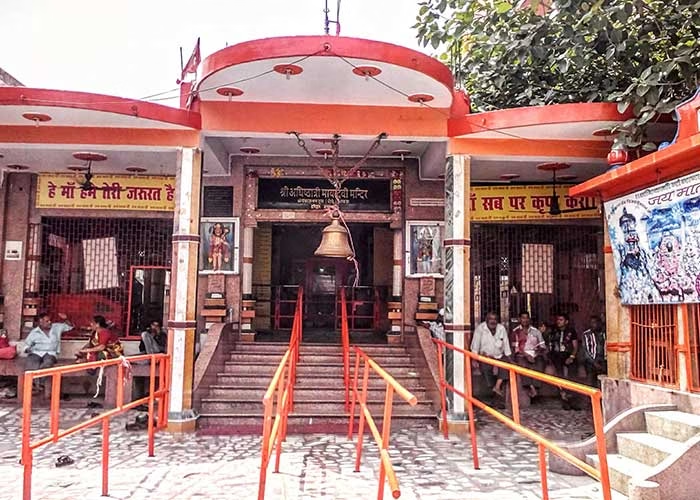
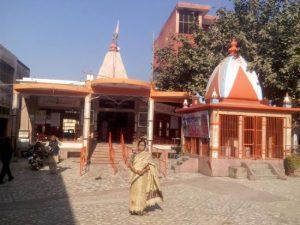
Namaste and welcome to the definitive spiritual guide for the Maya Devi Temple, Haridwar. As the presiding deity of the ancient city of Mayapuri, this temple is not merely a structure of stone but a living locus of divine feminine energy. For the devout, a visit here is a journey to the very source of creation and spiritual purification.
1. Introduction & Spiritual Essence
The Maya Devi Temple is one of the most ancient and sacred shrines in Haridwar, dedicated to Goddess Maya Devi. She is revered as the Adhisthatri Devi (the ruling deity) of the holy city.
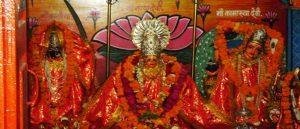
- The Deity: Unlike standard depictions, the murti (idol) of Maya Devi is unique, featuring three faces and four arms. She is an embodiment of Shakti, holding the idols of Goddess Kali in her left hand and Goddess Kamakhya in her right.
- Form: She represents the combined energies of creation, preservation, and destruction.
- Siddh Peetha: The temple is recognized as a Siddh Peetha, meaning a place where worship fulfills the heartfelt desires of devotees.
Phalaśruti: Why Devotees Visit
According to ancient Hindu scriptures, visiting the Maya Devi Temple bestows specific spiritual benefits:
- Removal of Obstacles: Devotees pray here to remove hurdles in their life paths and to gain clarity.
- Ancestral Liberation: It is believed that offering prayers here assists in the liberation (Moksha) of ancestors’ souls, cleansing ancestral karma.
- Fulfillment of Desires: As a Siddh Peetha, sincere prayers are said to manifest positive outcomes for health, wealth, and harmony.
2. Historical Origins & Scriptural Legend
The history of the Maya Devi Temple is woven into the very fabric of Hindu mythology and geography.
The Legend of the Shakti Peetha
Tradition holds that the temple stands at the precise spot where the heart and navel (navel) of Goddess Sati fell during the cosmic event known as the Daksha Yagna. When Sati immolated herself, Lord Shiva carried her body across the universe in grief. As parts of her body dropped to earth, holy sites were established. The falling of the heart and navel here sanctified the ground as a Shakti Peetha.
Architectural Timeline
- Origins: The temple structure dates back to the 11th Century, making it one of the five ancient temples of Haridwar that remain intact today.
- Renovations: While the core sanctum retains its ancient stone work, the temple complex has undergone renovations over the centuries, particularly by local Mahants and later by the Baranwal Gupta family, who currently manage the temple trust.
- Scriptural Reference: Ancient texts refer to Haridwar as Mayapuri in reverence to this deity, a name that predates the current nomenclature.
3. Architectural Marvels
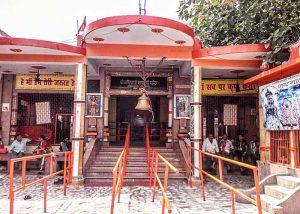
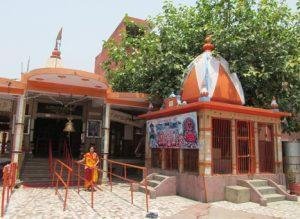
The architecture of Maya Devi Temple is a blend of ancient Nagara styles and regional North Indian temple aesthetics, adapted to the geography of the Birla Ghat region.
Sanctum and Sculptures
The inner shrine (Garbhagriha) is the focal point. Unlike the towering spires of later Rajput architecture, the structure here is grounded and powerful.
- The Murti: The central idol of Maya Devi is flanked by Kali and Kamakhya. The three faces represent the multifaceted nature of the Divine Mother.
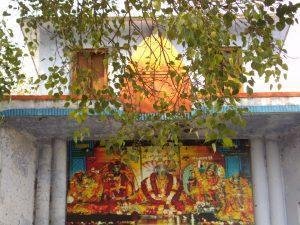
- Surrounding Deities: The complex also houses shrines for Goddess Anandamayi and Shirdi Sai Baba, reflecting the inclusive nature of Hindu worship.
Vastu Shastra and Location
The temple is strategically located to the east of Har Ki Pauri. In Vastu Shastra, the east is the direction of the rising sun, symbolizing illumination and divine energy. The temple acts as a spiritual anchor for the city, balancing the flow of the Ganga to the west.
4. Darshan & Ritual Logistics (2026 Update)
To ensure a seamless spiritual experience, it is vital to plan your visit. Below are the standard timings and ritual schedules. Note: Timings may extend during festivals.
| Session | Timings | Activity |
|---|---|---|
| Morning Darshan | 05:00 AM – 12:00 PM | Mangala Aarti, Shringar Puja |
| Afternoon Break | 12:00 PM – 02:00 PM | Temple Cleaning & Rest |
| Evening Darshan | 02:00 PM – 09:00 PM | Bhog Aarti, Sandhya Aarti |
Key Sevas and Booking
Devotees can book specific rituals to enhance their pilgrimage.
- Abhishekam: Ritual bathing of the deity with water, milk, and honey. Best performed in the morning.
- Archana: Personalized chanting of the goddess’s names.
- Online Seva Booking: While some tickets are available at the counter, it is highly recommended to book in advance for the 2026 season. Visit the official temple trust website or the Uttarakhand Tourism Portal for the “Haridwar Devbhoomi” ticketing section.
Major Festivals in 2026
- Chaitra Navratri: March 30 – April 7, 2026
- Shravan Navratri: July 26 – August 3, 2026
- Durga Puja (Sharad Navratri): September 22 – October 1, 2026
- Maha Shivaratri: February 26, 2026 (High footfall expected).
5. Practical Visitor Guidance
To maintain the sanctity of the temple and ensure safety, visitors are advised to adhere to the following guidelines.
Code of Conduct
- Dress Code: Traditional attire is preferred. Men should wear dhoti/kurta or full-length trousers; women should wear saree, salwar kameez, or long skirts. Avoid shorts and sleeveless tops.
- Photography: Photography is strictly prohibited inside the inner sanctum (Garbhagriha). Mobile phones should be switched to silent mode.
- Footwear: Shoes must be removed at the designated stands outside the temple. A small token fee is usually required.
Crowd Management & Accessibility
- Best Time to Visit: Early mornings (5:00 AM – 7:00 AM) offer the most serene darshan. Post-9:00 AM, crowds increase significantly.
- Accessibility: The temple has stone steps. While manageable for most, those with mobility issues may require assistance. Wheelchairs are not standard in this specific ancient structure but can be arranged via the district administration helpline.
- Seasonal Advice: Haridwar summers (May-June) are hot. Carry a water bottle and a towel. Winters (Dec-Jan) are cool and ideal for pilgrimage.
- Lockers: Mobile phone lockers and bag storage are available near the entrance for a nominal fee.
6. Pilgrimage Connectivity
How to Reach Maya Devi Temple
The temple is located on Upper Road, near Birla Ghat. It is well-connected by road and rail.
- By Air: The nearest airport is Jolly Grant Airport (Dehradun), approximately 35 km away. Taxis are available directly to Haridwar.
- By Rail: Haridwar Junction Railway Station is the nearest major railhead, just 3-4 km from the temple. Auto-rickshaws and e-rickshaws are readily available.
- By Road: Haridwar is on National Highway 334. Regular bus services connect Haridwar to Delhi, Dehradun, and Rishikesh.
Nearby Sacred Sites (Pilgrimage Circuit)
Maya Devi Temple is part of the “Panch Tirtha” of Haridwar. Extend your pilgrimage to these nearby sites:
- Chandi Devi Temple: Located on Neel Parvat, accessible by cable car or a 3km trek. Dedicated to Goddess Chandi.
- Mansa Devi Temple: Situated on Bilwa Parvat. Famous for fulfilling wishes. Accessible via rope-way (Udan Khatola).
- Har Ki Pauri: Just a short walk east of the temple. The most sacred ghats where the Ganga Aarti takes place at sunset.
7. Frequently Asked Questions (FAQs)
What is the entry fee for Maya Devi Temple?
General darshan is free. However, there may be a nominal charge for shoe storage and special entry during peak festivals like Navratri.
Is there a VIP darshan entry available?
While there is no “VIP” category in the traditional sense, the temple trust offers Paid Darshan tickets during festivals to skip the general queue. These can be purchased at the temple counter or online.
What is the significance of the three faces of Maya Devi?
The three faces symbolize the Tridevi—the triple goddess aspect of creation (Saraswati), preservation (Lakshmi), and destruction/transformative power (Parvati/Kali).
Can I perform a special Puja on behalf of someone?
Yes, you can book an Archana or Abhishekam for family members. You will need to provide the Gotra and full name of the person for whom the puja is being performed.
What are the crowd forecast for Kumbh Mela 2026?
While the Maha Kumbh is in 2025, smaller Ardh Kumbh preparations may affect traffic in late 2026. It is advisable to book accommodation months in advance if visiting during the Shahi Snan dates.

Contact Details
Address: Upper Road, Birla Ghat, Haridwar, Uttarakhand 249401
Phone: +91 9984932075 (Maya Devi Temple Trust)
Recent Posts

ओ सांवरे तूने ही मुझको संभाला – Lyrics & Meaning
ओ सांवरे तूने ही मुझको संभाला – A Prayer to Shyam Origin & Spiritual Essence Why This Bhajan Resonates Devotees chant this when overwhelmed by life’s storms—the refrain ‘तूने ही मुझको संभाला’ is the soul’s sigh of relief: “You…

कथा ये है महाराज मेरे की – Lyrics & Meaning
कथा ये है महाराज मेरे की छत्रपति संभाजी महाराज – A Prayer to Chhatrapati Sambhaji Maharaj Origin & Spiritual Essence Why This Bhajan Resonates Devotees chant this when their spirit feels tested—its powerful refrain “महाराज मेरे” is a soul’s…

Rigveda Samhita Yathartha Anuvada (ऋग्वेद संहिता यथार्थ अनुवाद) – Complete Set with Anvayartha & Hindi/English Translation
The Rigveda is the oldest surviving scripture of humanity and the foundational text of Sanātana Dharma. For serious students, scholars, UPSC aspirants studying ancient Indian history, Sanskrit learners, and spiritual seekers, a precise and grammatically structured translation is indispensable.…

आना भी अकेला है जाना भी अकेला है – Lyrics & Meaning | BharatTemples
आना भी अकेला है जाना भी अकेला है – A Prayer to the Divine Witness Origin & Spiritual Essence Why This Bhajan Resonates Devotees turn to this bhajan in moments of deep reflection—when life’s attachments begin to ache. The…

माता शेरावाली के द्वार जो भी जाता है – Lyrics & Meaning
माता शेरावाली के द्वार जो भी जाता है – A Prayer to Maa Sherawali Origin & Spiritual Essence Why This Bhajan Resonates Devotees turn to this bhajan in times of fear or uncertainty—its promise that no one leaves Maa’s…

मार लेना सपणी उबार लेणा भवरा – Lyrics & Meaning
मार लेना सपणी उबार लेणा भवरा – A Prayer to the Divine Beloved Origin & Spiritual Essence Why This Bhajan Resonates Devotees chant this in moments of deep vulnerability—its cry of “मार लेना सपणी, उबार लेणा भवरा” is the…

हमें श्याम सुंदर भरोसा तुम्हारा – Lyrics & Meaning
हमें श्याम सुंदर भरोसा तुम्हारा – A Prayer to Shyam Sundar Origin & Spiritual Essence Why This Bhajan Resonates Devotees chant this when feeling alone—its refrain ‘de do sahara’ is the soul’s cry for divine support. Lyrics in Hindi…

Mere Satguru Ne Di Thi Davai Lyrics in Hindi & Meaning
Mere Satguru Ne Di Thi Davai: Invoking the Guru’s Liberating Wisdom This soul-stirring bhajan venerates the Satguru (True Spiritual Master) as the divine physician who dispenses the only remedy for life’s deepest sufferings. Composed by Sant Karmaveer Tufani, it…

Janm Diyo Thari Maa Dukh Dekhiyo Lyrics in Hindi & Meaning
जन्म दियो थारी माँ दुख देखियो (Maa’s Grief Upon Birthing You) This soul-stirring Chetavani Bhajan (admonitory hymn) is addressed to the Divine Mother (Maa) – a call for repentance when children forget their filial duties in the dark age…
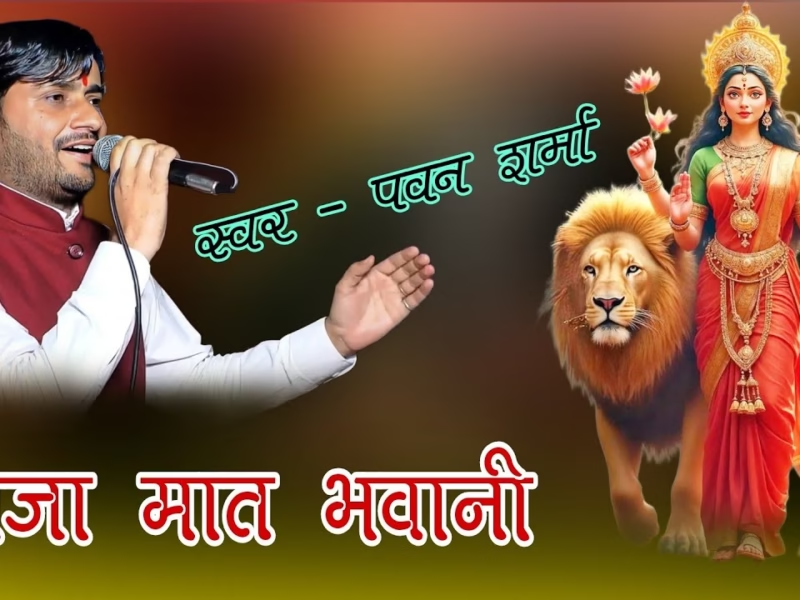
Bhadi Sabha Mein Thane Manaun Lyrics in Hindi & Meaning
Bhadi Sabha Mein Thane Manaun: Invoking the Spear-Wielding Mother Mata Bhawani (श्री ज्वाला भवानी), the fiery manifestation of Shakti worshipped as the Protector of Dharma in Her Dhaulagarh sanctum. Origin & Spiritual Essence Composed in Rajasthani folk tradition by…