
Contents
Standing majestically on the southern bank of the Vaigai River, the Meenakshi Amman Temple is not merely a place of worship; it is the living, breathing soul of Madurai. Dedicated to Goddess Meenakshi (an avatar of Goddess Parvati) and her consort Sundareswarar (Lord Shiva), this temple represents one of the most significant pilgrimage sites in South India. Known interchangeably as the Minakshi-Sundareshwara Temple, it is a monumental testament to Dravidian heritage and unyielding devotion.
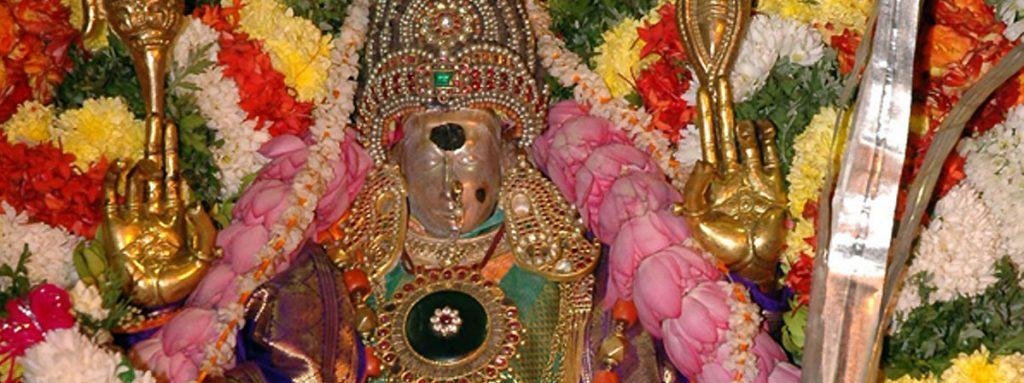
The Deity & Form: Unlike most Shiva temples where the lingam is the focal point, the primary deity here is the Goddess herself—Meenakshi, the “Fish-Eyed” one. The idols are Swayambhu (self-manifested) and carved from a single green emerald stone. Lord Sundareswarar serves as her consort in the sanctum, emphasizing the sacred balance of Shakti (power) and Shiva.
Phalaśruti (Spiritual Benefits): Why do devotees flock here by the thousands daily? According to Vedic tradition, a visit to Madurai washes away ancestral karma. Devotees believe that Darshan of Meenakshi fulfills marital desires, blesses childless couples with progeny, and instills wisdom. The temple is historically linked to the Indra Lingam (a rare meru-shaped lingam), which is believed to absolve sins committed knowingly or unknowingly.
Historical Origins & Scriptural Legend
Ancient Roots: The history of Meenakshi Temple dates back to the 1st century C.E., with scholars claiming it to be as old as the city of Madurai itself. Legend holds that the Pandyan king Kulashekarar Pandyan built the temple following instructions received in a dream from Lord Shiva. Early 6th-century texts describe the temple as the central structure of a scholarly metropolis.
The Sthala Purana: Local lore narrates that the Goddess Meenakshi was born out of a sacrificial fire performed by King Malayadwaja Pandya. She was born with three breasts—a divine sign that she would rule the world and conquer the three worlds. When she married Shiva, the third breast disappeared, fulfilling the prophecy.
Destruction and Rebirth: The temple has faced trials of fire and war. In the 14th century C.E., Malik Kafur, a commander of the Delhi Sultanate, led armies into Southern India, plunders and destroying the temple structure. Centuries later, the Vijayanagara Empire rulers spearheaded a massive rebuilding effort. The temple complex was further fortified and expanded in the 16th and 17th centuries by the Nayaka dynasty, specifically kings like Vishwanatha Nayakar, who adhered strictly to the Silpa Shastras (canons of architecture) to construct the marvel we see today.
Architectural Marvels: Dravidian Grandeur
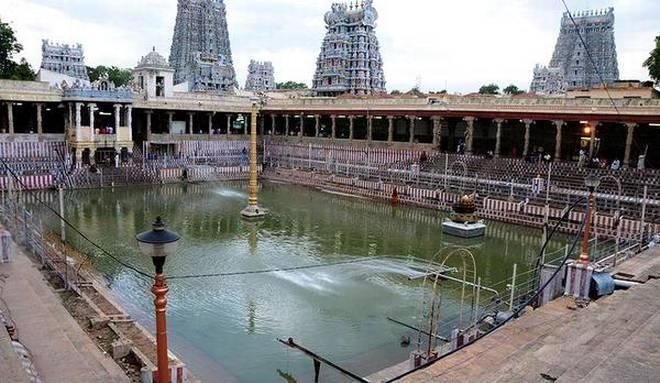
The Meenakshi Temple is a sublime example of Dravidian architecture. It is a sprawling complex covering nearly 170 acres, with the outer structures dominating the city’s skyline.
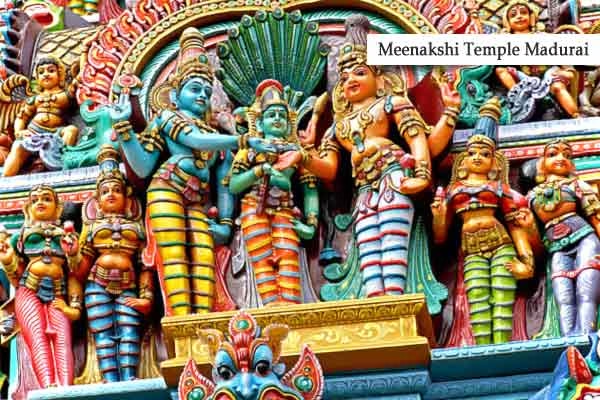
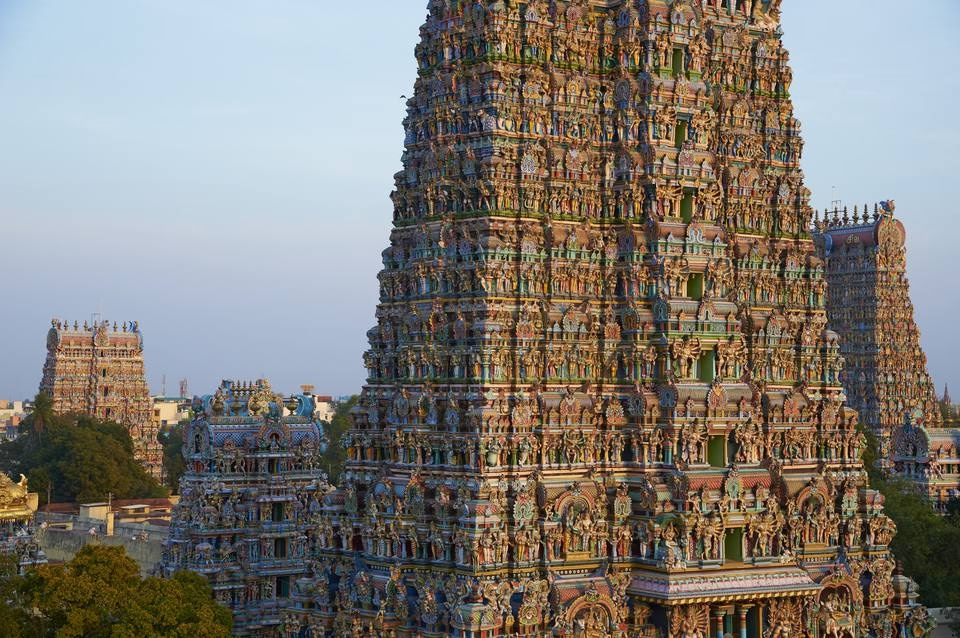
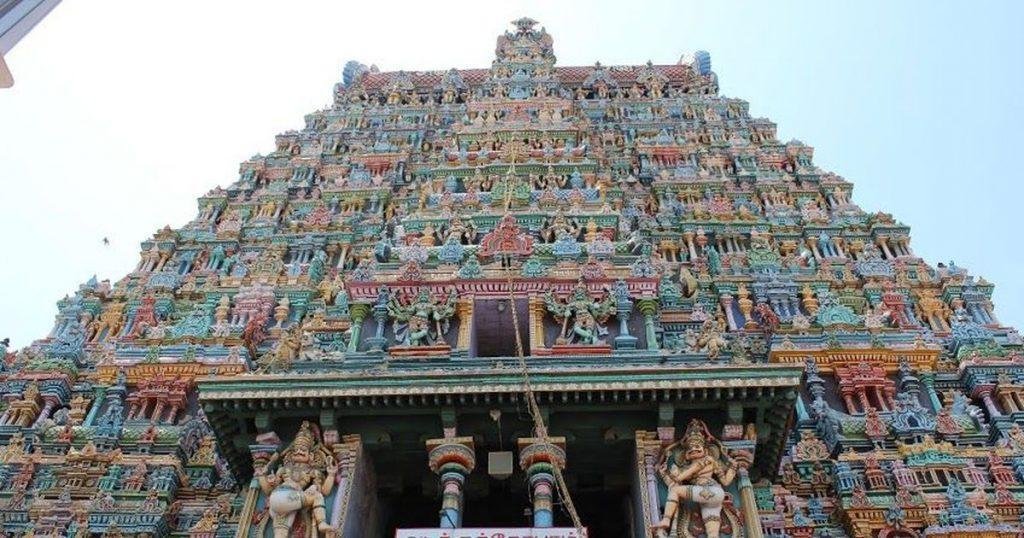
The Gopurams: The complex houses 14 towering Gopurams (gateway towers). These are pyramidal structures built of stone and covered with intricate stucco statues painted in vibrant colors. The southern tower stands tallest at 51.9 meters (170 feet). These towers are not just architectural elements; they are visual narratives depicting stories from the Puranas.
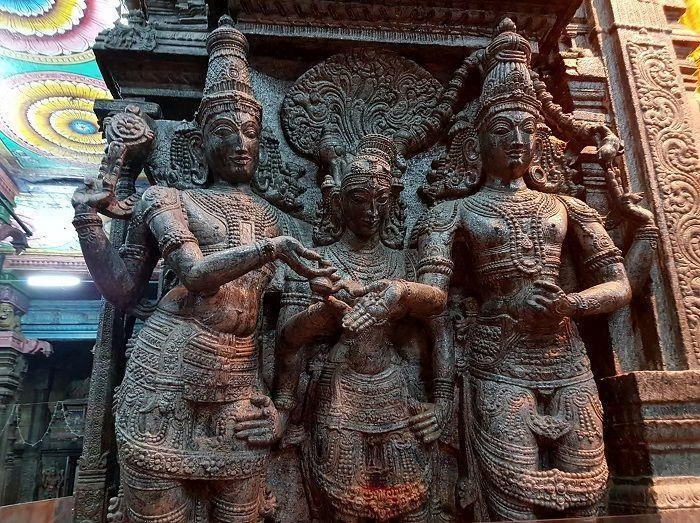
The Hall of a Thousand Pillars: While the entire temple is a marvel, the Ayirakkal Mandapam (Hall of 1000 Pillars) is an engineering masterpiece. These pillars are not identical; each features a unique sculpture, often of a deity or an animal. The hall serves as a museum today.
Vimanas and Sanctums: The Garbhagrihas (sanctums) of Meenakshi and Sundareswarar are topped with Vimanas (cupolas) gilded with pure gold. The architecture follows a rectangular grid layout, adhering to Vastu Shastra, ensuring the energy flow moves from the outer worldly areas to the inner spiritual sanctum.
Gallery

Darshan & Ritual Logistics
Planning your visit requires attention to the daily rituals and the seasonal calendar. The temple is a hub of activity, especially during the Tirukalyanam Festival (the celestial wedding of Meenakshi and Sundareswarar).
Daily Darshan Timings
The temple typically opens early before dawn and closes late at night. Below are the standard timings for 2026. Note that these are subject to change during festivals.
| Session | Opening Time | Closing Time |
|---|---|---|
| Morning Darshan | 05:00 AM | 12:30 PM |
| Afternoon Break | 12:30 PM | 04:00 PM |
| Evening Darshan | 04:00 PM | 10:00 PM |
Key Sevas and Online Booking
Devotees can perform various Sevas (ritual services) to the deities. While many tickets are sold at the counters, the online booking system is highly recommended for better planning.
- Abhishekam (Ritual Bathing): Performed to the emerald idol. Usually 6:00 AM.
- Archana (Chanting): Individual or group recitations of the Goddess’s 108 names.
- Palliyarai Pooja (Bed Chamber Worship): A rare ritual performed at the start of the day.
- Thirukalyanam (Special Marriage Ceremony): Conducted annually during the Tamil month of Chittirai.
How to Book: Visit the official HR&CE (Hindu Religious and Charitable Endowments) website of Tamil Nadu to reserve your slots. For major festivals in 2026, booking opens 60 days in advance.
2026 Festival Calendar
- Chithirai Thiruvizha (April 2026): The grand 10-day festival culminating in the celestial wedding.
- Aadi Pooram (July/August 2026): Celebrated with the Goddess Amman going to the riverbanks.
- Navarathri (September/October 2026): 9 nights of dance and music in the Kilikoondu Mandapam.
- Arvudhira Darshan (December/January 2026): Special Darshan for Lord Shiva.
Practical Visitor Guidance
The Meenakshi Temple attracts over 15,000 visitors daily, peaking during weekends and festival seasons. Here is how to navigate your visit smoothly.
Crowd Management & Best Time to Visit
- Early Morning (4:30 AM – 6:00 AM): The best time for a peaceful Darshan and photography of the architecture.
- Mid-day (10:00 AM – 2:00 PM): This is usually the busiest period, especially with tour groups.
- Seasonal Advice: Madurai is hot year-round. In summer (April–June), carry an umbrella and water. During the monsoon (November), the temple grounds can be slippery.
Rules & Etiquette
- Dress Code: Strict adherence to traditional attire is required. Men must wear Dhoti or formal pants with a shirt. Women must wear a Saree, Salwar Kameez, or full-length skirt with a blouse. Jeans and T-shirts are prohibited inside the sanctum.
- Photography: Photography is strictly prohibited inside the inner sanctum (Garbhagriha). It is allowed in the outer courtyards but be respectful of worshippers.
- Mobile Lockers: Free electronic lockers are available near the temple entrance. Mobile phones and cameras must be deposited here before entering the main shrine.
- Accessibility: The temple complex involves considerable walking. Wheelchairs are available for senior citizens upon request at the entrance office.
Pilgrimage Connectivity
Madurai is a well-connected Tier-2 city, making it accessible for pilgrims from across the globe.
How to Reach
- By Air: Madurai International Airport (IXM) is located just 12 km from the temple. Taxis and airport shuttles are readily available.
- By Rail: Madurai Junction is one of the busiest railway terminals in Tamil Nadu, connected by major trains like the Vaigai Express.
- By Road: The temple is located in the heart of the city. It connects via the NH-38 (Inner Ring Road) and the NH-44 (North-South Corridor). Local city buses run every 10 minutes to the “Meenakshi Temple” stop.
Nearby Sacred Sites (Pilgrimage Circuit)
Extend your spiritual journey by visiting these nearby sites:
- Kallazhagar Temple (Alagar Koyil): Located 20 km northeast, this hilltop temple is dedicated to Lord Vishnu (as Kallazhagar) and is closely linked to the Meenakshi wedding legend.
- Thirumohur Kalatheeswarar Temple: A historic Shiva temple located 15 km from Madurai, known for its association with the legendary composer Muthu Thandavar.
- Alagar Koyil Waterfall: A natural spring near the hill temple, believed to be a sacred dip spot.
Frequently Asked Questions (FAQs)
Yes, the temple offers a “Special Darshan” ticket for ₹100, which allows devotees to bypass the general queue. However, during peak festival days like Chithirai Thiruvizha, even these tickets may result in a wait time of 1-2 hours.
While the temple is generally open to all, restrictions apply based on the deity’s customs. For the main sanctum of Meenakshi and Sundareswarar, the same dress code applies to everyone. Non-Hindus are generally allowed entry into the temple complex, but entrance to the inner sanctum (Garbhagriha) is traditionally restricted to Hindus. Please respect the local customs.
The idol of Meenakshi is carved from a single piece of emerald, making it one of the rarest in the world. It is believed that the emerald radiates a cooling energy that counteracts the intense heat of Madurai, symbolizing the Goddess’s compassion.
Yes, the temple administration provides free storage lockers for bags and luggage. However, large suitcases may not be allowed, so it is advised to travel light.
In the early morning (before 7:00 AM), a complete Darshan takes about 45 minutes. During mid-day, it can take 2 to 3 hours depending on the crowd. On average, plan for 2 hours for a relaxed visit including the walk around the complex.
Contact Details
Official Address: Madurai Main, Madurai, Tamil Nadu 625001, India
For specific inquiries regarding donations, events, or logistics, visitors should contact the temple administration office located at the entrance.
Recent Posts

ओ सांवरे तूने ही मुझको संभाला – Lyrics & Meaning
ओ सांवरे तूने ही मुझको संभाला – A Prayer to Shyam Origin & Spiritual Essence Why This Bhajan Resonates Devotees chant this when overwhelmed by life’s storms—the refrain ‘तूने ही मुझको संभाला’ is the soul’s sigh of relief: “You…

कथा ये है महाराज मेरे की – Lyrics & Meaning
कथा ये है महाराज मेरे की छत्रपति संभाजी महाराज – A Prayer to Chhatrapati Sambhaji Maharaj Origin & Spiritual Essence Why This Bhajan Resonates Devotees chant this when their spirit feels tested—its powerful refrain “महाराज मेरे” is a soul’s…

Rigveda Samhita Yathartha Anuvada (ऋग्वेद संहिता यथार्थ अनुवाद) – Complete Set with Anvayartha & Hindi/English Translation
The Rigveda is the oldest surviving scripture of humanity and the foundational text of Sanātana Dharma. For serious students, scholars, UPSC aspirants studying ancient Indian history, Sanskrit learners, and spiritual seekers, a precise and grammatically structured translation is indispensable.…

आना भी अकेला है जाना भी अकेला है – Lyrics & Meaning | BharatTemples
आना भी अकेला है जाना भी अकेला है – A Prayer to the Divine Witness Origin & Spiritual Essence Why This Bhajan Resonates Devotees turn to this bhajan in moments of deep reflection—when life’s attachments begin to ache. The…

माता शेरावाली के द्वार जो भी जाता है – Lyrics & Meaning
माता शेरावाली के द्वार जो भी जाता है – A Prayer to Maa Sherawali Origin & Spiritual Essence Why This Bhajan Resonates Devotees turn to this bhajan in times of fear or uncertainty—its promise that no one leaves Maa’s…

मार लेना सपणी उबार लेणा भवरा – Lyrics & Meaning
मार लेना सपणी उबार लेणा भवरा – A Prayer to the Divine Beloved Origin & Spiritual Essence Why This Bhajan Resonates Devotees chant this in moments of deep vulnerability—its cry of “मार लेना सपणी, उबार लेणा भवरा” is the…

हमें श्याम सुंदर भरोसा तुम्हारा – Lyrics & Meaning
हमें श्याम सुंदर भरोसा तुम्हारा – A Prayer to Shyam Sundar Origin & Spiritual Essence Why This Bhajan Resonates Devotees chant this when feeling alone—its refrain ‘de do sahara’ is the soul’s cry for divine support. Lyrics in Hindi…

Mere Satguru Ne Di Thi Davai Lyrics in Hindi & Meaning
Mere Satguru Ne Di Thi Davai: Invoking the Guru’s Liberating Wisdom This soul-stirring bhajan venerates the Satguru (True Spiritual Master) as the divine physician who dispenses the only remedy for life’s deepest sufferings. Composed by Sant Karmaveer Tufani, it…

Janm Diyo Thari Maa Dukh Dekhiyo Lyrics in Hindi & Meaning
जन्म दियो थारी माँ दुख देखियो (Maa’s Grief Upon Birthing You) This soul-stirring Chetavani Bhajan (admonitory hymn) is addressed to the Divine Mother (Maa) – a call for repentance when children forget their filial duties in the dark age…
Bhadi Sabha Mein Thane Manaun Lyrics in Hindi & Meaning
Bhadi Sabha Mein Thane Manaun: Invoking the Spear-Wielding Mother Mata Bhawani (श्री ज्वाला भवानी), the fiery manifestation of Shakti worshipped as the Protector of Dharma in Her Dhaulagarh sanctum. Origin & Spiritual Essence Composed in Rajasthani folk tradition by…