
Contents
Introduction & Spiritual Essence
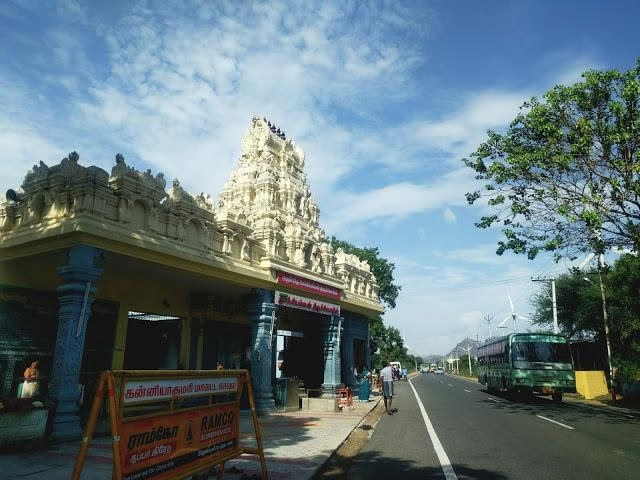
The Muppandhal Avvaiyar Amman Temple, situated in the serene landscapes of Aralvaimozhi, Kanyakumari, is a unique sanctuary that bridges the gap between literary history and divine devotion. Unlike typical temples dedicated solely to deities, this shrine honors Avvaiyar, the legendary Sangam era poetess, alongside Mother Esakki.
The Divine Forms
The temple houses two primary spiritual energies:
- Avvaiyar (The Sage Poetess): Revered for her wisdom, friendship with ancient kings (Pari, Athiyaman), and ethical verses (Aathichoodi). She is considered the guardian of the region.
- Muppandhal Amman (Esakki/Shakthi): The fierce protective deity, believed to have manifested to eradicate evil and grant the boon of fertility and safety.
Phalaśruti: Why Devotees Visit
Devotees flock to this temple for specific spiritual benefits (Phalaśruti):
- Cleansing Ancestral Karma: Rituals here are believed to pacify restless spirits and clear negative karmic debts left by ancestors.
- Marriage & Fertility: Unmarried women pray for timely marriages, often receiving a sacred yellow thread tied by priests after worship.
- Protection from Evil: The tying of a protective sacred thread (Pavitram) is a core ritual to ward off black magic and evil spirits.
- Vehicle Safety: A unique local tradition involves drivers stopping their vehicles in front of the temple to pray for safe journeys.
Historical Origins & Scriptural Legend
While specific construction dates are not inscribed in modern records, the temple’s existence is deeply rooted in the Sangam period (c. 300 BCE to 300 CE) and subsequent folklore.
The Etymology of Muppandhal
According to temple records and local tradition, the name “Muppandhal” derives from a grand historic event. Tradition holds that Avvaiyar arranged the marriage of Sangavai and Angavai, the daughters of King Pari. To host the ceremony, the sovereigns of the Chera, Chola, and Pandya kingdoms erected separate pandals (canopies/shelters). The place where these three (Muppu) pandals (Pandhal) were erected came to be known as Muppandhal.
The Esakki Manifestation
The origin of the Goddess Esakki shrine involves a miraculous dream visitation. An old devotee in nearby Panagudi suffered from a severe stomach ailment that doctors could not cure. In a dream, her clan Goddess appeared, massaged her stomach, and revealed her location beneath a cactus plant. Upon waking cured, the devotee found the stone idol at that exact spot. The villagers built a thatched shed, which eventually evolved into the current stone temple.
Legendary Tragedy & Transformation
Another Sthala Purana recounts the story of a prostitute and a Shiva temple priest in the nearby village of Pazhavur. Murdered out of greed near a cactus bush, the woman and her brother were reborn as Yakshas (Neelan and Neeli). They sought vengeance against their killer (reborn as a merchant). Avvaiyar, witnessing these events, intervened and advised Neeli to channel her rage into protection. Lord Shiva and Goddess Parvati granted Neeli the power of Veera Shakthi, transforming her into Goddess Esakki, who remains the guardian of the region.
Architectural Marvels
The temple is a classic example of the Dravidian architectural style, featuring the distinctive Gopurams (towering gateways) and Vimanas (shrine roofs) typical of Tamil Nadu temples.
Structural Highlights
- The Sanctum (Garbhagriha): The inner sanctum houses the Avvaiyar idol, distinct from standard deity depictions, emphasizing her sage-like appearance.
- Adhi Moola Sthanam: The “Ancient Sanctum” located beneath the neem and cactus trees where the original clay idol of Esakki is preserved. This area is spiritually charged, believed to be the very spot of the Yaksha transformation.
- Mandapas: Pillared halls used for rituals, notably where devotees place cradles (Thottil) for fertility blessings.
While not a UNESCO World Heritage site, the temple is preserved by the local community and maintains the sanctity of ancient Tamil worship methods, utilizing natural elements like the neem tree and cactus in its sacred grove.
Darshan & Ritual Logistics
Below is the schedule for daily rituals. Please note that timings may vary slightly during festivals.
Daily Timings
| Session | Timing |
|---|---|
| Morning Opening | 6:30 AM |
| Mid-day Closure | 12:00 PM – 4:00 PM |
| Evening Closing | 8:00 PM |
| Special Days | Tuesdays, Fridays, Sundays |
Key Sevas (Rituals) & Offerings
- White Pongal & Payasam: The primary Naivedyam (food offering) distributed as Prasadam.
- Jaggery & Gingelly Sweet: A traditional offering beloved by the Goddess.
- Harvest Offering: Farmers offer a portion of their yield directly to the deity.
- Abhishekam: Performed with turmeric water, especially on full moon days.
Online Seva Booking
While the Muppandhal Avvaiyar Amman Temple is largely community-managed, devotees seeking to book specific Archana or remote Parivara Pooja (family prayer) can check the Tamil Nadu Hindu Religious and Charitable Endowments (HR&CE) Department online portal or contact the local panchayat office for current digital booking availability.
2026 Festival Dates
Mark your calendar for these significant observances:
- Full Moon Days (Pournami): Every month (High crowd expected).
- Adi Month Tuesday Festival: Typically falls in July/August. The last Tuesday of the Tamil month of Adi is celebrated grandly with firewalking rituals by male devotees who have performed Varusham (41-day penance).
- Aavani Masam: August – September 2026 (Birthday of Avvaiyar celebrations).
Practical Visitor Guidance
Dress Code & Etiquette
Visitors are requested to maintain the sanctity of the temple. Men should wear Dhoti or trousers with shirts, while women are expected to wear sarees, half-sarees, or churidars with dupattas. Avoid shorts and sleeveless tops.
Photography & Mobile Phones
Photography is generally discouraged inside the inner sanctum. Mobile phones should be silenced during Darshan. As locker facilities are limited, it is advisable to carry minimal electronics.
Crowd Management & Seasons
- Best Time to Visit: Early morning (6:30 AM – 8:00 AM) or late evening (6:00 PM – 7:30 PM) to avoid crowds.
- Seasonal Advice: Kanyakumari is humid year-round. In May and peak summer, carry water and an umbrella. During the Monsoon (June-October), carry rain gear as the temple involves walking through open courtyards.
- Accessibility: The temple has basic accessibility. However, the inner sanctum may be challenging for wheelchairs due to narrow passages.
Pilgrimage Connectivity
How to Reach Muppandhal
The temple is located in Muppandhal village, approximately 3 km from the main Aralvaimozhi junction.
- By Air: The nearest airport is Trivandrum International Airport (TRV), located roughly 75-90 km away (approx. 1.5 to 2 hours drive).
- By Rail: The closest railway head is Aralvaimozhi Railway Station (3 km). Alternatively, Nagercoil Junction (20 km) offers better connectivity to major cities.
- By Road: The temple is accessible via the NH-66. Buses and private taxis are available from Nagercoil, Kanyakumari, and Suchindram.
Nearby Sacred Sites
Enhance your pilgrimage by visiting these nearby destinations:
- Suchindram Thanumalayan Temple (20 km): Famous for its 18-foot Anjaneyar statue and musical pillars.
- Kanyakumari Amman Temple (30 km): The shrine of Devi Kanya Kumari at the southernmost tip of India.
- Padmanabhapuram Palace (28 km): A wooden marvel of Kerala architecture, the former seat of the Travancore kings.
Frequently Asked Questions (FAQ)
1. Is there a VIP Darshan entry available?
The Muppandhal Avvaiyar Amman Temple is a community-managed temple and does not typically have a formal VIP entry system. However, visiting during non-peak hours (early morning or late evening) ensures a quick and peaceful Darshan.
2. Can non-Hindus visit the temple?
While this is a traditional Hindu place of worship, the temple is associated with Avvaiyar, a figure of universal wisdom and ethics. However, access to the inner sanctum is generally restricted to those who follow Hindu customs. Non-Hindu visitors are welcome to visit the outer courtyards and the sacred grove.
3. What is the significance of the yellow thread tied to unmarried girls?
On full moon days, girls seeking marriage pray to the Goddess. After the Pooja, priests tie a yellow thread to the wrist. This is a symbolic blessing from Goddess Esakki for a happy and prosperous marriage, acting as a talisman of protection.
4. Where can I stay near the temple?
Lodging options are better available in Nagercoil (20 km) or Kanyakumari (30 km). These towns offer everything from budget lodges to premium hotels. Local tea shops and small rest houses are available in Aralvaimozhi for a quick break.
5. What is the specific vehicle safety ritual?
As you approach the temple, you will notice a unique tradition where drivers stop their vehicles, honk lightly or switch off engines to offer prayers. This is done to invoke Avvaiyar’s protection for safe travels, as the roads in the region (Aralvaimozhi Ghat) were historically considered challenging.
Recent Posts

ओ सांवरे तूने ही मुझको संभाला – Lyrics & Meaning
ओ सांवरे तूने ही मुझको संभाला – A Prayer to Shyam Origin & Spiritual Essence Why This Bhajan Resonates Devotees chant this when overwhelmed by life’s storms—the refrain ‘तूने ही मुझको संभाला’ is the soul’s sigh of relief: “You…

कथा ये है महाराज मेरे की – Lyrics & Meaning
कथा ये है महाराज मेरे की छत्रपति संभाजी महाराज – A Prayer to Chhatrapati Sambhaji Maharaj Origin & Spiritual Essence Why This Bhajan Resonates Devotees chant this when their spirit feels tested—its powerful refrain “महाराज मेरे” is a soul’s…

Rigveda Samhita Yathartha Anuvada (ऋग्वेद संहिता यथार्थ अनुवाद) – Complete Set with Anvayartha & Hindi/English Translation
The Rigveda is the oldest surviving scripture of humanity and the foundational text of Sanātana Dharma. For serious students, scholars, UPSC aspirants studying ancient Indian history, Sanskrit learners, and spiritual seekers, a precise and grammatically structured translation is indispensable.…

आना भी अकेला है जाना भी अकेला है – Lyrics & Meaning | BharatTemples
आना भी अकेला है जाना भी अकेला है – A Prayer to the Divine Witness Origin & Spiritual Essence Why This Bhajan Resonates Devotees turn to this bhajan in moments of deep reflection—when life’s attachments begin to ache. The…

माता शेरावाली के द्वार जो भी जाता है – Lyrics & Meaning
माता शेरावाली के द्वार जो भी जाता है – A Prayer to Maa Sherawali Origin & Spiritual Essence Why This Bhajan Resonates Devotees turn to this bhajan in times of fear or uncertainty—its promise that no one leaves Maa’s…

मार लेना सपणी उबार लेणा भवरा – Lyrics & Meaning
मार लेना सपणी उबार लेणा भवरा – A Prayer to the Divine Beloved Origin & Spiritual Essence Why This Bhajan Resonates Devotees chant this in moments of deep vulnerability—its cry of “मार लेना सपणी, उबार लेणा भवरा” is the…

हमें श्याम सुंदर भरोसा तुम्हारा – Lyrics & Meaning
हमें श्याम सुंदर भरोसा तुम्हारा – A Prayer to Shyam Sundar Origin & Spiritual Essence Why This Bhajan Resonates Devotees chant this when feeling alone—its refrain ‘de do sahara’ is the soul’s cry for divine support. Lyrics in Hindi…

Mere Satguru Ne Di Thi Davai Lyrics in Hindi & Meaning
Mere Satguru Ne Di Thi Davai: Invoking the Guru’s Liberating Wisdom This soul-stirring bhajan venerates the Satguru (True Spiritual Master) as the divine physician who dispenses the only remedy for life’s deepest sufferings. Composed by Sant Karmaveer Tufani, it…

Janm Diyo Thari Maa Dukh Dekhiyo Lyrics in Hindi & Meaning
जन्म दियो थारी माँ दुख देखियो (Maa’s Grief Upon Birthing You) This soul-stirring Chetavani Bhajan (admonitory hymn) is addressed to the Divine Mother (Maa) – a call for repentance when children forget their filial duties in the dark age…
Bhadi Sabha Mein Thane Manaun Lyrics in Hindi & Meaning
Bhadi Sabha Mein Thane Manaun: Invoking the Spear-Wielding Mother Mata Bhawani (श्री ज्वाला भवानी), the fiery manifestation of Shakti worshipped as the Protector of Dharma in Her Dhaulagarh sanctum. Origin & Spiritual Essence Composed in Rajasthani folk tradition by…