
Contents
Introduction & Spiritual Essence
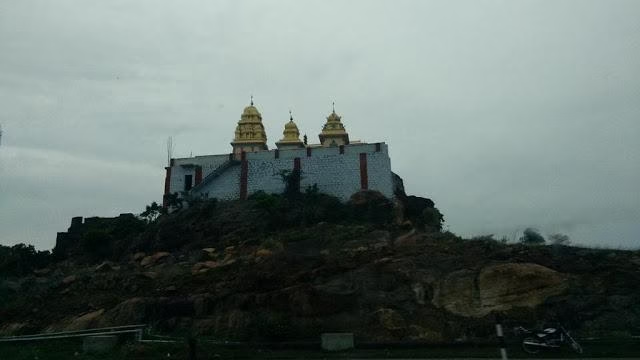
Perched atop a serene hillock overlooking the meeting point of the Indian Ocean, the Bay of Bengal, and the Arabian Sea lies the sacred Murugan Kundram Temple. While Kanyakumari is famous for the Kumari Amman temple dedicated to the virgin goddess, this hilltop sanctuary offers a profound counterpoint, dedicated to Lord Murugan (also revered as Karthikeya or Subramanya).
Locally known as Murugan Kundram, the temple is a beacon of devotion for Murugan devotees across the globe. The primary deity is Lord Murugan, enshrined here in a Swayambhu (self-manifested) form. Unlike man-made idols, the natural rock formation in the sanctum sanctorum resembles the imposing form of the war-god.
Phalaśruti: Why Visit Murugan Kundram?
According to devotional beliefs and the Phalaśruti (scriptural promises of merit), a pilgrimage to this temple is spiritually equivalent to visiting the famed Palani Murugan Temple in Tamil Nadu. The hilltop location signifies elevation above worldly troubles.
Devotees visit primarily for:
- Cleansing Ancestral Karma: It is believed that prayers offered here help liberate ancestors from the cycle of suffering.
- Removal of Obstacles: Lord Murugan is the remover of obstacles (Vighnaharta). Worshipping him here is said to clear paths to success in career and personal life.
- Protection: Being situated near the ocean, the temple is a spiritual fortress protecting devotees from negative energies.
Historical Origins & Scriptural Legend
While specific dynastic records for this small, natural cave temple are sparse compared to massive stone structures like Meenakshi Amman, the temple’s history is deeply woven into the region’s folklore.
The Legend of the Hillock
Tradition holds that this hillock was the meditation spot for various Siddhas (enlightened beings). The Swayambhu idol is believed to have been discovered by a local villager centuries ago when he lost his herd of goats and found them grazing on the hill. Upon investigating, he found the self-manifested idol of Lord Murugan.
Scriptural Connection
While the Sthala Purana is largely oral, the temple aligns with the worship style described in the Skanda Purana, which details Lord Murugan’s journeys and abodes across South India. The name “Kundram” itself is derived from the Sanskrit Kumara (youth) and Kundram (hill), signifying the Lord’s eternal youth.
According to temple records, the current structure has been renovated over time to protect the sanctity of the natural rock formation, adding prakaras (corridors) and a roof over the sanctum while maintaining the cave-like ambiance.
Architectural Marvels
The Murugan Kundram Temple is a prime example of Dravidian Architecture adapted to a natural landscape. Unlike monolithic temples, this structure harmonizes with the rugged terrain of the hillock.
Sanctum & Vastu
The temple faces East, adhering to Vastu Shastra principles to allow the morning sun (Surya) to illuminate the sanctum first. The Garbhagriha (inner sanctum) is small and intimate, enhancing the connection between the devotee and the deity. The absence of a towering Shikhara (spire) here is intentional; the hill itself acts as the vertical axis, merging the natural with the divine.
Sculptures & Shrines
The inner sanctum houses the main deity, Lord Murugan, flanked by idols of his consorts, Valli and Devasena. Outside the sanctum, devotees can offer prayers at a Mandapa (hall) which features pillars depicting stories from the Thirukkurals and Murugan’s victory over the demon Surapadman. The exterior walls are relatively simple, reflecting the austerity of the ascetics who once inhabited the space.
Note on Preservation: While not a UNESCO World Heritage site, the temple is a protected local monument under the surveillance of the Hindu Religious and Charitable Endowments (HR&CE) Department of Tamil Nadu.
Darshan & Ritual Logistics
Visiting Murugan Kundram requires an early start to avoid the tropical heat and to witness the temple’s serene morning atmosphere. Below are the standard operating timings.
Daily Timings
| Session | Timing | Description |
|---|---|---|
| Morning Darshan | 6:00 AM – 12:30 PM | Best time: 7:00 AM (Sunrise) |
| Mid-day Closure | 12:30 PM – 4:00 PM | For rituals and cleaning |
| Evening Darshan | 4:00 PM – 8:00 PM | Includes lighting of lamps |
Key Sevas & Online Booking
While the temple is smaller, key rituals are performed daily. For specific abhishekams or archanas, booking is recommended during festival seasons.
- Abhishekam: Performed with milk, honey, and sandalwood paste. Timing: 8:00 AM.
- Archana (Santhana Deepam): Special prayer for family well-being. Timing: Throughout open hours.
- Online Seva Booking: While traditional bookings are made at the temple counter, the Tamil Nadu HR&CE department is increasingly digitizing smaller temples. For the most current online booking options, check the official Tamil Nadu Tourism Temple Portal or the HR&CE app.
2026 Major Festival Dates
Planning a visit during these festivals allows for special Pooja and decorations, though crowds will be higher.
- Thaipusam: January 13, 2026 (Monday)
- Vaikasi Visakam: May 21, 2026 (Thursday) – Birth anniversary of Lord Murugan.
- Aadi Krithigai: August 5, 2026 (Tuesday) – Highly auspicious for Murugan temples.
- Skanda Shashti: November 11, 2026 (Tuesday) – Celebrating the defeat of Surapadman.
- Thirukarthigai: December 7, 2026 (Sunday) – Lighting of lamps.
Practical Visitor Guidance
Visiting a hilltop temple in Kanyakumari requires preparation. Here is what you need to know to ensure a smooth darshan.
Dress Code & Etiquette
As with all Hindu temples in Tamil Nadu, modest attire is mandatory. Men should wear dhotis or trousers (no shorts), and women should wear sarees, salwars, or long skirts. Western attire like jeans or t-shirts may be restricted, though enforcement varies by strictness of the day.
Photography & Mobiles
Photography is strictly prohibited inside the inner sanctum (Garbhagriha). It is advisable to switch off mobile phones or keep them in silent mode within the temple premises. As this is a hilltop location, you may need to leave footwear at the designated paid counters at the base of the hill.
Crowd Management & Seasonal Advice
- Best Hours: The ideal time for darshan is 6:30 AM to 8:00 AM. The temple is relatively empty, and the cool breeze is refreshing.
- Summer (March – June): Temperatures in Kanyakumari can be high. Carry water and wear a hat. The climb up the hill steps is strenuous in the heat.
- Monsoon (October – November): Expect rain. The steps can become slippery; wear shoes with good grip.
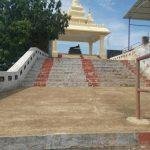
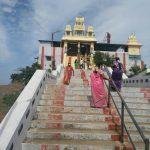
- Accessibility: The temple requires climbing a flight of stone steps. It is not wheelchair accessible. Senior citizens can request assistance from local volunteers or hire a doli (palanquin) if available (subject to service terms).
Pilgrimage Connectivity
How to Reach Murugan Kundram
The temple is strategically located near the southern tip of India.
- By Air: The nearest airport is Trivandrum International Airport (TRV) in Kerala, located approximately 90 km away. From there, taxis and buses are available to Kanyakumari. Alternatively, the new Kanniyakumari Airport is under development and closer.
- By Rail: The Kanyakumari Railway Station is the terminus of major trains like the Himsagar Express. The temple is roughly 3-4 km from the station (15 mins by auto/taxi).
- By Road: Kanyakumari is well connected via National Highway 66 (formerly NH 44). Buses are frequent from Nagercoil (20 km), Thiruvananthapuram (100 km), and Madurai (245 km).
Nearest Railway Station
Kanyakumari Railway Station (CAPE)
Distance: 3 km
Transport: Auto-rickshaws and local buses (Route 5, 10) available.
Nearby Sacred Sites
To complete your spiritual journey in Kanyakumari, consider visiting these nearby sites:
- Kumari Amman Temple: The focal point of Kanyakumari, dedicated to Goddess Parvati. Located just 3 km from Murugan Kundram.
- Thanumalayan Temple (Suchindram): Located 12 km north, famous for its musical pillars and the Hanuman statue. A major hub for Shaiva and Vaishnava traditions.
- Sree Padmanabhaswamy Temple: Located 100 km away in Thiruvananthapuram (Kerala), this temple is renowned for its architectural grandeur and underground vaults.
Photo Gallery

Frequently Asked Questions (FAQ)
1. Is there a VIP Darshan entry available?
Murugan Kundram is a smaller shrine compared to mega-temples, and there is generally no formal VIP entry system. The darshan is relatively quick unless during major festivals. However, during peak seasons, the temple administration may prioritize those who book special homams or pujas.
2. Are non-Hindus allowed inside?
Generally, entry is restricted to Hindus who practice the faith. However, non-Hindu tourists are often allowed to view the architecture from the outer courtyard or entrance, subject to the discretion of the temple priests.
3. What are the accommodation options near the temple?
Since the temple is within the town limits of Kanyakumari, there are numerous hotels and lodges ranging from budget to luxury (Taj, The Madurai Residency, etc.) located within 2-5 km of the hilltop. Staying near the beach offers the best views.
4. Is the temple open 24/7?
No, the temple follows strict timings. It opens early in the morning and closes in the evening after the last prayer. The inner sanctum is not accessible at night.
5. What is the history of the name “Kundram”?
The term “Kundram” is the Tamil adaptation of the Sanskrit word Kumara, meaning youth or the divine son. It refers specifically to Lord Murugan. Thus, Murugan Kundram literally translates to “The Hill of Lord Murugan.”
Recent Posts

Shri Kaamkoteeshwar Mandir, Varanasi – History & Significance
In the heart of Kashi, the eternal city of Lord Shiva, where the Ganges flows with celestial grace, stands the Shri Kaamkoteeshwar Mandir. This sacred Sannidhi is not merely a temple but a profound spiritual bridge between the Northern…

ओ सांवरे तूने ही मुझको संभाला – Lyrics & Meaning
ओ सांवरे तूने ही मुझको संभाला – A Prayer to Shyam Origin & Spiritual Essence Why This Bhajan Resonates Devotees chant this when overwhelmed by life’s storms—the refrain ‘तूने ही मुझको संभाला’ is the soul’s sigh of relief: “You…

कथा ये है महाराज मेरे की – Lyrics & Meaning
कथा ये है महाराज मेरे की छत्रपति संभाजी महाराज – A Prayer to Chhatrapati Sambhaji Maharaj Origin & Spiritual Essence Why This Bhajan Resonates Devotees chant this when their spirit feels tested—its powerful refrain “महाराज मेरे” is a soul’s…

Rigveda Samhita Yathartha Anuvada (ऋग्वेद संहिता यथार्थ अनुवाद) – Complete Set with Anvayartha & Hindi/English Translation
The Rigveda is the oldest surviving scripture of humanity and the foundational text of Sanātana Dharma. For serious students, scholars, UPSC aspirants studying ancient Indian history, Sanskrit learners, and spiritual seekers, a precise and grammatically structured translation is indispensable.…

आना भी अकेला है जाना भी अकेला है – Lyrics & Meaning | BharatTemples
आना भी अकेला है जाना भी अकेला है – A Prayer to the Divine Witness Origin & Spiritual Essence Why This Bhajan Resonates Devotees turn to this bhajan in moments of deep reflection—when life’s attachments begin to ache. The…

माता शेरावाली के द्वार जो भी जाता है – Lyrics & Meaning
माता शेरावाली के द्वार जो भी जाता है – A Prayer to Maa Sherawali Origin & Spiritual Essence Why This Bhajan Resonates Devotees turn to this bhajan in times of fear or uncertainty—its promise that no one leaves Maa’s…

मार लेना सपणी उबार लेणा भवरा – Lyrics & Meaning
मार लेना सपणी उबार लेणा भवरा – A Prayer to the Divine Beloved Origin & Spiritual Essence Why This Bhajan Resonates Devotees chant this in moments of deep vulnerability—its cry of “मार लेना सपणी, उबार लेणा भवरा” is the…

हमें श्याम सुंदर भरोसा तुम्हारा – Lyrics & Meaning
हमें श्याम सुंदर भरोसा तुम्हारा – A Prayer to Shyam Sundar Origin & Spiritual Essence Why This Bhajan Resonates Devotees chant this when feeling alone—its refrain ‘de do sahara’ is the soul’s cry for divine support. Lyrics in Hindi…

Mere Satguru Ne Di Thi Davai Lyrics in Hindi & Meaning
Mere Satguru Ne Di Thi Davai: Invoking the Guru’s Liberating Wisdom This soul-stirring bhajan venerates the Satguru (True Spiritual Master) as the divine physician who dispenses the only remedy for life’s deepest sufferings. Composed by Sant Karmaveer Tufani, it…

Janm Diyo Thari Maa Dukh Dekhiyo Lyrics in Hindi & Meaning
जन्म दियो थारी माँ दुख देखियो (Maa’s Grief Upon Birthing You) This soul-stirring Chetavani Bhajan (admonitory hymn) is addressed to the Divine Mother (Maa) – a call for repentance when children forget their filial duties in the dark age…