
Contents
Introduction & Spiritual Essence
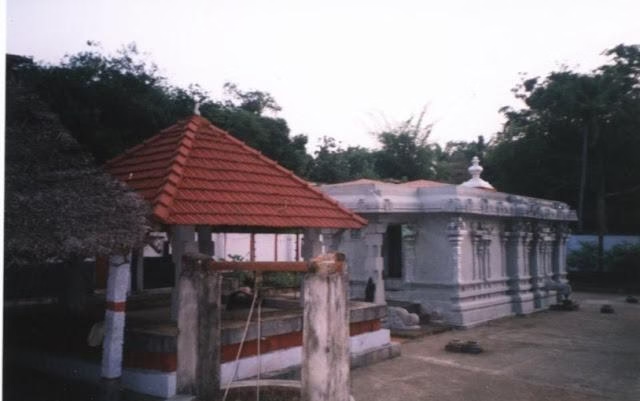
Nestled in the serene landscapes of Chenkody in the Kanyakumari district, the Mutathura Mahadevar Temple stands as a beacon of ancient spirituality and Dravidian heritage. Dedicated to Lord Shiva, this temple is revered by devotees as a Swayambhu shrine, where the divine lingam is believed to have manifested naturally.
Phalaśruti: Why Visit?
According to temple records and local folklore, the Significance of Mutathura Mahadevar lies in its potent ability to cleanse ancestral karma and nullify planetary afflictions, particularly those related to Saturn (Shani) and the Moon (Chandra). Devotees visit this sacred spot to attain mental peace, prosperity, and relief from prolonged ailments. The temple is considered a powerful Dhasa Bhukti Mukti Sthalam, offering relief from the cycles of life’s challenges.
Historical Origins & Scriptural Legend
Tradition holds that the Mutathura Mahadevar Temple dates back approximately 1,200 years. While specific dynastic inscriptions are currently under scholarly review, the architectural style and stone masonry suggest a construction era spanning the Medieval Pandya period or early Nayak rule in the southern regions.
The Sthala Purana
The Stele Purana (local oral legend) narrates a fascinating story involving a Naga (serpent deity) who worshipped a Shiva Lingam beneath a Vel tree (Spear tree) at this location. A farmer, ploughing his field nearby, struck the earth and unearthed the lingam. When he attempted to move it, blood oozed from the soil, causing panic. That night, Lord Shiva appeared in the farmer’s dream, instructing him to build a temple on that very spot. Consequently, the village was named Muthu (Pearl) + Oor (Place/Village), evolving into ‘Mutathura’.
Architectural Marvels
The temple is a classic exemplar of Dravidian Architecture. The structure is designed according to Vastu Shastra principles, ensuring energy alignment with the cardinal directions.
- The Shikhara (Rajagopuram): The temple features a modest yet striking Rajagopuram (main tower) facing east. The intricate carvings depict scenes from Hindu mythology.
- The Mandapa: A spacious Maha Mandapa with monolithic pillars supports the ceiling. These pillars feature sculptures of deities, musicians, and dancers, showcasing the finesse of ancient artisans.
- Sanctum Sanctorum: The inner sanctum houses the Swayambhu Lingam, which is slightly oval-shaped and believed to grow in size over epochs.
Darshan & Ritual Logistics (2026 Update)
To ensure a smooth pilgrimage experience, we have outlined the daily schedule and key rituals. Please note that timings may vary slightly during festivals.
Daily Timings
| Session | Timing | Details |
|---|---|---|
| Morning Darshan | 6:00 AM – 11:00 AM | Includes Ushathkalam and Kalasanthi Pooja. |
| Afternoon Closure | 11:00 AM – 4:00 PM | Temple remains closed for deity rest. |
| Evening Darshan | 4:00 PM – 8:00 PM | Includes Sayarakshai Pooja. |
Key Sevas & Online Booking
Devotees can perform various Sevas (Services) to the deity. For the convenience of pilgrims, the temple administration is expected to facilitate online booking via the Tamil Nadu Hindu Religious & Charitable Endowments (HR&CE) website by 2026.
- Abhishekam: Ritual bathing of the Shiva Lingam with milk, honey, and sandalwood paste.
- Archana: Recitation of hymns (e.g., Shiva Ashtothram) accompanied by the offering of flowers.
- Rudra Abhishekam: A grand ritual usually performed on Mondays and Pradosham.
2026 Major Festival Dates
- Maha Shivaratri: February 26, 2026 (Expect all-night vigil and special Abhishekams).
- Pradosham: Monthly (13th and 28th of every month). Special seva is conducted during twilight.
- Karthigai Deepam: December 4, 2026 (Lighting of lamps).
Practical Visitor Guidance
Visiting the Mutathura Mahadevar Temple requires adherence to certain protocols to respect the sanctity of the site.
- Dress Code: Traditional attire is mandatory. Men should wear Dhoti or trousers with a shirt; Women should wear Saree, Salwar Kameez, or full-length skirts. Avoid jeans and shorts.
- Photography: Photography is strictly prohibited inside the Sanctum Sanctorum (Garbhagriha). Permitted in the outer prakaram (corridor) without flash.
- Electronic Devices: Mobile phones and cameras must be kept on silent mode. Some sections may require these to be deposited at the entrance counter.
- Accessibility: The temple complex has a few steps at the entrance. The inner sanctum is narrow, making it slightly challenging for wheelchair users, though assistance is available from temple staff.
- Crowd Management: The best time to visit is the early morning (6:00 AM – 7:30 AM) on weekdays. Weekends and Mondays see higher footfall. Carry water bottles as the region can be humid, especially from March to May.
Pilgrimage Connectivity
The temple is well-connected by road, making it accessible from major cities in Tamil Nadu and Kerala.
How to Reach
- By Air: The nearest airport is Trivandrum International Airport (TRV) in Kerala, located approximately 58 km away (approx. 1.5 hours drive).
- By Rail: The nearest railway station is Kuzhithurai (approx. 13 km). Trivandrum Central is another major option.
- By Road: The temple is located 2 km from Chenkody. It is accessible via the NH 66 (formerly NH 47). Specific routes connect from Nagercoil (24 km) and Marthandam (12 km).
Nearby Sacred Sites (Pilgrimage Circuit)
Extend your spiritual journey by visiting these nearby landmarks:
- Mathur Aqueduct (Mathur Hanging Trough): Located just 4 km away, this is the highest aqueduct in South Asia, offering scenic views and a small shrine dedicated to Lord Vishnu.
- Thiruvattaru Adikesava Perumal Temple: A historic Vishnu temple 6 km away, known for its ancient inscriptions and unique architectural layout.
- Padmanabhapuram Palace: Located 12 km away, this wooden palace is a masterpiece of traditional Kerala architecture and a UNESCO World Heritage contender.
Frequently Asked Questions (FAQ)
1. Is there a VIP darshan entry at Mutathura Mahadevar Temple?
Currently, the temple operates on a general darshan system. However, during special festivals, a paid darshan ticket (₹50) may be introduced by the HR&CE department to manage crowds. It is advisable to check the official Tamil Nadu temple portal before visiting.
2. What is the best time of year to visit?
The ideal time is between October and February when the weather is cool and pleasant. Summers (March–May) in Kanyakumari can be quite hot and humid.
3. Are there accommodation facilities near the temple?
While there are no guest houses directly attached to the Mutathura temple, Chenkody and Thiruvattaru offer decent lodges. For better amenities, travelers usually stay in Nagercoil or Marthandam, which are 20-30 minutes away by car.
4. Can non-Hindus enter the temple?
Generally, South Indian temples administered by the HR&CE department allow entry to all. However, the inner sanctum is restricted to Hindus. Please verify the current entry policy with the temple office upon arrival.
5. What are the contact details for the temple office?
For verification of timings and seva availability, you may contact the Executive Officer at the Kuzhithurai Devasthanam Office or visit the official Tamil Nadu HR&CE website. (Note: Specific direct phone lines for smaller temples are often shared via the district office).
Photo Gallery
How to Reach:
Mutathura Mahadevar Temple is a Hindu Temple dedicated to Lord Shiva located at Chenkody in Kanyakumari District of Tamilnadu. The Temple is believed to be 1200 Years Old. The Temple is located at about 2 Kms from Chenkody, 2 Kms from Poovancode Junction Bus Stop, 6 Kms from Thiruvattaru, 4 Kms from Mathur Aqueduct (Mathur Hanging Trough), 12 Kms from Marthandam, 16 Kms from Kuzhithurai, 13 Kms from Kuzhithurai, Railway Station, 10 Kms from Thuckalay, 19 Kms from Colachel, 12 Kms from Padmanabhapuram, 24 Kms from Nagercoil, 14 Kms from Eraniel, 48 Kms from Kanyakumari and 58 Kms from Thiruvananthapuram. Nearest Railway Station is located at Kuzhithurai and Nearest Airport is located at Thiruvananthapuram.
Contact Details
Official Address
Recent Posts

Shri Kaamkoteeshwar Mandir, Varanasi – History & Significance
In the heart of Kashi, the eternal city of Lord Shiva, where the Ganges flows with celestial grace, stands the Shri Kaamkoteeshwar Mandir. This sacred Sannidhi is not merely a temple but a profound spiritual bridge between the Northern…

ओ सांवरे तूने ही मुझको संभाला – Lyrics & Meaning
ओ सांवरे तूने ही मुझको संभाला – A Prayer to Shyam Origin & Spiritual Essence Why This Bhajan Resonates Devotees chant this when overwhelmed by life’s storms—the refrain ‘तूने ही मुझको संभाला’ is the soul’s sigh of relief: “You…

कथा ये है महाराज मेरे की – Lyrics & Meaning
कथा ये है महाराज मेरे की छत्रपति संभाजी महाराज – A Prayer to Chhatrapati Sambhaji Maharaj Origin & Spiritual Essence Why This Bhajan Resonates Devotees chant this when their spirit feels tested—its powerful refrain “महाराज मेरे” is a soul’s…

Rigveda Samhita Yathartha Anuvada (ऋग्वेद संहिता यथार्थ अनुवाद) – Complete Set with Anvayartha & Hindi/English Translation
The Rigveda is the oldest surviving scripture of humanity and the foundational text of Sanātana Dharma. For serious students, scholars, UPSC aspirants studying ancient Indian history, Sanskrit learners, and spiritual seekers, a precise and grammatically structured translation is indispensable.…

आना भी अकेला है जाना भी अकेला है – Lyrics & Meaning | BharatTemples
आना भी अकेला है जाना भी अकेला है – A Prayer to the Divine Witness Origin & Spiritual Essence Why This Bhajan Resonates Devotees turn to this bhajan in moments of deep reflection—when life’s attachments begin to ache. The…

माता शेरावाली के द्वार जो भी जाता है – Lyrics & Meaning
माता शेरावाली के द्वार जो भी जाता है – A Prayer to Maa Sherawali Origin & Spiritual Essence Why This Bhajan Resonates Devotees turn to this bhajan in times of fear or uncertainty—its promise that no one leaves Maa’s…

मार लेना सपणी उबार लेणा भवरा – Lyrics & Meaning
मार लेना सपणी उबार लेणा भवरा – A Prayer to the Divine Beloved Origin & Spiritual Essence Why This Bhajan Resonates Devotees chant this in moments of deep vulnerability—its cry of “मार लेना सपणी, उबार लेणा भवरा” is the…

हमें श्याम सुंदर भरोसा तुम्हारा – Lyrics & Meaning
हमें श्याम सुंदर भरोसा तुम्हारा – A Prayer to Shyam Sundar Origin & Spiritual Essence Why This Bhajan Resonates Devotees chant this when feeling alone—its refrain ‘de do sahara’ is the soul’s cry for divine support. Lyrics in Hindi…

Mere Satguru Ne Di Thi Davai Lyrics in Hindi & Meaning
Mere Satguru Ne Di Thi Davai: Invoking the Guru’s Liberating Wisdom This soul-stirring bhajan venerates the Satguru (True Spiritual Master) as the divine physician who dispenses the only remedy for life’s deepest sufferings. Composed by Sant Karmaveer Tufani, it…

Janm Diyo Thari Maa Dukh Dekhiyo Lyrics in Hindi & Meaning
जन्म दियो थारी माँ दुख देखियो (Maa’s Grief Upon Birthing You) This soul-stirring Chetavani Bhajan (admonitory hymn) is addressed to the Divine Mother (Maa) – a call for repentance when children forget their filial duties in the dark age…