
Contents
Introduction & Spiritual Essence
Nestled within the sacred geography of Kashi (Varanasi), the Nakshatreswar Temple stands as a unique testament to the cosmic harmony between celestial bodies and the divine. Dedicated to Lord Shiva in the form of Nakshatreswar, this ancient shrine is deeply revered for its association with the Nakshatras (lunar mansions) and planetary influences.
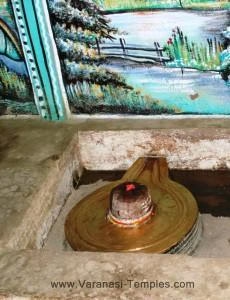
The presiding deity, a self-manifested Swayambhu Lingam, is worshipped as the conqueror of celestial destinies. According to temple records, this is the specific form of Shiva where the stars themselves pay homage.
Phalaśruti: The Spiritual Benefit
Why do devotees specifically seek the blessings of Nakshatreswar? The spiritual efficacy (Phalaśruti) of this temple is profound:
- Planetary Peace: It is believed that worshipping here pacifies the malefic effects of all nine planets (Navagrahas).
- Nakshatra Dosh Nivaran: It specifically remedies afflictions caused by one’s birth star (Janma Nakshatra) in their horoscope.
- Spiritual Liberation: Legends state that devotees who offer sincere prayers here are assured a place in higher celestial realms (Chandra Lok and beyond) after death, freeing them from the cycle of rebirth.
Historical Origins & Scriptural Legend
The Legend of the Sixty Stars
The Sthala Purana (local oral tradition) recounts a celestial event where sixty beautiful celestial maidens, including Rohini (one of the nakshatras), descended to Earth. They chose the confluence of the Varuna River and the holy Ganga in Kashi to perform intense penance.
They installed a Lingam at this spot and worshipped Lord Shiva with unwavering devotion. Pleased by their austerity, Lord Shiva appeared. The maidens prayed for husbands possessing the magnificence and power of Shiva himself. The Lord granted their wish, decreeing that they would reside in a celestial world far above the lunar sphere.
Timeline & Renovation
While exact dating is difficult due to the antiquity of Kashi’s shrines, the current architectural structure reflects the devotional styles prevalent during the Maratha and Bhonsle eras of the 18th century. The temple has undergone several renovations to preserve the sanctity of the sanctum while maintaining the ancient stone work typical of Varanasi’s heritage sites.
Architectural Marvels
Style and Layout
The Nakshatreswar Temple exhibits a blend of Nagara style temple architecture, adapted to the compact urban footprint of Varanasi. Unlike the sprawling complexes of South India, this shrine focuses verticality through its Shikhara (towering spire), symbolizing the axis mundi connecting earth to heaven.
Vastu Shastra & Sculptures
Adhering to Vastu Shastra, the temple’s sanctum (Garbhagriha) is oriented to channel positive cosmic energy. The exterior walls feature intricate carvings of celestial nymphs and planetary deities, reflecting the temple’s astronomical significance. The Mandapa (pillared hall) serves as a gathering space for devotees during rituals, featuring carved pillars that tell the story of the 60 celestial maidens.
Darshan & Ritual Logistics
Daily Timings
Temple timings may vary slightly during festivals. Below is the standard schedule for 2026.
| Session | Timing |
|---|---|
| Morning Darshan | 05:00 AM – 12:00 PM |
| Mid-day Break | 12:00 PM – 3:00 PM |
| Evening Darshan | 03:00 PM – 09:00 PM |
Key Sevas & Online Booking
Devotees can perform various rituals to seek blessings:
- Rudrabhishekam: Performed for planetary peace and general well-being.
- Nakshatra Homa: A specific fire ritual dedicated to the 27 Nakshatras.
- Archana: Personalized chanting of names and lineage.
To book these services, please visit the official portal for Varanasi Temple Trust or contact the temple administrator directly.
2026 Major Festival Dates
- Maha Shivaratri: February 26, 2026
- Pradosh Vrat: Every 13th lunar day (Tritiya) of each month.
- Nakshatra Jayanti: Observance on the full moon day of Kartik (November 5, 2026).
Practical Visitor Guidance
Dress Code & Etiquette
Visitors are expected to dress modestly. Traditional Indian attire is recommended. Leather items are generally discouraged in the inner sanctum.
Photography & Electronics
Photography may be restricted inside the sanctum (Garbhagriha). Mobile phones should be switched to silent mode. Dedicated lockers are available at the entrance for valuables.
Crowd Management
- Best Time to Visit: Early mornings (5:00 AM – 7:00 AM) offer the most serene darshan.
- Seasonal Advice: Summers (April–June) in Varanasi can be scorching; carry a water bottle and head covering. Winters (Nov–Feb) are pleasant.
Pilgrimage Connectivity
How to Reach
The Nakshatreswar Temple is located at A.37/51, Raj Ghat Fort, Adi Keshav Temple area, Varanasi.
Transport Options:
- Air: Lal Bahadur Shastri International Airport (LBS) is approximately 25 km away.
- Rail: Varanasi Junction (BSB) is the nearest major railway station (approx. 7 km).
- Road: Accessible via auto-rickshaw or cycle rickshaw from anywhere in the city. The site is near the ghats of the Ganga.
Nearby Sacred Sites
Extend your pilgrimage by visiting these nearby shrines:
- Kashi Vishwanath Temple: The primary Jyotirlinga of Lord Shiva (approx. 3 km).
- Sankat Mochan Hanuman Temple: Famous for relieving devotees from troubles (approx. 2 km).
- Adi Keshava Temple: Located in the same complex area, representing the ancient origin of Kashi.
Frequently Asked Questions
1. Is there a VIP darshan entry available?
Currently, Nakshatreswar Temple operates on a standard darshan system. However, priority is given to elderly devotees and those requiring assistance. Special arrangements can be made by contacting the temple administrator in advance for ritual sponsorships.
2. Can I perform a specific Nakshatra Puja for my child?
Yes, the temple is famous for performing Nakshatra pujas based on the birth star. It is recommended to book this service a day in advance to arrange the specific materials required.
3. Are there accommodation facilities nearby?
While there are no guest houses inside the temple, the Varanasi city center offers numerous Dharamshalas and hotels ranging from budget to luxury.
4. Is the temple wheelchair accessible?
Due to the heritage nature of the structure and the location in the old city, wheelchair access may be challenging. Assistance from volunteers is recommended.
5. What is the significance of the Varuna river connection?
The temple is located near the confluence of the Varuna and Ganga rivers. In Vedic texts, the Varuna river is associated with cosmic order; thus, this location is considered a powerful point for spiritual cleansing.
Recent Posts

Shri Kaamkoteeshwar Mandir, Varanasi – History & Significance
In the heart of Kashi, the eternal city of Lord Shiva, where the Ganges flows with celestial grace, stands the Shri Kaamkoteeshwar Mandir. This sacred Sannidhi is not merely a temple but a profound spiritual bridge between the Northern…

ओ सांवरे तूने ही मुझको संभाला – Lyrics & Meaning
ओ सांवरे तूने ही मुझको संभाला – A Prayer to Shyam Origin & Spiritual Essence Why This Bhajan Resonates Devotees chant this when overwhelmed by life’s storms—the refrain ‘तूने ही मुझको संभाला’ is the soul’s sigh of relief: “You…

कथा ये है महाराज मेरे की – Lyrics & Meaning
कथा ये है महाराज मेरे की छत्रपति संभाजी महाराज – A Prayer to Chhatrapati Sambhaji Maharaj Origin & Spiritual Essence Why This Bhajan Resonates Devotees chant this when their spirit feels tested—its powerful refrain “महाराज मेरे” is a soul’s…

Rigveda Samhita Yathartha Anuvada (ऋग्वेद संहिता यथार्थ अनुवाद) – Complete Set with Anvayartha & Hindi/English Translation
The Rigveda is the oldest surviving scripture of humanity and the foundational text of Sanātana Dharma. For serious students, scholars, UPSC aspirants studying ancient Indian history, Sanskrit learners, and spiritual seekers, a precise and grammatically structured translation is indispensable.…

आना भी अकेला है जाना भी अकेला है – Lyrics & Meaning | BharatTemples
आना भी अकेला है जाना भी अकेला है – A Prayer to the Divine Witness Origin & Spiritual Essence Why This Bhajan Resonates Devotees turn to this bhajan in moments of deep reflection—when life’s attachments begin to ache. The…

माता शेरावाली के द्वार जो भी जाता है – Lyrics & Meaning
माता शेरावाली के द्वार जो भी जाता है – A Prayer to Maa Sherawali Origin & Spiritual Essence Why This Bhajan Resonates Devotees turn to this bhajan in times of fear or uncertainty—its promise that no one leaves Maa’s…

मार लेना सपणी उबार लेणा भवरा – Lyrics & Meaning
मार लेना सपणी उबार लेणा भवरा – A Prayer to the Divine Beloved Origin & Spiritual Essence Why This Bhajan Resonates Devotees chant this in moments of deep vulnerability—its cry of “मार लेना सपणी, उबार लेणा भवरा” is the…

हमें श्याम सुंदर भरोसा तुम्हारा – Lyrics & Meaning
हमें श्याम सुंदर भरोसा तुम्हारा – A Prayer to Shyam Sundar Origin & Spiritual Essence Why This Bhajan Resonates Devotees chant this when feeling alone—its refrain ‘de do sahara’ is the soul’s cry for divine support. Lyrics in Hindi…

Mere Satguru Ne Di Thi Davai Lyrics in Hindi & Meaning
Mere Satguru Ne Di Thi Davai: Invoking the Guru’s Liberating Wisdom This soul-stirring bhajan venerates the Satguru (True Spiritual Master) as the divine physician who dispenses the only remedy for life’s deepest sufferings. Composed by Sant Karmaveer Tufani, it…

Janm Diyo Thari Maa Dukh Dekhiyo Lyrics in Hindi & Meaning
जन्म दियो थारी माँ दुख देखियो (Maa’s Grief Upon Birthing You) This soul-stirring Chetavani Bhajan (admonitory hymn) is addressed to the Divine Mother (Maa) – a call for repentance when children forget their filial duties in the dark age…