Nageshwar Temple Varanasi: History, Timings & Jyotirling Darshan Guide
Receive daily temple updates, divine darshan, and morning bhajans directly on WhatsApp.
Contents
- 1 Nageshwar Temple, Varanasi: The Ancient Jyotirling of Kashi
- 1.1 1. Introduction & Spiritual Essence
- 1.2 2. Historical Origins & Scriptural Legend
- 1.3 3. Architectural Marvels
- 1.4 4. Darshan & Ritual Logistics
- 1.5 5. Practical Visitor Guidance
- 1.6 6. Pilgrimage Connectivity
- 1.7 7. Frequently Asked Questions (FAQs)
- 1.7.1 1. Is Nageshwar Temple in Varanasi the same as the one in Maharashtra?
- 1.7.2 2. Is there a VIP Darshan entry?
- 1.7.3 3. What is the difference between this temple and the Nageshwar in Dwarka?
- 1.7.4 4. Can I perform Rudrabhishek here?
- 1.7.5 5. What is the best time to visit Varanasi for this Darshan?
- 1.8 Photo Gallery
- 1.9 How to Reach
- 1.10 Contact Details
Nageshwar Temple, Varanasi: The Ancient Jyotirling of Kashi
Welcome to bharattemples.com. As we journey into the spiritual heart of Kashi, we encounter the divine presence of Lord Nageshwar. While the world knows Nageshwar as the Jyotirling located in Maharashtra and near Dwarka, the Kashi Khand of the Skanda Purana reveals a hidden truth: within the sacred boundaries of Varanasi lies a manifestation of this same eternal Jyotirling.
1. Introduction & Spiritual Essence
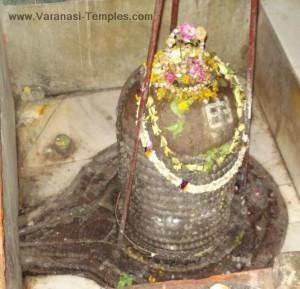
The Nageshwar Temple in Varanasi is a cornerstone of the Antargrihi Yatra—a pilgrimage circuit prescribed in the Kashi Khand. Unlike traditional shrines, this temple houses a Swayambhu (self-manifested) Shiv Ling, which is revered as one of the twelve Jyotirlings of the universe.
Primary Deity: Lord Nageshwar (a form of Lord Shiva).
Alternate Names: Nageshwaranath, Nagesh Jyotirling.
Phalaśruti: The Spiritual Benefits
Devotees flock to this temple seeking liberation from the cycle of birth and death. The primary benefits of Darshan here include:
- Cleansing Ancestral Karma: Rituals performed for ancestors (Pind Daan) gain immense potency when combined with Nageshwar Darshan.
- Removal of Serpent Afflictions (Naga Dosha): It is believed that worship here neutralizes negative planetary influences related to Rahu and Ketu.
- Inner Peace: As part of the Antargrihi Yatra, it is said that one who worships the Nageshwar Ling in Kashi attains the spiritual merit of visiting the two external Nageshwar Jyotirlings combined.
2. Historical Origins & Scriptural Legend
The history of this temple is woven into the spiritual fabric of Kashi itself, dating back to the era of the Kashi Khand (Skanda Purana).
📖 Related: Eka Danta Vinayak Temple: History, Darshan Timings & Varanasi Guide
Scriptural Reference: According to Kashi Khand, Chapter 100, Lord Vishnu described the geography of Kashi to Lord Brahma, identifying specific locations for divine manifestations. The text explicitly prescribes the Antargrihi Yatra, which mandates the worship of Nageshwar.
Local Legend: Tradition holds that the original Swayambhu Ling was revealed during a cosmic event where Lord Shiva manifested as a column of light (Jyotirlinga). Unlike the Nageshwar of Gokarna (Maharashtra) or the one near Dwarka, the Varanasi Nageshwar is protected within the dense residential fabric of the old city, preserving its ancient charm. Local priests note that the temple predates many written historical records, relying on the oral history passed down through generations of Pandas (priestly families).
3. Architectural Marvels
The Nageshwar Temple exemplifies the Nagara style of temple architecture, adapted to the narrow lanes of Varanasi. While not as expansive as the Kashi Vishwanath Temple, its sanctity lies in the internal structure.
- The Sanctum (Garbhagriha): The Shiv Ling is housed in a dimly lit sanctum, enhancing the meditative atmosphere. The Ling is positioned slightly lower than the floor level, a feature common in ancient Kashi temples.
- Visual Elements: The temple features a tiered Shikhara (spire) rising above the sanctum. While the exterior is modest due to space constraints, the interior carvings depict various forms of Lord Shiva.
- Vastu Shastra: The temple layout is aligned strictly according to Vastu principles, ensuring a flow of positive energy. The entrance faces east, welcoming the rising sun (Surya).
Note: While the temple is historically significant, it does not currently hold an ASI or UNESCO World Heritage status, remaining a vital part of the living heritage of Varanasi.
4. Darshan & Ritual Logistics
For devotees planning their visit, it is essential to note the timings and ritual schedules. As this is an ancient temple, schedules may vary slightly during festivals.
Daily Darshan Timings
| Session | Timings | Description |
|---|---|---|
| Morning Darshan | 05:00 AM – 12:00 PM | Morning rituals (Mangala Aarti) happen early. Best for quiet meditation. |
| Midday Closure | 12:00 PM – 03:00 PM | Temple usually remains closed for Shayan Aarti preparation and cleaning. |
| Evening Darshan | 03:00 PM – 10:00 PM | Evening Aarti and Bhajans are performed. (Timings may extend during Shivratri). |
Key Sevas & Online Booking
Due to the temple’s intimate nature, many rituals are performed directly by the resident priests. However, standard Kashi services apply:
- Abhishekam: Performed with milk, honey, and gangajal. Timing: 6:00 AM – 9:00 AM.
- Archana: Recitation of Shiva Sahasranama and Rudrashtakam.
- Online Booking: While this specific niche temple may not have a dedicated online portal, general Kashi Vishwanath Trust bookings often cover this sector. Alternatively, book via the official Kashi Vishwanath Corridor portal or local temple boards.
📖 Related: Aadi Mahadev Temple Varanasi: History, Darshan Timings & Legends
2026 Important Festival Dates
- Maha Shivratri: Tuesday, February 24, 2026. (Special night-long darshan).
- Shravan Mondays: July 13, 20, 27 (2026). Expect massive crowds; VIP passes are recommended.
- Kartik Purnima: Thursday, November 5, 2026.
5. Practical Visitor Guidance
Navigating the ancient bylanes of Varanasi requires preparation. Here is what you need to know before visiting Nageshwar Temple.
- Dress Code: Traditional attire is highly recommended. Men should wear dhoti/kurta or pants with covered shoulders. Women should wear saree or salwar kameez. Avoid shorts and sleeveless tops.
- Photography: Strictly prohibited inside the Garbhagriha (sanctum sanctorum). Phones and cameras must be switched off or kept in lockers.
- Mobile Lockers: Due to narrow lanes, large bags are not allowed. Small handbags are permitted. There are no official lockers at this specific shrine, so it is best to carry minimal items.
- Accessibility: The lanes leading to the temple are narrow and uneven. It is not wheelchair accessible. The temple involves steps.
Crowd Management & Seasonal Advice
- Best Hours: 5:00 AM – 7:00 AM (Early Morning) or 3:00 PM – 5:00 PM (Afternoon). Avoid the evening rush during weekends.
- Seasonal Tips:
– Summer (April-June): Carry a water bottle and a handheld fan. Temperatures in Varanasi can cross 45°C.
– Monsoon (July-Sept): The lanes become slippery. Wear sturdy, anti-slip footwear.
6. Pilgrimage Connectivity
Located in the heart of the old city, the temple is accessible via multiple modes of transport.
How to Reach
- Nearest Airport: Lal Bahadur Shastri International Airport (LBS), Varanasi (approx. 25 km). Take a taxi to Chowk or Godaulia.
- Railway Station: Varanasi Junction (BSB) is the main station (approx. 5-6 km). Auto-rickshaws are readily available.
- Road Access: The temple is accessible via NH-19 (formerly NH-2). Since vehicles cannot enter the core old city area, visitors must park at designated parking lots (e.g., at Dashashwamedh Ghat or Godaulia) and walk or take a cycle rickshaw.
Nearby Sacred Sites (Pilgrimage Circuit)
Construct your itinerary to include these nearby spiritual hubs:
- Mrityunjay Temple: Located very close to Nageshwar. It houses another Shiv Ling and is essential for those seeking longevity and health.
- Sankat Mochan Hanuman Temple: Famous for relieving devotees from troubles. Located 1.5 km away.
- Kashi Vishwanath Jyotirling: The primary Jyotirling of Kashi, located approximately 1.5 km from Nageshwar via the Vishwanath Gali.
7. Frequently Asked Questions (FAQs)
1. Is Nageshwar Temple in Varanasi the same as the one in Maharashtra?
Scripturally, yes. While the physical location differs, the Kashi Khand states that the Nageshwar Ling in Kashi is spiritually equivalent to the Jyotirlings in Gokarna and Dwarka. Devotees believe that worshiping here fulfills the duty of visiting the others.
2. Is there a VIP Darshan entry?
There is no formal “VIP” ticket counter at this specific temple. However, offering a higher donation to the head priest can sometimes facilitate a quicker Darshan during peak hours.
3. What is the difference between this temple and the Nageshwar in Dwarka?
The Nageshwar in Dwarka is a major tourist attraction with a large garden and statue. The Nageshwar in Varanasi is a traditional, intimate shrine. The Varanasi form is worshipped specifically as part of the Kashi Yatra.
4. Can I perform Rudrabhishek here?
Yes, Rudrabhishek can be performed, but it requires advance booking with the local priest family managing the temple. It is advisable to visit the temple a day prior to schedule the ritual.
5. What is the best time to visit Varanasi for this Darshan?
October to March is ideal weather-wise. Avoid April-June due to extreme heat. For a spiritual peak, visit during Shivratri or the month of Shravan (July-August).
Photo Gallery
Experience the divine aura of Nageshwar Temple through our curated images.
How to Reach
The temple is located at House No. Ck.1/21, Patani Tola, Bhosala Ghat, Varanasi. One can travel up to Chowk by Cycle Rickshaw and walk to this place via Sankata Devi Temple (famous landmark). Alternatively, devotees can approach the place by boat up to Bhosala Ghat and climb up the steps. There is another Shiv Ling named Nageshwar in the premises of Mrityunjay Temple and devotees worship this Ling also with all divinity.
Contact Details
For inquiries, visitors can contact the local temple management or the Varanasi Tourism Board.
📖 Related: Prem Mandir, Mathura: History, Timings & Complete Pilgrimage Guide