
Contents
1. Introduction & Spiritual Essence
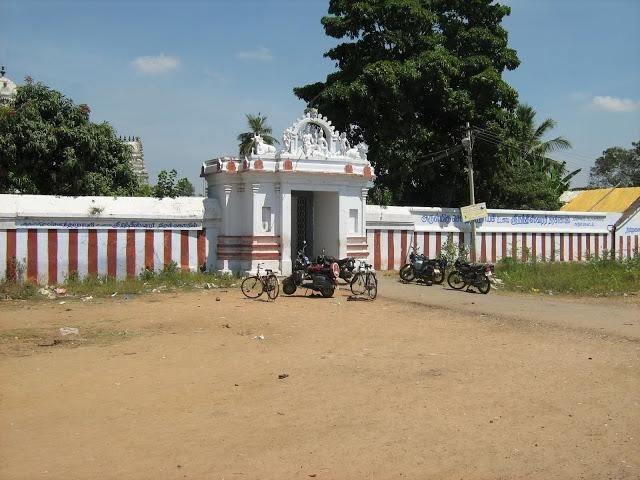
The Nandeeswarar Temple, situated in the serene locale of Nandivaram, Guduvanchery (Kanchipuram District), stands as a timeless testament to Bhakti and architectural grandeur. This ancient Thevara Sthalam is dedicated to Lord Shiva, worshipped here as Nandeeswarar (The Lord of Nandi), and the consort goddess Soundara Nayaki (Analogous to Parvati).
The presiding deity is a Swayambhu Lingam (self-manifested), making it a highly powerful center of energy. The temple is deeply rooted in the consciousness of the local Palli community and is revered as a Kshetra where ancestral karma is cleansed.
Phalaśruti: The Benefits of Visitation
Devotees flock to this shrine primarily to pacify the effects of Pitru Dosha (ancestral imbalances) and to seek relief from chronic ailments. As per scriptural legends, worshipping Nandeeswarar here grants the devotee the endurance of a bull (strength) and the grace of the Goddess (prosperity). It is specifically believed that offering prayers here brings mental clarity and resolves obstacles in one’s career and personal life.
2. Historical Origins & Scriptural Legend
The temple is a jewel of the Pallava Dynasty. According to historical records and inscriptions, it was constructed in 715 AD by the renowned Pallava Emperor Nandivarman II. The town “Nandivaram” itself derives its name from the emperor and the temple’s presiding deity.
The Legend of Nandeeswarar
According to the Sthala Purana, during the celestial churning of the ocean (Samudra Manthan), the Asuras and Devas worked together to obtain the nectar of immortality (Amrutham). After the pot was retrieved, a brief quarrel ensued. Finally, with Lord Shiva’s intervention, the Devas consumed the nectar and began rejoicing in their newfound immortality. In their ecstasy, they momentarily neglected Lord Shiva.
Realizing their error, the Devas prayed fervently. Lord Shiva appeared and performed the Ananda Tandava (Cosmic Dance) atop the horns of his vahana, the bull (Nandi). Thus, the Lord came to be known as Nandeeswarar—the Lord who dances upon Nandi—bestowing his grace upon this sacred land.
3. Architectural Marvels
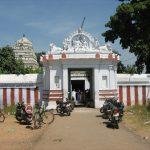
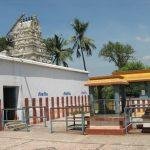
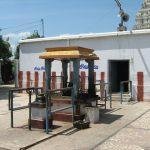
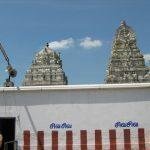
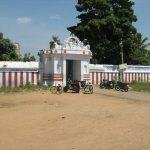
The temple showcases the classic Dravidian style of architecture, characteristic of the Pallava era. While the structure has undergone renovations over the centuries, the sanctity of the original layout remains intact.
- The Sanctum (Garbhagriha): The main deity faces East. The Lingam is large and imposing, flanked by intricate carvings.
- Koshta Vigrahas: Niches surrounding the sanctum house exquisite sculptures of Narthana Ganapathy, Dakshinamurthy, Mahavishnu, and Brahma.
- Shrines: Separate shrines for Lord Ganesha, Lord Murugan with his consorts Valli and Devasena, and the fierce forms of Bhairava and Chandikeswarar.
- Unique Artifacts: A notable statue of Lord Vishnu and an ancient idol of Nandi are placed under the holy Cannon Ball Tree (Nagalinga Maram), which serves as the Sthala Vriksham (sacred tree).
- The Tank: A temple tank (Kulam) is located on the eastern side, essential for rituals during Mahalaya Paksha.
While the ASI has not listed it as a protected monument, the temple’s antiquity is evident in the pillars and the layout of the Prakara (corridor).
4. Darshan & Ritual Logistics
Planning your visit is essential to experience the spiritual ambiance fully. Below are the tentative timings for 2026.
Daily Timings (Tentative)
| Session | Timing |
|---|---|
| Morning Darshan | 6:00 AM – 12:00 PM |
| Afternoon Closure | 12:00 PM – 4:00 PM |
| Evening Darshan | 4:00 PM – 8:30 PM |
Key Sevas & Online Booking
Devotees can book specific rituals and Abhishekam (sacred bathing of the deity) through the official Tamil Nadu HR&CE portal.
- Abhishekam: Performed on Mondays and Pradosham.
- Archana: Available daily; devotees can request specific Sanskrit hymns.
- online Seva Booking: Visit the Tamil Nadu Tourism Portal or the specific HR&CE app for slots.
2026 Festival Calendar
- Arudra Darshanam: January 2026 (Celebrating Nataraja).
- Maha Shivaratri: February 26, 2026 (Major 24-hour vigil).
- Aadi Perukku: August 3, 2026 (River/ocean worship).
- Kartigai Deepam: December 4, 2026.
5. Practical Visitor Guidance
- Dress Code: Traditional attire is recommended (Dhoti/Saree). Avoid shorts and sleeveless tops.
- Photography: Strictly prohibited inside the sanctum sanctorum. Permitted in the outer corridors, subject to local rules.
- Mobile Lockers: There are limited locker facilities; it is advisable to travel light and keep valuables at home.
- Accessibility: The temple is compact. It is accessible for those with minor mobility issues, but the corridors are narrow.
Crowd Management
Best Hours to Visit: Weekday mornings (7:00 AM – 9:00 AM) offer the least crowd.
Seasonal Advice:
- Summer (May-June): Temperatures in Kanchipuram district can exceed 40°C. Carry water and wear protective headgear.
- Monsoon (Oct-Nov): Pleasant weather, but be cautious of slippery granite floors.
6. Pilgrimage Connectivity
How to Reach
- By Road: The temple is located just 0.5 km from the Guduvanchery Bus Terminus. From Chennai, take NH 45 (Grand Southern Trunk Road). After Kattankulathur, enter Guduvanchery; the area is known as Nandivaram. Take the first left before the bus stand.
- By Rail: The nearest railway station is Guduvanchery Railway Station (Approx. 2 km). Auto-rickshaws are readily available.
- By Air: Chennai International Airport (MAA) is roughly 30 km away.
Nearby Sacred Sites (Pilgrimage Circuit)
- Uttara Swami Malai Temple (Guduvanchery): A hill temple dedicated to Lord Murugan, located very close to Nandivaram.
- Kailasanathar Temple (Kanchipuram): The iconic 8th-century Pallava structure (approx. 25 km away).
- Ekambareswarar Temple (Kanchipuram): One of the Pancha Bhoota Stalas (approx. 28 km away).
7. Frequently Asked Questions (FAQ)
Is there a VIP darshan entry?
The temple is managed by the local community and HR&CE. While there is no formal VIP ticket system like in Tirupati, contacting the temple executive officer in advance for large groups is advisable.
What is the significance of the Nagalinga Maram in this temple?
The Cannon Ball tree (Couroupita guianensis) is the Sthala Vriksham (sacred tree) of this temple. Its flowers resemble the hood of a snake (Naga) and the Lingam-shaped fruit represents Shiva, symbolizing unity.
Are non-Hindus allowed?
Generally, entry to the inner sanctum is restricted to Hindus. However, the courtyard and outer shrines are often accessible to all visitors seeking to admire the architecture.
Is there accommodation available nearby?
The temple does not have attached rest houses. However, several guest houses and lodges are available in Kanchipuram town and Guduvanchery. It is recommended to book in advance during festival seasons.
What is the history of the Sthala Vriksham?
Tradition holds that the tree has been present since the Pallava era and is considered a manifestation of the deity’s energy, providing shade and medicinal benefits to devotees.
![DSC04591[3], Nandeeswarar Temple, Nandivaram, Guduvanchery, Kanchipuram](https://www.bharattemples.com/wp-content/uploads/bt/2018/07/DSC045913-150x150.jpg)

![DSC04586[6], Nandeeswarar Temple, Nandivaram, Guduvanchery, Kanchipuram](https://www.bharattemples.com/wp-content/uploads/bt/2018/07/DSC045866-150x150.jpg)
![DSC04583[6], Nandeeswarar Temple, Nandivaram, Guduvanchery, Kanchipuram](https://www.bharattemples.com/wp-content/uploads/bt/2018/07/DSC045836-150x150.jpg)

Contact Details
Official Address:
Nandeeswarar Temple,
Nandivaram, Guduvanchery,
Kanchipuram District, Tamil Nadu 603202.
Phone: Please contact the Kanchipuram HR&CE office for the most current direct line.
Recent Posts

Shri Kaamkoteeshwar Mandir, Varanasi – History & Significance
In the heart of Kashi, the eternal city of Lord Shiva, where the Ganges flows with celestial grace, stands the Shri Kaamkoteeshwar Mandir. This sacred Sannidhi is not merely a temple but a profound spiritual bridge between the Northern…

ओ सांवरे तूने ही मुझको संभाला – Lyrics & Meaning
ओ सांवरे तूने ही मुझको संभाला – A Prayer to Shyam Origin & Spiritual Essence Why This Bhajan Resonates Devotees chant this when overwhelmed by life’s storms—the refrain ‘तूने ही मुझको संभाला’ is the soul’s sigh of relief: “You…

कथा ये है महाराज मेरे की – Lyrics & Meaning
कथा ये है महाराज मेरे की छत्रपति संभाजी महाराज – A Prayer to Chhatrapati Sambhaji Maharaj Origin & Spiritual Essence Why This Bhajan Resonates Devotees chant this when their spirit feels tested—its powerful refrain “महाराज मेरे” is a soul’s…

Rigveda Samhita Yathartha Anuvada (ऋग्वेद संहिता यथार्थ अनुवाद) – Complete Set with Anvayartha & Hindi/English Translation
The Rigveda is the oldest surviving scripture of humanity and the foundational text of Sanātana Dharma. For serious students, scholars, UPSC aspirants studying ancient Indian history, Sanskrit learners, and spiritual seekers, a precise and grammatically structured translation is indispensable.…

आना भी अकेला है जाना भी अकेला है – Lyrics & Meaning | BharatTemples
आना भी अकेला है जाना भी अकेला है – A Prayer to the Divine Witness Origin & Spiritual Essence Why This Bhajan Resonates Devotees turn to this bhajan in moments of deep reflection—when life’s attachments begin to ache. The…

माता शेरावाली के द्वार जो भी जाता है – Lyrics & Meaning
माता शेरावाली के द्वार जो भी जाता है – A Prayer to Maa Sherawali Origin & Spiritual Essence Why This Bhajan Resonates Devotees turn to this bhajan in times of fear or uncertainty—its promise that no one leaves Maa’s…

मार लेना सपणी उबार लेणा भवरा – Lyrics & Meaning
मार लेना सपणी उबार लेणा भवरा – A Prayer to the Divine Beloved Origin & Spiritual Essence Why This Bhajan Resonates Devotees chant this in moments of deep vulnerability—its cry of “मार लेना सपणी, उबार लेणा भवरा” is the…

हमें श्याम सुंदर भरोसा तुम्हारा – Lyrics & Meaning
हमें श्याम सुंदर भरोसा तुम्हारा – A Prayer to Shyam Sundar Origin & Spiritual Essence Why This Bhajan Resonates Devotees chant this when feeling alone—its refrain ‘de do sahara’ is the soul’s cry for divine support. Lyrics in Hindi…

Mere Satguru Ne Di Thi Davai Lyrics in Hindi & Meaning
Mere Satguru Ne Di Thi Davai: Invoking the Guru’s Liberating Wisdom This soul-stirring bhajan venerates the Satguru (True Spiritual Master) as the divine physician who dispenses the only remedy for life’s deepest sufferings. Composed by Sant Karmaveer Tufani, it…

Janm Diyo Thari Maa Dukh Dekhiyo Lyrics in Hindi & Meaning
जन्म दियो थारी माँ दुख देखियो (Maa’s Grief Upon Birthing You) This soul-stirring Chetavani Bhajan (admonitory hymn) is addressed to the Divine Mother (Maa) – a call for repentance when children forget their filial duties in the dark age…