
Contents
- 1 The 11 Nangur Vishnu Temples of Thirunangur: A Complete Pilgrimage Guide
The 11 Nangur Vishnu Temples of Thirunangur: A Complete Pilgrimage Guide
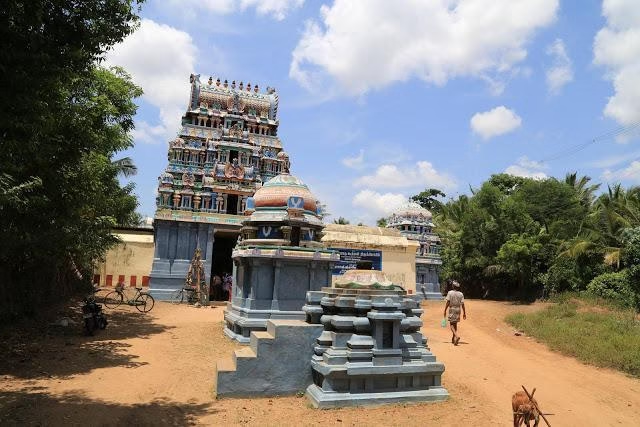
Located in the sacred land of Thirunangur, Nagapattinam district, the Nangur Vishnu Temples represent a unique spiritual cluster within the 108 Divya Desams (Abodes of Vishnu). Unlike most Divya Desams where a single deity is enshrined, this holy village hosts 11 separate temples dedicated to Lord Vishnu, each embodying a distinct manifestation born from divine history.
1. Introduction & Spiritual Essence
The Nangur Vishnu temples are not merely structures of stone; they are living chronicles of the cosmic battle between Rudra (Shiva) and the supreme preserving power of Lord Vishnu. The primary deity here is worshipped as Paramapadha Naathan (The Lord of the Heavenly Realm).
Why do devotees visit Nangur?
According to Phalaśruti (scriptural verses promising spiritual rewards), a pilgrimage to these 11 shrines offers:
• Resolution of Cosmic Discord: Legend states that Lord Vishnu pacified the wrathful Rudra here. Thus, devotees visit to find inner peace and resolve deep-seated conflicts.
• Ancestral Liberation: Circumambulating the Ubaya Cauvery (the holy tank) and visiting all 11 shrines is believed to liberate ancestors from karmic cycles.
• Divine Union: As the site where Shiva and Vishnu merged energies, it is a powerful location for realizing the unity of the divine.
2. Historical Origins & Scriptural Legend
The Legend of the Rudra Thandavam
Tradition holds that Lord Brahma performed a Yaagam (sacrificial ritual) at his father-in-law Daksha’s place. However, he did not invite Lord Shiva. Feeling insulted, Shiva performed the fierce Rudra Thandavam at Ubaya Cauvery, located a few kilometers southeast of Sirkazhi. As Shiva danced, his hair flew, and from every fallen strand, a new form of Shiva emerged, threatening the stability of the universe.
To contain this cosmic energy, Lord Vishnu appeared here in 11 different forms to grant darshan to Shiva. These forms were drawn from other holy Divya Desams. Consequently, the Nangur region comprises 11 distinct temples, each housing a unique form of Vishnu.
Historical Timeline
• Dynastic Origins: The oldest structural elements and inscriptions trace back to the reign of the Medieval Chola King Parantaka I (9th–10th Century CE).
• Sanctification: The temples were sanctified by Tirumangai Alvar, one of the revered Alvars (Vaishnava saint-poets). He dedicated verses (Pasurams) to these shrines.
• Modern Era: The temples are currently maintained by the Hindu Religious and Charitable Endowments (HR&CE) Department of Tamil Nadu.
3. Architectural Marvels
The Nangur temples are masterpieces of the Dravidian Architectural Style, adhering to the principles of Vastu Shastra.
Structural Highlights
• The Gopurams: Unlike the towering Rajagopurams of later Nayak-era temples, these shrines feature modest, yet aesthetically pleasing Vimanas (tower over the sanctum).
• The Ubaya Cauvery Tank: Located centrally, this holy tank is architecturally aligned to allow devotees to perform rites for their ancestors.
• Sculpture: The Mandapas (pillared halls) feature exquisite carvings of Dwarapalakas (guardian deities) and scenes from the Padma Purana.
• Status: While not a UNESCO World Heritage Site, these temples are protected monuments of state archaeological importance.
4. Darshan & Ritual Logistics
As these are 11 distinct temples clustered in one village, the timings are generally synchronized. Below are the standard operating hours.
Daily Timings
| Session | Timings | Activity |
|---|---|---|
| Morning | 06:00 AM – 11:30 AM | Abhishekam, Suprabhatam |
| Afternoon | 12:00 PM – 4:30 PM | Temple Rest (Cleansing) |
| Evening | 5:30 PM – 9:00 PM | Deeparadhana, Aarthi |
Key Sevas & Online Booking
While specialized Sevas vary by the specific shrine, the following are universally performed:
- Archana: Recitation of 108 names (₹50 – ₹100).
- Abhishekam: Ritual bathing of the deity (₹150 – ₹300).
- Thirumanjanam: Special offering on festival days.
Booking: Devotees can book general darshan and specific Sevas via the HR&CE Tamil Nadu Online Portal or the Arulmigu Narasimha Swamy Temple office (administers the complex).
2026 Festival Highlights
- Thai Amavasai (Masi): January 29, 2026. This is the most significant day, featuring the Thirumangai Alvar Mangalasasana Utsavam.
- Garuda Sevai: A spectacular procession where festival idols from all 11 temples are brought out on Garuda Vahanams (Eagle Mounts). 预计日期: February 2026.
- Vaikuntha Ekadashi: May 24, 2026 (Second Friday of May). Special Sesha Vahana Sevai.
5. Practical Visitor Guidance
Rules & Regulations
- Dress Code: Traditional attire is mandatory. Men: Dhoti or Shirt/Pants. Women: Saree, Half-Saree, or Salwar Kameez. Western wear (jeans, shorts) is prohibited.
- Photography: Strictly prohibited inside the Garbhagriha (Sanctum Sanctorum). Photography in the outer prakarams is permitted without flash.
- Lockers: Mobile phones and bags must be deposited at the designated Valanchi (Counter) before entering the temple complex. Tokens are issued.
- Accessibility: The temples are built on traditional flooring. While the main paths are even, devotees with mobility issues may require assistance for the outer circumambulation path.
- Best Hours: The optimal time for Darshan is between 8:00 AM and 10:00 AM to avoid the midday crowd and heat.
- Seasonal Tips:
- Summer (April–May): Temperatures exceed 38°C. Carry water bottles (available at shops) and wear head coverings.
- Monsoon (Oct–Dec): Light rains. Carry an umbrella; the stone floors can become slippery.
Crowd Management & Seasonal Advice
6. Pilgrimage Connectivity
How to Reach Thirunangur
The village is strategically located on the Sirkazhi–Nagapattinam highway, making it accessible via the Grand Trunk Road.
By Road:
• NH/SH: Located directly on the SH-66 (Sirkazhi–Nagapattinam route).
• Nearest Bus Stand: Thirunangur Bus Stop (village halt). Major bus hubs are Sirkazhi (8 km) and Mayiladuthurai (20 km).
• Distance: 220 km south of Chennai; 80 km east of Thanjavur.
By Train:
• Nearest Railway Station: Sirkazhi Railway Station (8 km).
• Major Junction: Mayiladuthurai Junction (20 km) has excellent connectivity to Chennai, Tiruchirappalli, and Rameswaram.
By Air:
• Tiruchirappalli International Airport (TRZ): Located approximately 145 km away (approx. 3 hours drive via NH 83).
Nearby Sacred Sites (Pilgrimage Circuit)
Combine your visit to Nangur with these holy sites:
- Thiruvaduthurai Adikesava Perumal Temple: Located just 3 km away, another revered Divya Desam.
- Sirkazhi (Thiru Sirkazhi): The birthplace of Thirugnana Sambandar. 8 km away. Home to the massive Brahmapureeswarar Temple and Sattainathar Temple.
- Vaitheeswaran Koil: A major Shiva temple dedicated to healing (25 km away). Devotees often visit Sirkazhi/Vaitheeswaran Koil along with Nangur.
7. Frequently Asked Questions (FAQ)
Is there a VIP Darshan entry at Nangur Vishnu Temples?
Yes, the temples offer a Rajabhogam darshan ticket (usually ₹100–₹200) which allows devotees to enter during specific hours, bypassing the general queue. This is available at the central administration office upon arrival.
Can we visit all 11 temples in one trip?
Absolutely. All 11 temples are located within a radius of 1-2 kilometers around the Thirunangur village tank. A single walk covers all shrines, though it is recommended to set aside at least 3-4 hours for a relaxed darshan and prayers.
Is Non-Vegetarian food allowed in the temple premises?
Strictly No. The Nangur Vishnu Temples are vegetarian zones. Alcohol and smoking are strictly prohibited within the temple complex and the village precincts.
Where can I stay for a night halt?
Thirunangur is a small village with limited lodging. It is recommended to stay in Sirkazhi (8 km) or Mayiladuthurai (20 km), where various guest houses (Choultries) and hotels are available.
Are there guides available?
Official guides are not always available at the gate. However, the temple priests are knowledgeable about the local legends and often explain the significance of each form of Vishnu to interested devotees.
Recent Posts

Shri Kaamkoteeshwar Mandir, Varanasi – History & Significance
In the heart of Kashi, the eternal city of Lord Shiva, where the Ganges flows with celestial grace, stands the Shri Kaamkoteeshwar Mandir. This sacred Sannidhi is not merely a temple but a profound spiritual bridge between the Northern…

ओ सांवरे तूने ही मुझको संभाला – Lyrics & Meaning
ओ सांवरे तूने ही मुझको संभाला – A Prayer to Shyam Origin & Spiritual Essence Why This Bhajan Resonates Devotees chant this when overwhelmed by life’s storms—the refrain ‘तूने ही मुझको संभाला’ is the soul’s sigh of relief: “You…

कथा ये है महाराज मेरे की – Lyrics & Meaning
कथा ये है महाराज मेरे की छत्रपति संभाजी महाराज – A Prayer to Chhatrapati Sambhaji Maharaj Origin & Spiritual Essence Why This Bhajan Resonates Devotees chant this when their spirit feels tested—its powerful refrain “महाराज मेरे” is a soul’s…

Rigveda Samhita Yathartha Anuvada (ऋग्वेद संहिता यथार्थ अनुवाद) – Complete Set with Anvayartha & Hindi/English Translation
The Rigveda is the oldest surviving scripture of humanity and the foundational text of Sanātana Dharma. For serious students, scholars, UPSC aspirants studying ancient Indian history, Sanskrit learners, and spiritual seekers, a precise and grammatically structured translation is indispensable.…

आना भी अकेला है जाना भी अकेला है – Lyrics & Meaning | BharatTemples
आना भी अकेला है जाना भी अकेला है – A Prayer to the Divine Witness Origin & Spiritual Essence Why This Bhajan Resonates Devotees turn to this bhajan in moments of deep reflection—when life’s attachments begin to ache. The…

माता शेरावाली के द्वार जो भी जाता है – Lyrics & Meaning
माता शेरावाली के द्वार जो भी जाता है – A Prayer to Maa Sherawali Origin & Spiritual Essence Why This Bhajan Resonates Devotees turn to this bhajan in times of fear or uncertainty—its promise that no one leaves Maa’s…

मार लेना सपणी उबार लेणा भवरा – Lyrics & Meaning
मार लेना सपणी उबार लेणा भवरा – A Prayer to the Divine Beloved Origin & Spiritual Essence Why This Bhajan Resonates Devotees chant this in moments of deep vulnerability—its cry of “मार लेना सपणी, उबार लेणा भवरा” is the…

हमें श्याम सुंदर भरोसा तुम्हारा – Lyrics & Meaning
हमें श्याम सुंदर भरोसा तुम्हारा – A Prayer to Shyam Sundar Origin & Spiritual Essence Why This Bhajan Resonates Devotees chant this when feeling alone—its refrain ‘de do sahara’ is the soul’s cry for divine support. Lyrics in Hindi…

Mere Satguru Ne Di Thi Davai Lyrics in Hindi & Meaning
Mere Satguru Ne Di Thi Davai: Invoking the Guru’s Liberating Wisdom This soul-stirring bhajan venerates the Satguru (True Spiritual Master) as the divine physician who dispenses the only remedy for life’s deepest sufferings. Composed by Sant Karmaveer Tufani, it…

Janm Diyo Thari Maa Dukh Dekhiyo Lyrics in Hindi & Meaning
जन्म दियो थारी माँ दुख देखियो (Maa’s Grief Upon Birthing You) This soul-stirring Chetavani Bhajan (admonitory hymn) is addressed to the Divine Mother (Maa) – a call for repentance when children forget their filial duties in the dark age…