
Contents
Introduction & Spiritual Essence
Nestled along the sacred banks of the River Ganga in the holy city of Kashi (Varanasi), the Nar Narayan Temple stands as a timeless testament to devotion toward Lord Vishnu. The temple houses the presiding deity, Nar Narayan, a dual form representing the eternal aspect of Lord Vishnu—the cosmic protector.
While Varanasi is primarily revered as the abode of Lord Shiva, this temple offers a profound counterpoint, signifying the unity of Shiva and Vishnu (Hari-Hara). The idol of Nar Narayan is depicted with four arms, holding the conch, discus, lotus, and mace, carved from black stone.
Phalaśruti: The Spiritual Benefits
According to the sacred Kashi Khand of the Skanda Purana, the temple is situated at the site of a former Narayan Teerth (a holy pond). While the physical waters no longer exist, the spiritual potency of the site remains intact. Devotees believe that worshipping Nar Narayan at this temple grants liberation (Moksha) and washes away the deepest layers of karmic debt.
It is said that a single darshan of the deity here equates to the merit of visiting the Badrinath Temple in the Himalayas. Devotees visit specifically to seek blessings for ancestral peace and to attain the protective grace of Lord Vishnu.
Historical Origins & Scriptural Legend
The history of the Nar Narayan Temple is deeply intertwined with the ancient history of Varanasi itself.
The Kashi Khand Legend
Tradition holds that Lord Vishnu, in his form as Narayan, performed intense austerity at this location to please Lord Shiva. The scripture states: “Kashi Khand states one Narayan Teerth where Lord Vishnu is available in the form of Nar Narayan.” This location was originally a water body (Teerth) where the divine energy of Vishnu manifested.
Although the tank was later filled or lost to the changing topography of the Ganga riverbank, the devotion remained. The temple was established to house the Swayambhu (self-manifested) deity discovered at this site.
Architectural Marvels
The Nar Narayan Temple exemplifies the Nagara style of temple architecture, characteristic of North India, while adapting to the unique topography of Varanasi’s ghats.
- Shikhara (Tower): The temple features a towering Shikhara that rises gracefully towards the sky, symbolizing the spiritual ascent of the devotee. Unlike the massive pyramidal structures of South India, this spire is curvilinear and capped with a Amalaka (disc-shaped stone).
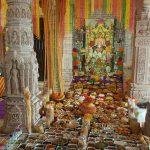
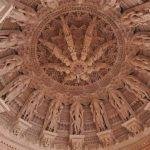
- Mandapa (Hall): The inner sanctum is accessed through a pillared Mandapa adorned with intricate carvings of deities from the Vaishnava pantheon.
- Sculptures: The exterior walls feature detailed relief work depicting scenes from Hindu mythology, including the Dashavatara (ten incarnations) of Vishnu.
- Vastu Shastra: The temple is oriented according to strict Vastu principles, facing East to catch the first rays of the rising sun, illuminating the deity during morning prayers.
Photo Gallery
Darshan & Ritual Logistics (2026)
Visiting the Nar Narayan Temple requires adherence to the traditional daily rituals. Below is the schedule for the upcoming year.
Daily Timings
| Darshan Type | Timing |
|---|---|
| Morning Mangala Aarti | 05:00 AM – 06:00 AM |
| Morning Darshan | 06:00 AM – 12:00 PM |
| Afternoon Break | 12:00 PM – 02:00 PM |
| Evening Darshan | 02:00 PM – 08:30 PM |
| Shayan Aarti | 08:30 PM – 09:00 PM |
Key Sevas & Online Booking
Devotees can book specific Sevas (ritual services) to enhance their spiritual experience:
- Abhishekam: Ritual bathing of the deity with milk, honey, and ghee (performed daily at 7:00 AM).
- Archana: Recitation of the 108 names of Lord Vishnu.
- Sahasranama Archana: Recitation of 1,000 names of Vishnu.
To book these services, devotees should visit the official temple administration or the Varanasi temple board website. Online Seva Booking platforms usually open slots 30 days in advance.
2026 Festival Schedule
Major festivals are celebrated with grandeur. Plan your visit accordingly:
- Janmashtami: August 14, 2026 (Special night-long vigil and Abhishekam).
- Narashimha Jayanti: May 9, 2026.
- Holika Dahan: March 13, 2026 (Celebrated near the ghat).
Practical Visitor Guidance
To ensure a smooth darshan experience at the Nar Narayan Temple, please follow these guidelines:
- Dress Code: Traditional attire is recommended. Men should wear dhoti or trousers with a shirt; women should wear saree or salwar kameez. Avoid shorts and sleeveless tops.
- Photography: Photography is strictly prohibited inside the inner sanctum (Garbhagriha). Phones must be switched to silent mode.
- Mobile Lockers: Due to the narrow approach, large bags are not allowed. Small lockers are available near the Bhairav Nath Ghat entry point.
- Crowd Management: The temple is located on narrow ghat steps. Best time to visit: 6:00 AM to 9:00 AM or 4:00 PM to 6:00 PM to avoid peak crowd times.
- Accessibility: The approach involves descending steep steps at Gai Ghat. It is not wheelchair accessible. Walking is mandatory from the nearest motorable road.
Pilgrimage Connectivity
The Nar Narayan Temple is located at A.1/72, Badri Narayan Ghat steps near Gai Ghat, Varanasi.
How to Reach
- By Air: Lal Bahadur Shastri International Airport (LBS) is approximately 25 km away (45 mins by taxi).
- By Rail: Varanasi Junction (BSB) is about 7 km from the temple. Direct auto-rickshaws are available to Bhaironath Ghat.
- By Road: The temple is located near Bhaironath Ghat. Visitors can take an auto-rickshaw to Bhaironath and walk down the steps to the riverbank. The distance from Godaulia intersection is roughly 1.5 km on foot.
Nearby Sacred Sites
Extend your pilgrimage by visiting these nearby temples:
- Kaal Bhairav Temple: Located 10 minutes away near Bhaironath Ghat. The guardian deity of Kashi.
- Durga Temple (Monkey Temple): 1.5 km away. A vibrant red-hued temple dedicated to Goddess Durga.
- Kashi Vishwanath Temple: The primary Jyotirlinga is approximately 20 minutes by walk through the narrow lanes of the old city.
Frequently Asked Questions (FAQs)
1. Is there a VIP darshan entry at Nar Narayan Temple?
Unlike larger temples, the Nar Narayan Temple is relatively intimate. There is no separate VIP entry, but senior citizens and differently-abled devotees are accorded priority seating near the sanctum.
2. Is there a specific deity associated with Narayan Teerth?
Yes, the deity is Nar Narayan, a form of Lord Vishnu. The temple commemorates the ancient Narayan Teerth mentioned in the Kashi Khand, although the pond itself is no longer visible.
3. Can I visit the temple during menstruation?
Traditionally, like most orthodox Hindu temples in Varanasi, menstruating women are restricted from entering the inner sanctum, though the courtyard areas may be accessible. It is best to consult the temple priest upon arrival for specific guidelines.
4. Is the temple open during heavy rains?
The temple remains open year-round. However, during monsoon (July-September), the Ganga steps may be slippery, and the inner sanctum might close earlier due to security reasons. Wear rubber-soled footwear with grip.
5. Are there hotels near the temple?
There are several guest houses and hotels near Dashashwamedh Ghat and Assi Ghat, which are within walking distance (15-20 minutes) of the Nar Narayan Temple.
Recent Posts

ओ सांवरे तूने ही मुझको संभाला – Lyrics & Meaning
ओ सांवरे तूने ही मुझको संभाला – A Prayer to Shyam Origin & Spiritual Essence Why This Bhajan Resonates Devotees chant this when overwhelmed by life’s storms—the refrain ‘तूने ही मुझको संभाला’ is the soul’s sigh of relief: “You…

कथा ये है महाराज मेरे की – Lyrics & Meaning
कथा ये है महाराज मेरे की छत्रपति संभाजी महाराज – A Prayer to Chhatrapati Sambhaji Maharaj Origin & Spiritual Essence Why This Bhajan Resonates Devotees chant this when their spirit feels tested—its powerful refrain “महाराज मेरे” is a soul’s…

Rigveda Samhita Yathartha Anuvada (ऋग्वेद संहिता यथार्थ अनुवाद) – Complete Set with Anvayartha & Hindi/English Translation
The Rigveda is the oldest surviving scripture of humanity and the foundational text of Sanātana Dharma. For serious students, scholars, UPSC aspirants studying ancient Indian history, Sanskrit learners, and spiritual seekers, a precise and grammatically structured translation is indispensable.…

आना भी अकेला है जाना भी अकेला है – Lyrics & Meaning | BharatTemples
आना भी अकेला है जाना भी अकेला है – A Prayer to the Divine Witness Origin & Spiritual Essence Why This Bhajan Resonates Devotees turn to this bhajan in moments of deep reflection—when life’s attachments begin to ache. The…

माता शेरावाली के द्वार जो भी जाता है – Lyrics & Meaning
माता शेरावाली के द्वार जो भी जाता है – A Prayer to Maa Sherawali Origin & Spiritual Essence Why This Bhajan Resonates Devotees turn to this bhajan in times of fear or uncertainty—its promise that no one leaves Maa’s…

मार लेना सपणी उबार लेणा भवरा – Lyrics & Meaning
मार लेना सपणी उबार लेणा भवरा – A Prayer to the Divine Beloved Origin & Spiritual Essence Why This Bhajan Resonates Devotees chant this in moments of deep vulnerability—its cry of “मार लेना सपणी, उबार लेणा भवरा” is the…

हमें श्याम सुंदर भरोसा तुम्हारा – Lyrics & Meaning
हमें श्याम सुंदर भरोसा तुम्हारा – A Prayer to Shyam Sundar Origin & Spiritual Essence Why This Bhajan Resonates Devotees chant this when feeling alone—its refrain ‘de do sahara’ is the soul’s cry for divine support. Lyrics in Hindi…

Mere Satguru Ne Di Thi Davai Lyrics in Hindi & Meaning
Mere Satguru Ne Di Thi Davai: Invoking the Guru’s Liberating Wisdom This soul-stirring bhajan venerates the Satguru (True Spiritual Master) as the divine physician who dispenses the only remedy for life’s deepest sufferings. Composed by Sant Karmaveer Tufani, it…

Janm Diyo Thari Maa Dukh Dekhiyo Lyrics in Hindi & Meaning
जन्म दियो थारी माँ दुख देखियो (Maa’s Grief Upon Birthing You) This soul-stirring Chetavani Bhajan (admonitory hymn) is addressed to the Divine Mother (Maa) – a call for repentance when children forget their filial duties in the dark age…
Bhadi Sabha Mein Thane Manaun Lyrics in Hindi & Meaning
Bhadi Sabha Mein Thane Manaun: Invoking the Spear-Wielding Mother Mata Bhawani (श्री ज्वाला भवानी), the fiery manifestation of Shakti worshipped as the Protector of Dharma in Her Dhaulagarh sanctum. Origin & Spiritual Essence Composed in Rajasthani folk tradition by…