
Contents
Introduction & Spiritual Essence: The Seat of Divine Knowledge
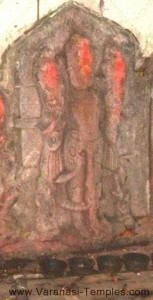
The ancient city of Varanasi (Kashi) is a living museum of spiritual energy, and nestled within its labyrinthine ghats lies the historic Narad Keshav Temple. Dedicated to Narad Muni, the celestial sage, and Lord Vishnu, this temple is a rare jewel in the crown of Kashi’s religious landscape. According to the revered Kashi Khand of the Skanda Purana, Lord Vishnu manifests here in the form of Narad Keshav.
Phalaśruti: The Boon of Visiting
Scriptural texts proclaim that devotees who visit this temple attain ultimate knowledge (Jnana) and spiritual clarity. The temple is historically associated with Narad Teerth, a sacred pond that once existed here. Tradition holds that bathing in these waters and worshipping Narad Keshav cleanses ancestral karma and grants the blessing of Lord Vishnu. While the physical Teerth has vanished over the millennia, the spiritual potency of the location remains, resonating through the sanctum.
Historical Origins & Scriptural Legend
Scriptural Authority: The primary source of the temple’s origin is the Kashi Khand, which explicitly states the presence of Lord Vishnu in the form of Narad Keshav at Narad Teerth.
The Legend of Narad Teerth:
In ancient times—estimated between 1,000 and 2,000 years ago—Kashi was abundant with sacred ponds (Teerths). The Narad Teerth, situated at Prahlad Ghat, was a significant site where Narad Muni is said to have performed penance. Over the centuries, natural geological changes caused many of these water bodies to dry up or submerge. Today, if the Teerth is inaccessible, devout scriptures suggest that taking a holy dip in the nearby River Ganga suffices to invoke the deity’s blessings before entering the temple.
Architectural Timeline:
While specific dynastic records regarding the initial construction are sparse, the architectural style suggests origins in the medieval period, likely renovated during the Maratha or Bhosle period influence in Varanasi. The current structure stands as a testament to centuries of devotion.
Architectural Marvels
The Narad Keshav Temple showcases a traditional blend of Nagara and regional Kashi architectural styles.
- The Sanctum (Garbhagriha): The inner sanctum houses the primary deity, Narad Keshav, depicted with his signature attributes—the Veena (lute) and the Japa Mala (rosary). The iconography symbolizes the harmony of music and meditation.
- The Mandapas: The temple features pillared halls (Mandapas) that allow devotees to gather for kirtans and discourses, typical of the spiritual atmosphere in Kashi.
- Location & Vastu: Strategically located at Prahlad Ghat, the temple aligns with the river flow, following Vastu Shastra principles where the entrance faces the rising sun, inviting positive energy.

Darshan & Ritual Logistics
To ensure a seamless spiritual experience, devotees are advised to follow the temple’s schedule and ritual offerings.
Daily Darshan Timings
Timings are subject to change during festivals and specific rituals.
| Session | Timing | Activity |
|---|---|---|
| Morning | 05:00 AM – 12:00 PM | Mangala Aarti, Shringar, Darshan |
| Afternoon | 12:00 PM – 4:00 PM | Temple Rest (Deep Cleaning) |
| Evening | 4:00 PM – 9:00 PM | Sandhya Aarti, Shayan Aarti |
Key Sevas & Online Booking
Devotees can book specific Sevas to enhance their experience:
- Abhishekam: Ritual bathing of the deity with milk, honey, and ghee. Best performed on Mondays.
- Narad Archana: Special chanting of the Narad Gayatri Mantra for wisdom.
- Vishnu Sahasranama Parayana: Recitation of the 1,000 names of Vishnu.
Note: While the temple primarily follows traditional booking, online services are integrated through the broader Varanasi temple network. Visit the official Varanasi Temple Administration website or local counters at Prahlad Ghat for 2026 bookings.
Festival Calendar 2026
Planning your visit around these dates ensures a vibrant atmosphere:
- Narad Jayanti: April 25, 2026 (Special procession and Kirtan).
- Janmashtami: August 14, 2026 (Celebrating Lord Krishna’s birth, significant for Vishnu temples).
- Deepavali: November 1, 2026 (Grand decoration with lights).
- Maha Shivaratri: February 26, 2026 (While dedicated to Shiva, Kashi celebrates unity; expect crowds).
Practical Visitor Guidance
- Dress Code: Traditional Indian attire is preferred. Men should wear dhotis or trousers (no shorts), and women should opt for sarees or modest dresses.
- Photography: Photography is strictly prohibited inside the sanctum sanctorum. Permitted in the outer courtyards with respectful silence.
- Mobile Lockers: Due to narrow lanes, it is advisable to carry minimal luggage. A cloakroom is available near Prahlad Ghat main steps.
- Accessibility: The temple is located inside the old city. Access is via narrow alleyways; rickshaws can take you to Prahlad Ghat Chauraha, followed by a short walk. Not fully wheelchair accessible due to stairs.
Crowd Management & Seasonal Tips
Best Time to Visit: October to March (Winter). The weather in Varanasi is pleasant, and early morning darshan is blissful.
Summer (April-June): Temperatures can exceed 40°C. Carry water and an umbrella. Darshan lines move faster as devotees seek shade.
Monsoon (July-September): High humidity. The river levels rise; check local advisories before visiting the ghats.
Pilgrimage Connectivity
How to Reach Narad Keshav Temple
- By Air: Lal Bahadur Shastri International Airport (LBS) is approx. 25 km away. Taxis (Ola/Uber/Micro) are readily available.
- By Rail: Varanasi Junction (BSB) is the nearest major railway station, approx. 7 km from Prahlad Ghat. Auto-rickshaws are the most common mode of transport.
- By Road: The temple is located near NH 19 (GT Road). Take the Assi Ghat/Prahlad Ghat route. Note: The last mile requires walking through the heritage lane.
- By Boat: A scenic route is by boat. Hire a private boat or take a shared ferry to Prahlad Ghat. The temple is a short walk up the steps.
Nearby Sacred Sites
Expand your pilgrimage circuit by visiting:
- Prahladeshwar Temple: Located opposite Narad Keshav, dedicated to Lord Shiva.
- Shitla Mandir: Just steps away, dedicated to the Goddess of pox (Shitla Mata).
- Assi Ghat: The confluence of the Ganga and Assi rivers, a major pilgrimage site.
Map Placeholder: Embed Google Map Coordinates for Prahlad Ghat, Varanasi.
Frequently Asked Questions (FAQs)
1. Is there a VIP Darshan entry at Narad Keshav Temple?
Due to the temple’s historic location in the narrow lanes of Old Varanasi, VIP entry is generally not enforced. However, special passes can be obtained from the temple priests during non-peak hours for a nominal donation.
2. What is the significance of the name “Narad Keshav”?
The name signifies the union of Sage Narad (the messenger and devotee of Vishnu) and Keshav (a name of Lord Vishnu). It represents the ideal state where a devotee becomes one with the divine through knowledge and music.
3. Can we perform Shraddha (Ancestral Rites) here?
Yes, this temple is highly potent for cleansing ancestral karma. Priests perform Shraddha and Tarpan ceremonies, especially during Pitru Paksha.
4. Are there food or accommodation facilities nearby?
Basic street food is available near Prahlad Ghat (e.g., chaat, lassi). For accommodation, Ashrams and guest houses are available at Assi Ghat, about 10-15 minutes walking distance.
5. Is the temple open during heavy rains?
Yes, but during severe monsoon flooding, access to the ghat steps may be restricted. It is advisable to check the local Varanasi administration alerts.
Conclusion
The Narad Keshav Temple offers a unique spiritual journey into the heart of Kashi’s ancient wisdom. Whether you are seeking the divine melody of life or ancestral blessings, a visit to this historic shrine promises peace and enlightenment. Plan your visit to Varanasi to experience the timeless grace of Lord Narad Keshav.
Recent Posts

ओ सांवरे तूने ही मुझको संभाला – Lyrics & Meaning
ओ सांवरे तूने ही मुझको संभाला – A Prayer to Shyam Origin & Spiritual Essence Why This Bhajan Resonates Devotees chant this when overwhelmed by life’s storms—the refrain ‘तूने ही मुझको संभाला’ is the soul’s sigh of relief: “You…

कथा ये है महाराज मेरे की – Lyrics & Meaning
कथा ये है महाराज मेरे की छत्रपति संभाजी महाराज – A Prayer to Chhatrapati Sambhaji Maharaj Origin & Spiritual Essence Why This Bhajan Resonates Devotees chant this when their spirit feels tested—its powerful refrain “महाराज मेरे” is a soul’s…

Rigveda Samhita Yathartha Anuvada (ऋग्वेद संहिता यथार्थ अनुवाद) – Complete Set with Anvayartha & Hindi/English Translation
The Rigveda is the oldest surviving scripture of humanity and the foundational text of Sanātana Dharma. For serious students, scholars, UPSC aspirants studying ancient Indian history, Sanskrit learners, and spiritual seekers, a precise and grammatically structured translation is indispensable.…

आना भी अकेला है जाना भी अकेला है – Lyrics & Meaning | BharatTemples
आना भी अकेला है जाना भी अकेला है – A Prayer to the Divine Witness Origin & Spiritual Essence Why This Bhajan Resonates Devotees turn to this bhajan in moments of deep reflection—when life’s attachments begin to ache. The…

माता शेरावाली के द्वार जो भी जाता है – Lyrics & Meaning
माता शेरावाली के द्वार जो भी जाता है – A Prayer to Maa Sherawali Origin & Spiritual Essence Why This Bhajan Resonates Devotees turn to this bhajan in times of fear or uncertainty—its promise that no one leaves Maa’s…

मार लेना सपणी उबार लेणा भवरा – Lyrics & Meaning
मार लेना सपणी उबार लेणा भवरा – A Prayer to the Divine Beloved Origin & Spiritual Essence Why This Bhajan Resonates Devotees chant this in moments of deep vulnerability—its cry of “मार लेना सपणी, उबार लेणा भवरा” is the…

हमें श्याम सुंदर भरोसा तुम्हारा – Lyrics & Meaning
हमें श्याम सुंदर भरोसा तुम्हारा – A Prayer to Shyam Sundar Origin & Spiritual Essence Why This Bhajan Resonates Devotees chant this when feeling alone—its refrain ‘de do sahara’ is the soul’s cry for divine support. Lyrics in Hindi…

Mere Satguru Ne Di Thi Davai Lyrics in Hindi & Meaning
Mere Satguru Ne Di Thi Davai: Invoking the Guru’s Liberating Wisdom This soul-stirring bhajan venerates the Satguru (True Spiritual Master) as the divine physician who dispenses the only remedy for life’s deepest sufferings. Composed by Sant Karmaveer Tufani, it…

Janm Diyo Thari Maa Dukh Dekhiyo Lyrics in Hindi & Meaning
जन्म दियो थारी माँ दुख देखियो (Maa’s Grief Upon Birthing You) This soul-stirring Chetavani Bhajan (admonitory hymn) is addressed to the Divine Mother (Maa) – a call for repentance when children forget their filial duties in the dark age…
Bhadi Sabha Mein Thane Manaun Lyrics in Hindi & Meaning
Bhadi Sabha Mein Thane Manaun: Invoking the Spear-Wielding Mother Mata Bhawani (श्री ज्वाला भवानी), the fiery manifestation of Shakti worshipped as the Protector of Dharma in Her Dhaulagarh sanctum. Origin & Spiritual Essence Composed in Rajasthani folk tradition by…