
Contents
- 1 Introduction & Spiritual Essence
- 2 Historical Origins & Scriptural Legend
- 3 Architectural Marvels
- 4 Darshan & Ritual Logistics
- 5 Practical Visitor Guidance
- 6 Pilgrimage Connectivity
- 6.1 How to Reach
- 6.2 Nearby Sacred Sites (Pilgrimage Circuit)
- 6.3 Frequently Asked Questions (FAQs)
- 6.3.1 1. Is there a VIP darshan entry for the Navagraha Temple?
- 6.3.2 2. Can I perform a specific ritual for Saturn (Shani)?
- 6.3.3 3. Is there a facility for tonsure (Mundan) at the Navagraha shrine?
- 6.3.4 4. Are non-Hindus allowed inside the Navagraha Temple?
- 6.3.5 5. What is the ideal time to perform Navagraha Pradakshina?
Introduction & Spiritual Essence
Nestled in the sacred hills of Dindigul district, the Navagraha Temple in Palani is a unique sanctuary dedicated to the Nine Celestial Bodies (Navagrahas) of Vedic astrology. While the town of Palani is globally renowned for the Arulmigu Dhandayuthapani Swamy Temple (Murugan), this specific Navagraha shrine serves as a powerful astrological adjunct. Here, the presiding deity is the collective energy of the Grahas, influencing the cosmic order of devotees’ lives.
Unlike standalone planetary temples, this shrine within the Palani complex allows pilgrims to seek remedies for astrological afflictions (Doshas) simultaneously while venerating Lord Murugan. The primary form of worship here is directed toward the nine planets: Sun (Surya), Moon (Chandra), Mars (Mangala), Mercury (Budha), Jupiter (Guru), Venus (Shukra), Saturn (Shani), and the shadow planets Rahu and Ketu.
Phalaśruti: Why Visit?
Devotees visit this temple to alleviate the malefic effects of planetary positions in their horoscopes. Specific benefits include:
- Cleansing Ancestral Karma: Performing rituals here is believed to pacify Pitru Dosha.
- Overcoming Obstacles: Worshipping Lord Rahu and Ketu helps remove hurdles in career and personal life.
- Health and Prosperity: Seeking the blessings of Lord Sukra (Venus) and Guru (Jupiter) for longevity and wealth.
Historical Origins & Scriptural Legend
The Navagraha Temple Palani history is deeply interwoven with the antiquity of the main Palani Murugan shrine. According to historical records, the temple complex dates back to the 9th century AD, constructed during the reign of the Chera Dynasty. The structure has undergone significant renovations over the centuries, with major works recorded in the 16th and 20th centuries, preserving its Dravidian heritage.
Scriptural Legend
Tradition holds that the sage Bhogar, one of the 18 Siddhas, established the deity of Lord Murugan here. While the main sanctum houses Murugan, the Navagraha shrine was established to appease the planetary deities who had been cursed or displaced.According to the Sthala Purana, the divine sage Narada visited Mount Kailash to present a Jnana Palam (fruit of wisdom) to Lord Shiva. When Shiva decided to distribute the fruit to his sons, Ganesha and Murugan, a contest ensued. Murugan, feeling slighted, left Kailash and settled in Palani. The planetary deities (Navagrahas) followed him here to seek his blessings, establishing this shrine to alleviate their own cosmic burdens and assist devotees in resolving planetary afflictions.
Architectural Marvels
The temple showcases the classic Dravidian style of architecture, characterized by its towering gateways and intricate stonework. The structure is designed according to the principles of Vastu Shastra, aligning the planetary energies with the terrestrial layout.
- The Gopuram: The temple features a multi-tiered gopuram (entrance tower) adorned with colorful sculptures depicting various deities and mythological scenes.
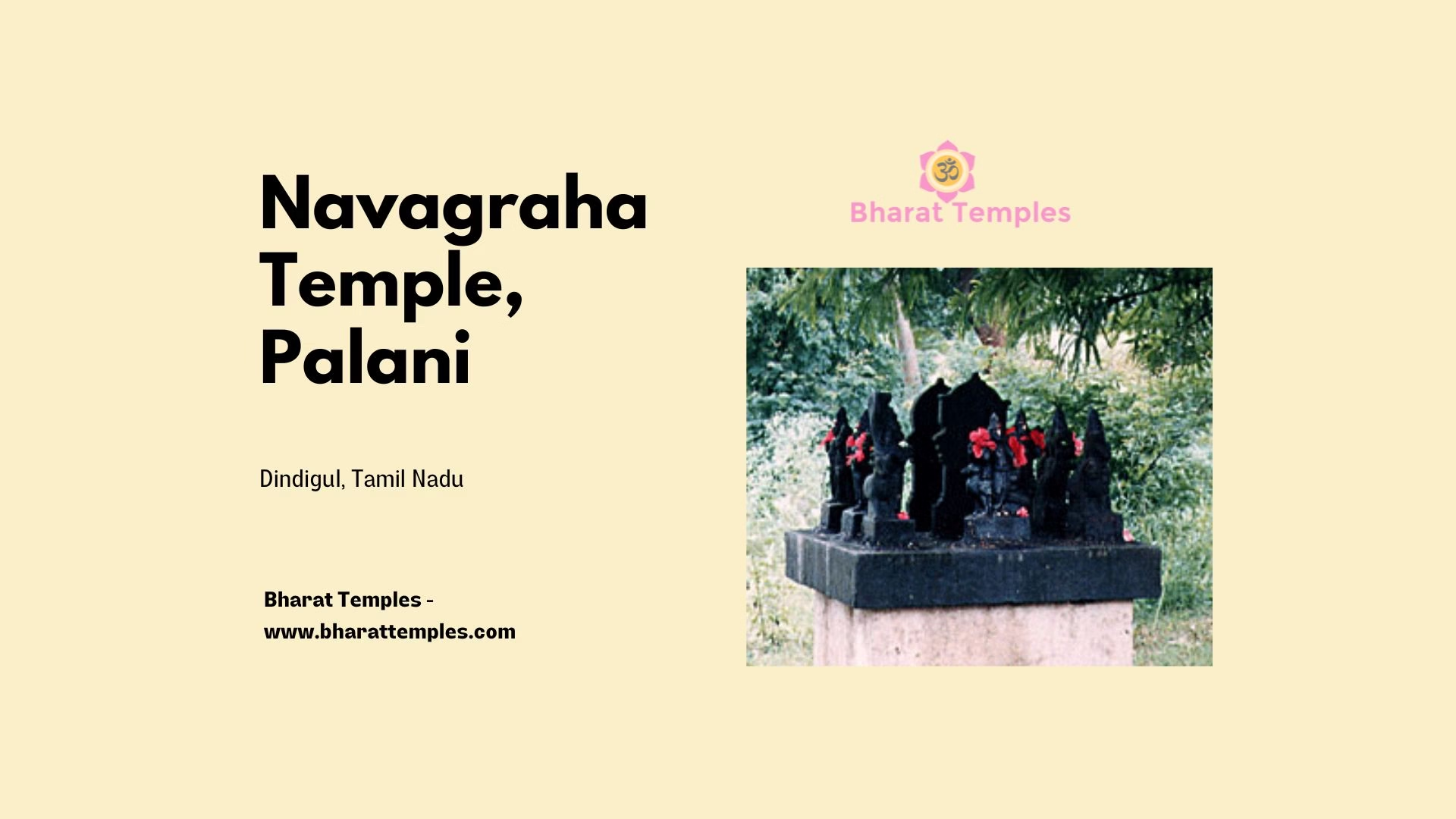
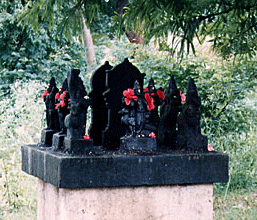
- Navagraha Mandapam: The core of the shrine is the Mandapam (hall) where the nine planetary deities are enshrined in separate niches or shrines, arranged in a specific astrological order.
- Sculptures: The pillars and walls are carved with scenes from the Skanda Purana, showcasing the life and victories of Lord Murugan.
While the main Palani temple is a protected monument, the Navagraha shrine maintains the traditional sanctity of the complex. The architecture facilitates the ritual of Pradakshina (circumambulation), allowing devotees to walk around the nine deities in a clockwise direction.
Darshan & Ritual Logistics
Visiting the Navagraha Temple requires understanding the schedule of the larger Palani complex, as the shrines are located within the same precinct.
Daily Timings (Tentative)
Note: Timings may vary during festival seasons and special events.
| Session | Timing | Activity |
|---|---|---|
| Morning | 6:00 AM – 12:00 PM | Abhishekam & General Darshan |
| Afternoon | 12:00 PM – 4:00 PM | Temple Closing / Cleaning |
| Evening | 4:00 PM – 8:00 PM | Deeparadhana & Special Pujas |
Key Sevas and Online Booking
Devotees can perform specific rituals for the Navagrahas. In 2026, the Tamil Nadu HR&CE Department manages bookings via the official website.
- Navagraha Homam: A fire ritual to appease all nine planets.
- Maha Abhishekam: Ritual bathing of the planetary idols with milk, honey, and turmeric.
- Vilva Archana: Offering Bilva leaves to Lord Murugan and the Navagrahas.
How to Book: Visit Tamil Nadu Tourism/HR&CE portal and select “Palani Dhandayuthapani Temple” to reserve specific Sevas.
Major 2026 Festivals
- Thai Poosam (January): A grand celebration marking the wedding of Lord Murugan; highly significant for planetary worship.
- Thaipusam (Tamil Month of Thai): Expect massive crowds; devotees take vows to carry Kavadi.
- Skanda Sashti (May/June): Celebrates the victory of Murugan over the demon Surapadma.
- Panguni Uthiram (March/April): Another key festival for planetary propitiation.
Practical Visitor Guidance
To ensure a serene experience at the Navagraha Temple, Palani, adhere to the following guidelines:
- Dress Code: Traditional attire is mandatory. Men should wear Vetti (dhoti) or pants with a shirt, and women should wear saree or salwar kameez. Avoid shorts or torn clothing.
- Photography: Strictly prohibited inside the inner sanctum and the Navagraha shrine. Mobile phones are allowed but must be silenced.
- Crowd Management:
- Best Hours: Early morning (6:00 AM – 7:30 AM) or late evening (after 6:00 PM).
- Seasonal Advice: Palani is hot in summer (April–June). Carry water and an umbrella. Wear breathable cotton fabrics.
- Accessibility: The temple is accessible via foot (stairs) or the winch/battery vehicle service available at the base of the hill.
Pilgrimage Connectivity
How to Reach
- By Air: The nearest airport is Coimbatore International Airport (CJB), approximately 100 km away. Taxis and buses are available from the airport.
- By Rail: Palani Railway Station (PLNI) is just 3 km from the temple. Direct trains connect Palani to Chennai, Coimbatore, and Tiruchirappalli.
- By Road: Palani is well-connected via NH 85 and State Highways. Regular bus services operate from Madurai, Dindigul, and Theni.
Nearby Sacred Sites (Pilgrimage Circuit)
Enhance your spiritual journey by visiting these nearby temples:
- Arulmigu Dhandayuthapani Swamy Temple (Palani Hill): The primary deity of Palani.
- Kulithalai Kadamboor Sivan Temple: Located about 40 km away, known for its unique architecture.
- Kodaikanal: A hill station 60 km away with the Kurinji Andavar Temple, offering a blend of nature and divinity.
Frequently Asked Questions (FAQs)
Yes, the Palani temple administration offers Special Darshan tickets (approx. Rs. 100) which allow faster access to the main deity and the Navagraha shrines. VIP passes are also available through official channels.
2. Can I perform a specific ritual for Saturn (Shani)?
Absolutely. Shani Thailabhishekam (oil abhishekam) is a popular ritual performed on Saturdays to mitigate the effects of Sade Sati.
While the main tonsure facilities are located near the base of the hill, the rituals associated with planetary doshas often involve symbolic hair offering. However, physical tonsure is typically performed at the main Murugan shrine or the designated sheds below.
While the main Palani temple has historically restricted entry to Hindus, the Navagraha shrines are generally open to all seekers of astrology and cosmic healing. It is advisable to check the latest HR&CE regulations.
The most auspicious time is during Rahukalam or specific planetary hours (Yamagandam) depending on your astrological needs. Consult a local priest at the temple for personalized timings.
Note: This guide is based on general historical data and traditional practices. For real-time updates on temple timings and closures, please consult the official Tamil Nadu Tourism Department before your visit.
Recent Posts

Shri Kaamkoteeshwar Mandir, Varanasi – History & Significance
In the heart of Kashi, the eternal city of Lord Shiva, where the Ganges flows with celestial grace, stands the Shri Kaamkoteeshwar Mandir. This sacred Sannidhi is not merely a temple but a profound spiritual bridge between the Northern…

ओ सांवरे तूने ही मुझको संभाला – Lyrics & Meaning
ओ सांवरे तूने ही मुझको संभाला – A Prayer to Shyam Origin & Spiritual Essence Why This Bhajan Resonates Devotees chant this when overwhelmed by life’s storms—the refrain ‘तूने ही मुझको संभाला’ is the soul’s sigh of relief: “You…

कथा ये है महाराज मेरे की – Lyrics & Meaning
कथा ये है महाराज मेरे की छत्रपति संभाजी महाराज – A Prayer to Chhatrapati Sambhaji Maharaj Origin & Spiritual Essence Why This Bhajan Resonates Devotees chant this when their spirit feels tested—its powerful refrain “महाराज मेरे” is a soul’s…

Rigveda Samhita Yathartha Anuvada (ऋग्वेद संहिता यथार्थ अनुवाद) – Complete Set with Anvayartha & Hindi/English Translation
The Rigveda is the oldest surviving scripture of humanity and the foundational text of Sanātana Dharma. For serious students, scholars, UPSC aspirants studying ancient Indian history, Sanskrit learners, and spiritual seekers, a precise and grammatically structured translation is indispensable.…

आना भी अकेला है जाना भी अकेला है – Lyrics & Meaning | BharatTemples
आना भी अकेला है जाना भी अकेला है – A Prayer to the Divine Witness Origin & Spiritual Essence Why This Bhajan Resonates Devotees turn to this bhajan in moments of deep reflection—when life’s attachments begin to ache. The…

माता शेरावाली के द्वार जो भी जाता है – Lyrics & Meaning
माता शेरावाली के द्वार जो भी जाता है – A Prayer to Maa Sherawali Origin & Spiritual Essence Why This Bhajan Resonates Devotees turn to this bhajan in times of fear or uncertainty—its promise that no one leaves Maa’s…

मार लेना सपणी उबार लेणा भवरा – Lyrics & Meaning
मार लेना सपणी उबार लेणा भवरा – A Prayer to the Divine Beloved Origin & Spiritual Essence Why This Bhajan Resonates Devotees chant this in moments of deep vulnerability—its cry of “मार लेना सपणी, उबार लेणा भवरा” is the…

हमें श्याम सुंदर भरोसा तुम्हारा – Lyrics & Meaning
हमें श्याम सुंदर भरोसा तुम्हारा – A Prayer to Shyam Sundar Origin & Spiritual Essence Why This Bhajan Resonates Devotees chant this when feeling alone—its refrain ‘de do sahara’ is the soul’s cry for divine support. Lyrics in Hindi…

Mere Satguru Ne Di Thi Davai Lyrics in Hindi & Meaning
Mere Satguru Ne Di Thi Davai: Invoking the Guru’s Liberating Wisdom This soul-stirring bhajan venerates the Satguru (True Spiritual Master) as the divine physician who dispenses the only remedy for life’s deepest sufferings. Composed by Sant Karmaveer Tufani, it…

Janm Diyo Thari Maa Dukh Dekhiyo Lyrics in Hindi & Meaning
जन्म दियो थारी माँ दुख देखियो (Maa’s Grief Upon Birthing You) This soul-stirring Chetavani Bhajan (admonitory hymn) is addressed to the Divine Mother (Maa) – a call for repentance when children forget their filial duties in the dark age…