
Contents
- 1 Neelakandeswarar Temple, Erukkattampuliyur: A Definitive Pilgrimage Guide
- 1.1 1. Introduction & Spiritual Essence
- 1.2 2. Historical Origins & Scriptural Legend
- 1.3 3. Architectural Marvels
- 1.4 4. Darshan & Ritual Logistics (2026 Guide)
- 1.5 5. Practical Visitor Guidance
- 1.6 6. Pilgrimage Connectivity
- 1.7 7. Frequently Asked Questions (FAQ)
- 1.8 Photo Gallery
- 1.9 Contact Details & Location
Neelakandeswarar Temple, Erukkattampuliyur: A Definitive Pilgrimage Guide
Welcome to the sacred grounds of Neelakandeswarar Temple, a timeless abode of Lord Shiva located in the tranquil village of Erukkattampuliyur (Rajendirapattinam) in Cuddalore District. As a 36th Devaram Paadal Petra Sthalam, this temple is not merely a structure of stone but a living testament to the spiritual vibrance of Tamil Saivaism. This guide, crafted with devotion and architectural precision, serves as your comprehensive companion for a transformative pilgrimage.
1. Introduction & Spiritual Essence
The Divine Form of Neelakandeswarar
The primary deity of this temple is Neelakandeswarar (also revered as Suvethaaranyeswarar and Thirukumaresar). He manifests as a Swayambhu (self-manifested) Sphatika Lingam (a crystalline phallus form). The name “Neelakandeswarar” translates to “The Blue-Throated Lord,” referring to the cosmic event where Lord Shiva consumed the poison Halahala during the churning of the ocean (Samudra Manthan). Presiding over the sanctum is the grace-filled Mother Neelamalar Kanni (also known as Virar Mulaiyammai or Neelorbalaambal).
Phalaśruti: The Boon of Darshan
Why do devotees undertake this sacred journey? According to the Sthala Purana and local lore, the temple possesses potent spiritual energies for:
- Remedial Astrology: Devotees believe that worshipping here alleviates afflictions related to Budha (Mercury) and Guru (Jupiter) in one’s astrological chart.
- Speech & Health: A unique ritual involves praying for relief from speech impairments and throat ailments, directly linked to the Lord’s blue throat symbolism.
- Santhana Prapthi: Couples seeking progeny find solace here, as the Lord is known as Kumaraswamy (the divine parent).
- Ancestral Cleansing: Rituals performed here are believed to cleanse ancestral karma, bringing peace to forefathers.
2. Historical Origins & Scriptural Legend
The Chola & Nayak Legacy
While the village is now called Rajendirapattinam, the original history traces back to the Chola Dynasty, who laid the foundation of this spiritual complex. The current masonry structure, featuring the magnificent granite walls and gopurams, was significantly expanded and fortified during the Nayak period in the 16th century. Today, the temple is maintained by the Hindu Religious and Charitable Endowments (HR&CE) Department of Tamil Nadu.
Scriptural Significance
The temple holds the highest honor in Saiva literature:
- Thevaram: The presiding deity is celebrated in the 7th-century Tamil Saiva canon, Thevaram, composed by the Nayanmars (specifically Sambandhar and Appar). It is classified as a Paadal Petra Sthalam (sung by saints).
- Thirupugazh: The saint poet Arunagirinathar has sung glories of the Lord Murugan enshrined here.
- Birthplace of Nayanar: This land is the Avatara Sthalam of the Saiva saint Thiruneelakanta Nayanar.
Tradition holds that the five Puliyur shrines were worshipped by Sage Vyagrapada, and this temple is one of them.
3. Architectural Marvels
Dravidian Vastu Shastra
The temple is a masterpiece of Dravidian Architecture, covering approximately half an acre. The layout follows strict Vastu principles, with concentric rectangular granite walls protecting the sanctum.
The Five-Tiered Gopuram
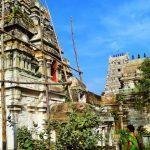
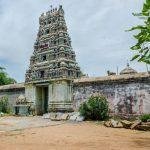
The temple is entered through a five-tiered Gopuram (gateway tower), a classic feature of Nayak architecture. The Shikhara (tower) above the sanctum is adorned with intricate stucco work and carvings depicting mythological narratives.
Notable Shrines & Sculptures
Inside the complex, devotees circumambulate the Prakaram (corridor) to view:
- The Swayambhu Lingam: The central shrine houses the crystal-like Neelakandeswarar.
- Vinayaka & Subramanya: Shrines for the sons of Shiva, positioned strategically as per Agama Shastra.
- Sculpted Pillars: The Mandapa (hall) features yali (mythical lion-elephant) sculptures and dancing figures, showcasing the zenith of stone carving.
4. Darshan & Ritual Logistics (2026 Guide)
The temple operates on a strict schedule of four daily rituals. The last Maha Kumbabishekam (consecration) was performed on September 2, 1996.
Daily Opening Hours
Based on current temple administration standards, the timings are as follows:
| Session | Timing | Activity |
|---|---|---|
| Morning | 6:00 AM – 11:00 AM | Goddess & Lord Abhishekam |
| Afternoon Break | 11:00 AM – 4:00 PM | Temple Closed |
| Evening | 4:00 PM – 8:00 PM | Darshan & Pooja |
Key Sevas (Rituals)
The temple priests perform four daily rituals: Kalasanthi (8:00 AM), Uchikalam (12:00 PM), Sayarakshai (6:00 PM), and Arthajamam (8:00 PM).
- Abhishekam: Sacred bath of the deity (usually performed with milk, honey, sandalwood, and fruit).
- Alangaram: Decoration of the deity with flowers and silk.
- Deepa Aradanai: Waving of camphor and oil lamps.
Online Seva Booking: While smaller temples rely on physical visits, you can often book general darshan or specific Sevas through the Tamil Nadu HR&CE official portal (temple.tnhrce.org) or by contacting the phone numbers listed in the footer.
2026 Festival Calendar
The most prominent festival is Maha Shivaratri, celebrated during the Tamil month of Panguni (March–April).
- Pradosham: Monthly (13th and 28th day of every lunar cycle).
- Ammavasai (New Moon) & Pournami (Full Moon): Special abhishekams.
- Karthigai Deepam: Lighting of lamps (November/December).
- Navaratri: Celebrated for Goddess Neelamalar Kanni (Sept/Oct).
5. Practical Visitor Guidance
Code of Conduct & Dress Code
- Attire: Traditional dress is mandatory. Men should wear Dhoti or trousers with a shirt; women should wear Saree or Salwar Kameez. Avoid shorts or sleeveless tops.
- Electronics: Photography may be restricted inside the inner sanctum. Mobile lockers are recommended for keeping devices silent and out of sight during meditation.
- Accessibility: The temple has granite flooring. Elderly visitors may require assistance; footwear stands are available at the entrance.
Crowd Management & Seasonal Advice
- Best Hours: Early morning (6:00 AM – 7:30 AM) or late evening (6:00 PM – 7:30 PM) for a peaceful Darshan.
- Summer (April–June): Cuddalore can be humid. Carry a water bottle and a head covering.
- Monsoon (Oct–Dec): The region receives rainfall; carry an umbrella.
6. Pilgrimage Connectivity
How to Reach
By Road: The temple is located on the Vridhachalam to Jayamkondam route and is easily visible from the main highway. It is approximately 13 km from Vridhachalam and 44 km from the cultural hub of Chidambaram.
By Rail: The nearest railway junction is Vridhachalam Road.
By Air:
- Trichy (Tiruchirappalli): ~132 km
- Pondicherry: ~92 km
- Chennai: ~243 km
Nearby Sacred Sites (Pilgrimage Circuit)
- Thiruvaduthurai Adikesava Perumal Temple: Located nearby, dedicated to Lord Vishnu.
- Karuvepilankurichi Temple: A significant Shiva temple just 6 km away.
- Vridhachalam: Home to the famous Vaitheeswaran Koil (for healing ailments).
7. Frequently Asked Questions (FAQ)
Is there a VIP or Special Entry Darshan available?
For this specific shrine, VIP darshan is generally not applicable due to its smaller scale compared to mega-temples. However, during annual festivals, special queues are opened for senior citizens and differently-abled devotees.
Can I perform rituals for ancestors?
Yes. It is highly recommended to perform Shraddha or Tharpanam rituals during the Ammavasai (New Moon) days here to cleanse ancestral lineage.
Are there accommodation facilities nearby?
Basic guest houses are available in Vridhachalam (13 km away). For better amenities, Cuddalore or Chidambaram are ideal bases (40–45 km away).
What is the significance of the “Blue Throat” connection?
The temple celebrates the Neela Kantha aspect of Shiva. Devotees with speech defects or throat issues pray here for relief, believing the crystalline nature of the Lingam amplifies the vibrational energy of healing mantras.
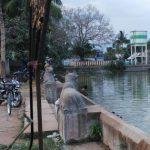
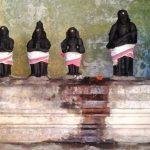
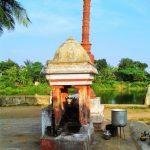
Photo Gallery
Contact Details & Location
Neelakandeswarar Temple
Rajendirapattinam Post,
Vridhachalam Taluk,
Cuddalore District – 608703
Phone: +91 4143 243 533
Mobile: +91 99761 73524 / 94877 03524 / 93606 37784
Recent Posts

Shri Kaamkoteeshwar Mandir, Varanasi – History & Significance
In the heart of Kashi, the eternal city of Lord Shiva, where the Ganges flows with celestial grace, stands the Shri Kaamkoteeshwar Mandir. This sacred Sannidhi is not merely a temple but a profound spiritual bridge between the Northern…

ओ सांवरे तूने ही मुझको संभाला – Lyrics & Meaning
ओ सांवरे तूने ही मुझको संभाला – A Prayer to Shyam Origin & Spiritual Essence Why This Bhajan Resonates Devotees chant this when overwhelmed by life’s storms—the refrain ‘तूने ही मुझको संभाला’ is the soul’s sigh of relief: “You…

कथा ये है महाराज मेरे की – Lyrics & Meaning
कथा ये है महाराज मेरे की छत्रपति संभाजी महाराज – A Prayer to Chhatrapati Sambhaji Maharaj Origin & Spiritual Essence Why This Bhajan Resonates Devotees chant this when their spirit feels tested—its powerful refrain “महाराज मेरे” is a soul’s…

Rigveda Samhita Yathartha Anuvada (ऋग्वेद संहिता यथार्थ अनुवाद) – Complete Set with Anvayartha & Hindi/English Translation
The Rigveda is the oldest surviving scripture of humanity and the foundational text of Sanātana Dharma. For serious students, scholars, UPSC aspirants studying ancient Indian history, Sanskrit learners, and spiritual seekers, a precise and grammatically structured translation is indispensable.…

आना भी अकेला है जाना भी अकेला है – Lyrics & Meaning | BharatTemples
आना भी अकेला है जाना भी अकेला है – A Prayer to the Divine Witness Origin & Spiritual Essence Why This Bhajan Resonates Devotees turn to this bhajan in moments of deep reflection—when life’s attachments begin to ache. The…

माता शेरावाली के द्वार जो भी जाता है – Lyrics & Meaning
माता शेरावाली के द्वार जो भी जाता है – A Prayer to Maa Sherawali Origin & Spiritual Essence Why This Bhajan Resonates Devotees turn to this bhajan in times of fear or uncertainty—its promise that no one leaves Maa’s…

मार लेना सपणी उबार लेणा भवरा – Lyrics & Meaning
मार लेना सपणी उबार लेणा भवरा – A Prayer to the Divine Beloved Origin & Spiritual Essence Why This Bhajan Resonates Devotees chant this in moments of deep vulnerability—its cry of “मार लेना सपणी, उबार लेणा भवरा” is the…

हमें श्याम सुंदर भरोसा तुम्हारा – Lyrics & Meaning
हमें श्याम सुंदर भरोसा तुम्हारा – A Prayer to Shyam Sundar Origin & Spiritual Essence Why This Bhajan Resonates Devotees chant this when feeling alone—its refrain ‘de do sahara’ is the soul’s cry for divine support. Lyrics in Hindi…

Mere Satguru Ne Di Thi Davai Lyrics in Hindi & Meaning
Mere Satguru Ne Di Thi Davai: Invoking the Guru’s Liberating Wisdom This soul-stirring bhajan venerates the Satguru (True Spiritual Master) as the divine physician who dispenses the only remedy for life’s deepest sufferings. Composed by Sant Karmaveer Tufani, it…

Janm Diyo Thari Maa Dukh Dekhiyo Lyrics in Hindi & Meaning
जन्म दियो थारी माँ दुख देखियो (Maa’s Grief Upon Birthing You) This soul-stirring Chetavani Bhajan (admonitory hymn) is addressed to the Divine Mother (Maa) – a call for repentance when children forget their filial duties in the dark age…