
Contents
Introduction & Spiritual Essence
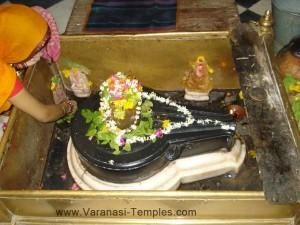
Deep within the labyrinthine lanes of Varanasi, specifically in the sacred locality of Neelkanth Mohalla, lies the Neelkantheshwar Temple. This ancient shrine is dedicated to Lord Shiva in his form as Neelkanth (The Blue-Throated One). The temple is not merely a stone structure but a living testament to the divine drama of the cosmic ocean churning (Samudra Manthan), where Lord Shiva consumed the deadly poison (Halahal) to save creation, turning his throat blue in the process.
Phalaśruti (Spiritual Benefits): According to the sacred Kashi Khand of the Skanda Purana, worshipping the Neelkantheshwar Lingam in Varanasi yields rewards equivalent to worshipping Lord Shiva himself. Devotees believe that a sincere darshan here cleanses ancestral karma and grants the spiritual merit of a pilgrimage to the Amarnath caves. It is a site where the destructive and protective aspects of the divine merge into a singular, tranquil form.
Historical Origins & Scriptural Legend
The history of Neelkantheshwar Temple is deeply rooted in the scriptural geography of Kashi. Chapter 69 of the Kashi Khand describes how various potent Lings, originally stationed in distant lands, were transported to Varanasi by the divine bull, Nandi.
The Kalanjar Connection: Tradition holds that the presiding Lingam was originally located in the Kalanjar mountains (a historic fortress in Madhya Pradesh associated with Lord Shiva). Through divine intervention, this Ling was installed in Varanasi. The locality surrounding the temple—Neelkanth Mohalla—derives its name entirely from this deity, indicating the temple’s central role in the area’s identity.
While the exact century of construction is difficult to pinpoint due to the cyclical nature of renovation in Varanasi, the temple’s roots trace back to the medieval period of temple-building in North India. The current structure, while preserving the sanctum sanctorum, has undergone various renovations to maintain its structural integrity while retaining its ancient spiritual vibrations.
Architectural Marvels
The Neelkantheshwar Temple showcases the resilience and adaptability of Nagara-style temple architecture within the dense urban fabric of Varanasi. Unlike sprawling temple complexes, the architecture here is vertical and inward-looking, designed to focus the devotee’s attention solely on the divine.
Key Features:
- The Sanctum (Garbhagriha): The innermost chamber houses the Swayambhu (self-manifested) Lingam, draped in fresh flowers and bilva leaves daily.
- The Mandapa: A pillared hall allows devotees to gather for prayers. The pillars feature intricate carvings of deities, though centuries of oil application and touch have smoothed many details.
- Vastu Shastra: The temple layout adheres to traditional Vastu principles, with the entrance oriented to allow the morning sun to fall directly on the deity during Abhishekam.
- Decorative Elements: The exterior walls display traditional terracotta and stucco work, characteristic of temples in the Varanasi region.
Note on Preservation: While not a UNESCO World Heritage site, the temple is part of the broader Varanasi Heritage Zone and maintains significant local historical value.
Darshan & Ritual Logistics
To facilitate a smooth pilgrimage experience, it is essential to be aware of the opening hours and specific rituals. Please note that timings may vary slightly during festivals or special ceremonies.
Daily Temple Timings
| Session | Timings |
|---|---|
| Morning Darshan | 5:00 AM – 12:00 PM |
| Afternoon Break | 12:00 PM – 3:00 PM |
| Evening Darshan | 3:00 PM – 9:00 PM |
| Aarti Timings | 5:00 AM & 7:00 PM |
Key Sevas & Online Booking
Devotees can book specific rituals to deepen their connection with the deity. While specific local shrines may vary, standard Shiva Sevas are performed here.
- Abhishekam: Ritual bathing of the Lingam with milk, honey, and water (5:30 AM).
- Archana: Recitation of names (typically done with 108 Bilva leaves).
- Rudrabhishek: A elaborate Vedic ritual for specific intentions.
Booking Information: As of 2026, many Varanasi temples integrate with the Kashi Vishwanath Corridor digital infrastructure. For the Neelkantheshwar temple, it is recommended to check the official Varanasi Temple Trust portal or contact the local management committee directly for online availability, as this specific shrine operates largely on a traditional, in-person basis for bookings.
2026 Major Festival Dates
- Maha Shivaratri: February 26, 2026 (Extended hours and special Rudrabhishek).
- Shravan Month: July 14 – August 11, 2026 (Peak crowd season; Mondays are especially auspicious).
- Pradosh Vrat: Monthly (Check lunar calendar).
Practical Visitor Guidance
Visiting Varanasi, particularly the narrow Galis near the ghats, requires preparation. Here is what you need to know for the Neelkantheshwar Temple:
- Dress Code: Traditional attire is highly recommended. Men should wear dhotis or full-length trousers; women should wear sarees or full-length dresses. Avoid shorts or sleeveless tops as a mark of respect.
- Photography: Photography is strictly prohibited inside the sanctum sanctorum. Mobile phones are permitted but must be silenced.
- Footwear: There is a designated footwear stall outside the temple. Please keep the small token safe.
- Accessibility: The temple is located in a dense residential area. Access is via narrow, ancient alleyways. It is not wheelchair accessible. Visitors must walk from the nearest motorable road.
- Crowd Management:
- Best Time: Early morning (6:00 AM – 8:00 AM) offers the most peaceful experience.
- Seasonal Advice: Varanasi summers (May-June) are extreme. Carry a water bottle and a head covering. In winter (Dec-Jan), warm layers are essential as temple halls can be drafty.
Pilgrimage Connectivity
Reaching the temple involves navigating the historic core of Varanasi.
How to Reach
- Nearest Airport: Lal Bahadur Shastri International Airport (LBS) (approx. 25 km).
- Nearest Railway Station: Varanasi Junction (BSB) (approx. 5 km).
- By Road: The temple is near Chowk. From the main road, you must walk. Auto-rickshaws can take you to Brahmanal Chouraha. The temple is located on the opposite side of Mani Karnika Ghat with reference to Brahmanal Chauraha.
- Address: Ck.33/23, Neelkanth Mohalla, Varanasi, Uttar Pradesh 221001.
Nearby Sacred Sites
A pilgrimage to Neelkantheshwar is often combined with other nearby shrines:
- Adi Chunchanagiri Mahasamsthana Shakha Mutt: Located adjacent to the temple, this is a prominent center for spiritual discourse and service.
- Kedareshwar Temple: Located just a short walk away. Notably, there is another Neelkanteshwar Ling located in a small room just outside the Kedareshwar temple on the steps towards the Ganges.
- Mani Karnika Ghat: One of the oldest and most sacred ghats of Varanasi, known for cremation rituals and the belief that a dip here leads to liberation (Moksha).
Frequently Asked Questions (FAQs)
1. Is there a VIP darshan entry at Neelkantheshwar Temple?
Unlike the larger Kashi Vishwanath Temple, Neelkantheshwar is a smaller shrine managed locally. There is generally no formal VIP entry system. The temple encourages all devotees to join the general darshan line, which moves relatively quickly due to the smaller size.
2. Can I perform my own Abhishekam?
Generally, only trained priests are allowed inside the sanctum sanctorum to perform the Abhishekam to ensure the ritual is done according to Vedic standards. However, you can purchase the materials (milk, honey, flowers) and offer them to the priest, who will perform the ritual on your behalf.
3. What is the significance of the Blue-Throated form?
The form represents self-sacrifice. During the churning of the ocean, the poison emerged first and threatened to destroy the world. Lord Shiva drank the poison to save all beings, holding it in his throat, which turned blue. Worshipping this form asks for the strength to handle life’s toxins with grace.
4. Is there a cloakroom or locker facility?
Due to the temple’s location in a residential area, there are no official high-tech locker facilities. It is best to travel light and keep valuables at your hotel or in a money belt.
5. Are non-Hindus allowed inside?
Neelkantheshwar is a traditional Hindu shrine. While Varanasi is generally open, smaller local shrines like this one often maintain traditional entry restrictions. It is advisable to check with the local management before visiting.
Photo Gallery
Recent Posts

Shri Kaamkoteeshwar Mandir, Varanasi – History & Significance
In the heart of Kashi, the eternal city of Lord Shiva, where the Ganges flows with celestial grace, stands the Shri Kaamkoteeshwar Mandir. This sacred Sannidhi is not merely a temple but a profound spiritual bridge between the Northern…

ओ सांवरे तूने ही मुझको संभाला – Lyrics & Meaning
ओ सांवरे तूने ही मुझको संभाला – A Prayer to Shyam Origin & Spiritual Essence Why This Bhajan Resonates Devotees chant this when overwhelmed by life’s storms—the refrain ‘तूने ही मुझको संभाला’ is the soul’s sigh of relief: “You…

कथा ये है महाराज मेरे की – Lyrics & Meaning
कथा ये है महाराज मेरे की छत्रपति संभाजी महाराज – A Prayer to Chhatrapati Sambhaji Maharaj Origin & Spiritual Essence Why This Bhajan Resonates Devotees chant this when their spirit feels tested—its powerful refrain “महाराज मेरे” is a soul’s…

Rigveda Samhita Yathartha Anuvada (ऋग्वेद संहिता यथार्थ अनुवाद) – Complete Set with Anvayartha & Hindi/English Translation
The Rigveda is the oldest surviving scripture of humanity and the foundational text of Sanātana Dharma. For serious students, scholars, UPSC aspirants studying ancient Indian history, Sanskrit learners, and spiritual seekers, a precise and grammatically structured translation is indispensable.…

आना भी अकेला है जाना भी अकेला है – Lyrics & Meaning | BharatTemples
आना भी अकेला है जाना भी अकेला है – A Prayer to the Divine Witness Origin & Spiritual Essence Why This Bhajan Resonates Devotees turn to this bhajan in moments of deep reflection—when life’s attachments begin to ache. The…

माता शेरावाली के द्वार जो भी जाता है – Lyrics & Meaning
माता शेरावाली के द्वार जो भी जाता है – A Prayer to Maa Sherawali Origin & Spiritual Essence Why This Bhajan Resonates Devotees turn to this bhajan in times of fear or uncertainty—its promise that no one leaves Maa’s…

मार लेना सपणी उबार लेणा भवरा – Lyrics & Meaning
मार लेना सपणी उबार लेणा भवरा – A Prayer to the Divine Beloved Origin & Spiritual Essence Why This Bhajan Resonates Devotees chant this in moments of deep vulnerability—its cry of “मार लेना सपणी, उबार लेणा भवरा” is the…

हमें श्याम सुंदर भरोसा तुम्हारा – Lyrics & Meaning
हमें श्याम सुंदर भरोसा तुम्हारा – A Prayer to Shyam Sundar Origin & Spiritual Essence Why This Bhajan Resonates Devotees chant this when feeling alone—its refrain ‘de do sahara’ is the soul’s cry for divine support. Lyrics in Hindi…

Mere Satguru Ne Di Thi Davai Lyrics in Hindi & Meaning
Mere Satguru Ne Di Thi Davai: Invoking the Guru’s Liberating Wisdom This soul-stirring bhajan venerates the Satguru (True Spiritual Master) as the divine physician who dispenses the only remedy for life’s deepest sufferings. Composed by Sant Karmaveer Tufani, it…

Janm Diyo Thari Maa Dukh Dekhiyo Lyrics in Hindi & Meaning
जन्म दियो थारी माँ दुख देखियो (Maa’s Grief Upon Birthing You) This soul-stirring Chetavani Bhajan (admonitory hymn) is addressed to the Divine Mother (Maa) – a call for repentance when children forget their filial duties in the dark age…