
Contents
- 1 The Sacred Abode of Eternal Marriage: Nithyakalyana Venkatesa Perumal Temple Guide
- 1.1 1. Introduction & Spiritual Essence
- 1.2 2. Historical Origins & Scriptural Legend
- 1.3 3. Architectural Marvels
- 1.4 4. Darshan & Ritual Logistics (2026 Schedule)
- 1.5 5. Practical Visitor Guidance
- 1.6 6. Pilgrimage Connectivity
- 1.7 7. Frequently Asked Questions (FAQs)
- 1.8 Photo Gallery
- 1.9 How to Reach (Detailed)
The Sacred Abode of Eternal Marriage: Nithyakalyana Venkatesa Perumal Temple Guide
Welcome to the sacred town of Arani, nestled on the banks of the Arani River in the Thiruvallur district. Here stands the ancient and revered Nithyakalyana Venkatesa Perumal Temple, a sanctuary where the divine marriage of Lord Vishnu and Goddess Mahalakshmi is celebrated not just once, but eternally. This guide is crafted for the modern pilgrim, offering a blend of spiritual depth, architectural insight, and practical logistics to enhance your visit in 2026.
1. Introduction & Spiritual Essence
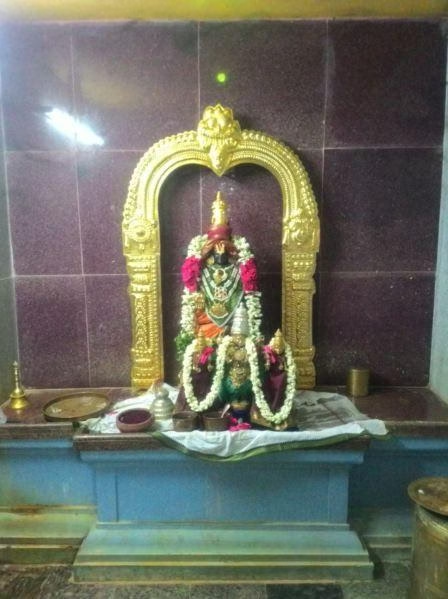
The primary deity of this temple is Nithyakalyana Venkatesa Perumal (Lord Vishnu) in a standing posture, facing East. He is accompanied by his consort, Goddess Sridevi (Lakshmi) and Bhudevi (Earth Mother). This temple is part of the Divya Desam circuit (the 108 abodes of Vishnu recognized by the Alvars), adding to its historical and spiritual prestige.
Why Devotees Visit: The Phalaśruti
According to temple scriptures and local tradition, worshipping Lord Nithyakalyana Venkatesa bestows specific blessings upon devotees:
- Harmony in Matrimony: As the name suggests, the temple is a potent site for seeking blessings for a prosperous marriage and harmonious family life.
- Removal of Ancestral Karma: Performing rituals here is believed to help cleanse sins or obligations (Pitru Dosha) carried over from ancestors.
- Mental Peace & Liberation: The eternal energy of the Lord assists in attaining mental clarity and, ultimately, Moksha (liberation).
2. Historical Origins & Scriptural Legend
While the exact date of the original construction remains a subject of local historiography, the temple follows the classical Dravidian style of architecture, indicative of the Pallava or early Chola periods (circa 8th–10th century CE). The structure has been carefully preserved by local trusts and likely underwent significant renovations during the Vijayanagara era, a time known for the proliferation of Vishnu temples.
The Legend of Nithyakalyana
Tradition holds that this is the site where Lord Brahma, the creator, performed a Yagna seeking a suitable consort for Lord Vishnu. At the behest of Lord Vishnu, the celestial churning of the ocean (Samudra Manthan) took place, resulting in the emergence of Sri Mahalakshmi. It is said that the divine wedding that followed at this Arani site was so auspicious that it became an eternal event—’Nithya Kalyanam.’ Unlike other temples where the wedding is celebrated seasonally, here the Lord bestows the grace of eternal union.
3. Architectural Marvels
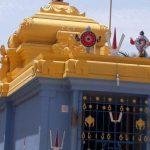
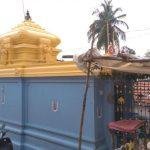
The temple is a classic example of the Dravidian style, characterized by its pyramid-shaped gateways (Gopurams) and concentric courtyards.
Vastu Shastra Elements
Adhering to Vastu principles, the temple is oriented with the main sanctum (Garbhagriha) facing East, allowing the rising sun to bathe the deity in natural light. The Pradakshina (circumambulation) paths are designed to align the devotee’s energy with the cosmic rhythm.
Key Features
- The Shikhara: The towering spire above the sanctum, though modest in height compared to massive complexes, is intricately carved with motifs of deities and floral patterns.
- Mandapas: The temple features pillared halls (Mandapas) with carved bases. These are used for conducting musical performances and religious discourses.
- Notable Sculptures: The outer walls depict scenes from the Ramayana and Mahabharata, along with images of Lord Narasimha and Lord Rama.
4. Darshan & Ritual Logistics (2026 Schedule)
Planning your visit ensures a peaceful darshan. Below are the standard timings and significant festival dates for 2026.
Daily Temple Timings
| Session | Timings |
|---|---|
| Morning Darshan | 06:00 AM – 12:00 PM |
| Afternoon Closure | 12:00 PM – 04:00 PM |
| Evening Darshan | 04:00 PM – 08:00 PM |
| Pooja Breaks | Morning (8:30 AM – 9:30 AM); Evening (6:00 PM – 7:00 PM) |
*Note: Timings may vary slightly during festival seasons or government holidays.
Key Sevas (Rituals) & Online Booking
Devotees can participate in several sevas. While many bookings are managed locally, the Tamil Nadu Hindu Religious and Charitable Endowments (HR&CE) Department increasingly facilitates online bookings for major temples.
- Thirumanjanam (Abhishekam): Sacred bathing of the deity with milk, honey, and sandalwood paste.
- Archana: Recitation of the Lord’s names (typically done with Tulasi leaves).
- Oru Kala Pooja: Special worship lasting one hour.
How to Book: Visit the official Tamil Nadu HR&CE portal (tnhrce.org), search for “Arani Nithyakalyana Venkatesa Perumal Temple,” and select the desired seva.
2026 Festival Calendar
The temple comes alive during these periods. Expect larger crowds and special ritual timings.
- Panguni Uthiram (Annual Brahmotsavam): March/April 2026. This is the most significant festival, celebrating the celestial wedding.
- Vaikuntha Ekadashi: December 2026. Celebrates the opening of the celestial gates (Paramapada Vasal).
- Aadi Perukku: July/August 2026. A special celebration along the banks of the Arani River.
5. Practical Visitor Guidance
To ensure a comfortable and respectful visit, please adhere to the following guidelines.
Visitor Etiquette & Rules
- Dress Code: Traditional attire is recommended. Men should wear dhotis or formal trousers with shirts; women should opt for sarees, salwar kameez, or long skirts.
- Photography: Photography is strictly prohibited inside the inner sanctum (Garbhagriha). Mobile phones are allowed but must be on silent mode.
- Mobile Lockers: Small storage facilities are usually available near the entrance for electronic devices, though availability cannot be guaranteed during peak festival times.
- Accessibility: The sanctum is accessible via steps. A ramp is available at the main entrance for wheelchairs, but navigating the inner corridors may require assistance.
Crowd Management & Seasonal Advice
- Best Hours: The least crowded times are immediately after the morning opening (6:30 AM) or just before the evening closure (7:30 PM).
- Seasonal Tips:
– May-June (Summer): Arani gets quite hot; carry water and a hat.
– November-February (Winter): Ideal weather for travel.
– July-October (Monsoon): Light rain is common; carry an umbrella.
6. Pilgrimage Connectivity
Arani is well-connected by road and rail, making it an accessible destination from Chennai and surrounding areas.
How to Reach
- By Road: Located approximately 41 km from Chennai via NH 48 (Chennai – Bangalore Highway). Take the turnoff towards Gummidipoondi/Arani from Red Hills.
- By Air: Chennai International Airport (MAA) is the nearest airport, roughly 54 km away (approx. 1.5 hours drive).
- By Rail: The nearest major railway station is Kavaraippettai (11 km). Alternatively, Gummidipoondi Railway Station (16 km) is a viable option. For better connectivity, Chennai Central is 41 km away.
- Local Transport: Frequent local buses operate from Ponneri and Periyapalayam. Auto-rickshaws are available from Arani New Bus Stand (just 250 meters from the temple).
Nearby Sacred Sites (Pilgrimage Circuit)
Extend your spiritual journey by visiting these nearby temples:
- Sampangi Pitchaaleeswarar Temple: Located just 650 meters away, this Shiva temple is a architectural counterpart to the Venkatesa temple.
- Periyapalayam Sri Bhavani Amman Temple: A powerful deity shrine located 5 km away, known for fulfilling vows.
- Thiruvallur Veeraraghava Swamy Temple: Located 35 km away, this is a major Divya Desam dedicated to Lord Raghava (Healer of the world).
7. Frequently Asked Questions (FAQs)
1. Is there a VIP or Special Darshan entry?
While the temple does not have a high-tech queue system like Tirupati, the administration allows for priority entry for senior citizens, differently-abled devotees, and those who have booked specific ‘Special Darshan’ tickets at the counter.
2. Are non-Hindus allowed inside the temple?
As per traditional customs and Tamil Nadu HR&CE rules, entry is restricted to Hindus only.
3. Where can I park my vehicle?
There is a dedicated parking area adjacent to the Arani New Bus Stand, roughly 100 meters from the temple entrance. During peak festivals, street parking along the main road is utilized.
4. Is outside food allowed?
Outside food is not permitted inside the temple sanctum. However, there are small shops and tea stalls outside the temple that serve prasadam and snacks. The temple occasionally conducts Anna Dhana (free meal services) during festivals.
5. What is the primary language spoken by the archakas?
Tamil is the primary language used for all rituals and prayers. However, the archakas are generally fluent in Telugu and understand basic Hindi/English.
Photo Gallery
How to Reach (Detailed)
Nithyakalyana Venkatesa Perumal Temple is a Hindu Temple dedicated to Lord Vishnu located at Arani Village in Thiruvallur District of Tamilnadu. The place is situated on the banks of Arani River. The Temple is located at about 250 meters Arani New Bus Stand, 450 meters from Old Arani Bus Stand, 650 meters from Sampangi Pitchaaleeswarar Temple, 7 Kms from Chinnambedu, 11 Kms from Kavaraippettai Railway Station, 5 Kms from Periyapalayam, 14 Kms from Gummudipoondi, 16 Kms from Gummudipoondi Railway Station, 15 Kms from Ponneri, 14 Kms from Thatchoor, 35 Kms from Thiruvallur, 41 Kms from Chennai and 54 Kms from Chennai Airport. To reach Arani, one must cross Red Hills from Chennai and take the road towards Gummidipoondi. Local Buses are available from Ponneri and Periyapalayam.
Recent Posts

Shri Kaamkoteeshwar Mandir, Varanasi – History & Significance
In the heart of Kashi, the eternal city of Lord Shiva, where the Ganges flows with celestial grace, stands the Shri Kaamkoteeshwar Mandir. This sacred Sannidhi is not merely a temple but a profound spiritual bridge between the Northern…

ओ सांवरे तूने ही मुझको संभाला – Lyrics & Meaning
ओ सांवरे तूने ही मुझको संभाला – A Prayer to Shyam Origin & Spiritual Essence Why This Bhajan Resonates Devotees chant this when overwhelmed by life’s storms—the refrain ‘तूने ही मुझको संभाला’ is the soul’s sigh of relief: “You…

कथा ये है महाराज मेरे की – Lyrics & Meaning
कथा ये है महाराज मेरे की छत्रपति संभाजी महाराज – A Prayer to Chhatrapati Sambhaji Maharaj Origin & Spiritual Essence Why This Bhajan Resonates Devotees chant this when their spirit feels tested—its powerful refrain “महाराज मेरे” is a soul’s…

Rigveda Samhita Yathartha Anuvada (ऋग्वेद संहिता यथार्थ अनुवाद) – Complete Set with Anvayartha & Hindi/English Translation
The Rigveda is the oldest surviving scripture of humanity and the foundational text of Sanātana Dharma. For serious students, scholars, UPSC aspirants studying ancient Indian history, Sanskrit learners, and spiritual seekers, a precise and grammatically structured translation is indispensable.…

आना भी अकेला है जाना भी अकेला है – Lyrics & Meaning | BharatTemples
आना भी अकेला है जाना भी अकेला है – A Prayer to the Divine Witness Origin & Spiritual Essence Why This Bhajan Resonates Devotees turn to this bhajan in moments of deep reflection—when life’s attachments begin to ache. The…

माता शेरावाली के द्वार जो भी जाता है – Lyrics & Meaning
माता शेरावाली के द्वार जो भी जाता है – A Prayer to Maa Sherawali Origin & Spiritual Essence Why This Bhajan Resonates Devotees turn to this bhajan in times of fear or uncertainty—its promise that no one leaves Maa’s…

मार लेना सपणी उबार लेणा भवरा – Lyrics & Meaning
मार लेना सपणी उबार लेणा भवरा – A Prayer to the Divine Beloved Origin & Spiritual Essence Why This Bhajan Resonates Devotees chant this in moments of deep vulnerability—its cry of “मार लेना सपणी, उबार लेणा भवरा” is the…

हमें श्याम सुंदर भरोसा तुम्हारा – Lyrics & Meaning
हमें श्याम सुंदर भरोसा तुम्हारा – A Prayer to Shyam Sundar Origin & Spiritual Essence Why This Bhajan Resonates Devotees chant this when feeling alone—its refrain ‘de do sahara’ is the soul’s cry for divine support. Lyrics in Hindi…

Mere Satguru Ne Di Thi Davai Lyrics in Hindi & Meaning
Mere Satguru Ne Di Thi Davai: Invoking the Guru’s Liberating Wisdom This soul-stirring bhajan venerates the Satguru (True Spiritual Master) as the divine physician who dispenses the only remedy for life’s deepest sufferings. Composed by Sant Karmaveer Tufani, it…

Janm Diyo Thari Maa Dukh Dekhiyo Lyrics in Hindi & Meaning
जन्म दियो थारी माँ दुख देखियो (Maa’s Grief Upon Birthing You) This soul-stirring Chetavani Bhajan (admonitory hymn) is addressed to the Divine Mother (Maa) – a call for repentance when children forget their filial duties in the dark age…