
Contents
- 1 Nootreteeswarar Temple History & Darshan Timings: The 108th Kailasa
Nootreteeswarar Temple History & Darshan Timings: The 108th Kailasa
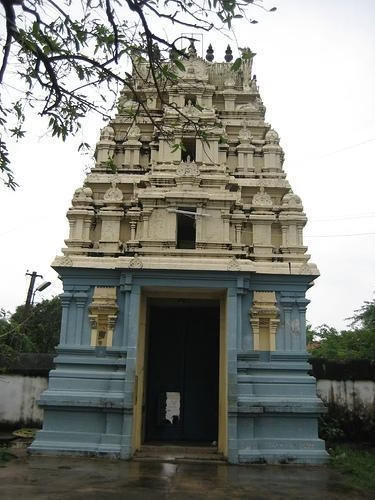
Welcome to the definitive spiritual guide for the Nootreteeswarar Temple in Chinnakavanam, Thiruvallur. Nestled on the serene banks of the Brahma Aranya River, this ancient Dravidian temple is not merely a structure of stone but a living chronicle of the Vaishnava-Shiva connection and the unfathomable power of Bhakti (devotion). As we step into 2026, this guide is engineered to aid modern pilgrims in navigating the sacred geometry and logistics of this holy site.
| Date built: | – |
|---|---|
| Deity: | Nootreteeswarar |
| Architectural style: | Dravidian architecture |
| Major festivals | – |
| Locale: | Chinnakavanam |
| District:: | Thiruvallur |
| Address: | Nootreteeswarar TempleChinnakavanam, Ponneri,Thiruvallur District – 601204 |
| Phone | +91 44 2797 3061 |
1. Introduction & Spiritual Essence
The Nootreteeswarar Temple is a dedicated sanctuary for Lord Shiva, revered here as Nootreteeswarar (The Lord of the 108 Lingams). The presiding deity is a Swayambhu (self-manifested) Lingam. His consort, Goddess Sivagami Ammai, is enshrined alongside him in the main sanctum.
Phalaśruti: Why Visit?
Pilgrims flock to this site to witness the miraculous Ankola Ganapathy. According to temple lore, this specific Vinayaka is formed from the merger of 108 sand Lingams. Worshipping him is believed to:
- Grant Vighna Harta’s Blessings: Removing obstacles in business, education, and marriage.
- Cleansing Ancestral Karma: Performing rituals here, particularly on Tuesdays, is believed to alleviate Pithru Dosham (ancestral afflictions).
- Marriage & Harmony: Devotees, especially young women seeking marriage, worship the Goddess with rose garlands for three consecutive full moon days.
2. Historical Origins & Scriptural Legend
While the exact construction date remains unrecorded in public archives, tradition holds that this temple dates back several centuries, built during the transition of Chola and Vijayanagara influences. The architecture hints at a rich medieval past.
The Saga of the 108 Lingams
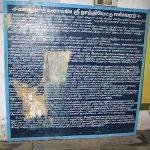
The Sthala Purana (local legend) is rooted in the epic journey of Sage Agastya. The sage was traveling to Kasi (Varanasi) but was halted by Lord Ganesha at this very spot in Chinnakavanam (then called Chathurvethapuram).
Divine intervention instructed Agastya that worshipping a Shivalingam under the ancient Eranzhil (Angola) tree for 108 days would yield the spiritual merit of a full Kasi pilgrimage. For 107 days, he crafted Lingams from the sand of the Brahma Aranya River. However, on the final day, he neglected to worship Lord Ganesha first. Miraculously, all 108 Lingams merged into a single idol of Vinayaka.
The Birth of Nootreteeswarar
Subsequently, Lord Shiva granted Darshan to Agasthya in the form of Ganesha. To complete his penance, the sage installed a new Lingam—Nootreteeswarar—which is considered spiritually equivalent to the original 108 Lingams. According to temple records, this site is also the 108th and final temple constructed by Agastya on the banks of the mythical Kuchasthalai River to cure his stomach ailments (a result of draining the ocean).
3. Architectural Marvels
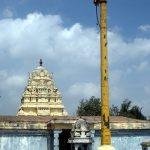
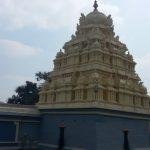
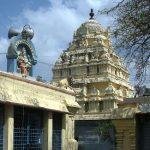
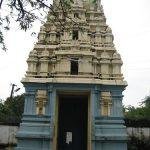
The temple showcases the classic Dravidian style of architecture, characterized by:
- The Sanctum (Garbhagriha): Houses two distinct Lingams—Nootreteeswarar and Chadurvedeeswarar—each with a dedicated Nandi (bull statue) facing them.
- The Mandapa: A pillared hall that, despite the temple’s compact size, allows for circumambulation (Pradakshina).
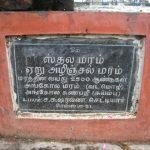
- The Sacred Tree (Sthala Vruksham): The Eranzhil tree (Angola or Arasu), under which the original 108 Lingams merged. The sand-formed Vinayaka remains preserved here.
4. Darshan & Ritual Logistics (2026 Guide)
While the temple follows traditional timings, the priests are known to open the temple upon request for devotees traveling from afar.
Daily Temple Timings
| Session | Timings |
|---|---|
| Morning Darshan | 9:00 AM – 12:00 PM |
| Afternoon Break | 12:00 PM – 4:00 PM |
| Evening Darshan | 4:00 PM – 7:00 PM |
Sevas & Offerings
- Abhishekam: Performed daily during morning hours.
- Vada Malai: Uniquely, this is the only temple where Vada Malai (a garland of savory lentil fritters) is offered to Lord Ganesha rather than Anjaneya. Devotees offer 54 to 108 Vadas to fulfill wishes.
- Online Seva Booking: As of 2026, the temple is managed by the HRCE (Hindu Religious and Charitable Endowments) Department. You can book Archana and Abhishekam via the Arralanayagi portal or the official Tamil Nadu temple app. Direct booking links are updated quarterly.
2026 Festival Dates
- Maha Shivaratri: February 26, 2026
- Chithirai Brahmotsavam: April 15 – April 25, 2026
- Margazhi Tiruvadhirai: December 20, 2026 – January 3, 2027
5. Practical Visitor Guidance
To ensure a spiritually fulfilling visit, please adhere to the following guidelines:
- Dress Code: Traditional attire is mandatory. Men should wear dhotis or trousers with shirts; women should wear sarees, salwar kameez, or churidars. Avoid shorts and sleeveless tops.
- Photography & Mobiles: Photography inside the sanctum sanctorum is strictly prohibited. It is recommended to switch off mobile phones or use silent mode within the temple premises.
- Crowd Management:
- Best Time to Visit: Weekday mornings (9:00 AM – 10:30 AM) are least crowded.
- Seasonal Advice: Summers (May) in Thiruvallur are hot and humid. Carry a reusable water bottle and a towel. The temple courtyard can get heated; wear light footwear that is easy to remove.
- Accessibility: The temple is small and accessible for senior citizens, though there are steps at the entrance. Wheelchair access is limited to the outer courtyard.
6. Pilgrimage Connectivity
The temple is located in Chinnakavanam, a hamlet near Ponneri, approximately 39 km north of Chennai.
How to Reach
- By Air: Chennai International Airport (MAA) is the nearest airport (approx. 51 km). Taxi services are available to Ponneri.
- By Rail: Ponneri Railway Station (approx. 2 km) is the closest rail head. From there, auto-rickshaws are readily available.
- By Road:
- Take the Kolkata Highway (NH16).
- Pass the Karanodai Bridge and Tollgate.
- Proceed towards Thatchur Cross Road and turn right (East) towards Ponneri.
- Continue past Ponneri town towards Pulicat. After crossing the Brahma Aranya River bridge, Chinnakavanam begins. The temple is on the right side in an adjoining lane.
Nearby Sacred Sites (Pilgrimage Circuit)
- Thirupalaivanam (7 km): Famous for the Narasimha Swamy Temple.
- Pulicat Lake & Temple (18 km): A unique coastal shrine dedicated to Lord Srinivasa.
- Thiruvallur (51 km): Home to the famous Veeraraghava Swamy Temple (an Ashtanga Vaishnava Sthalam).
7. Frequently Asked Questions (FAQ)
Is there a VIP Darshan entry available?
Currently, the Nootreteeswarar Temple does not have a formal VIP darshan quota like larger temples. Darshan is granted on a first-come, first-served basis. However, devotees can contact the temple priest or the local HRCE office for priority assistance during special occasions.
Can we perform Shradh or Tharpanam here?
Yes, this temple is highly auspicious for ancestral rituals. The proximity to the Brahma Aranya riverbank makes it a favorable spot for performing Pithru Tharpanam. It is advisable to bring your own ritual materials or consult the priest in advance.
Where can we park our vehicles?
There is a small paved area near the temple entrance for two-wheelers and cars. During festival days, vehicles are parked along the roadside by the Brahma Aranya river bank.
Is the temple open on all days?
Yes, the temple remains open year-round. However, during deepavali and pongal, the timings might be adjusted slightly. It is recommended to call the provided contact number before planning a long-distance trip.
What is the significance of the Brahma Aranya River?
According to legend, Sage Agastya created this river to remove the sins of beings affected by the ocean drainage. The sand from this river is considered sacred and was the primary material used to create the 108 Lingams.
Photo Gallery
Contact Details
- Nootreteeswarar Temple
- Chinnakavanam, Ponneri,
- Thiruvallur District – 601204
- Phone: +91 44 2797 3061
- Mobile: +91 98437 08593
Recent Posts

Shri Kaamkoteeshwar Mandir, Varanasi – History & Significance
In the heart of Kashi, the eternal city of Lord Shiva, where the Ganges flows with celestial grace, stands the Shri Kaamkoteeshwar Mandir. This sacred Sannidhi is not merely a temple but a profound spiritual bridge between the Northern…

ओ सांवरे तूने ही मुझको संभाला – Lyrics & Meaning
ओ सांवरे तूने ही मुझको संभाला – A Prayer to Shyam Origin & Spiritual Essence Why This Bhajan Resonates Devotees chant this when overwhelmed by life’s storms—the refrain ‘तूने ही मुझको संभाला’ is the soul’s sigh of relief: “You…

कथा ये है महाराज मेरे की – Lyrics & Meaning
कथा ये है महाराज मेरे की छत्रपति संभाजी महाराज – A Prayer to Chhatrapati Sambhaji Maharaj Origin & Spiritual Essence Why This Bhajan Resonates Devotees chant this when their spirit feels tested—its powerful refrain “महाराज मेरे” is a soul’s…

Rigveda Samhita Yathartha Anuvada (ऋग्वेद संहिता यथार्थ अनुवाद) – Complete Set with Anvayartha & Hindi/English Translation
The Rigveda is the oldest surviving scripture of humanity and the foundational text of Sanātana Dharma. For serious students, scholars, UPSC aspirants studying ancient Indian history, Sanskrit learners, and spiritual seekers, a precise and grammatically structured translation is indispensable.…

आना भी अकेला है जाना भी अकेला है – Lyrics & Meaning | BharatTemples
आना भी अकेला है जाना भी अकेला है – A Prayer to the Divine Witness Origin & Spiritual Essence Why This Bhajan Resonates Devotees turn to this bhajan in moments of deep reflection—when life’s attachments begin to ache. The…

माता शेरावाली के द्वार जो भी जाता है – Lyrics & Meaning
माता शेरावाली के द्वार जो भी जाता है – A Prayer to Maa Sherawali Origin & Spiritual Essence Why This Bhajan Resonates Devotees turn to this bhajan in times of fear or uncertainty—its promise that no one leaves Maa’s…

मार लेना सपणी उबार लेणा भवरा – Lyrics & Meaning
मार लेना सपणी उबार लेणा भवरा – A Prayer to the Divine Beloved Origin & Spiritual Essence Why This Bhajan Resonates Devotees chant this in moments of deep vulnerability—its cry of “मार लेना सपणी, उबार लेणा भवरा” is the…

हमें श्याम सुंदर भरोसा तुम्हारा – Lyrics & Meaning
हमें श्याम सुंदर भरोसा तुम्हारा – A Prayer to Shyam Sundar Origin & Spiritual Essence Why This Bhajan Resonates Devotees chant this when feeling alone—its refrain ‘de do sahara’ is the soul’s cry for divine support. Lyrics in Hindi…

Mere Satguru Ne Di Thi Davai Lyrics in Hindi & Meaning
Mere Satguru Ne Di Thi Davai: Invoking the Guru’s Liberating Wisdom This soul-stirring bhajan venerates the Satguru (True Spiritual Master) as the divine physician who dispenses the only remedy for life’s deepest sufferings. Composed by Sant Karmaveer Tufani, it…

Janm Diyo Thari Maa Dukh Dekhiyo Lyrics in Hindi & Meaning
जन्म दियो थारी माँ दुख देखियो (Maa’s Grief Upon Birthing You) This soul-stirring Chetavani Bhajan (admonitory hymn) is addressed to the Divine Mother (Maa) – a call for repentance when children forget their filial duties in the dark age…