
Contents
Introduction & Spiritual Essence
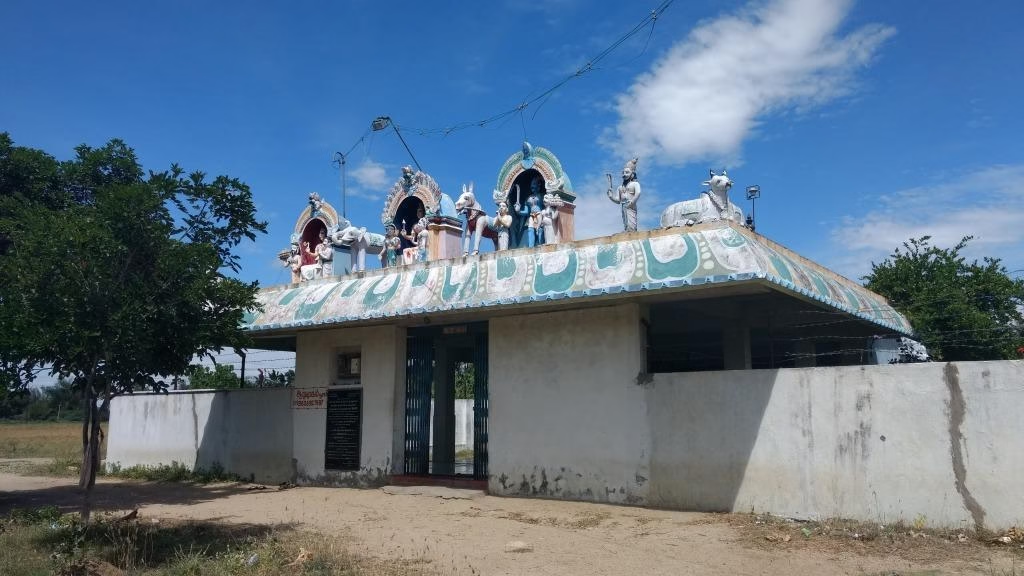
Nestled in the serene village of Pullambadi in Trichy District, the Oothaai Amman Temple stands as a beacon of spiritual solace and ancient heritage. This sacred shrine is dedicated to Muniyakka Amman (locally revered as Oothaai Amman), a benevolent village deity worshipped with deep devotion by the local community and devotees across Tamil Nadu.
While the term “Oothaai” refers to the sanctity of the abode, the deity here is known to grant protection and blessings to her children. In the local dialect, she is often referred to as Amman (Mother), signifying her role as the universal protector.
Phalaśruti: The Boon of Visitation
Devotees flock to this temple seeking specific blessings known as Phalaśruti (spiritual and material benefits). According to the faith of the devotees, visiting the Oothaai Amman Temple is believed to:
- Cleansing Ancestral Karma: Performing rituals here is considered highly effective for resolving Pitru Dosha (ancestral afflictions) and bringing peace to departed souls.
- Protection from Evil: The temple is renowned as a powerful center for warding off negative energies and the evil eye (Drushti).
- Health and Prosperity: Regular Archana and prayers are offered for the well-being of family members and success in endeavors.
Historical Origins & Scriptural Legend
While specific historical inscriptions regarding the exact century of construction are yet to be cataloged by the Archaeological Survey of India (ASI), the temple reflects the deep-rooted agrarian traditions of the Trichy region. The temple structure and the rituals have evolved over centuries, shaped by the local community.
The Sthala Purana (Local Legend)
Tradition holds that the temple originated from a divine vision experienced by the village elders of Pullambadi. It is said that the deity self-manifested (Swayambhu) in the form of a sacred stone near a neem tree. To this day, the sanctity of the tree is preserved within the temple complex. The legend narrates the Amman’s arrival to protect the village from a severe famine and pestilence, offering prayers to her resulted in the restoration of prosperity to the agricultural lands of Pullambadi.
Architectural Marvels
The Oothaai Amman Temple is a classic example of the Dravidian style of architecture, characterized by its vibrant sculptural work and spacious layout designed for community gatherings.
Key architectural highlights include:
- The Rajagopuram: The temple entrance features a welcoming tower (Gopuram) adorned with traditional Yalis and Dwarapalakas (guardian deities), painted in vivid colors typical of Tamil Nadu temples.
- The Sanctum Sanctorum (Garbhagriha): The inner shrine houses the main deity, Oothaai Amman, facing east. The idol is carved from granite and depicts the goddess in a seated posture, radiating tranquility.
- The Maha Mandapa: A large pillared hall allows devotees to sit and perform prayers. The pillars are engraved with motifs from Hindu mythology, serving as a visual narrative of epic tales.
- Vastu Shastra: The temple follows traditional Vastu principles, with the inner sanctum aligned to ensure the influx of positive energy flow during the solar equinoxes.
Darshan & Ritual Logistics
Visiting the Oothaai Amman Temple requires adherence to the daily schedule. Note that timings may vary slightly during festival seasons or special circumstances.
Daily Timings
| Session | Timing | Activity |
|---|---|---|
| Morning | 06:00 AM – 12:00 PM | Temple opens, Abhishekam, and General Darshan |
| Afternoon | 12:00 PM – 04:00 PM | Temple Closed (Deity Rest) |
| Evening | 04:00 PM – 08:00 PM | Evening Puja and General Darshan |
Key Sevas and Offerings
Devotees can participate in various rituals to enhance their spiritual experience:
- Abhishekam: Ritual bathing of the deity with milk, honey, and sandalwood paste. Available during morning hours.
- Archana: Chanting of the goddess’s names. Multiple options are available (e.g., Sahasranamam).
- Special Homams: Conducted on Tuesdays and Fridays for specific planetary alignments.
Online Seva Booking & 2026 Festivals
Assumption: While a dedicated app for this specific local temple may not exist, bookings are often managed through the local temple office or general Tamil Nadu temple portals.
Devotees are advised to contact the temple office directly for Online Seva Booking options as the facility becomes available. For 2026, mark your calendars for the following high-traffic days:
- Navaratri: October 2026 (Date varies based on Tamil Calendar).
- Chithirai Thiruvizha (Annual Festival): April 2026 (Specific dates to be confirmed by the temple committee).
Practical Visitor Guidance
To ensure a peaceful visit, please adhere to the following guidelines:
- Dress Code: Traditional attire is mandatory. Men must wear Dhoti or formal pants with a shirt; women are expected to wear Saree, Salwar Kameez, or Churidar. Avoid jeans and t-shirts inside the sanctum.
- Photography: Photography is restricted inside the main sanctum. Permitted in the outer praharam (circumambulation path) without flash.
- Mobile & Lockers: Electronic devices must be silenced. While dedicated digital lockers may not be available, a cloakroom service is provided near the entrance for a nominal fee.
- Crowd Management: The best time to visit is early morning (6:00 AM – 7:30 AM) or late evening. During summer (May), carry water bottles and cover your head with a cloth, as the granite flooring retains heat.
Pilgrimage Connectivity
How to Reach Oothaai Amman Temple
The temple is highly accessible via road and rail, making it a convenient stop on a Trichy spiritual circuit.
- By Air: The nearest airport is Trichy International Airport (TIR), located approximately 41 km away. Taxis and airport buses connect to Trichy Central Bus Stand.
- By Train: The closest railway head is Pullambadi Railway Station, just 2 km from the temple. For major trains, the Trichy Junction (TPJ) is 36 km away.
- By Road: Pullambadi is well-connected by State Highways. It is located roughly 600 meters from the Pullambadi Bus Stand. Travelers coming from Trichy can take the Trichy – Lalgudi – Pullambadi route.
Nearby Sacred Sites
Extend your pilgrimage with these nearby destinations:
- Pullambadi Perumal Temple: Dedicated to Lord Vishnu, located in the same village.
- Zambeeswarar Temple (Tiruvarangulam): A historic Shiva temple located 10 km from Pullambadi, famous for its rare swayambhu lingam.
- Trichy Rockfort (Ucchi Pillayar Temple): The iconic 7th-century fort temple, 36 km away, offering panoramic views of the Kaveri river.


Frequently Asked Questions (FAQs)
1. Is there a VIP darshan entry available?
For a small local temple like Oothaai Amman, there are no official VIP quotas. However, donating to the temple hundi or requesting a special Archana with the priest often allows for quicker access during non-peak hours.
2. Are non-Hindus allowed inside the temple?
Generally, this temple follows traditional practices that restrict entry to Hindus only. However, exceptions are sometimes made for non-Hindus seeking cultural interest, subject to the discretion of the temple priest. It is best to inquire at the office.
3. What is the significance of the offering known as “Pongal”?
Offering Pongal (sweet rice cooked in milk) is a way of expressing gratitude to the deity for a bountiful harvest and prosperity. It is a primary offering here.
4. Is there accommodation available nearby?
Basic lodges and guest houses are available in the nearby town of Puvalur (10 km). For better amenities and hotels, Trichy (36 km) is recommended.
5. What are the temple timings on Pournami (Full Moon)?
On Full Moon days, the temple usually remains open until 9:00 PM to accommodate special homams and increased devotee traffic.
Recent Posts

Shri Kaamkoteeshwar Mandir, Varanasi – History & Significance
In the heart of Kashi, the eternal city of Lord Shiva, where the Ganges flows with celestial grace, stands the Shri Kaamkoteeshwar Mandir. This sacred Sannidhi is not merely a temple but a profound spiritual bridge between the Northern…

ओ सांवरे तूने ही मुझको संभाला – Lyrics & Meaning
ओ सांवरे तूने ही मुझको संभाला – A Prayer to Shyam Origin & Spiritual Essence Why This Bhajan Resonates Devotees chant this when overwhelmed by life’s storms—the refrain ‘तूने ही मुझको संभाला’ is the soul’s sigh of relief: “You…

कथा ये है महाराज मेरे की – Lyrics & Meaning
कथा ये है महाराज मेरे की छत्रपति संभाजी महाराज – A Prayer to Chhatrapati Sambhaji Maharaj Origin & Spiritual Essence Why This Bhajan Resonates Devotees chant this when their spirit feels tested—its powerful refrain “महाराज मेरे” is a soul’s…

Rigveda Samhita Yathartha Anuvada (ऋग्वेद संहिता यथार्थ अनुवाद) – Complete Set with Anvayartha & Hindi/English Translation
The Rigveda is the oldest surviving scripture of humanity and the foundational text of Sanātana Dharma. For serious students, scholars, UPSC aspirants studying ancient Indian history, Sanskrit learners, and spiritual seekers, a precise and grammatically structured translation is indispensable.…

आना भी अकेला है जाना भी अकेला है – Lyrics & Meaning | BharatTemples
आना भी अकेला है जाना भी अकेला है – A Prayer to the Divine Witness Origin & Spiritual Essence Why This Bhajan Resonates Devotees turn to this bhajan in moments of deep reflection—when life’s attachments begin to ache. The…

माता शेरावाली के द्वार जो भी जाता है – Lyrics & Meaning
माता शेरावाली के द्वार जो भी जाता है – A Prayer to Maa Sherawali Origin & Spiritual Essence Why This Bhajan Resonates Devotees turn to this bhajan in times of fear or uncertainty—its promise that no one leaves Maa’s…

मार लेना सपणी उबार लेणा भवरा – Lyrics & Meaning
मार लेना सपणी उबार लेणा भवरा – A Prayer to the Divine Beloved Origin & Spiritual Essence Why This Bhajan Resonates Devotees chant this in moments of deep vulnerability—its cry of “मार लेना सपणी, उबार लेणा भवरा” is the…

हमें श्याम सुंदर भरोसा तुम्हारा – Lyrics & Meaning
हमें श्याम सुंदर भरोसा तुम्हारा – A Prayer to Shyam Sundar Origin & Spiritual Essence Why This Bhajan Resonates Devotees chant this when feeling alone—its refrain ‘de do sahara’ is the soul’s cry for divine support. Lyrics in Hindi…

Mere Satguru Ne Di Thi Davai Lyrics in Hindi & Meaning
Mere Satguru Ne Di Thi Davai: Invoking the Guru’s Liberating Wisdom This soul-stirring bhajan venerates the Satguru (True Spiritual Master) as the divine physician who dispenses the only remedy for life’s deepest sufferings. Composed by Sant Karmaveer Tufani, it…

Janm Diyo Thari Maa Dukh Dekhiyo Lyrics in Hindi & Meaning
जन्म दियो थारी माँ दुख देखियो (Maa’s Grief Upon Birthing You) This soul-stirring Chetavani Bhajan (admonitory hymn) is addressed to the Divine Mother (Maa) – a call for repentance when children forget their filial duties in the dark age…