
Contents
Introduction & Spiritual Essence
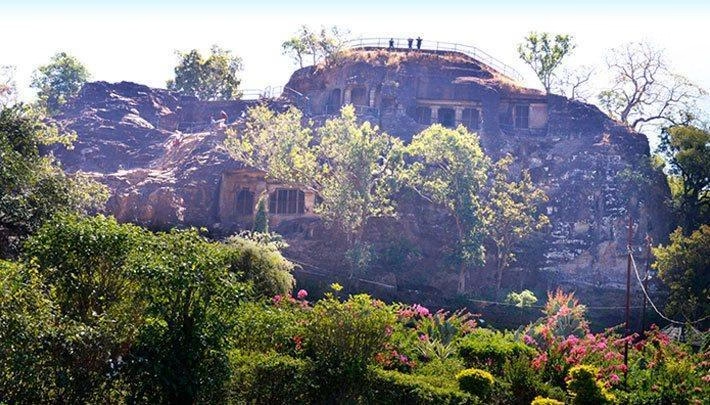
Perched at an altitude of 1,067 meters in the lush embrace of the Satpura Range, the holy land of Pachmarhi—revered as Satpura ki Rani—is a sanctuary where divinity and nature converge. The primary spiritual focus here is the ancient Shri Mahadev Temple (often referred to as the Mahadev Gufa Temple), a cave shrine housing a Swayambhu (self-manifested) Shiva Lingam. Unlike constructed murtis, this form is believed to have emerged naturally from the earth, radiating intense spiritual energy. According to scriptural legends, this is one of the rare sites where Lord Shiva manifests as the Sada-Shiva (the eternal form), offering devotees profound peace and liberation.
Phalaśruti: Why Devotees Visit
Visiting the Pachmarhi temples is believed to wash away accumulated negative karma and ancestral debts. Legend holds that meditating on the Mahadev avatar here grants Moksha (liberation) to one’s ancestors. The pristine mountain air, combined with the vibration of the Panchakshara mantra (Om Namah Shivaya), creates an environment conducive to inner purification and spiritual awakening.
Historical Origins & Scriptural Legend
The Legend of the Five Caves
The very name “Pachmarhi” is etymologically rooted in the Shri Panch Pandavas of the Mahabharata. Derived from “Panch” (five) and “Marhi” (caves), the hill station is historically associated with the thirteen-year exile of the Pandavas. Tradition holds that the eldest brother, Yudhishthira, along with his brothers Bheem, Arjuna, Nakul, and Sahadeva, resided in these high-altitude caves. The caves served not merely as shelter but as a strategic vantage point, reinforcing the notion that this land was chosen by the gods for divine play (Lila).
Historical Timeline:
While the spiritual origins date back to Vedic times, the physical site as we see it today was significantly documented during the mid-19th century. According to temple records, the region was under the sovereignty of the Gond King, Bhawut Singh. In 1857, Captain James Forsyth of the British Army, accompanied by Subhedar Major Nathoo Ramji Powar, discovered this plateau. While the British developed Pachmarhi as a cantonment and summer capital, the local tribal and Brahmin communities diligently preserved the sanctity of the Mahadev shrine, ensuring the rituals continued unbroken.
Architectural Marvels
The architecture of Pachmarhi is a harmonious blend of nature’s raw geometry and human devotion. The Shri Mahadev Temple is an exemplary cave shrine, classified as a unique hybrid of rock-cut architecture and simple structural masonry.
- Cave & Mandapa: The temple features a natural rock formation serving as the Garbhagriha (sanctum sanctorum). The entrance is flanked by a modest Mandapa (hall) where devotees can sit for darshan and satsang. The ceiling often displays natural mineral streaks that resemble abstract spiritual motifs.
- Shikhara Style: Unlike the towering Dravida or Nagara spires found in plains, the shrine here integrates the elevation of the hill itself. The “shikhara” is formed by the hilltopography, symbolizing the Meru Parvat (axis of the universe).
- Monolithic Sculptures: Inside the cave, the Shiva Lingam is accompanied by natural rock formations that resemble a Nandi (bull) facing the deity, carved by the hand of time rather than a sculptor.
Darshan & Ritual Logistics
To ensure a smooth spiritual journey in 2026, we recommend checking the online portal regularly. The following timetable is based on traditional Nitya Puja schedules.
| Ritual / Seva | Timing | Booking Details |
|---|---|---|
| Morning Abhishekam | 06:00 AM – 08:00 AM | Online / Temple Counter (Limited Slots) |
| Mid-day Archana | 11:00 AM – 12:30 PM | Direct Entry (Devotee Contribution) |
| Evening Aarti | 06:00 PM – 07:00 PM | Open to All (Best for Darshan) |
| Midnight Puja (Shayan) | 10:30 PM | Special Permission Required |
2026 Festival Calendar
- Janmashtami: August 14-15, 2026 (Special night-long vigil).
- Maha Shivaratri: February 26, 2026 (The grandest event; expect heavy crowds).
- Navratri: April 6-14, 2026 (Vasant Navratri) & October 1-9, 2026 (Sharad Navratri).
- Nag Panchami: July 27, 2026 (Special prayers for protection).
Practical Visitor Guidance
Visiting a hill sanctuary requires preparation. The spiritual experience is enhanced by physical comfort.
- Dress Code: Traditional Indian attire is recommended. Men should wear Dhoti or Kurta-Pajama; women should wear Saree or Salwar Kameez. Avoid shorts or sleeveless tops, as the cave temple has a strict dress code due to the confined sacred space.
- Photography & Mobiles: Photography is strictly prohibited inside the Garbhagriha. Electronic devices must be silenced. Lockers are available near the temple entrance for a nominal fee.
- Accessibility: The Mahadev Gufa requires descending a flight of steps and navigating uneven rock surfaces. It is not wheelchair accessible. Senior citizens are advised to visit during early morning hours when assistance is more readily available.
- Crowd Management: The best hours for darshan are 6:00 AM – 8:00 AM and 8:00 PM – 9:30 PM. During May (peak summer), carry a reusable water bottle and a handkerchief; the humidity in the valley can be high despite the altitude.
Pilgrimage Connectivity
How to Reach
- By Air: The nearest airport is Raja Bhoj Airport, Bhopal (approx. 190 km away). From there, hire a taxi via Hoshangabad to Pachmarhi.
- By Rail: The nearest major railway junction is Itarsi Junction (approx. 75 km). Pipariya (on the Jabalpur line) is another nearby option (approx. 45 km).
- By Road: Pachmarhi is well connected via NH 45. Regular buses ply from Bhopal and Hoshangabad. The scenic drive through the Satpura forest is a spiritual journey in itself.
Nearby Sacred Sites (Pilgrimage Circuit)
- Trishundi Fall: Located near Rajendra Giri, the water here is believed to have medicinal properties.
- Apsara Vihar: A serene pool and waterfall area, perfect for meditative bathing.
- Chauragarh Temple: Situated atop a mountain peak (3,300 ft), this temple is famous for the thousands of tridents (Trishuls) embedded in the rock by pilgrims.
Frequently Asked Questions (FAQ)
1. Is there a VIP Darshan entry available?
While there is no formal VIP quota like in Tirupati, devotees who book the Abhishekam Seva in advance are granted priority access during the ritual hours. Additionally, senior citizens (above 65 years) are facilitated by temple volunteers for quicker entry.
2. What is the best time of year to visit?
The ideal time is from October to March. The weather is cool and pleasant. Monsoon (July-September) brings lush greenery but slippery paths. Summers (April-June) can be hot, though the hilltop remains cooler than the plains.
3. Are non-Hindus allowed inside the temple?
Historically, Pachmarhi temples are open to all seekers of spirituality. However, the inner sanctum of the Mahadev cave follows traditional protocols where entry into the Garbhagriha is reserved for Hindus. Respectful viewing from the Mandapa is allowed for all visitors.
4. How do I book online seva?
Official online booking is managed via the local temple committee portal. For the most accurate link and secure booking, please visit the dedicated “Services” section on bharattemples.com or the official Madhya Pradesh Tourism website, as third-party aggregators may charge commission.
5. Is accommodation available near the temple?
Yes, Pachmarhi has a variety of options ranging from Madhya Pradesh Tourism Corporation (MPSTDC) guest houses to private hotels and GMVN (Garhwal Mandal) lodges. Booking in advance during festivals is essential.









Recent Posts

Shri Kaamkoteeshwar Mandir, Varanasi – History & Significance
In the heart of Kashi, the eternal city of Lord Shiva, where the Ganges flows with celestial grace, stands the Shri Kaamkoteeshwar Mandir. This sacred Sannidhi is not merely a temple but a profound spiritual bridge between the Northern…

ओ सांवरे तूने ही मुझको संभाला – Lyrics & Meaning
ओ सांवरे तूने ही मुझको संभाला – A Prayer to Shyam Origin & Spiritual Essence Why This Bhajan Resonates Devotees chant this when overwhelmed by life’s storms—the refrain ‘तूने ही मुझको संभाला’ is the soul’s sigh of relief: “You…

कथा ये है महाराज मेरे की – Lyrics & Meaning
कथा ये है महाराज मेरे की छत्रपति संभाजी महाराज – A Prayer to Chhatrapati Sambhaji Maharaj Origin & Spiritual Essence Why This Bhajan Resonates Devotees chant this when their spirit feels tested—its powerful refrain “महाराज मेरे” is a soul’s…

Rigveda Samhita Yathartha Anuvada (ऋग्वेद संहिता यथार्थ अनुवाद) – Complete Set with Anvayartha & Hindi/English Translation
The Rigveda is the oldest surviving scripture of humanity and the foundational text of Sanātana Dharma. For serious students, scholars, UPSC aspirants studying ancient Indian history, Sanskrit learners, and spiritual seekers, a precise and grammatically structured translation is indispensable.…

आना भी अकेला है जाना भी अकेला है – Lyrics & Meaning | BharatTemples
आना भी अकेला है जाना भी अकेला है – A Prayer to the Divine Witness Origin & Spiritual Essence Why This Bhajan Resonates Devotees turn to this bhajan in moments of deep reflection—when life’s attachments begin to ache. The…

माता शेरावाली के द्वार जो भी जाता है – Lyrics & Meaning
माता शेरावाली के द्वार जो भी जाता है – A Prayer to Maa Sherawali Origin & Spiritual Essence Why This Bhajan Resonates Devotees turn to this bhajan in times of fear or uncertainty—its promise that no one leaves Maa’s…

मार लेना सपणी उबार लेणा भवरा – Lyrics & Meaning
मार लेना सपणी उबार लेणा भवरा – A Prayer to the Divine Beloved Origin & Spiritual Essence Why This Bhajan Resonates Devotees chant this in moments of deep vulnerability—its cry of “मार लेना सपणी, उबार लेणा भवरा” is the…

हमें श्याम सुंदर भरोसा तुम्हारा – Lyrics & Meaning
हमें श्याम सुंदर भरोसा तुम्हारा – A Prayer to Shyam Sundar Origin & Spiritual Essence Why This Bhajan Resonates Devotees chant this when feeling alone—its refrain ‘de do sahara’ is the soul’s cry for divine support. Lyrics in Hindi…

Mere Satguru Ne Di Thi Davai Lyrics in Hindi & Meaning
Mere Satguru Ne Di Thi Davai: Invoking the Guru’s Liberating Wisdom This soul-stirring bhajan venerates the Satguru (True Spiritual Master) as the divine physician who dispenses the only remedy for life’s deepest sufferings. Composed by Sant Karmaveer Tufani, it…

Janm Diyo Thari Maa Dukh Dekhiyo Lyrics in Hindi & Meaning
जन्म दियो थारी माँ दुख देखियो (Maa’s Grief Upon Birthing You) This soul-stirring Chetavani Bhajan (admonitory hymn) is addressed to the Divine Mother (Maa) – a call for repentance when children forget their filial duties in the dark age…