Contents
1. Introduction & Spiritual Essence: The Abode of the Cosmic Serpent
The Padmanabhaswamy Temple, located in the heart of Thiruvananthapuram (Trivandrum), Kerala, stands as one of the most significant and wealthiest spiritual centers in the world. Dedicated to Lord Vishnu, the temple derives its name from the Sanskrit words Padma (lotus) and Abhaswamy (Lord), signifying the Lord seated on a lotus.
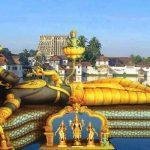
The primary deity is revered as Sree Padmanabhaswamy, depicted in the Anantha Shayanam posture—the eternal yogic sleep on the serpent Adi Shesha, who represents the cosmic infinity of time and space.
Phalaśruti: Why Devotees Visit
Scriptural tradition holds that a darshan of this deity offers profound spiritual liberation. As per the Brahma Purana and Skanda Purana, visiting this shrine is believed to:
- Cleansing Ancestral Karma: Devotees believe that prayers offered here for ancestors (Pitru Tarpana) release the lineage from generational curses.
- Protection (Raksha): The presence of the Nagaraja (serpent deity) in the sanctum is thought to ward off evil influences and planetary afflictions (Doshas).
- Moksha: Since the temple is one of the 108 Divya Desams (primary abodes of Vishnu), it is considered a gateway to Moksha (liberation from the cycle of rebirth).
2. Historical Origins & Scriptural Legend
Chronology & Royalty
While the exact date of construction remains ancient, the current structure and rituals were consolidated between the 16th and 18th centuries. The temple was patronized by the Travancore Royal Family. Marthanda Varma (1706–1758), the greatest ruler of Travancore, led major renovations. In 1750, he dedicated the entire kingdom to the deity, acting as the “Servant of Padmanabha,” establishing the temple trust that persists today.
Temple Records: Inscriptions dating back to the Sangam period (500 BC – 300 AD) reference the temple as “The Golden Temple,” suggesting it was renowned for its wealth even in antiquity.
Sthala Purana: The Legend of Ananthankadu
According to oral tradition and the Brahma Purana, the sage Vilvamangalathu Swamiyar was meditating near the Ananthapuram Temple in Kasargod. Lord Vishnu appeared before him as a mischievous cowherd boy. After the boy vanished, the sage heard a Pulaya woman threaten to throw her child into the forest of Ananthankadu.
Following this clue, the sage discovered a massive Iluppa tree (Indian Butter Tree) falling down, transforming into the Anantha Sayana Moorti. The Lord agreed to manifest as a smaller idol on the condition that the sage provide a meal of Rice Kanji (congee) and Uppumanga (salted mango) served in a coconut shell. This ritual offering is still part of temple lore.
3. Architectural Marvels
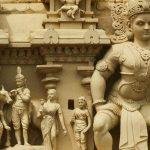
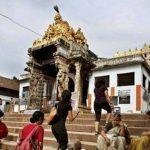
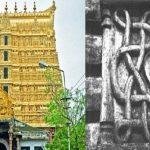
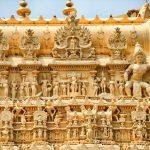
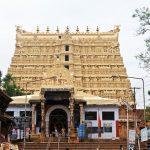
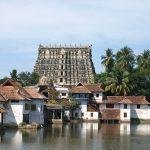
The temple is a stunning synthesis of the Kerala Style and the Dravidian (Tamil Kovil) style. High walls enclose the complex, topped by a majestic 16th-century Gopuram (gateway tower) adorned with intricate carvings.
Key Structural Elements
- Ottakkal Mandapam: The central platform is carved from a single slab of granite. It is 20 square feet and 2.5 feet thick. It was placed here by Marthanda Varma in 1731 CE after being quarried from Thirumala.
- The Sanctum Sanctorum (Garbhagriha): The deity is viewed through three distinct doors:
- The first door reveals the face of the Lord and the Shiva Lingam (held in his hand).
- The second reveals the Lord’s torso, Brahma on the lotus, and the gold Utsava idols.
- The third reveals the Lord’s feet and the Bhudevi (Goddess Earth).
- Vastu Shastra: The temple faces east, and the inner sanctum is designed to align with the solar cycles, ensuring sunlight hits the Simhasana (pedestal) at specific times of the day.
ASI & UNESCO Status: While the temple is a protected monument under the Kerala State Archaeology Department, the entire complex is currently on the UNESCO Tentative List for World Heritage Site consideration due to its cultural uniqueness.
4. Darshan & Ritual Logistics (2026 Guide)
Daily Timings
The temple observes strict timings and specific intervals for ritualistic purification.
| Session | Timing | Service |
|---|---|---|
| Morning | 3:30 AM – 4:45 AM | Nirmalyam |
| Morning | 5:00 AM – 6:20 AM | Abhishekam (Restricted Entry) |
| Morning | 6:30 AM – 12:00 PM | General Darshan |
| Evening | 5:00 PM – 6:20 PM | Deeparadhana |
| Evening | 6:45 PM – 7:20 PM | Athazha Puja |
Key Sevas & Online Booking
The temple does not have a standard online booking system for general darshan; tokens are issued at the center. However, for specific Sevas, booking is managed via the official temple administration.
- Archana: Chanting of the Lord’s names. Can be done individually or for family.
- Abhishekam: Ritual bathing of the deity. Strictly restricted. Only the King of Travancore and select priests perform the Abhishekam in the inner sanctum. Devotees may offer materials for Abhishekam, which are performed in a separate shrine.
- Navagraha Homam: Performed for planetary afflictions.
- Online Link: Visitors should check padmanabhaswamytemple.org (official site) closer to the travel date for 2026 availability of Archana and Paripalana tickets.
2026 Major Festivals
- January 14, 2026 (Makara Sankranti): Makara Vilakku is the grandest annual festival. The deity is taken out in a procession, and a celestial lamp is sighted on the hilltop.
- March 28, 2026 (Holi): Holika Dahanam and Mahabhishekam.
- October 2, 2026 (Vijaya Dashami): Special Alankaram (decoration) and Choroonu (rice feeding ceremony for infants).
- November 14, 2026 (Deepavali): Thousands of lamps are lit in the courtyard.
5. Practical Visitor Guidance
Dress Code & Etiquette
Adherence to traditional attire is mandatory for entry into the temple premises.
- Men: Mundu (dhoti) is compulsory. Shirts are not permitted inside the inner temple. A shirt may be worn in the outer corridors.
- Women: Saree, Set-Mundu, or Salwar Kameez (with dupatta) is allowed. Western clothing (pants, shorts, short skirts) is strictly prohibited.
Crowd Management & Best Time to Visit
- Best Hours: The least crowded time is between 12:00 PM and 3:00 PM (after the morning rush) and post 8:00 PM.
- Summer (April–May): Thiruvananthapuram is hot and humid. Carry a reusable water bottle. There are free water dispensers in the outer precinct.
- Monsoon (June–September): Carry an umbrella; sudden downpours are common.
Security & Lockers
Due to the temple’s immense wealth, security is paramount. All mobile phones, cameras, leather belts, and electronic gadgets are banned inside the inner temple. Free locker facilities are available in the Panchakadu area (near the East Fort entrance). Note: The temple does not allow any luggage into the sanctum. Please travel light.
6. Pilgrimage Connectivity
How to Reach
- By Air: The temple is 6 km from Trivandrum International Airport (TRV). Pre-paid taxis and airport buses run frequently.
- By Rail: Thiruvananthapuram Central (TVC) is the nearest railway station, just 2 km away. Auto-rickshaws are readily available.
- By Road: The temple is located at the East Fort, accessible via NH 66 (connecting to Mumbai) and NH 744 (connecting to Madurai).
Nearby Sacred Sites (Pilgrimage Circuit)
Extend your spiritual journey with these nearby Divya Desams:
- Ananthapuram Temple (Kasargod): Believed to be the Moolasthanam (root seat) of the deity. Located 400 km north; ideal for a dedicated spiritual circuit.
- Sree Padmanabha Swamy Temple, Thiruvattar: Located 60 km south in Kanyakumari District (Tamil Nadu), often called the replica of the Thiruvananthapuram deity.
- Kovalam Beach: Located 16 km from the temple. While a tourist spot, the full moon meditation here is a recommended spiritual activity.
7. Frequently Asked Questions (FAQ)
Is there a VIP darshan entry available?
Yes, the temple administration offers Special Entry Darshan tickets. However, these must be booked well in advance. VIPs holding official government recommendations must contact the Executive Officer (EO) at the temple administrative office at least 24 hours prior to their visit.
Can we carry food items inside?
Outside food is strictly prohibited within the temple premises. However, the temple provides Prasadam (holy offering) at the temple kitchen (Annadanam). Non-Hindu devotees are not permitted entry, and there are no exceptions to this rule as per the Temple Entry Proclamation.
What is the significance of the ‘Ottakkal Mandapam’?
The Ottakkal Mandapam (single stone platform) is significant because it is traditionally reserved for the Travancore royal family. Only the incumbent King is permitted to perform Sashtanga Namaskaram (full prostration) on this platform, as it symbolizes the surrender of the kingdom to the deity.
Is photography allowed?
Photography is strictly prohibited inside the inner sanctum. However, photography is allowed in the outer corridors and the courtyard, provided it does not disturb the rituals or other devotees.
What is the ‘Katusarkara Yogam’?
It is a secret herbal paste used to cover the deity. It prevents the Saligramam idol from direct contact with air or moisture. The paste is changed periodically. When the idol is covered, devotees view the symbol of the Lord’s foot.
8. Contact Details
Sree Padmanabhaswamy Temple
West Nada, Fort, East Fort,
Pazhavangadi, Thiruvananthapuram,
Kerala 695023, India
Phone: 0471-246-4606 (Administrative Office)
Email: [email protected] (General Inquiry)
Photo Gallery