

Contents
- 1 Pancha Pandava Malai Jain Cave Complex: A Definitive Pilgrimage Guide
Pancha Pandava Malai Jain Cave Complex: A Definitive Pilgrimage Guide
Introduction & Spiritual Essence
Nestled in the serene landscapes of Vellore district, the Pancha Pandava Malai Jain Cave Complex stands as a testament to the profound spiritual heritage of Tamil Nadu. While the name associates the site with the legendary brothers of the Mahabharata, the hill is locally revered as Tiruppanmalai, meaning “Sacred Milk Hill.” This nomenclature hints at the purity and sanctity attributed to this ancient landscape.
Although technically an archaeological site rather than a functioning temple with daily idol worship, the complex holds immense spiritual significance for Jain pilgrims and heritage enthusiasts alike.
Phalaśruti: Why Devotees Visit
Visitors to this ancient Jain center seek spiritual benefits rooted in the region’s history as a hub of asceticism:
- Connection to Asceticism: During the early medieval period (9th to 11th centuries), this hilly area was a flourishing center for Jain Sadhus. Walking these grounds is believed to connect devotees with the vibration of severe penance and meditation practiced by Tirthankaras.
- Karmic Cleansing: The site is associated with the Mahendra style of cave excavations, often linked to the Parshvanath sect. Meditating here is said to help cleanse ancestral karma and foster mental tranquility.
- Historical Devotion: The inscriptions found here, including those of the Pallava king Nandivarman, serve as a reminder of the devotion of past eras, inspiring current generations to uphold Anekantavada (multiplicity of viewpoints).
Historical Origins & Scriptural Legend
The history of Pancha Pandava Malai is etched into its rocks and inscriptions, spanning dynasties from the Pallavas to the Cholas.
Builders and Era
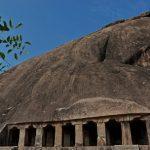
According to archaeological records, the seven cave temples here belong to the Nandivarma Pallava period (circa 740 AD). These caves are considered some of the largest excavations in the Mahendra style, named after the great Pallava king Mahendra Varma. The rock-cut cave temple on the eastern face of the hill is a masterpiece of early Dravidian architecture.
Later, during the 10th century, the region fell under the strong influence of Jain ascetics during the reign of the Chola king Parantaka I. An inscription found in a structural temple in the village confirms that the town was a Jain stronghold.
Scriptural References & Sthala Purana
While the name “Pancha Pandava Malai” links to the Mahabharata, the Sthala Purana (local legend) merges myth with history. It is believed that the Pandavas traversed this region during their exile, blessing the land.
Key inscriptions found on the site include:
- Pallava Inscription: Mentions the donor Naranan who carved the figure of Pon Iyakki (Yakshi) for his guru Naganandhi during the reign of Nandivarman Pothatharasar.
- Chola Inscription: Details a donation of the village Kooraganpadi by Veeracholan, a king of the Lada country, and his queen.
- Chola King Rajaraja I: Another inscription links the site to the era of the great Rajaraja I, cementing its continuous relevance.
Architectural Marvels
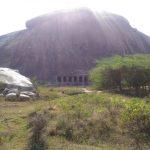
The cave complex is a defining example of Dravidian architecture in its nascent, rock-cut phase. The style here is categorized as Mahendra style, characterized by simplicity and grand scale.
Structure and Layout
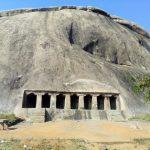
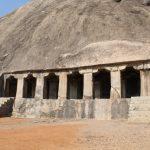
The primary east-facing cave is excavated at the foot of the hillock. Key architectural elements include:
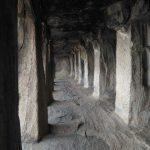
- Mukhamandapam (Front Hall): A large hall supported by twelve pillars arranged in two rows. The pillars are uniform, square from top to bottom, a hallmark of Pallava engineering.
- Corbels and Pilasters: Above the pillars, curved corbels (horizontal projections) support the roof, showcasing the transition from wooden to stone architecture.
- Niches and Cells: The back wall features seven niches carved into empty cells. The side walls contain square un-carved blocks, suggesting that the original plan intended for deeper excavation into the rock.
- Staircases: Two staircases (north and south) are present, though these were not carved out of the native rock, indicating later additions or modifications.
Iconography and Sculptures
Atop the hill lies a natural cavern housing exquisite carvings. The artistic layout includes:
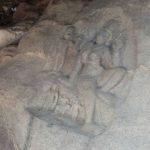
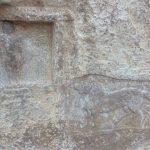
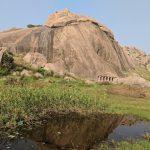
- The Yakshi Figure: Carved on a large rock face near a natural pool of water. The Yakshi is depicted sitting under a tree, one leg on the ground and the other bent, holding a Chauri (fly whisk). Four attendant figures surround her.
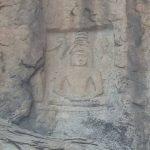
- Jain Tirthankara: Seated atop the rock face in Yogaasana (meditative posture), representing the eternal peace of the enlightened soul.
- Other Figures: On the southern face, a naked male figure and an animal are carved, further enriching the iconographic variety of the site.
Darshan & Ritual Logistics
As an archaeological site maintained by the Archaeological Survey of India (ASI), the Pancha Pandava Malai Jain Cave Complex does not follow the traditional temple ritual schedule. However, the administrative body has set visiting hours to ensure the preservation of the delicate carvings.
Visiting Hours (2026 Schedule)
| Day | Morning Timing | Evening Timing |
|---|---|---|
| Monday – Sunday | 9:00 AM – 12:00 PM | 2:00 PM – 5:00 PM |
| *Closed on National Holidays and Fridays for maintenance. | ||
Sevas and Offerings
Unlike a living temple, there are no daily Sevas like Abhishekam or Archana performed on the idols by the public. However, devotees often perform Manasika Puja (mental worship) and Pradakshina (circumambulation) around the hillock.
Online Booking: Currently, no online booking is required for entry as it is a protected monument with a nominal entry fee. However, for specialized tours or educational groups, bookings can be made via the ASI Tamil Nadu circle official website.
2026 Festival Dates of Significance
While the site does not host grand festivals, visiting during these Jain or general auspicious dates is recommended:
- Mahavir Jayanti: April 12, 2026
- Paryushan Parva: August 16 – 24, 2026
- Karthigai Deepam: November 15, 2026 (Highly revered in Tamil Nadu)
Practical Visitor Guidance
Visiting Pancha Pandava Malai requires preparation due to its rugged, archaeological nature.
Rules and Regulations
- Dress Code: Modest attire is required. As a site of spiritual importance, visitors are expected to cover shoulders and knees.
- Photography: Still photography is generally allowed, sometimes with a small fee. However, videography and drone usage require prior permission from the ASI office in Vellore.
- Mobile Lockers: There are no digital lockers on-site. Visitors are advised to travel light.
- Accessibility: The terrain is rocky. While the base cave is accessible, reaching the upper cavern requires climbing uneven steps. It is not recommended for those with severe mobility issues.
Crowd Management & Seasonal Advice
- Best Hours: Visit between 9:30 AM and 11:00 AM to avoid the midday sun and crowds.
- Seasonal Tip: During May (summer), temperatures in Vellore can soar. Carry at least 1 liter of water per person. Wear a hat and sunglasses.
- Monsoon Caution: In November and December, the rock surface becomes slippery. Exercise extreme caution while climbing.
Pilgrimage Connectivity
How to Reach
- By Air: The nearest international airport is Chennai International Airport (MAA), approximately 113 km away.
- By Rail: The closest railway junction is Ranipet (11 km). Taxis and autos are readily available from Ranipet to Vilapakkam.
- By Road: The complex is located 3.5 km from the Vilapakkam Bus Stop. It is accessible via the Arcot – Vilapakkam road.
Nearby Sacred Sites (Pilgrimage Circuit)
- Narasimha Temple, Tirumani: Located approximately 15 km away, this is a historic temple dedicated to Lord Narasimha, also featuring inscriptions from the Pallava and Chola periods.
- Kailasanathar Temple, Arungundram: As mentioned in local legends, remnants of Siva temples exist in Arungundram. This temple is a short drive away and offers a contrast between Shaivism and Jainism in the region.
- Triple Temple, Kanchipuram: About 45 km from Vilapakkam, the Kailasanathar and Ekambareswarar temples in Kanchipuram provide a deeper dive into Dravidian architectural grandeur.
Frequently Asked Questions (FAQ)
1. Is there a VIP darshan entry available?
No. As this is an archaeological site and not a functioning temple, there is no concept of VIP darshan. Entry is based on the ASI ticket counter timing and first-come-first-serve basis.
2. Are there any food facilities at the complex?
There are no restaurants or canteens within the cave complex. It is advisable to eat at Vilapakkam or Arcot before ascending the hill. Carrying water and light snacks is recommended.
3. What is the entry fee for Pancha Pandava Malai?
For Indian nationals, the entry fee is nominal (typically under INR 20), while foreign tourists may be charged a higher rate. Prices are subject to change as per ASI guidelines in 2026.
4. Can we perform meditation or yoga here?
Yes, the environment is highly conducive to meditation. However, yoga practice should not obstruct the pathway for other visitors or damage the fragile rock surfaces.
5. Is the site safe for children?
Yes, but parental supervision is mandatory. The upper cavern requires climbing steep steps, and there are no railings at many places.
Photo Gallery
Contact Details
ASI Superintending Archaeologist
Tamil Nadu Circle, Vellore
Phone: +91-416-2222713 (ASI Vellore Office)
Recent Posts

ओ सांवरे तूने ही मुझको संभाला – Lyrics & Meaning
ओ सांवरे तूने ही मुझको संभाला – A Prayer to Shyam Origin & Spiritual Essence Why This Bhajan Resonates Devotees chant this when overwhelmed by life’s storms—the refrain ‘तूने ही मुझको संभाला’ is the soul’s sigh of relief: “You…

कथा ये है महाराज मेरे की – Lyrics & Meaning
कथा ये है महाराज मेरे की छत्रपति संभाजी महाराज – A Prayer to Chhatrapati Sambhaji Maharaj Origin & Spiritual Essence Why This Bhajan Resonates Devotees chant this when their spirit feels tested—its powerful refrain “महाराज मेरे” is a soul’s…

Rigveda Samhita Yathartha Anuvada (ऋग्वेद संहिता यथार्थ अनुवाद) – Complete Set with Anvayartha & Hindi/English Translation
The Rigveda is the oldest surviving scripture of humanity and the foundational text of Sanātana Dharma. For serious students, scholars, UPSC aspirants studying ancient Indian history, Sanskrit learners, and spiritual seekers, a precise and grammatically structured translation is indispensable.…

आना भी अकेला है जाना भी अकेला है – Lyrics & Meaning | BharatTemples
आना भी अकेला है जाना भी अकेला है – A Prayer to the Divine Witness Origin & Spiritual Essence Why This Bhajan Resonates Devotees turn to this bhajan in moments of deep reflection—when life’s attachments begin to ache. The…

माता शेरावाली के द्वार जो भी जाता है – Lyrics & Meaning
माता शेरावाली के द्वार जो भी जाता है – A Prayer to Maa Sherawali Origin & Spiritual Essence Why This Bhajan Resonates Devotees turn to this bhajan in times of fear or uncertainty—its promise that no one leaves Maa’s…

मार लेना सपणी उबार लेणा भवरा – Lyrics & Meaning
मार लेना सपणी उबार लेणा भवरा – A Prayer to the Divine Beloved Origin & Spiritual Essence Why This Bhajan Resonates Devotees chant this in moments of deep vulnerability—its cry of “मार लेना सपणी, उबार लेणा भवरा” is the…

हमें श्याम सुंदर भरोसा तुम्हारा – Lyrics & Meaning
हमें श्याम सुंदर भरोसा तुम्हारा – A Prayer to Shyam Sundar Origin & Spiritual Essence Why This Bhajan Resonates Devotees chant this when feeling alone—its refrain ‘de do sahara’ is the soul’s cry for divine support. Lyrics in Hindi…

Mere Satguru Ne Di Thi Davai Lyrics in Hindi & Meaning
Mere Satguru Ne Di Thi Davai: Invoking the Guru’s Liberating Wisdom This soul-stirring bhajan venerates the Satguru (True Spiritual Master) as the divine physician who dispenses the only remedy for life’s deepest sufferings. Composed by Sant Karmaveer Tufani, it…

Janm Diyo Thari Maa Dukh Dekhiyo Lyrics in Hindi & Meaning
जन्म दियो थारी माँ दुख देखियो (Maa’s Grief Upon Birthing You) This soul-stirring Chetavani Bhajan (admonitory hymn) is addressed to the Divine Mother (Maa) – a call for repentance when children forget their filial duties in the dark age…
Bhadi Sabha Mein Thane Manaun Lyrics in Hindi & Meaning
Bhadi Sabha Mein Thane Manaun: Invoking the Spear-Wielding Mother Mata Bhawani (श्री ज्वाला भवानी), the fiery manifestation of Shakti worshipped as the Protector of Dharma in Her Dhaulagarh sanctum. Origin & Spiritual Essence Composed in Rajasthani folk tradition by…