Papanasini Siva Temple: History, Timings & Complete Guide
Receive daily temple updates, divine darshan, and morning bhajans directly on WhatsApp.
Contents
- 1 Introduction & Spiritual Essence
- 2 Historical Origins & Scriptural Legend
- 3 Architectural Marvels
- 4 Darshan & Ritual Logistics
- 5 Practical Visitor Guidance
- 6 Pilgrimage Connectivity
- 7 Frequently Asked Questions (FAQ)
Introduction & Spiritual Essence
In the ancient heart of Bhubaneswar, often called the “City of Temples,” lies the Papanasini Siva Temple. A testament to the spiritual grandeur of Odisha, this shrine is dedicated to Lord Shiva (Siva). The name “Papanasini” carries profound devotional weight, translating to “The Destroyer of Sins.” While the temple is currently in a state of archaeological preservation, its spiritual resonance remains potent.
Why Devotees Visit: The Phalaśruti
According to local devotional traditions and the spiritual significance of the name, pilgrims visit the Papanasini Siva Temple seeking Moksha (liberation) and the washing away of past karma. Phalaśruti—the spiritual benefits cited in oral legends—suggests that sincere prayers offered here cleanse the soul of ancestral burdens and personal transgressions. Though the sanctum sanctorum is currently empty, the vibration of centuries of worship lingers in the precinct, making it a powerful site for meditation and reflection.
Historical Origins & Scriptural Legend
The temple dates back to the 14th-15th centuries, a period that marked the late phase of the Eastern Ganga dynasty’s architectural patronage. While specific royal dedications are often lost to time, the craftsmanship aligns with the zenith of temple building in Kalinga.
📖 Related: Durgiana Temple Amritsar: History, Darshan Timings & Complete Guide (2026)
The Sthala Purana
Tradition holds that the temple was built to commemorate the divine power of Shiva to absolve devotees of their “Papa” (sins). In the local folklore of the Old Town area, this precinct is considered a spiritual cleansing ground. While scriptural references in major Puranas specifically naming this site are rare due to its later construction, the temple’s existence is deeply woven into the cultural fabric of Bhubaneswar’s religious history.
Architectural Marvels
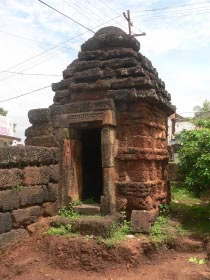
The Papanasini Siva Temple is a classic example of Kalinga Architecture, distinct for its tiered structure and detailed sculptures. It stands amidst a sacred precinct, surrounded by the Banesvara Siva temple to the east and the Maitresvara temple to the south.
Vastu Shastra & Structural Design
On plan, the temple features a square Vimana (sanctum) measuring 2.50 square metres. The elevation follows the Pidha order, rising to a height of 4.16 metres. The construction utilizes laterite stone, a local material known for its durability and distinctive reddish hue.
The structure is divided into five distinct sections of the Bada (vertical wall), known as the Panchanga Bada:
- Pabhaga (base): 0.55 metres
- Talajangha: 0.40 metres
- Bandhana (moulding): 0.23 metres
- Upara Jangha: 0.42 metres
- Baranda (capping): 0.46 metres
The Gandi (superstructure) measures 1.15 metres, culminating in a Mastaka (crown) of 0.95 metres.
Notable Sculptures
The temple features Raha niches and Parsva Devatas (subsidiary deities) on the north, west, and eastern walls. These niches measure 0.40 metres in height by 0.28 metres in width. However, historical records indicate that all niches are currently empty, suggesting that the original idols may have been relocated or lost over centuries.
Darshan & Ritual Logistics
While the temple is maintained by the Archaeological Survey of India (ASI) as a monument, daily worship and rituals are upheld by local priests for the adjacent active shrines in the precinct.
Daily Timings
| Session | Timing | Activity |
|---|---|---|
| Morning | 06:00 AM – 12:00 PM | Morning Aarti & Darshan |
| Evening | 04:00 PM – 08:00 PM | Evening Aarti & Darshan |
| *Note: As an ASI-protected site, timings may vary slightly on public holidays. | ||
📖 Related: Gurudwara Baba Atal Sahib,Amritsar
Seva and Online Booking
For specific rituals like Abhishekam (ritual bathing of the deity) or Archana (recitation of names), devotees generally perform these at the nearby Maitresvara or Banesvara temples, as the Papanasini sanctum is empty.
Online Seva Booking: While the Papanasini temple itself does not have a dedicated online portal due to its protected status, general offerings for the Bhubaneswar temple circuit can often be managed via the Odisha Tourism or local temple committee websites.
2026 Festival Calendar
Key festivals celebrated with fervor in the Bhubaneswar temple precincts:
- Shivaratri (Feb 26, 2026): The most significant night for Lord Shiva. The precinct is illuminated, and special night-long vigils are held.
- Kartik Purnima (Nov 05, 2026): A sacred day for bathing in the nearby Bindu Sarovar tank.
- Ratha Yatra (June 27, 2026): While primarily associated with Jagannath, the entire city engages in festive activities.
Practical Visitor Guidance
Visiting the Old Town area requires preparation, especially during peak seasons.
Visitor Rules & Etiquette
- Dress Code: Modest attire is mandatory. Traditional Indian wear (dhoti/saree) is recommended.
- Photography: Permitted outside the temple premises. However, photography inside the sanctum or of specific ASI markers may be restricted; look for signage.
- Mobile Lockers: There are no dedicated electronic lockers at this specific site. It is advisable to carry minimal luggage.
- Accessibility: The temple is located on uneven ground typical of Old Bhubaneswar. Wheelchair access is limited.
Crowd Management
- Best Hours: Visit between 6:00 AM and 9:00 AM to avoid crowds and enjoy the cool morning light for photography.
- Seasonal Advice: Odisha summers (April–June) are intense. Carry water and a head covering. Monsoons (July–Sept) bring lush greenery but also humidity and occasional flooding in the Old Town drains.
📖 Related: Shri Kali Devi Temple, Patiala: History, Darshan Timings & Guide
Pilgrimage Connectivity
How to Reach Papanasini Temple
The temple is situated in the Old Town (Papanasini Precinct) area of Bhubaneswar.
- Nearest Airport: Biju Patnaik International Airport (BBI) is approximately 10 km away (30 mins by taxi).
- Nearest Railway Station: Bhubaneswar Railway Station (BBS) is about 6 km away.
- By Road: The temple is accessible via NH 16 (formerly NH 5). From the station, take a taxi or auto-rickshaw to “Badheibanka Chowk” via Janpath.
Nearby Sacred Sites (Pilgrimage Circuit)
- Lingaraj Temple: Just 1 km away. The premier landmark of Bhubaneswar (11th century).
- Mukteswar Temple: 2 km away. Famous for its ornate Torana (archway) and Kalinga style.
- Bindu Sagar Lake: 1.5 km away. Considered holy waters for ritual purification.
Frequently Asked Questions (FAQ)
1. Is the Papanasini Siva Temple an active place of worship?
The temple is maintained by the Archaeological Survey of India (ASI). While the main sanctum is empty and not used for daily idol worship, the precinct remains a spiritual space, and adjacent temples in the complex are actively worshipped.
2. Is there a VIP darshan entry?
No. As an ASI-protected archaeological site, there is no VIP entry or special ticket. It is open to all visitors during visiting hours.
3. What is the significance of the name “Papanasini”?
The name literally means “Destroyer of Sins” (Papa = Sins, Nasini = Destroyer). It signifies the belief that devotees washing their sins in the holy waters of nearby Bindu Sagar and praying here attain spiritual purity.
4. Are there entry fees?
Currently, there is no entry fee for Indian nationals to visit the Papanasini temple premises. However, fees may apply for visiting the ASI museum or other specific sites in the complex.
5. What is the best time of year to visit?
The ideal time is between October and February. The weather is pleasant, and the city celebrates major festivals like Durga Puja and Diwali.